
Mindfulness Games for Kids: Short Activities to Practice Noticing


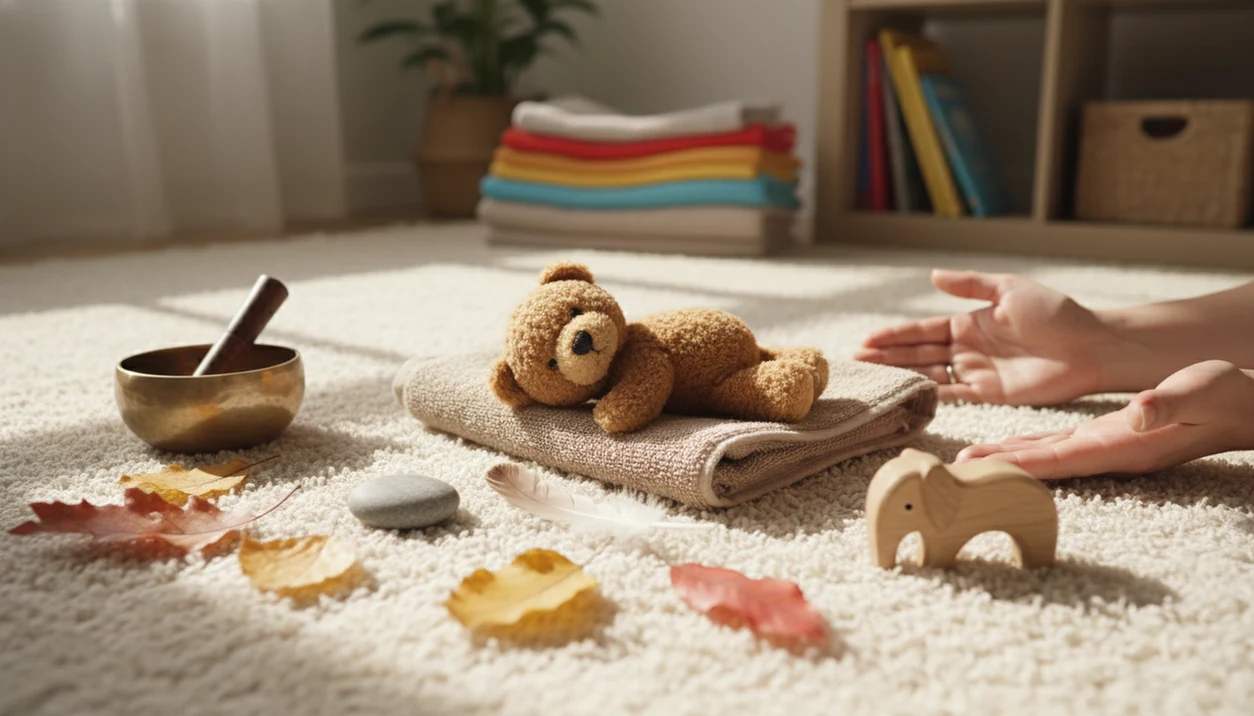
Mindfulness games for kids are short, playful activities that help children notice breath, sounds, senses, movement, and feelings in the present moment. They are not rules, punishments, or tests of how quietly a child can sit. Start with one to five minutes of listening, watching a stuffed animal rise with the breath, or moving like a slow turtle. Join the game rather than giving instructions from the sidelines.
Try these activities during calm moments: before homework, at bedtime, on a walk, or while waiting for a ride. Keep participation optional and adapt the game to the child’s age, attention span, and sensory comfort. The aim is to practice noticing together, not to stop every difficult feeling. Games cannot replace professional support when a child needs it.
Definition: Mindfulness games for kids are child-friendly noticing activities that use play, breath, senses, and movement to practice present-moment awareness in everyday life.
The essentials
- Keep each game short, sensory, and optional so mindfulness feels playful instead of corrective.
- Use games before bedtime, homework, car rides, classroom transitions, or outdoor walks rather than only during conflict.
- Adapt every activity for age, sensory comfort, and attention span; do not use games as a replacement for professional support when a child needs it.
Best mindfulness games for kids at a glance
The easiest mindfulness games for kids are short, sensory, and shared with an adult. A child is more likely to join when the grown-up breathes, listens, walks, or moves too.
| Game | Time | Best setting | Best age range | Skill practiced |
|---|---|---|---|---|
| Stuffed-animal belly breathing | 1-3 minutes | Bed, couch, quiet floor | 3-7 | Breath awareness |
| Sound detective | 1-2 minutes | Classroom, park bench, car | 4-10 | Listening and attention |
| Five-senses walk | 3-5 minutes | Sidewalk, yard, hallway | 5-12 | Sensory noticing |
| Slow-motion animal moves | 2-4 minutes | Living room, gym, classroom | 3-9 | Body awareness |
| Kindness pebble | 1-3 minutes | Backpack, pocket, bedside | 6-12 | Warm attention and reflection |
A folded towel on bedroom carpet is enough for a “practice space.” No special cushion required.
For younger children, start with movement or touch. Older kids often like a challenge, such as finding three faraway sounds before the bell tone ending the practice.
Practice noticing, getting distracted, and returning
Field note: the useful part of a mindfulness game is usually not the quiet ending. It is the small loop inside the play: a child notices something, drifts away, and comes back without getting scolded. The anchor might be breath, sound, movement, or touch.
Kids tend to catch on faster when the cue is physical and easy to test. “Notice the cotton sleeve on your wrist” is clearer than “observe your inner state.” Breath awareness can start by watching a small toy lift and settle. Sound awareness might mean finding the softest noise while rain taps the glass. Movement awareness can be a slow animal walk across a rug.
The mechanism is simple: repeated attention practice builds familiarity with body signals and shifting focus. It may support self-awareness, but it should not be sold as treatment. A 2017 Campbell systematic review of school-based mindfulness programs found small positive effects on cognitive and socioemotional outcomes, while noting variation in program quality and study design (Csr.2017.5).
Mindfulness practices and meditation techniques for beginners and daily life can build noticing, pausing, and returning skills, not instant obedience or emotional control on command.
What child mindfulness research can tell parents
Research on mindfulness for children is cautiously promising, especially in structured school programs, but it does not prove that a two-minute game at home will create treatment-level change. The strongest findings tend to involve attention, self-awareness, and some socioemotional skills; effects on anxiety, behavior, sleep, and long-term mental health are more mixed or still uncertain.
A fair way to read the evidence is to separate program research from kitchen-table practice:
- Distinguish the setting. School studies often use trained teachers, repeated lessons, and group routines. A bedtime breathing game or sound hunt is shorter and less controlled.
- Expect modest support. Reviews such as the Campbell Collaboration’s 2017 school-based mindfulness review and the NCCIH’s 2024 mindfulness overview describe benefits as variable, not guaranteed.
- Watch what improves. Focus, pausing, and naming body cues may shift before big feelings or behavior patterns do.
- Keep guidance individualized. If a child has significant anxiety, trauma symptoms, depression, aggression, or school impairment, mindfulness games can be a gentle add-on, not a replacement for clinical advice.
Keep games short, sensory, and shared
- Short and playful usually beats long and serious; most children do better with 60 seconds of a game than 10 minutes of forced stillness.
- Sensory games usually work better than silent sitting because children can touch, hear, see, or move with the practice.
- Calm moments are the training ground; practice before stress if you want the skill available during stress.
- Adult modeling matters more than perfect instructions; a child notices whether you are playing too. Caregivers expecting a baby can try pregnancy affirmations meditation for their own calm practice before joining children in a game.
- Mindfulness activities can support attention and stress skills, but they are not therapy or crisis care.
For a plain-language research and safety overview, the National Center for Complementary and Integrative Health notes that mindfulness evidence varies by condition, population, and practice type (NCCIH overview).
The pencil tapping during study time can become the practice. Try listening to three taps, then feeling one breath before starting the next math problem.
For younger children who need even shorter starts, short meditation for toddlers can be adapted into one-breath games.
How to use mindfulness activities for kids without pressure
Use mindfulness activities for kids as invitations, not correction. The tone matters as much as the game.
- Invite the child with playful language. Say, “Let’s try a noticing game,” not “You need to calm down.”
- Choose one game for the week. Repeat stuffed-animal breathing, sound detective, or five-senses walking so it becomes familiar.
- Keep eyes open as an option. Let the child look at the floor, a toy, a window, or your face.
- Stop while interest is still present. End after one good round instead of stretching it until the child resists.
- Ask one simple question afterward. Try, “What did you notice?” or “Was that easy, boring, or weird?”
Weird is allowed.
If breath practice becomes a family signal, parent and child breathing exercises can help adults participate without turning the game into a lesson. We usually suggest ending after a few calm breaths while it still feels doable, especially when a caregiver is tired or a child is already near their limit. If you are expecting and feeling worried, pregnancy anxiety meditation offers gentle practices for your own moments of calm.
Switch games when body awareness feels uncomfortable
A child does not have to focus on breathing or close their eyes to practice mindfulness. Body-focused exercises can feel uncomfortable for some children, including those with anxiety, trauma histories, or sensory sensitivities. Offer an outward-looking alternative: find three colors, feel a familiar fabric, or take slow animal steps. Let the child choose what feels manageable rather than insisting on the original game. For children who worry often, meditation for anxious kids offers gentle options without requiring breath focus.
Stop if the child becomes distressed, frustrated, dizzy, or more agitated. Stay with them and return to ordinary, supportive interaction instead of asking them to finish. The American Academy of Pediatrics places breathing and sensory grounding within broader support for children after stressful experiences. If symptoms are significant or these activities increase distress, consult a pediatric clinician rather than extending the practice.
Mindful games for children by age group
Mindful games for children should match development, interest, and sensory comfort. Age ranges help, but a child’s curiosity is the better guide.
Preschool mindfulness games
Ages 3-5 often like stuffed animal breathing, bubble breathing, and texture hunts. Invite them to compare a fuzzy sleeve, a ridged block, or the cool edge of a window while you are cleaning glass after school pickup. Keep the language concrete: “Can your bear ride your belly up and down?”
Elementary mindfulness games
Ages 6-8 can try sound detective, mindful snack, and five-finger breathing. They may enjoy counting sounds, noticing crunch and flavor, or tracing one finger slowly while breathing.
Tween mindfulness games
Ages 9-12 and tweens often prefer music noticing, thought clouds, mindful storytelling, walking attention challenges, journaling prompts, and sports breath cues. They may reject anything that sounds babyish, so offer choice. For older children moving toward adolescence, meditation for teens may fit better than cartoon-style games.
Everyday moments for playful meditation for kids
Where do mindfulness games fit into a normal day? They work best in tiny, repeatable moments when the child is not already upset.
At bedtime, place a stuffed animal on the belly for five breaths. During tooth brushing, notice mint taste, brush sound, and feet on the bathroom floor. Before homework, try one minute of sound detective. During classroom transitions, invite slow-motion animal steps to the rug. Waiting in line can become a five-things-you-see game. In car rides, ask children to notice three colors outside the window.
Micro-moments reduce resistance because they do not feel like another assignment. The cursor blinking on an email has an adult version too: pause, breathe once, then respond.
Use language like, “Want to play a focus game?” Avoid, “Do mindfulness because you are being difficult.” For sleep-focused routines, bedtime meditation for children can be kept equally brief.
Use games for practice, not obedience or treatment
Mindfulness games for kids are useful for building noticing skills, easing transitions, and creating shared calm routines. They are not tools for forcing obedience or stopping every meltdown.
| Best for | Not for |
|---|---|
| Practicing breath, sound, movement, and sensory awareness | Making a child comply immediately |
| Warmups before homework, reading, or class | Diagnosing anxiety, ADHD, trauma, or behavior concerns |
| Bedtime and family routines | Replacing counseling or medical care |
| Classroom transitions and group settling | Punishing a child for big feelings |
| Adult-child co-regulation | Requiring closed eyes, silence, or stillness |
Children with trauma histories, sensory sensitivities, or neurodivergence may need careful adaptations. Some prefer movement over stillness. Some need eyes open. Some dislike body scans because body focus feels uncomfortable.
For many families, playful games pair well with a broader family mindfulness routine, especially when the routine stays optional and predictable.
Printable and online kids mindfulness games
A useful printable for kids mindfulness games should fit on one page, use simple prompts, and avoid reward-chart framing. The goal is practice, not earning calm points.
Good printable cards often include four categories: breath, senses, movement, and listening. One card might say, “Find three quiet sounds.” Another might say, “Walk like a slow turtle for ten steps.” Keep the directions readable from the floor, because that is where these games often happen.
When comparing digital options, look for low-stimulation sessions like those in Smiling Mind, Headspace for Kids, Calm Kids, or Mindful.net rather than games built around badges and constant sound effects. Bright animations can pull attention away from noticing, so the Mindfulness Practices App should support a shared activity rather than replace the adult’s presence.
Image caption guidance: Child using a stuffed animal for belly breathing with an adult nearby, showing mindfulness games for kids as shared practice.
Limits of Mindfulness Games
- Benefits are often small to moderate in structured school programs, and home games may not reproduce those results.
- Seek professional help for self-harm talk, disruptive panic, aggression, shutdowns, or major sleep or school changes (Children And Mental Health).
- Games are not crisis tools or substitutes for professional care for significant anxiety, trauma, depression, or behavioral concerns.
- For anxiety, meditation for anxious kids is a gentle add-on, not care by itself.
Questions about mindfulness games for kids
What is an easy mindfulness game to start with?
Try sound detective: sit or stand together and listen for three different sounds. Ask which sound is closest or quietest, without treating the answers as right or wrong. One minute is enough for a first round. If listening feels uncomfortable, switch to finding three colors instead.
Can toddlers do mindfulness games?
Toddlers can join brief noticing games, such as watching a stuffed animal rise and fall on their belly or naming things they can see. Play alongside them and use concrete words. Expect shared play, not independent meditation. Evidence for lasting attention, sleep, or developmental benefits in very young children remains limited.
How long should a mindfulness game last?
Most games on this page take one to five minutes. For preschoolers, pediatric guidance suggests a few minutes per day rather than prolonged stillness. Start with one short round and stop while the child is still interested. Boredom, resistance, or distress is a reason to shorten or change the activity.
Do mindfulness games help children focus?
They give children a way to practice returning attention to a sound, sensation, or movement. Research on structured mindfulness programs suggests possible attention benefits, but evidence for broader improvements in schoolwork or behavior is weak. A short home game should not be presented as treatment for persistent attention difficulties.
What if my child refuses or will not sit still?
Do not make participation a condition for approval or a consequence for misbehavior. Offer a movement game, such as slow animal steps, or leave the activity for another calm moment. Sitting still is not the goal. A child can practice noticing while walking, looking around, or touching a familiar object.
Should children close their eyes during mindfulness games?
No. Eyes-open games are a valid option, especially when closing the eyes or noticing internal sensations feels uncomfortable. A child can look at a toy, find colors around the room, or notice textures. Allow them to stop, and change the activity if it makes them more upset.
Can mindfulness games help at bedtime?
A brief breathing or listening game can be part of a predictable bedtime routine. After reading or cuddling, try one to three minutes of noticing the belly move or listening for a quiet sound. Keep breathing natural and participation optional. The game should not delay bedtime or replace evaluation of persistent sleep problems.
Are mindfulness games a treatment for ADHD or anxiety?
No. Mindfulness programs may offer some benefits, but a playful home activity is not equivalent to a studied program or clinical treatment. Games can complement support by giving families a shared noticing routine. Significant anxiety, inattention, or changes in daily functioning call for professional assessment, not more practice alone.