
Bedtime Meditation for Children: Short Scripts and Parent Guidance


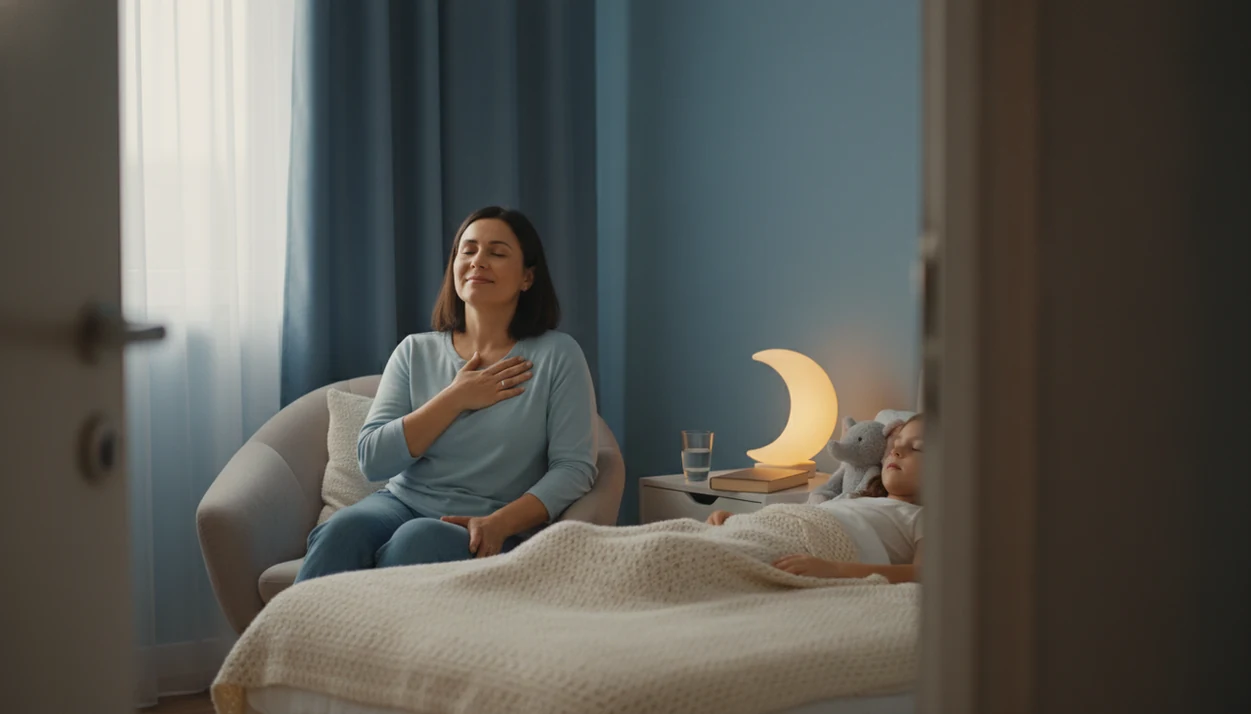
Bedtime meditation for children is a short, secular wind-down practice that uses gentle breathing, simple imagery, and quiet attention before lights out. Its purpose is to help a child feel calm, safe, and ready for rest, not to make sleep happen on command. A familiar script can become part of a predictable bedtime routine, alongside reading, cuddling, and saying goodnight.
Keep the practice brief, age-appropriate, and screen-free for the child. Start with a few quiet breaths or a simple relaxation script rather than an exciting story. Meditation is not a cure for insomnia, anxiety, or sleep disorders. Persistent sleep problems, loud snoring, severe anxiety, trauma-related nightmares, or difficulty functioning during the day call for pediatric guidance.
Definition: Bedtime meditation for children is a secular family mindfulness practice done before sleep to help a child feel calm, safe, and ready for rest.
The essentials
- Keep kids bedtime meditation short, predictable, screen-free, and age-appropriate.
- Use breathing, guided imagery, or a gentle body relaxation script rather than stimulating stories.
- Seek pediatric guidance for persistent sleep problems, loud snoring, severe anxiety, trauma-related nightmares, or daytime impairment.
Make meditation part of the bedtime routine
Bedtime meditation for children is a relaxing family wind-down routine done before lights out. It usually includes quiet breathing, a gentle story, or body relaxation while the child is already in bed.
A parent might sit nearby, lower their voice, and guide three slow breaths before saying goodnight. The goal is not to “make” sleep happen. It is to reduce stimulation, add predictability, and help the child notice and return when the mind jumps to tomorrow’s backpack or a grocery list.
Small is enough.
This is everyday mindfulness: attention practice, not treatment. It can support a calmer bedtime routine, but it does not diagnose insomnia, treat sleep apnea, or replace pediatric care. Tools like Mindful.net explain these practices in secular, beginner-friendly language alongside options such as Calm and Headspace, but a parent’s steady voice is often the main tool.
How familiar cues help children settle
Bedtime meditation for children works by lowering stimulation and giving attention something quiet to follow. The mechanism is behavioral and attentional, not magical or guaranteed.
Predictable routines can reduce arousal, which means the body is less geared toward play, worry, or argument. Slow breathing adds a simple physiological cue. Repetition tells the child, “We have done this before; bedtime is safe.” Soothing imagery gives the mind a soft place to land, like a warm blanket or a quiet treehouse.
The hallway may still be noisy.
A 2018 JAMA Pediatrics systematic review found promising but limited evidence for mind-body therapies, including mindfulness, for pediatric sleep JAMA study. Small pediatric studies have reported sleep improvements after mindfulness-based routines, but the evidence is still early and should not be treated as a universal bedtime fix. Supportive evidence exists, but it is not universal proof. A familiar breathing cue or short relaxation script gives a child something quiet to attend to, but it cannot guarantee sleep.
Sleep needs and meditation facts for parents
- Meditation use among U.S. children rose to 7.6% in 2017, up from 0.6% in 2012, according to CDC survey data CDC guidance.
- Many children have sleep difficulty at some point, but children sleep meditation is not a replacement for medical assessment when problems persist.
- Children ages 6-12 generally need 9-12 hours of sleep per 24 hours, and teens need 8-10 hours, according to the American Academy of Sleep Medicine Pediatricsleepdurationconsensus.Pdf.
- Short age-appropriate practices are usually more realistic than long recordings, especially when the phone timer is set for 5 minutes.
- Some children dislike stillness or closed eyes; eyes-open, sensory, or movement-based options may work better.
For a broader starting point, our meditation for kids guide covers daytime practice, family setup, and simple attention games.
Protect sleep time before adding meditation
A calming exercise should not push bedtime later. A 2022 review of 45 trials of children's sleep interventions found an average increase of 10.5 minutes of nighttime sleep. Interventions that included earlier bedtimes were associated with about 47 additional minutes. These findings concern sleep interventions broadly, not bedtime meditation specifically.
Keep the existing bedtime sequence and fit a short practice inside it: dim lights, stop screens and stimulating play, read or cuddle, then try one to three minutes of breathing or noticing sounds. When time is tight, shorten the meditation rather than postpone lights out. The practice should support the sleep schedule, not compete with it.
Choose breathing, quiet imagery, or body relaxation
The easiest bedtime mindfulness for kids is the method your child can repeat without getting more excited. Breathing, quiet imagery, and gentle body relaxation are the three most useful starting points. A strength based parenting approach can help you choose calming practices that suit your child's interests and comfort.
Balloon Breathing
Balloon breathing suits children who like a game. Ask them to breathe in as if filling a soft balloon in the belly, then let it slowly shrink.
Sleepy-Place Story
A sleepy-place story fits children who enjoy imagination. Keep it plain: a cozy room, soft socks, rain on the window. Avoid dragons, races, cliffhangers, or anything that turns bedtime into a movie.
Toe-to-Head Relaxation
Toe-to-head relaxation helps body-aware children. Name each area softly, from toes to knees to shoulders, and invite it to soften.
For most families, a calm parent voice is sufficient and often better than constantly changing audio tracks. Bright screens, novelty, and dramatic stories can wake a child up again. For daytime big feelings, calm down meditation for kids may fit better than a bedtime script.
Guide a short practice before lights out
Guided meditation for children bedtime works best as a repeatable routine, not a nightly experiment. Choose one short script and give it several nights before changing it.
- Set the room with dim lights, quiet voices, and no screens near the bed.
- Choose one script for the week, so the words become familiar instead of novel. If your child enjoys tracking habits, a parenting reward chart can recognize routine participation without making sleep a performance goal.
- Invite comfort by letting the child lie down, sit up, keep eyes open, or hold a blanket.
- Guide 3-7 minutes of breathing, gentle imagery, or body relaxation.
- End with reassurance such as, “You can rest now, and I am nearby.” You can also try teaching gratitude to children by naming one small kindness before the final goodnight.
- Repeat consistently without asking, “Are you asleep yet?”
The quiet pause before closing the bedroom door often matters more than the exact script. For families building a wider evening rhythm, a family mindfulness routine can connect dinner, bath, reading, and lights out without adding pressure. Practicing gratitude in parenting can help you notice small moments of connection without expecting bedtime to go perfectly.
Simple Bedtime Meditation Script for Children
How do you guide a simple bedtime meditation for children? Use a slow voice, offer choices, and never tell the child they must fall asleep.
“Get cozy in your bed. You can close your eyes, or you can keep them open and look at one quiet spot.
Take a slow breath in through your nose. Let it out gently, like you are fogging a tiny window. Let’s do that two more times.
Now imagine you are in a safe, cozy place. Maybe it is your bed, a soft tent, or a little reading corner. Nothing needs to happen there. You can just be.
Feel your feet getting heavy. Let your legs rest. Let your belly be soft. Let your shoulders drop into the bed. Your face can be easy.
If your mind thinks about something else, that is okay. Just notice it and come back to this breath.
I am going to be quiet now. You can rest in your own way.”
Match the practice to your child's needs
Kids bedtime meditation is a good fit when it adds calm connection and predictability. It is not the right tool when symptoms suggest a medical or mental-health concern.
| Fit question | Good fit | Not ideal for |
|---|---|---|
| Child preference | Enjoys stories, breathing games, or quiet parent time | Becomes distressed by stillness or inward focus |
| Bedtime pattern | Replacing screens or roughhousing with calmer cues | Chronic insomnia, suspected sleep apnea, or breathing pauses |
| Age and attention | Can follow a short, repeated script | Needs movement, sensory input, or a much shorter routine |
| Emotional needs | Mild bedtime restlessness or ordinary worries | Severe anxiety, trauma-linked nightmares, or daytime impairment |
Neurodivergent children and very young children may prefer eyes-open practice, a weighted blanket if already approved by caregivers, or a slow stretch beside the bed. For younger children, short meditation for toddlers may be more realistic than a full guided meditation.
Offer an alternative to closed eyes and body focus
Closed eyes and attention to bodily sensations are not comfortable for every child. Anxiety, trauma histories, sensory sensitivities, autism, or difficulty interpreting internal sensations can affect how a practice feels. Start with an eyes-open option: notice a color in the room, feel a blanket's texture, or listen for a quiet sound. The AAP includes sensory grounding within its guidance on helping children after stressful experiences.
Stay nearby and participate at first instead of expecting the child to settle independently. Offer a clear choice to stop. Distress, frustration, dizziness, or increasing agitation are reasons to end the exercise, not ask for more effort. Return to quiet, responsive comfort, and consult a pediatric clinician if symptoms are significant or meditation repeatedly increases distress. These mindful parenting tips can help you set calm, clear limits while responding gently to your child's needs.
Keep the breathing cue short
During a brief breathing practice before lights out, a parent can use the free breathing timer for pacing while keeping the screen out of the child's view. Let the child breathe comfortably rather than match every cue. Mindful.net also offers sleep audio in its app. A familiar spoken script is better when sound or a device makes bedtime more stimulating.
Bedtime Meditation Limits
- Bedtime meditation supports calmer evenings, but cannot treat insomnia or diagnosed sleep disorders, and pediatric evidence remains limited.
- Seek a pediatrician if your child regularly struggles to fall asleep, wakes often, or seems exhausted during the day.
- Inward focus can increase alertness, while stimulating audio or pressure to sleep can make bedtime meditation counterproductive.
- If anxiety is the main issue, meditation for anxious kids explains what mindfulness can and cannot do.
Children's bedtime meditation questions
What age can children start bedtime meditation?
Toddlers can try brief, playful calming activities with an adult, rather than formal seated meditation. Try smelling an imaginary flower and gently blowing out, or watching a stuffed animal rise and fall on the belly. Preschoolers can practice for a few minutes. Follow the child's interest and comfort, not an age-based performance goal.
How long should bedtime meditation last?
Start with one to three minutes, especially for younger children. Preschool guidance recommends a few minutes of meditation or calming breathing rather than prolonged stillness. An older child who enjoys a script may follow a slightly longer practice, but stop before it becomes frustrating or delays lights out.
Should children close their eyes during bedtime meditation?
No. A child can keep their eyes open and look at a quiet spot, notice colors, or feel the texture of a blanket. Closed eyes and body-focused exercises can feel uncomfortable for some children. Offer choices and allow the child to stop rather than treating stillness or closed eyes as requirements.
What if bedtime meditation makes my child more restless?
Shorten the practice or stop for the night. Imagery may become exciting, and inward attention can make some children uncomfortable. Try a quiet sound or a familiar blanket instead of a story or body scan. Stay nearby, offer reassurance, and avoid turning the exercise into another bedtime task they must complete.
Can bedtime meditation replace a bedtime story?
It can be an alternative when your child prefers breathing or relaxation, but it does not need to replace reading. A brief practice can follow a familiar book or cuddle. Keep imagery simple and uneventful, and avoid adding enough activities that the routine runs past the child's usual bedtime.
Does bedtime meditation treat childhood insomnia or anxiety?
No. It is a supportive calming routine, not a treatment for insomnia, anxiety, or diagnosed sleep disorders. Research on children's mindfulness shows generally small, context-dependent benefits, and evidence in very young children is limited. Persistent symptoms need pediatric assessment rather than longer meditation sessions or repeated changes of script.
When should I seek help for my child's sleep problems?
Ask a pediatric clinician about persistent trouble falling or staying asleep, loud snoring, breathing pauses, or substantial daytime sleepiness. Severe anxiety, trauma-related nightmares, developmental regression, or difficulty functioning during the day also warrant attention. Meditation should not delay assessment or replace care for a medical or mental-health concern.