
Mindfulness for Elementary Students: Activities, Timing, and Classroom Safeguards


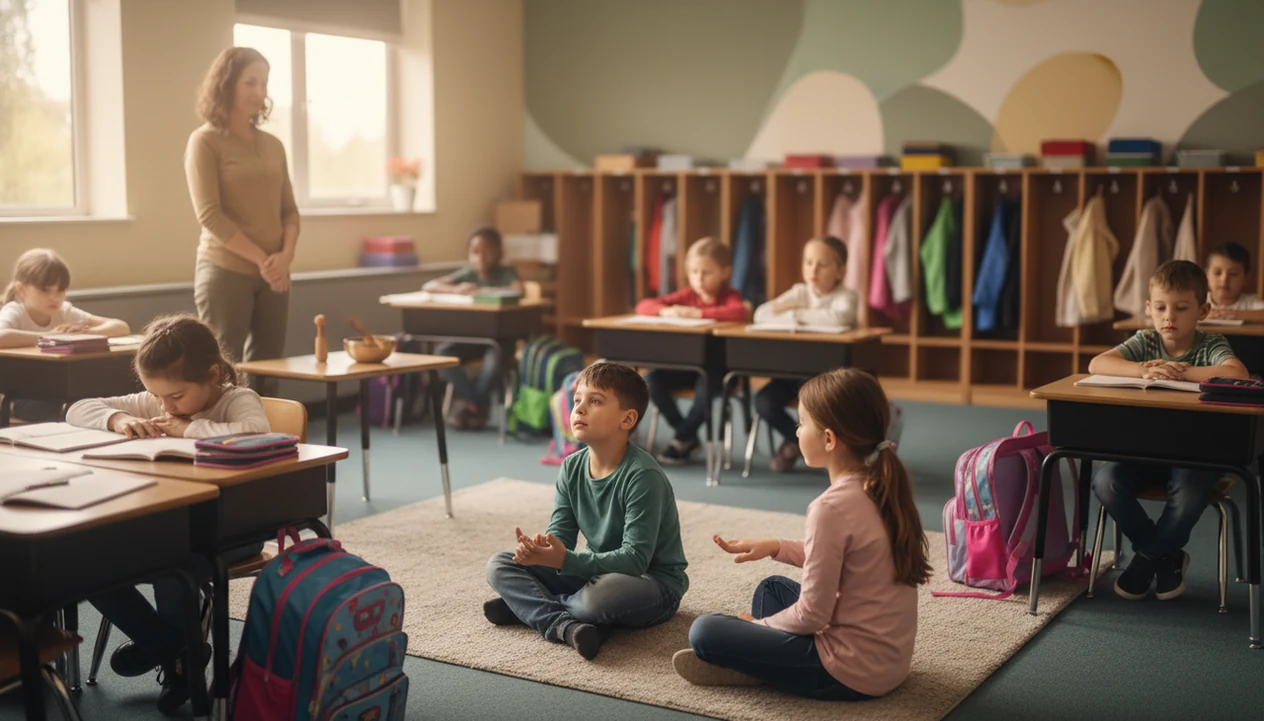
Mindfulness for elementary students is the practice of paying kind attention to the present moment through breathing, listening, movement, or simple body awareness. Children learn to notice sensations, thoughts, feelings, and surroundings without labeling them good or bad. In school, this is a secular attention skill, not religious instruction or a requirement to sit silently.
Start with one to five minutes, especially in younger grades, and build toward three to ten minutes when appropriate. Predictable moments, such as morning meeting, transitions, or test preparation, make practice easier to repeat. Let students keep their eyes open, move, draw, or listen quietly. Research suggests possible benefits, but results vary. Treat mindfulness as classroom support, not a cure for anxiety, trauma, behavior problems, or stressful school conditions.
What mindfulness means in an elementary classroom
Mindfulness for elementary students is noticing what is happening right now with kindness, using child-friendly practices that fit school life. It is a secular attention skill, not religious instruction, worship, doctrine, or a belief system.
In a classroom, mindfulness might look like three slow breaths, listening to a chime, feeling feet on the floor, drawing a weather report for emotions, or walking quietly from the rug to a desk. Younger children usually need concrete cues. Older elementary students can begin naming thoughts, feelings, and choices.
Mindfulness does not mean emptying the mind. A student may notice, “I’m thinking about recess,” then gently return to the sound, breath, or movement. That return is the practice.
Small returns count.
For children, mindfulness practices and meditation techniques for beginners and daily life deliver attention practice and self-awareness, not instant calm or guaranteed behavior change.
What research says about attention, stress, and learning
Research on school mindfulness suggests possible benefits for attention, emotional regulation, social-emotional skills, classroom behavior, and stress. The honest summary is promising but not settled; effects are usually small-to-moderate and depend on program quality, adult facilitation, and school context.
- A 2017 systematic review of 24 school-based mindfulness studies found that 70% reported significant improvement in at least one student outcome, such as attention, social-emotional skills, or stress J.Dr.2017.10.002.
- A 2015 randomized trial of 99 fourth- and fifth-grade students found gains in executive function, teacher-rated social-emotional competence, peer-rated prosocial behavior, and math grades after a classroom mindfulness-based program A0038454.
- A 2019 meta-analysis of 33 randomized controlled trials found small but significant effects on anxiety and attention problems in children and adolescents Jcpp.12980.
- Benefits appear stronger when teachers model the practice, use simple language, and repeat routines before students are upset.
- Mindfulness should be treated as one classroom support, not a stand-alone fix for anxiety, trauma, discipline, or school-wide stress.
For elementary students, short repeated practice is often easier than occasional long lessons because children learn the routine before they need it.
Ask what mindfulness adds to existing classroom support
A useful question is not just whether mindfulness helps, but what it is being compared with. In the MYRIAD school trial and implementation analysis, universal mindfulness training was not better than teaching as usual for adolescent mental health or well-being. These were older students, so the findings do not settle the question for elementary classrooms. They do show why a new program should not automatically be assumed better than existing support.
Before adding sessions, identify what students already receive: emotion vocabulary, relationship skills, problem-solving, help-seeking, and anti-bullying instruction. Choose a specific purpose for mindfulness, such as practicing attention during a transition, rather than replacing those lessons. A review of school mindfulness studies found small positive cognitive and social-emotional effects, but no statistically significant effect on academic or behavioral outcomes. Raising grades is not an established reason to adopt it.
Practicing the pause between a feeling and an action
Mindfulness works as attention training: students notice what is happening, pause, name it, and choose the next action. In plain terms, it gives children a small space between feeling something and reacting to it.
The classroom mechanism is practical. A child feels frustration during partner work, notices tight shoulders, takes one breath, and asks for help instead of grabbing the pencil. Another student pauses before blurting during read-aloud. After recess, the class practices listening for ten seconds so bodies can shift from running to learning.
Breathing and body awareness can support self-regulation, but they are not medical treatment. The point is not to make every child calm on command. It is to help students recognize signals earlier.
Autopilot is fast.
Repeated practice matters because pressure makes new skills harder to use. A routine practiced during morning meeting is more available before a spelling test, during a conflict, or when the progress bar on a classroom tablet moves too slowly.
Plan for student choice, consent, and safety
Before you start classroom mindfulness, make the practice safe, secular, brief, and optional enough that students can participate without pressure. The first safeguard is adult planning, not a breathing script.
- Check local requirements before implementation, including school policy, curriculum approval, family communication rules, and whether families need a clear opt-out path.
- Frame the practice as a simple attention or self-regulation skill, disconnected from religion, discipline, grades, rewards, or “good behavior” points.
- Offer choices every time: eyes open or lowered, sitting or standing, noticing a sound or object, drawing quietly, reading, or using gentle movement.
- Avoid forcing inward focus for the whole class. Closed eyes, still bodies, public sharing, or breath awareness can feel unsafe, embarrassing, or overwhelming for some children.
- Pause and get support when a student is panicked, dissociated, talking about harm, reacting to trauma, or unable to settle with ordinary classroom options. In those moments, involve a counselor, support staff member, administrator, caregiver, or the school’s safeguarding process instead of leading more breathing.
Choice protects the practice. It also protects students.
Build short practices into the school day
Use mindfulness during the school day as a brief, invited routine with a clear purpose. Avoid grading it, praising “quietest bodies,” or treating stillness as proof that a child is doing it correctly.
- Set a secular purpose such as focus, kindness, listening, or calming the body before learning.
- Choose a short practice lasting 1-5 minutes at first, especially for kindergarten through second grade.
- Offer student choice such as eyes open, looking down, drawing, quiet listening, or noticing an object.
- Repeat the practice during predictable routines like morning meeting, transitions, before tests, or after recess.
- Reflect briefly with neutral prompts such as, “What did you notice?” or “What changed, if anything?”
Invitation works better than compliance. A student sitting on the edge of the rug with eyes open may be practicing more honestly than one pretending to relax. For home practice that matches school routines, parent and child breathing exercises can keep the language simple and shared.
Classroom activities by age, time, and purpose
The most useful mindfulness activities for elementary students are short, concrete, and easy to repeat in ordinary classroom moments. Movement-based mindfulness may work better for students who struggle with stillness.
| Activity | Best age range | Time needed | Use case |
|---|---|---|---|
| Belly breathing | K, 5 | 1-3 minutes | Before tests, morning meeting |
| Five-senses noticing | K, 5 | 2-5 minutes | Grounding, transitions |
| Mindful listening | K, 5 | 1-3 minutes | Post-recess settling, group reset |
| Hand tracing | K, 3 | 1-2 minutes | Individual calming, desk practice |
| Mindful walking | 2-5 | 3-5 minutes | Hallway transitions, movement needs |
| Gratitude noticing | 3-5 | 3-5 minutes | SEL lessons, closing circle |
Short breathing practices
Ask students to feel the chest movement beneath a shirt or place a hand on the belly. Keep the count gentle, not competitive.
Mindful movement practices
Try slow walking, shoulder rolls, or stretching beside desks. Upper elementary students often prefer movement when they feel self-conscious.
Sensory attention practices
Use sound, color, texture, or temperature. A broader meditation for kids routine can include the same activities without requiring silence.
Where mindfulness helps, and where it does not belong
Mindfulness fits best when it supports learning readiness, emotional awareness, and gentle transitions. It fits poorly when adults use it to control children, avoid needed help, or quiet reasonable distress.
| Best for | Not ideal for |
|---|---|
| ✓ Morning routines | ✕ Punishment after misbehavior |
| ✓ Transitions between activities | ✕ Forced silence |
| ✓ Test preparation | ✕ Crisis intervention |
| ✓ Post-recess settling | ✕ Unmanaged trauma responses |
| ✓ Conflict recovery | ✕ Replacing accommodations |
| ✓ SEL lessons | ✕ Making children tolerate unsafe conditions |
Some neurodivergent, anxious, or trauma-affected students may dislike closing their eyes or focusing inward. Offer eyes-open attention, external sounds, drawing, movement, or stepping out with dignity.
Mindfulness usually works best when students have choice and safety, while inward-focus practices fit only some children at some moments. If a child is already overwhelmed, a calm down meditation for kids may need to be even shorter and more external.
Explain secular classroom practices to families
“What should we tell families about classroom mindfulness?” Say that students are learning short attention, self-regulation, and kindness practices that help them notice breathing, body signals, sounds, feelings, and choices.
A simple note might read: “Our class will sometimes use one- to three-minute mindfulness activities, such as quiet listening, breathing, movement, or noticing the five senses. These practices are secular and do not involve religion, worship, doctrine, or required meditation apps.”
Share sample activities before or during implementation. Families should know what words teachers will use and what choices students have. Where school policy requires opt-out options, provide a neutral alternative like drawing, reading quietly, or listening with eyes open.
A family mindfulness routine can also help parents use the same plain language at home.
Avoid forced stillness, discipline use, and big promises
Common mistakes make mindfulness feel like pressure instead of practice. The goal is to teach attention with care, not to create another classroom performance.
- Forced eyes closed: Let students keep eyes open, look down, or focus on an object. For some children, closed eyes feel unsafe or embarrassing.
- Big promises: Do not tell students mindfulness will eliminate stress, anxiety, anger, or behavior problems. It may help them notice and choose.
- Discipline use: Avoid assigning mindfulness after misbehavior. That turns a support skill into a consequence.
- Too long: Long practices can exceed developmental attention spans. A phone timer set for 3 minutes is often enough.
- Vague language: Use concrete school words like listen, breathe, notice, pause, and return. Pair concrete classroom language with affirmations for kids that encourage effort and kindness without promising perfect calm.
- One-off lessons: A single session rarely sticks. Teachers need to model the routine, including the ordinary moment of noticing the mind wander to a grocery list.
Classroom Example: A One-Minute Mindful Listening Reset
A useful classroom mindfulness reset is short, observable, and optional: students listen for a sound, notice their bodies, and return to learning without being graded on stillness.
Picture a teacher ringing a chime after recess. Students do not have to close their eyes. Some look at the floor. One child watches the pencil tray. Another notices sneakers pressing into tile, then the room hum fading back in.
The teacher says, “Notice when the sound is gone. Notice your sitting bones on the chair. Take one easy breath.” No one is asked to be perfectly still. No one has to share private feelings.
That kind of practice is short, secular, and repeatable. It gives the class a familiar reset without making calm the price of belonging.
Classroom Mindfulness Limits
- A JAMA study found no significant reduction in depression, anxiety, or poor wellbeing risks from a universal mindfulness curriculum.
- Mandatory practices involving closed eyes or inward focus can make some children anxious, self conscious, or disconnected.
- Mindfulness cannot replace therapy, trauma care, action against bullying, special education supports, or structural improvements.
- For self harm, abuse, panic, bullying, or feeling unsafe, follow school safeguarding policy and involve appropriate professional or emergency support.
Elementary classroom mindfulness questions
How long should elementary students practice mindfulness?
Start with one to five minutes, particularly in kindergarten through second grade. Three to ten minutes may suit some established routines, but longer is not automatically better. Use brief, repeated practice and adjust for age, participation, and comfort. End or change the activity if students become distressed.
What are quick mindfulness activities for an elementary classroom?
Try listening to a chime, noticing feet on the floor, tracing a hand while breathing gently, or naming things students can see and hear. Mindful walking and drawing an emotion weather report offer alternatives to sitting still. Give each activity a clear purpose, such as shifting from recess to classroom learning.
Should students close their eyes during mindfulness?
No. Students can keep their eyes open, look down, or focus on an object. Eye closure should never be required or treated as evidence of good participation. Offer movement, drawing, sensory noticing, or quiet independent activity for children who find inward attention uncomfortable or do not want to participate.
Is classroom mindfulness religious?
The classroom practices described here are secular attention and self-regulation exercises, not worship or religious instruction. Explain the activities plainly to families and share examples before implementation. Follow school policy and any consent requirements, and provide a clear, non-punitive alternative for students whose families have cultural or religious objections.
Does mindfulness improve grades or classroom behavior?
Research suggests possible benefits for attention and social-emotional skills, but results differ across programs and schools. One systematic review found no statistically significant effect on academic or behavioral outcomes. Do not promise higher grades or fewer disruptions, and do not use mindfulness as a consequence for misbehavior.
What if a child becomes upset during a mindfulness exercise?
Stop the exercise for that child and offer an external focus, movement, or a quiet alternative. Breath or body attention can bring up uncomfortable sensations or memories. Follow school safeguarding and referral procedures when needed. Mindfulness is not a substitute for responding to panic, abuse, bullying, self-harm, or feeling unsafe.
How often should a class practice mindfulness?
Use brief practices within predictable routines, such as morning meeting or the transition after recess, rather than relying on a single lesson. There is no established schedule that works for every class. Keep participation optional, notice student responsiveness, and adapt the activity instead of increasing practice time simply to meet a target.