
Helping Children Handle Big Emotions: What to Say and Do


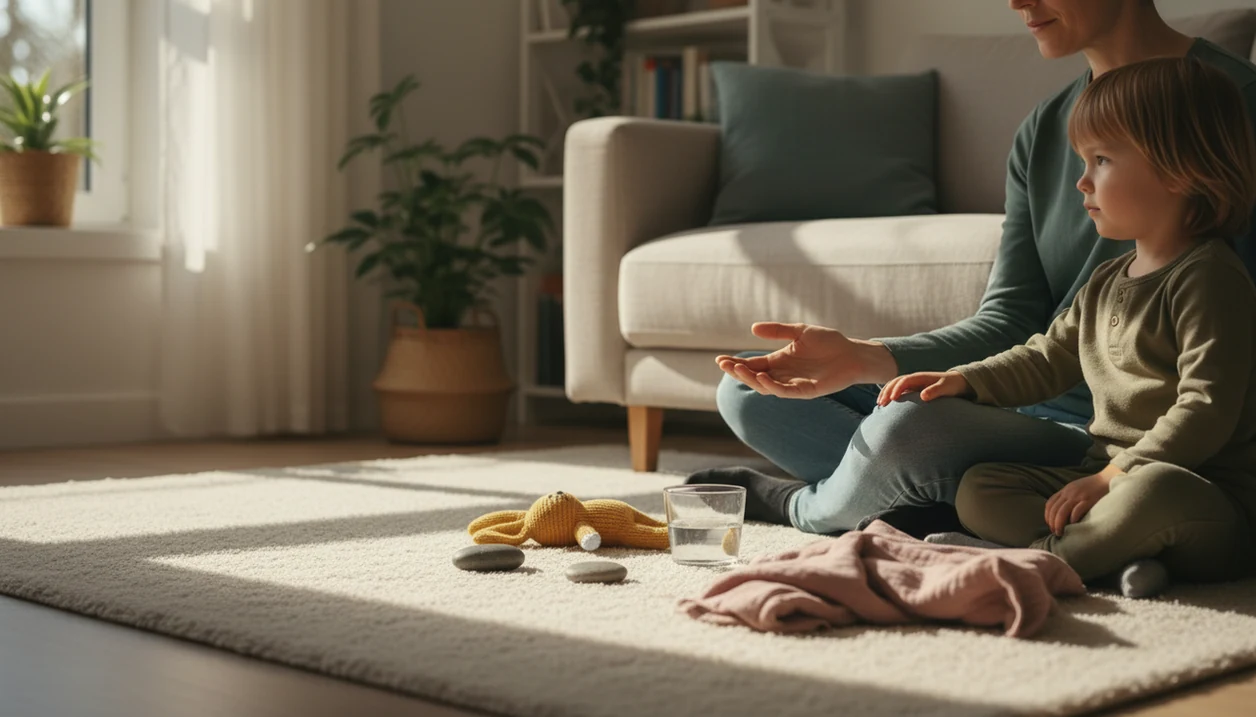
Helping children handle big emotions means teaching them to notice, name, and respond to intense feelings with adult support. Start with a calm adult, a simple feeling label, and one small regulation tool practiced before a meltdown. Anger, fear, sadness, frustration, and anxiety are normal parts of childhood; punishment alone does not teach a child how to manage them.
Children build self-regulation through repeated co-regulation: you steady your own body, connect with the child, then offer breathing, grounding, movement, or problem-solving. During an outburst, keep words brief and make safety the priority. Practice short, sensory tools when everyone is calm, so the child has something familiar to try when feelings rise.
The essentials
- Big emotions are normal in childhood; punishment alone does not teach regulation skills.
- Co-regulation comes first: kids borrow an adult’s calm before they can calm themselves.
- Brief secular mindfulness tools work best when practiced during calm moments, not introduced only during crisis.
What Parents Need to Know Before a Big Feeling Peaks
- Big emotions are not automatically misbehavior. A child sobbing over socks or yelling after a screen limit may be overloaded, not plotting against you.
- Co-regulation comes before self-regulation. Kids often need an adult’s steady voice, slower pace, and safe presence before they can use a skill alone.
- Feeling labels matter. “You look disappointed” gives the child language for body sensations, which can reduce intensity and open a small gap for choice.
- Mindfulness should be short and sensory. A five-minute phone timer, feet on tile, or pushing palms into a wall usually fits children better than long stillness.
- The evidence is useful, but modest. Per the CDC’s child mental health data, about 9.4% of U.S. children ages 3-17 have diagnosed anxiety, and about 4.4% have depression (CDC: CDC guidance). A randomized-trial meta-analysis of mindfulness programs for children and adolescents found small but significant mental-health benefits, not dramatic cures (Dunning et al., Journal of Child Psychology and Psychiatry: Jcpp.12980).
For young children, brief meditation for kids works best when it feels like practice, not a performance.
Child Nervous System Signals During Big Emotions
A child’s big emotion is often a body alarm: breathing gets faster, muscles tighten, thinking narrows, and ordinary requests can feel impossible. Mindfulness helps by giving the child a simple attention anchor while the adult provides safety and pace.
This is why the adult’s first job is not to win the argument. It is to lower the child’s arousal enough that language, choices, and repair can work again.
Here is how it works. When stress arousal rises, the child’s nervous system shifts toward protection. That means less flexible thinking and more fight, flight, freeze, or collapse. A calm adult face, lower voice, relaxed shoulders, and fewer words can signal, “You are safe enough to settle.” Not magic. Biology plus repetition. Understanding your child’s developing brain can help you respond with connection and clear limits during emotional moments.
Feeling labels help connect a child’s body signals with words: “Your calves look tense, and your heartbeat feels fast, maybe this is anger or fear.” From there, breath, movement, sound, touch, and sensory cues can give attention somewhere safe to land, like noticing a cotton sleeve on the wrist after a hard school pickup. You can also teach kids about the brain using simple explanations that connect body signals with feelings and choices.
5-Step Big Emotions Plan for Parents and Caregivers
Use this plan when emotions are rising, then practice it again when everyone is calm. The order matters because correction lands poorly when a child’s body is already in alarm mode.
- Pause yourself first. Feel your feet on carpet or floor, soften your jaw, and take one slower breath before speaking.
- Lower the demand. Move closer if safe, use fewer words, and reduce extra noise, questions, or lectures.
- Name and validate. Say, “You’re really frustrated that it’s time to stop. That’s hard.”
- Offer one regulation choice. Try belly breathing, a wall push, five-senses grounding, or a quiet space with a familiar object.
- Problem-solve after calm returns. Later, ask what happened, what repair is needed, and what to try next time.
For many families, parent and child breathing exercises are easier when practiced before homework, not during the homework blowup. A simple parent and child breathing exercises routine can make the steps feel familiar.
Big Emotions Tips by Age: Toddlers, Kids, and Teens
Support should change with age, language, and nervous system needs. A toddler needs safety and closeness; a teen usually needs respect and some control over the plan.
| Age group | What helps most | What to avoid |
|---|---|---|
| Toddlers and preschoolers | Short words, physical safety, sensory play, adult closeness | Long explanations, forced eye contact, too many choices |
| School-age children | Feeling words, breathing games, movement breaks, repair talks | Shaming, sarcasm, solving too soon |
| Teens and preteens | Autonomy, privacy, body-based tools, collaborative problem-solving | Public correction, lectures, treating distress as drama |
Toddlers and preschoolers
Use phrases like “mad body” or “sad face,” then offer squeezing a pillow or stomping like a bear. For younger kids, short meditation for toddlers should feel playful and brief.
School-age children
Try four-square breathing, a hallway movement break, or a two-sentence repair conversation after the storm.
Teens and preteens
Ask before coaching. Neurodivergent children and children with trauma histories may need adapted tools, sensory supports, or professional guidance.
When big emotions follow a death
After a death, anger or withdrawal may be part of grief rather than a behavior problem alone. Preschoolers may ask the same questions repeatedly because they do not yet understand that death is permanent. Older children may express grief through irritability, play, bodily complaints, or changes at school. The NHS guidance on children and bereavement explains how responses differ with age.
Use direct language: say the person died and their body stopped working, rather than saying they went to sleep. Answer the question the child asks, and expect them to return to it later. A calming exercise can support a difficult moment, but it does not replace conversations about the loss. Seek assessment when grief seriously disrupts daily functioning; suicidal statements or self-harm require immediate safety action and urgent evaluation.
Everyday upsets versus distress that needs assessment
Home mindfulness support is best for everyday emotional storms, not for replacing assessment when distress is persistent, severe, unsafe, or disrupting daily life. It can help families create repeatable pauses around frustration, transitions, bedtime, sibling conflict, homework stress, and mild anxiety-driven upset.
| Best for | Not ideal for |
|---|---|
| Everyday frustration after limits | Self-harm talk or threats |
| Bedtime resistance and transition stress | Aggression that is escalating |
| Sibling conflict and repair practice | Distress that persists for weeks |
| Homework tension and mild worry | Major school, sleep, eating, or social impairment |
CDC child mental health data reminds us that some children need more than home tools. Anxiety and depression can show up as irritability, anger, shutdowns, or outbursts. Clinicians typically recommend assessment when symptoms are persistent, impairing, or connected to safety concerns. Mindfulness is a support skill, not a diagnosis or treatment plan.
6 Mindfulness Activities for Kids With Big Emotions
These activities work best when practiced during calm moments. Keep them short, secular, and concrete.
- Teddy bear belly breathing. Have the child lie down with a stuffed animal on their belly and watch it rise and fall.
- Five-senses grounding. Name five things seen, four felt, three heard, two smelled, and one tasted.
- Four-square breathing. Trace a square with a finger: breathe in, hold, breathe out, pause.
- Mindful walking or animal movement. Walk slowly like a turtle or stretch like a cat across the rug.
- Hand-on-heart phrase. Try, “This is hard, and I can be kind to myself.”
- Sound listening. Ring a bell or tap a cup, then listen until the sound disappears.
Tools like Mindful.net can support adult practice or family routines, but they are not required.
School and Home Routines for Big Emotions Practice
How can families and teachers make emotion skills stick? Use predictable daily moments, not only crisis moments.
Transitions, homework, meals, car rides, and bedtime are natural practice points. A classroom bell followed by one breath can become a cue. At home, a child can press feet into the floor before opening a math worksheet. Sleep, routine, clear expectations, and adult modeling all reduce the load on a child’s coping system.
Try short scripts: “Pause. Name it. Pick one tool.” Or, “Your body looks wound up. Wall push or quiet corner?” Teachers can use regulation corners, movement breaks, and repair conversations after conflict.
Research on school-based mindfulness is promising but not huge. A randomized-trial meta-analysis found small but significant improvements in youth mental-health outcomes (Dunning et al.: Jcpp.12980). One Inner Explorer school study reported improvements in teacher-rated behavior after a daily audio-guided mindfulness program, but no single program works for every child (Bakosh et al., Frontiers in Psychology: Full). A steady family mindfulness routine often matters more than a perfect script.
Practice one calming tool before emotions rise
A calm moment before homework or bedtime gives you time to practice together without asking a distressed child to learn something new. Try the free breathing timer for a brief, comfortable breathing practice, or use a short guided meditation in the Mindful.net app. Stop if breath focus increases discomfort; movement or a sensory anchor may suit the child better. Persistent, severe, or unsafe distress needs professional assessment, not more app practice.
Limits of Home Mindfulness
- Mindfulness supports children but does not replace professional assessment, therapy, school evaluation, or medical care.
- Breathing can worsen distress, while meditation for anxious kids may support coping but should not delay needed care.
- In the U.S., call or text 988 for self-harm talk, suicidal thinking, or safety concerns; immediate danger requires emergency services.
- Outside the U.S., use your local emergency or crisis line for safety concerns.
Questions about children's big emotions
How do I calm a child during a meltdown?
First make the situation safe and steady yourself. Use a quieter voice, fewer words, and less stimulation. Name the likely feeling without arguing about it, then offer one familiar option, such as a wall push or quiet space. Save explanations, problem-solving, and repair for after the child is calmer.
Does validating feelings let children get away with bad behavior?
No. Acknowledging a feeling is different from allowing a harmful action. You can say, “You are furious that playtime ended. I will not let you hit.” Keep the limit clear and protect everyone involved. Once calm returns, help the child practice an acceptable response and repair any harm.
At what age should a child be able to calm themselves?
There is no single age when children should manage every intense feeling alone. Young children rely heavily on caregivers, and more independent regulation develops through repeated support. Toddlers need brief words and safety; school-age children can try choices and problem-solving. Teens still benefit from support that respects privacy and autonomy.
What if breathing exercises make my child more anxious?
Stop the breathing exercise rather than insisting they finish. Some children feel worse when attention turns to their breath. Offer a different anchor, such as pressing feet into the floor, pushing against a wall, listening to sounds, or gentle movement. Practice during calm moments and let the child's response guide the choice.
Why does my child get angry or shut down over small things?
The visible trigger may not explain the whole reaction. Frustration, tiredness, anxiety, grief, communication difficulties, or an unsafe situation can affect how a child responds. Notice when it happens, what comes just before it, and what the behavior communicates. Persistent or escalating distress deserves assessment rather than an assumption of defiance.
How can I teach emotion skills when my child is calm?
Choose a predictable moment, such as before homework or at bedtime. Practice one short tool together: name a feeling, press feet into the floor, listen for sounds, or try comfortable breathing. Model the same pause yourself. Familiar practice is more useful than presenting several new techniques during a meltdown.
When should I seek help for my child's big emotions?
Arrange an assessment when distress persists, escalates, or disrupts school, sleep, relationships, or ordinary activities. Do not wait indefinitely because big feelings can be developmentally normal. Self-harm, suicidal statements, or credible threats to hurt someone require immediate safety action and urgent professional evaluation. Use emergency services when there is immediate danger.