
Managing Emotions as a Parent: Pause, Set Limits, and Repair


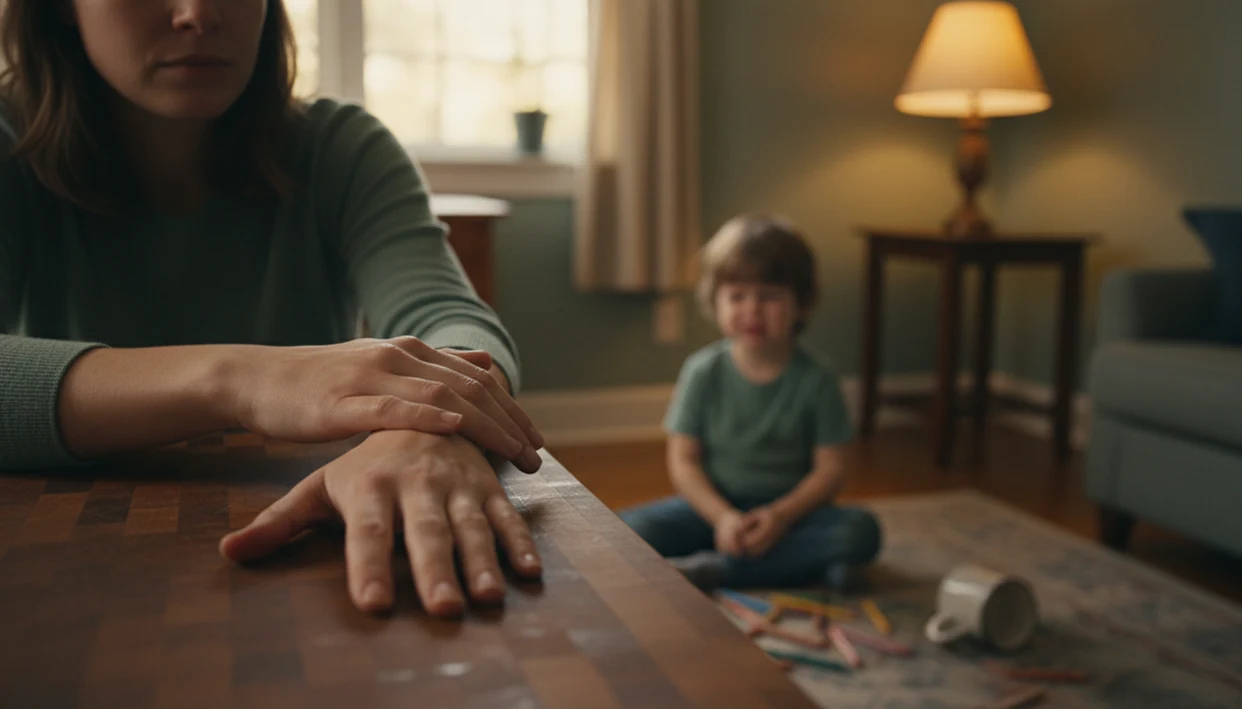
Managing emotions as a parent means noticing anger, anxiety, or overwhelm early enough to pause, settle your body, and choose a response rather than react automatically. The goal is not constant calm. It is to recover, take responsibility when you hurt someone, and show your child how to handle strong feelings without abandoning a clear boundary.
Start with a signal you can recognize: a clenched jaw, a hot face, racing thoughts, or a fast heartbeat. Before speaking, try one slow breath or feel your feet against the floor. After yelling or snapping, offer a brief, age-appropriate apology and explain what you will do differently. These are small practices for difficult moments, not a demand to become a perfect parent.
Definition: Managing emotions as a parent is the practice of recognizing your internal stress signals, regulating your nervous system, and choosing a values-based response instead of reacting automatically.
The essentials
- Start with body cues: tight jaw, hot face, racing thoughts, or a fast heartbeat are signals to pause before you speak.
- Use short secular mindfulness tools: one slow breath, grounding through the feet, or a 60-second reset can be enough in real parenting moments.
- Repair matters: when you yell or snap, a brief apology and age-appropriate explanation teaches children that emotions are workable.
Five principles for responding instead of reacting
- Parent emotion regulation shapes how children learn to handle their own feelings. Kids study tone, facial expression, posture, and follow-up more than lectures.
- Mindfulness practices such as breathing, body scans, and brief pauses can reduce parenting stress and improve emotional control for many parents.
- Early body signals matter. A clenched jaw, hot cheeks, or shoulders creeping upward can warn you before yelling takes over.
- Self-compassion helps parents recover after mistakes. It supports responsibility without turning one bad moment into “I’m a terrible parent.”
- Small daily practices are usually more realistic than rare perfect meditation sessions. A phone timer set for 5 minutes beats waiting for a quiet hour.
Tiny counts.
For overwhelmed parents, a repeatable 60-second pause is often easier than a long meditation because it fits the kitchen, car, hallway, or bedtime doorway.
How stress speeds up your parenting reactions
Managing emotions as a parent works by helping the nervous system shift out of threat mode before a reaction becomes automatic. Stress can narrow attention, speed up speech, and make flexible thinking harder.
Here is the basic mechanism: when your body reads a child’s scream, defiance, or delay as a threat, the stress response prepares you to fight, flee, freeze, or control. Breathing, grounding, and pausing add a small gap between impulse and response. In plain language, you give your brain a second chance. You can also teach kids about the brain using simple explanations of why strong feelings sometimes make thoughtful responses harder.
Children also borrow regulation from adults. A steadier voice, softer face, and repaired mistake can help a child return from overload. A 2024 meta-analysis found that mindful parenting is positively associated with children’s emotion regulation and negatively associated with internalizing and externalizing problems. Source: add the URL for the specific 2024 mindful-parenting meta-analysis referenced here. The silence after the final chime can feel small, but that pause is the practice. Learning how a child’s brain responds to yes can help you pair emotional reassurance with a firm boundary.
Mindfulness practices and meditation techniques for beginners and daily life deliver more noticing and returning, not a guarantee that parenting will feel easy.
Protect emotional safety without giving up boundaries
Managing emotions as a parent protects emotional safety by reducing repeated harsh anger, criticism, and verbal aggression. Calm does not mean permissive; it means regulated leadership.
Research from 2020 estimated that about 40% of U.S. children are exposed to potentially damaging levels of parental anger, criticism, or verbal aggression, which is linked at the population level with higher risks of anxiety and behavior problems. Source: add the URL for the 2020 study or report behind the 40% estimate. That number is not a verdict on one hard night. It is a reminder that patterns matter.
A firm boundary can still be calm: “I won’t let you hit,” said in a low voice, is different from a shaming speech. Repair also matters. After yelling, a parent can name what happened, take responsibility, and reconnect without making the child manage the adult’s guilt. For child-focused support, calm down meditation for kids can pair well with parent regulation.
Spot your warning signs before you raise your voice
Parent trigger signals are the early warning signs that your body, thoughts, or behavior are moving toward reactivity. Name your top three, then build your pause plan around them.
Body signals: tight chest, clenched jaw, heat in the face, shallow breath, fast heartbeat, or hands gripping the steering wheel harder than needed.
Thought signals: all-or-nothing thinking, “they never listen,” urgency, replaying disrespect, catastrophizing, or imagining the whole evening ruined.
Behavior signals: louder voice, pointing, threats, sarcasm, snapping instructions, slamming cabinets, or leaving abruptly without explaining. Understanding children’s emotions and behavior can help you respond to the feeling beneath an outburst while keeping limits clear.
Write three personal signals on a note in your phone. Mine would not be poetic: jaw, speed, lecture. That is enough information to act before the lecture turns into a speech nobody can hear.
The jaw unclenches behind closed lips. Start there.
A five-step pause for meltdowns, arguments, and refusals
Use this five-step plan when a child melts down, argues, delays bedtime, fights with a sibling, or refuses homework. The steps are short because hard moments do not leave room for a long script.
- Pause before speaking, even for one breath, and plant your feet on carpet, tile, or pavement.
- Regulate your body with a slow exhale, relaxed shoulders, or a hand on your chest where the tightness is strongest.
- Say fewer words than you want to say: “I’m getting too loud. I’m going to slow down.”
- Set the boundary clearly: “The tablet is done,” “I won’t let you hit,” or “Homework starts after snack.”
- Repair later if needed: name what happened, take responsibility, and say what you’ll try next time.
How to use managing emotions as a parent in real life: practice the steps once when things are calm. It is harder to invent a plan beside a crying child at 8:47 p.m.
Practice brief resets during ordinary family routines
Small mindfulness habits work best when they attach to ordinary family routines. You are training attention in moments that already exist.
Doorway breath: take one mindful breath before entering a room, especially after work or before waking a child.
Three-breath reset: use three slow breaths before responding to whining, arguing, or disrespect. Belly rising against a waistband is enough to notice.
Waiting scan: do a brief body scan while washing hands, sitting in the car, or waiting for a child to find shoes.
Self-compassion phrase: after a mistake, try, “That was hard, and I can repair.” It is accountable without piling on shame. Helping kids recognize their inner critic gives them another way to acknowledge mistakes without treating them as character flaws.
Tools like Mindful.net can support beginner-friendly mindfulness practices and meditation techniques when you want guided structure. If you prefer guided audio, Mindful.net’s Mindfulness Practices App can make the practice easier to repeat because the timer, voice, and session length are already chosen. A family mindfulness routine may also help if everyone benefits from the same short pause language.
Avoid lectures, dropped boundaries, and repeated apologies
Common mistakes usually happen when a good tool gets used at the wrong time or with too much pressure. The fix is not more perfection; it is choosing the next small move that fits your body, your child, and the moment.
- Stop explaining when your body is still activated. A racing heart and fast voice are signs to pause first, not add a longer lecture.
- Keep the boundary even while you regulate. Mindfulness should help you say “I won’t let you hit” more steadily, not talk yourself out of a needed limit.
- Apologize once or twice with clarity, then let your child have their own reaction. Repeating “I’m so sorry” until they comfort you shifts the emotional job onto them.
- Practice during calm minutes, not only during blowups. One doorway breath on an ordinary Tuesday makes the bedtime pause easier to find.
- Look for load-bearing stress before blaming your character. Sleep loss, work pressure, hunger, isolation, and lack of support can shrink anyone’s window of patience.
Troubleshooting keeps the practice practical. You are not failing because a hard moment was hard.
Match the support to the parenting problem
Parent mindfulness fits everyday reactivity, but it is not a replacement for care when safety, trauma, or serious mental health concerns are involved. Compare your situation honestly.
| Fit | Better match | Not ideal for |
|---|---|---|
| Snapping or lecturing | Short pauses and fewer-word scripts | Ongoing fear of harming yourself or others |
| Overstimulation | Grounding through feet, breath, or sound | Domestic violence or unsafe home dynamics |
| Beginner practice | Secular 1 to 5 minute exercises | Replacing therapy, medical care, or crisis support |
| Bedtime stress | Predictable reset routine | Ignoring sleep loss, work pressure, or childcare strain |
| Wanting repair skills | Apology plus next-step plan | Pretending structural stress is only a mindset issue |
Mindful parenting usually works best when it is paired with realistic supports, while therapy or safety planning fits situations where risk, trauma, or impairment is present.
Reduce the demands, not just your reaction
A pause does not create childcare, protect sleep, or remove an unsafe workload. In a CDC survey conducted in late 2020 and early 2021, approximately 85% of people combining parenting with unpaid adult caregiving reported at least one adverse mental-health symptom. This was a cross-sectional survey during pandemic conditions, not an estimate of current prevalence or proof that caregiving caused those symptoms. It does show why advice for parents should include practical support, not only emotional regulation.
After a recurring flashpoint, ask what demand could change before it happens again. Possibilities include sharing a task, protecting a rest period, requesting school or workplace accommodations, or arranging respite. Parents caring for children with additional needs may also need accessible communication and services. A caregiver-adapted mindfulness trial protocol accounts for caregiving demands, but a protocol is not evidence of effectiveness. Brief practice can support deliberate action; it cannot replace the help a family needs.
When to Get Professional or Crisis Support
Get professional or crisis support when anger feels frightening, unsafe, or bigger than you can reliably manage. Mindfulness can be a helpful pause, but it should never be used to endure harm, hide danger, or talk yourself out of protection.
If anyone might be hurt, including you, your child, a partner, or another person in the home, treat that as urgent. Therapy can also help when anger feels uncontrollable, when you are scared by your thoughts or behavior, or when old trauma gets pulled into current parenting moments. Medical support matters too if depression, panic, substance use, sleep disruption, or trauma symptoms are making regulation harder.
- Move toward immediate safety if there is risk of harm, even if that means leaving the room, calling someone nearby, or using local emergency help.
- Contact local crisis, emergency, domestic violence, or child-safety resources when danger is immediate or escalating.
- Tell a trusted professional what is happening plainly: “I’m afraid I might hurt someone,” or “I don’t feel safe at home.”
- Ask for therapy or medical care when anger, depression, substance use, or trauma symptoms keep returning.
- Refuse to use mindfulness as a reason to tolerate violence, coercion, threats, or unsafe dynamics.
What to say to your child after yelling
What should you say after yelling at your child? Repair should be brief, honest, and steady, not self-punishment or repeated apologizing that asks the child to comfort you.
A useful repair has four parts: name what happened, take responsibility, reassure the child, and state the next plan. Keep it age-appropriate. A preschooler does not need a detailed stress explanation. A teen may need more respect and fewer excuses.
Repair models accountability and emotional learning. It tells children, “Big feelings happen, and people can come back to each other.” If your child also wants a simple practice, parent and child breathing exercises can give both of you shared language.
Repair script for young children
“I yelled. That was too loud, and it may have scared you. You are safe. Next time I will take a breath and use a calmer voice.”
Repair script for older children
“I was frustrated, but yelling was not okay. I’m sorry. The limit still stands, and next time I’m going to pause before we keep talking.”
What can help you reset before bedtime gets tense?
During a tense bedtime routine, a pause may be easier to practice before the next instruction than during an argument. The Mindful.net app offers breathing exercises for that pause; the site's white noise and ambient sound player is an optional background for a quiet break. Neither addresses the reason bedtime keeps becoming difficult. Practical help, a change in routine, or professional support is a better next step when exhaustion, persistent distress, or safety concerns are driving the conflict.
Limits of Parenting Mindfulness
- Seek professional help for trauma, clinical depression, substance use, domestic violence, or safety concerns rather than relying on mindfulness.
- Progress is gradual, stress or sleep loss can trigger reactions, and breathing or body scans may feel activating.
- Some mindful parenting studies use small or specific samples, so findings may not apply to all families.
- If bedtime is hardest, bedtime meditation for children may support the child’s routine.
Questions about parenting anger and overwhelm
Why do I get angry so quickly with my child?
Stress can narrow your attention and make a response feel urgent. Sleep loss, ongoing demands, and familiar triggers can make pausing harder. Notice what happens just before you snap, such as jaw tension or faster speech. Anger that feels frightening or uncontrollable needs more support than a breathing exercise.
How do I stop myself from yelling in the moment?
Pause before the next sentence and feel your feet on the floor. Try a slow exhale, release your shoulders, and shorten your words: “I'm getting too loud. I'm going to slow down.” Keep any necessary safety boundary. The aim is a steadier response, not an instant disappearance of anger.
What should I say after yelling at my child?
Name what happened and take responsibility: “I yelled. That was not okay, and it wasn't your job to calm me down.” Then give a simple plan for next time. Keep the explanation age-appropriate, avoid blaming the child, and let them have their reaction without asking them to reassure you.
Can I be calm and still set firm limits?
Yes. Regulation does not mean allowing hitting, dropping a rule, or agreeing to every request. Say the boundary in fewer words, such as “I won't let you hit” or “The tablet is done.” You can acknowledge disappointment while holding the limit. Your child does not have to like the boundary.
How can I stay calmer during bedtime battles?
Practice a brief reset before bedtime begins, rather than waiting until you are already shouting. Notice your body signals and choose one short boundary statement in advance. If conflict keeps returning, look at the routine and available help. A pause cannot make up for ongoing sleep loss or an unmanageable workload.
Does being kind to myself excuse bad parenting?
Self-compassion means acknowledging a hard moment without turning it into a verdict about your whole character. It still includes responsibility: apologize, hold needed boundaries, and change what you can. “That was hard, and I can repair it” is different from dismissing yelling or expecting your child to accept repeated harm.
When should I get help for parenting anger?
Seek professional support when anger, anxiety, low mood, or sleep disruption persists, interferes with basic care, or feels beyond your control. Using substances to cope is another reason to seek help. Thoughts of harming yourself or someone else, or being unable to keep your child safe, require urgent local emergency or crisis support.