
Meditation for Siblings: Short, Voluntary Practices to Try Together


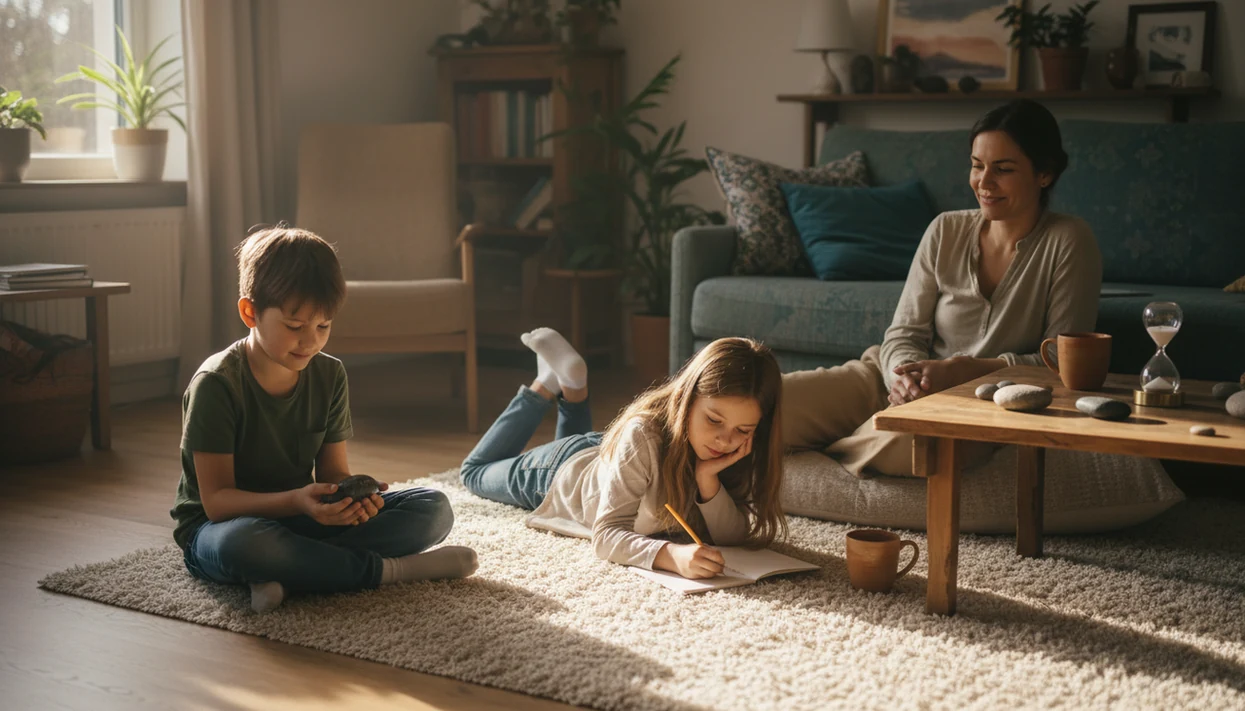
Meditation for siblings is a short, voluntary shared pause that helps children notice feelings and practice taking turns, not a way to force them to calm down or get along. This secular family practice can involve breathing, listening, movement, or naming feelings without pressure to feel a certain way. Start with 2-5 minutes and one simple activity.
A breathing game, sound-listening exercise, sensory scavenger hunt, or gratitude round gives brothers and sisters something specific to notice together. Keep the timing predictable, offer a choice, and let a child sit out. These pauses can support everyday transitions, but they are not punishment or conflict repair on demand. When a child is frightened or someone is getting hurt, supervision, safety measures, and professional support come first.
The essentials
- Keep sibling meditation short, predictable, and choice-based.
- Use playful shared practices like breathing games, sound listening, sensory scavenger hunts, and gratitude rounds.
- Do not use meditation as punishment, conflict repair on demand, or a substitute for safety and professional support.
Meditation for siblings as a shared family pause
Meditation for siblings is a brief family attention practice where brothers and sisters pause together and notice one simple thing. That might be breathing, sound, body sensations, movement, or one kind thought.
The goal is shared noticing, not forced harmony. A 5-minute guided meditation can help some children settle before bed. A short body scan may work after a loud afternoon. A gratitude round can give each child one turn to speak. Quiet listening can be as simple as hearing the refrigerator hum, a car outside, and then the room again.
Start small. If the older child rolls their eyes and the younger one pokes the timer, keep your voice steady and end on schedule instead of turning the pause into a lecture.
If one child wiggles or laughs, that does not mean the practice failed. For younger children, our broader meditation for kids guide gives age-friendly starting points.
Five facts about sibling mindfulness at home
- Sibling mindfulness works better as an option than a consequence. “Want to try a breathing game?” lands differently from “Go meditate until you are calm.”
- Short practices fit children better than long silence. Most families do better with 2-5 minutes, especially when a phone timer is visible on the table.
- Mindfulness may help children notice emotions before acting. A 2016 systematic review of 24 school-based mindfulness interventions found small to moderate gains in cognitive performance and resilience, with smaller gains in emotional problems NIH research. For school age siblings, mindfulness for elementary students offers practices suited to classroom routines and everyday attention.
- Predictable practice usually beats emergency use. A bedtime pause three nights a week is more realistic than introducing meditation during a shouting match.
- Caregiver modeling matters. A 2019 systematic review and meta-analysis of 33 randomized controlled trials found small positive effects on mindfulness and executive functioning in children and adolescents PubMed research.
For siblings, predictable two-minute practice is often easier than long guided meditation because children can remember the pattern and finish before boredom takes over.
What family mindfulness research says about shared practice
A 2021 systematic review and meta-analysis of family mindfulness programs examined 20 interventions involving 1,083 children and 1,131 parents. It found small positive effects on family functioning, parental mental health, and child mental health. Those findings support modest expectations, not a promise that meditating together will end sibling rivalry.
The programs generally involved parents and children practicing in parallel, rather than necessarily sitting together. That distinction matters at home: a child who declines a shared session is not rejecting the only possible form of family mindfulness. A caregiver can practice separately, and siblings can choose different activities. The review does not establish that joint sibling meditation is better than separate practice.
How shared attention and adult support work
A common myth is that sibling meditation has to make children instantly peaceful with each other. More often, it works through attention practice and co-regulation: children notice one simple anchor, such as a shared sound, cold hands after school pickup, or the wobble of a ceiling fan, then gently return when attention drifts.
Co-regulation is the adult part. A calm caregiver voice, a clear timer, and a known ending can make the pause feel safer. The adult is not performing calm. They are holding the shape of the practice.
The small skill is the gap.
A child may still feel angry when a sibling grabs the blue marker. The practice may help them notice “hot face” or “tight fists” before yelling. That gap does not cure sibling rivalry or guarantee better behavior. Small school-based mindfulness trials have linked mindfulness instruction with attention and emotional-regulation gains, but study designs, ages, and outcomes vary, so treat the findings as suggestive rather than sibling-specific NIH research. The same pause before reacting can support mindful social media habits for kids when online interactions stir strong feelings.
For siblings, the useful technique is the one they can repeat without a lecture: one cue, one timer, and one known ending.
Start a two-minute sibling practice
Use mindfulness for brothers and sisters at neutral times, with choice built in. Do not begin during peak conflict, when one child is crying and another is defending themselves from the hallway.
- Choose a low-stress time. Try after school snack, before screens, or before lights-out. For screen transitions, a plan for reducing kids phone use can support clear, consistent family expectations.
- Set a short timer. Start with two minutes, or five for older children and teens.
- Offer two choices. Ask, “Would you rather do sound listening or belly breathing?”
- Model participation. Sit nearby and practice too, even if one child watches from the couch.
- Allow an opt-out. Offer drawing, quiet reading, or sitting apart as a respectful alternative.
- Close with one word. Invite each child to say “sleepy,” “mad,” “fine,” or pass.
A simple family mindfulness routine can help make the timing predictable instead of invented on the spot.
Choose a practice for each child's age and energy
The most useful kids shared meditation format depends on age, energy, and the moment. Movement or sensory choices often work better for children who dislike stillness.
| Practice | Best for | Not ideal for | Mixed-age adaptation |
|---|---|---|---|
| Breathing buddy | Bedtime or couch rest | Kids who dislike lying still | Younger child uses a stuffed animal; older child counts breaths |
| Sound listening | Transitions and car arrivals | Very noisy rooms | One child names near sounds, another names far sounds |
| Body scan | Winding down | Children who feel anxious focusing inward | Keep it to feet, hands, shoulders |
| Sensory scavenger hunt | Active children | Moments needing quiet | Find 3 colors, 2 textures, 1 sound |
| Gratitude round | Family meals or bedtime | Fresh conflict | Each child may pass |
| Mindful movement | Restless afternoons | Unsafe roughhousing | Use slow stretches with personal space |
For bedtime, bedtime meditation for children can be easier than a daytime practice because the routine already has a clear ending.
Sibling mindfulness rules that keep practice non-coercive
Sibling mindfulness should not become discipline with softer words. Avoid phrases like, “Go meditate until you are calm,” or “You can come back when you are mindful.” Forced calm can make children feel ashamed of normal anger, jealousy, or disappointment. Pair optional pauses with affirmations for kids that acknowledge difficult feelings without demanding calm or pretending everything is fine.
Use opt-in language instead: “Would you like a breathing game or the quiet corner?” Another option is, “I’m going to take three breaths before I answer. You can join or just sit nearby.”
Safety limits are separate. If a child is hitting, throwing, blocking a doorway, or scaring a sibling, the adult’s job is to stop the unsafe behavior first. Meditation comes later, if at all.
Caregivers can still model one quiet breath when children decline.
Short sibling scripts for school mornings and bedtime
Use these short scripts when the house is already safe enough to pause. Read slowly, and let children keep their eyes open if they want.
Before-school breathing script: “Sit or stand where your feet can feel the floor. Breathe in while you count one. Breathe out while you count two. Notice your backpack, your shoes, and one sound in the room. One more breath, then we move.”
Bedtime body scan script: “Let your toes be heavy. Let your knees rest. Notice your belly moving under the blanket. Soften your forehead under your hair. If your mind jumps to tomorrow, just say ‘thinking’ and come back to the blanket.”
Repair-adjacent script: “No one has to apologize right now. Put one hand on your lap. Notice one feeling in your body. You can say one word, pass, or ask for space.”
For anxious children, gentler options are covered in meditation for anxious kids.
Image caption: sibling listening practice
Two siblings sitting apart with a caregiver nearby, practicing a short listening meditation for siblings.
Offer sound listening before a transition
Before bedtime or another routine transition, siblings can choose a sound from the free white noise and ambient sound player and listen briefly together. The Mindful.net app also offers breathing exercises for children who want that option. Ordinary room sounds work just as well for a simple listening activity; during active conflict, adult supervision and separation take priority.
Sibling Meditation Limits
- Children’s mindfulness evidence is promising but limited, not specific to siblings, and needs more rigorous research 38331.
- Benefits are usually modest and gradual, and one calm session will not resolve longstanding sibling rivalry.
- Seek professional support for significant aggression, trauma, bullying, or mental health concerns rather than relying on meditation.
- Some children feel more anxious, restless, or resistant during quiet practices, so caregivers still need judgment and safety limits.
When to seek professional support for sibling conflict
Seek professional support when sibling conflict includes injury, threats, bullying, trauma reminders, or a child becoming increasingly afraid at home. Meditation can be a helpful family tool, but it should never delay supervision, separation, or safety action.
Support is not a sign that the family has failed. It is one more resource, especially when the same fights keep escalating despite clear rules and calm routines.
- Step in for safety first. Separate children, remove dangerous objects, and stay close when hitting, intimidation, or blocking exits is happening.
- Call the right helper. Start with a pediatrician, licensed family therapist, school counselor, or local crisis service if anyone may be in immediate danger.
- Describe patterns clearly. Note what happens before conflict, who gets hurt or scared, and whether school stress, sleep, trauma, or anxiety seems involved.
- Ask for individualized support. Neurodivergent children may need sensory breaks, visual plans, communication tools, or different expectations for space and repair.
- Keep meditation optional. Use breathing or listening practice only after the home is safe enough to pause.
Sibling meditation questions
Can siblings meditate together if they argue a lot?
Yes, when both children want to participate and the situation is safe. Try a brief activity at a neutral time, rather than immediately after a fight. Shared meditation does not require affection or agreement. If conflict involves fear, threats, or injury, address safety and seek support instead.
How long should siblings meditate together?
Start with two minutes, with a clear ending that both children understand. Older children and teens may choose five minutes. There is no need to extend a session because it went well. A short, predictable pause is the aim, not proving that children can sit still.
What is a simple meditation for siblings of different ages?
Try sound listening: each child notices one nearby sound and one farther away, then takes a turn naming them. Keep eyes open if preferred. A younger child can simply point toward a sound, while an older child describes it. Avoid turning the activity into a contest.
What should I do if one sibling refuses to meditate?
Let that child opt out without losing a privilege or being called uncooperative. Offer drawing, quiet reading, or sitting apart while the other child participates. Ask again at another neutral time, but do not make joining the practice a condition for returning to family activities.
Can meditation stop sibling fights?
Meditation may help children notice feelings before acting, but it cannot reliably stop fights or resolve an ongoing rivalry. Adults still need to set limits, hear each child's account, and address harmful behavior. Do not use a breathing exercise in place of stopping hitting, intimidation, or blocked exits.
When is the best time for siblings to meditate?
Choose a predictable, relatively calm point in the day, such as after a snack, before screens, or before bed. Offer two activities and a short timer. Avoid starting at peak conflict, when one child is crying or frightened and another is still defending what happened.
What if breathing exercises make a child uncomfortable?
Stop the exercise and offer an outward-focused activity, such as listening to sounds or noticing objects in the room. Some children dislike stillness or feel anxious when attention turns inward. They can stand, move, keep their eyes open, or skip the practice. Comfortable participation matters more than completing a script.