
Meditation for Anxious Kids: Short Practices, Choices, and Stop Rules


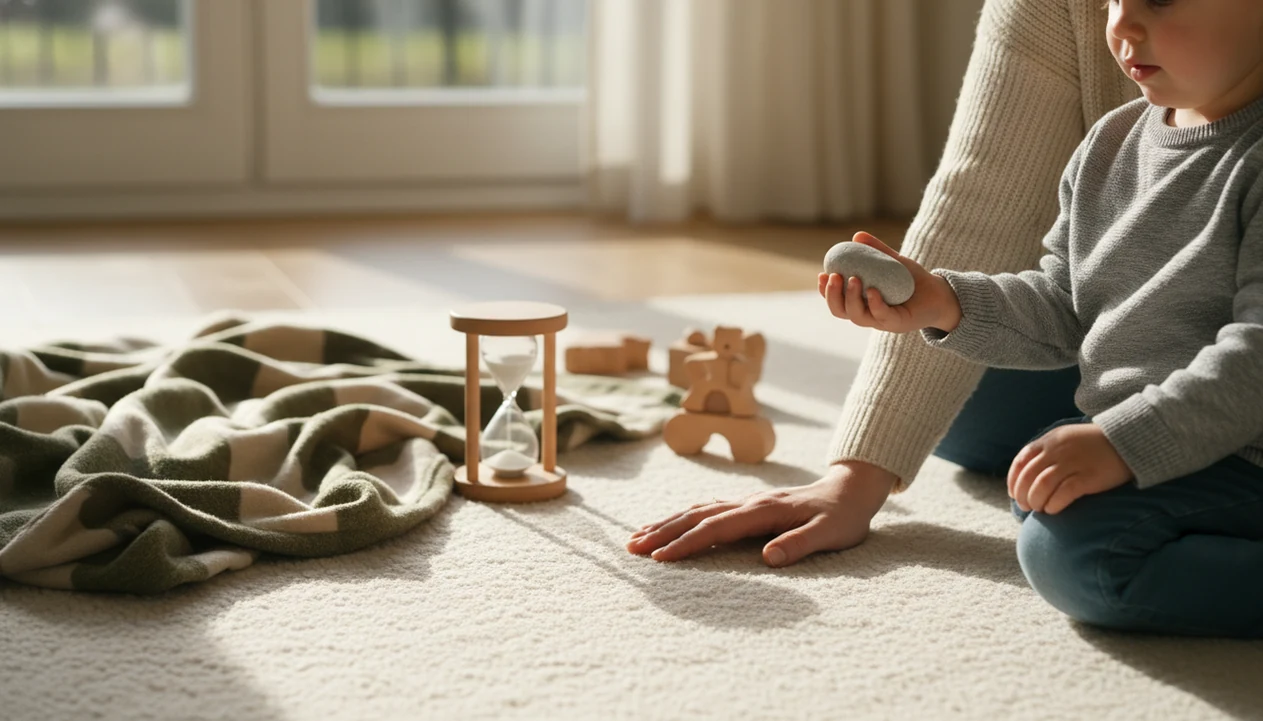
Meditation for anxious kids is a short, child-friendly attention practice that can help a child pause, notice worry, steady their breathing, and feel more grounded. It is a supportive skill, not a treatment or cure. A parent can sit nearby and invite the child to notice a sound, feel their feet on the floor, or follow one comfortable breath. The aim is to notice what is happening, not force calm.
Start with 1 to 5 minutes, offer choices, and stop if distress increases. Keep the practice appropriate to the child's age and comfort with stillness, breathing, and body awareness. This guide is educational support, not a diagnosis, treatment plan, or emergency resource. Anxiety that affects school, sleep, daily life, or safety needs qualified pediatric or mental health support.
The essentials
- Use short practices: 1-5 minutes is often enough for younger or anxious children.
- Focus on safety, grounding, breath, and body awareness rather than forcing calm.
- Seek qualified support when anxiety affects school, sleep, daily life, or safety.
Practice noticing worry, not making it disappear
Meditation for anxious kids is a short, child-friendly way to practice paying attention: to a breath, a sound in the room, a safe image, or a steady object like a library book spine. The goal is not to erase worry, but to help a child notice, pause, and come back to what is happening now.
The goal is not to erase anxiety. It is to help a child relate to worried feelings with a little more steadiness. A parent might sit beside the child on a rug, set a timer for three minutes, and say, “Let’s notice one breath together.” That is enough.
Short and shared works better.
Parent participation matters because anxious children often need co-regulation before self-regulation. In the U.S., the CDC reported that 9.4% of children ages 3-17 had current, diagnosed anxiety in 2022 CDC guidance, which gives useful context for how common anxiety concerns are. Meditation can be supportive, but it is not a diagnosis, treatment plan, or substitute for care. If your family is expecting a baby, pregnancy meditation for partners offers another way to practice supportive attention together.
Five starting points: brief, optional, sensory, shared, supportive
Myth to drop first: anxious children do not need a long, perfectly quiet meditation session to benefit. We usually suggest five safer starting points: keep it brief, make it optional, use the senses, practice alongside them, and remember that mindfulness is support, not a cure or a test of character.
- Short, simple, age-appropriate practices usually fit anxious children better than long silent sessions.
- Children should be invited to notice thoughts, feelings, and body sensations without judgment.
- Breathing, grounding, body scans, and calming imagery are common beginner formats.
- Parent or caregiver co-practice improves safety, consistency, and a child’s willingness to try again.
- Research suggests small-to-moderate anxiety symptom support from youth mindfulness programs, but evidence quality is mixed.
A 2021 meta-analysis found mindfulness-based programs produced small-to-moderate reductions in anxiety symptoms in children and adolescents, with an effect size around 0.35 PubMed research. That is encouraging, but not a promise. In real homes, a child may notice one cool breath at the nostrils, then immediately ask what’s for dinner. That still counts as practice.
When to try a short practice and when to seek support
Kids anxiety meditation support is most reasonable for mild worry, transitions, bedtime settling, big feelings, and learning body cues. It is not enough when anxiety is severe, persistent, unsafe, or stopping normal life.
| Situation | What it may look like | Practical next step |
|---|---|---|
| Best fit | Mild worry, test nerves, bedtime restlessness, transition stress, big feelings after a long day | Try 1-5 minutes with a parent nearby |
| Use caution | Restlessness, sensory sensitivity, frustration with stillness, worry that rises when eyes close | Use grounding, movement, or eyes-open practice |
| Seek support | Panic that worsens with stillness, severe avoidance, school refusal, trauma symptoms, self-harm concerns, daily impairment | Contact a pediatrician, licensed child therapist, school counselor, or emergency support |
Professional care and mindfulness can work together when a clinician recommends it. For a broader age-by-age starting point, our meditation for kids guide covers general practice choices.
Moving attention from worry to present-moment cues
Meditation for anxious kids works by shifting attention from worry loops toward present-moment signals, such as breath, feet, hands, sound, or a safe image. It trains noticing and recovery, not instant control.
Anxiety often reaches the body before a child has words for it. You might see a racing heartbeat, dry lips, quick “I don’t know” answers, stomach discomfort, or a child tracking every change around them at school pickup or during guitar practice. Those cues are not misbehavior by default; they are information a caregiver can meet with steadiness. If you are an expectant caregiver facing your own worry, pregnancy anxiety meditation offers gentle practices focused on your experience.
The simple mechanism is attentional regulation. In plain language, the child practices placing attention somewhere steadier, then returning when the mind runs back to worry. A warm exhale on the upper lip can become one anchor. So can the feeling of socks against carpet.
Mindfulness practices and meditation techniques for beginners and daily life deliver repeatable attention cues, not a guarantee that fear will disappear on command.
The National Center for Complementary and Integrative Health summarizes pediatric mindfulness evidence as promising but still limited, with results varying by condition, program design, and study quality NCCIH overview.
Before You Start: Safety Checks for Anxious Kids
Before you guide meditation, first check whether the child feels safe enough to try a short pause. If safety, panic, or trauma cues are present, skip meditation and use support, grounding, or professional help instead.
- Ask for consent. Say something simple like, “Would a one-minute pause feel okay, or should we do something else?” A child who says no is giving useful information.
- Choose an eyes-open option. If stillness, closed eyes, breath focus, or noticing the body seems to make worry louder, use sound, color, feet on the floor, or a nearby object instead.
- Set a visible timer. Let the child know exactly when the practice ends, even if it is only 30 seconds. Predictability can reduce the trapped feeling.
- Avoid practicing during danger signals. Do not start meditation in active panic, during trauma reminders, when safety is uncertain, or when the child is too overwhelmed to follow you.
- Prepare a fallback. Before breath or body awareness, choose one grounding move: name five things in the room, hold a textured object, press feet into the floor, or step outside together.
Guide a 1 to 5 minute practice with choices
Calming meditation for children is safest when it is brief, choice-based, and easy to stop. The parent’s job is to make the practice feel like support, not a test.
- Set a short time window. Choose 1-5 minutes, and tell the child when it will end.
- Choose a comfortable posture. Let the child sit, lie down, or stand with eyes open, softly focused, or closed.
- Name the feeling gently. Say, “Maybe worry is here,” without analyzing, correcting, or debating it.
- Guide one anchor. Use breath, feet, hands, sound, or a safe image, and return to it once or twice.
- End with choice and praise. Thank the child for trying, then transition back to a normal activity.
Stop if distress rises, the child feels trapped, or the practice becomes a battle. A cushion sliding on hardwood may bother one child more than the worry itself. Adjust the setup. For breath-based practice, parent and child breathing exercises can keep the routine shared and simple.
Grounding for anxious kids during worry spikes
Grounding for anxious kids is used when a child feels flooded, panicky, unreal, restless, or unable to follow a longer meditation. It is more active than relaxation and often works better during high anxiety.
- Feet Press: Ask the child to press both feet into the floor for five seconds, then release.
- Five Things You See: Invite the child to name five visible objects, without needing to feel calm.
- Hand-on-Heart: Offer one hand on the chest or belly, only if that feels comfortable.
- Sound Count: Count three sounds in the room, such as a fan, hallway step, or clock.
- Object Description: Hand the child a safe object and ask for color, shape, texture, and temperature.
Grounding keeps the eyes open and attention outward or sensory. That can feel safer than closing the eyes during a spike. A child standing on a stairwell landing can take one mindful step, name the railing color, and come back into the moment.
Practice beside your child without grading their calm
Parents can make mindfulness for anxious children safer by practicing with the child instead of instructing from across the room. “Let’s try one breath together” usually lands better than “calm down.”
Keep performance out of it. Don’t grade stillness, closed eyes, deep breathing, or whether anxiety disappears. A child who wiggles through 60 seconds may still be learning body cues. The conference room chair creaking softly during your own work pause is a reminder: adults are not still all the time either. Expectant caregivers who prefer reassuring words can try pregnancy affirmations meditation for their own pauses, without asking children to participate.
Adapt the practice to age, sensory sensitivity, neurodivergence, family stress, bedtime, and school transitions. Younger children may need imagery or movement. Older children may prefer privacy, headphones, or a saved lesson opened during lunch. For school transitions, classroom mindfulness for kids offers short resets that can remain optional and easy to stop.
Tiny routines beat big plans. A family mindfulness routine might be one breath before leaving for school, one grounding cue after homework, and one low-pressure pause before bed.
Stop when your child feels frightened, trapped, or dizzy
When should you stop kids anxiety meditation support? Stop right away if the child becomes more frightened, trapped, dizzy, ashamed, angry, or disconnected.
Do not use meditation to pressure a child through panic, phobias, trauma reminders, or school refusal. Stillness can feel unsafe for some children. So can body focus. If a child says, “I hate this,” believe the signal first, then simplify or switch to grounding.
Clinicians typically recommend assessment and appropriate support when anxiety is persistent, severe, impairing, or connected to safety concerns. Seek a pediatrician, licensed child therapist, school counselor, or emergency support if anxiety affects school, sleep, eating, friendships, family life, or self-harm risk, consistent with AACAP guidance on anxiety that interferes with a child’s normal activities The Anxious Child 047.Aspx.
Meditation can support coping but does not replace assessment, therapy, parent coaching, medical evaluation, or school accommodations. For bedtime-specific worry, bedtime meditation for children should stay gentle and optional, not become another nightly demand.
Can background sound be an alternative to breath focus?
During a short pause, a child who dislikes focusing on breathing might prefer listening to a sound with their eyes open. The free white noise and ambient sound player offers another sound to notice, provided the child finds it comfortable. Let them choose silence instead, and stop if the sound bothers them. For panic, increasing distress, or anxiety that disrupts daily life, an audio tool is no substitute for caregiver support and professional assessment.
Limits for anxious children
- Seek professional help for clinically significant childhood anxiety, since meditation is not a proven standalone treatment.
- Youth mindfulness research has mixed quality, with inconsistent effects across ages, programs, and settings.
- Silence, stillness, or body focus can frustrate or activate some children, and longer sessions may increase resistance.
- Mindful.net and its Mindfulness Practices App resources offer educational support, not emergency care or clinical services.
Questions about meditation for anxious kids
Can meditation help a child with anxiety?
Meditation can support a child in noticing worry and returning attention to a breath, sound, or object. It does not need to make anxiety disappear to be useful. It is not a stand-alone treatment for significant childhood anxiety, and persistent distress or difficulty with everyday activities needs professional assessment.
How long should an anxious child meditate?
Start with 1 to 5 minutes, or one brief shared pause if that feels more manageable. Tell the child when the practice will end and let them stop sooner. Longer sessions are not automatically better. Choose a length that allows participation without turning stillness or calm into a performance requirement.
Should an anxious child close their eyes during meditation?
No. Eyes-open practice is a valid option, especially when closing the eyes makes worry stronger. Invite the child to look at a nearby object, name colors in the room, or feel their feet on the floor. Let comfort and willingness guide the choice rather than treating closed eyes as the correct method.
What should I do if meditation makes my child's anxiety worse?
Stop the practice rather than encouraging the child to push through. Offer an eyes-open activity, such as naming visible objects or pressing their feet into the floor, if they want to try it. Stay nearby without demanding calm. Increasing fear, dizziness, feeling trapped, or disconnection are reasons to stop and reconsider the approach.
What can I try if my child dislikes breathing exercises?
Breathing is only one possible focus. Try listening for three sounds, describing an object, noticing colors, or feeling feet against the floor. Movement can also be an alternative to sitting still. Ask which option feels comfortable, and accept a refusal. The practice should offer support, not another task the child must complete.
Can I use meditation for bedtime anxiety?
A brief, optional practice can be used for bedtime settling, with a parent nearby and no expectation that the child must fall asleep. Choose a comfortable focus, such as a sound or safe image. Stop if worry increases. Ongoing anxiety that interferes with sleep needs attention beyond a bedtime meditation routine.
When does childhood anxiety need professional help instead of meditation?
Seek a pediatrician or qualified child mental health professional when anxiety is persistent, severe, or interfering with school, sleep, relationships, or ordinary activities. Meditation should not be used to pressure a child through panic, trauma reminders, or school refusal. Immediate danger, self-harm, or credible threats require urgent safety action and emergency help.