
Mindfulness for Family Life: Small Practices for Calmer Routines


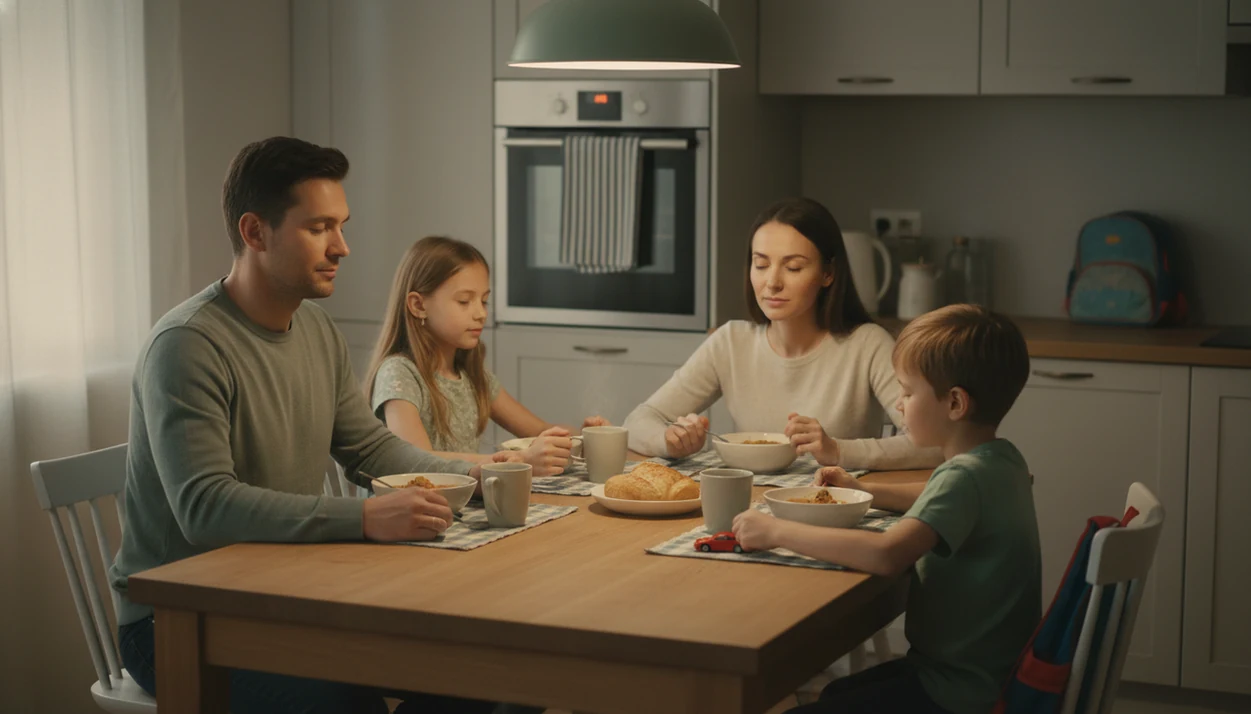
Mindfulness for family life means paying attention to yourself and one another in the present moment, with less rushing, judgment, and automatic reaction. Parents, children, and caregivers can practice it during meals, bedtime, transitions, and conversations. The aim is to notice what is happening before responding, not to keep everyone calm all the time.
Start with something small: one shared breath before eating, a few minutes of phone-free listening, or a brief check-in after school. Adults model the pause first; children learn through repeated examples rather than lectures. Keep practice inside routines you already have, instead of adding another task. Mindfulness can support patient communication, but it cannot replace sleep, clear expectations, safety, or professional support.
The essentials
- Start with brief habits: one shared breath, one phone-free meal, or one calm check-in is enough.
- Adults model the practice first; children learn mindfulness more from repeated examples than from lectures.
- Mindfulness supports calmer communication, but it does not replace sleep, structure, discipline, or professional support when needed.
What mindfulness looks like at home
Mindfulness for family life is present-moment attention practiced inside ordinary family moments, such as listening, eating, bedtime, and conflict repair. It is secular, beginner-friendly, and practical.
In plain language, it means noticing what is happening before the whole room gets pulled into reaction. A new mom might feel warm cheeks at school pickup when a child snaps from the back seat. A child might notice tears building before yelling across the hallway. The practice is the pause, not a polished family performance. For parents preparing for birth or adjusting afterward, childbirth and postpartum mindfulness offers practices suited to those transitions.
It does not require long silent meditation. Most families start better with tiny habits: one breath before a reply, one minute of quiet at bedtime, or listening to a child finish a sentence without jumping in. Brief mindfulness and meditation practices help build attention and steadier responses; they do not promise instant calm or a conflict-free home.
The sock by the door may still be there.
Five starting points for family practice
- Mindfulness belongs inside routines. It works better at dinner, bedtime, homework, and school transitions than as one more separate family chore.
- The core skill is noticing. Families practice noticing thoughts, emotions, body sensations, tone of voice, and the person in front of them.
- It may support calmer communication. Mindfulness gives adults and children a small gap between the trigger and the response.
- Short practices usually fit family life better than long sessions. For busy households, one to five minutes often beats an ambitious plan that disappears by Tuesday.
- It works best with structure. Sleep, predictable routines, warm limits, and repair after conflict matter. Mindfulness is not a replacement for parenting.
For families with younger children, meditation for kids usually starts with movement, breath, sound, or simple sensory games rather than silent sitting.
Start in a calm moment, with permission to opt out
Before you start mindfulness for family life, make it safe, brief, and optional. The best first practice usually happens before stress peaks, not while everyone is already flooded.
- Choose a calm moment, such as after breakfast or before lights-out, instead of introducing a new skill during a meltdown.
- Tell children what to expect in plain language: “This is short, you can try it or just watch, and it is not a punishment.”
- Model one breath yourself before inviting anyone else. Kids learn more from seeing an adult pause than from being told to calm down.
- Check basic needs first. Hunger, exhaustion, unsafe conflict, or chaotic routines can make mindfulness feel impossible; food, sleep, safety, and predictability come first. During pregnancy, morning sickness meditation can offer a gentle pause, without replacing medical advice for persistent symptoms.
- Offer movement or sensory noticing when stillness does not fit. A child can notice feet on the floor, squeeze a pillow, listen for three sounds, or walk slowly across the room.
Starting this way keeps the practice from becoming another pressure point. It also protects the main lesson: pausing is something the family can return to, not something children have to perform perfectly.
Notice the reaction before acting on it
Mindfulness for family life works by strengthening the pause between a trigger and a response. In a home, that pause might be one breath before correcting a child, or a child naming, “I’m mad,” before throwing a toy.
Two useful terms are emotional regulation and attentional control. Emotional regulation means noticing and managing feelings without being run by them. Attentional control means choosing where the mind goes next. In family language, it is the difference between snapping and resetting.
Naming sensations can lower automatic reactivity. “My chest feels tight” gives the brain a clearer signal than “Everyone is ruining dinner.” Adult modeling matters here. Children watch whether grown-ups breathe, apologize, and try again.
A University of Washington mindful-parenting study reported that parents who received mindfulness lessons managed emotions better and responded more intentionally to children, though the authors cautioned that results depend on program design and family context (PMC research article).
Build a brief pause into one daily routine
Use mindfulness for family life by choosing one repeatable cue, practicing for a few seconds, and returning to it after messy moments. Keep it ordinary enough that the family can do it on tired days.
- Choose one routine that already happens, such as breakfast, school pickup, or lights-out.
- Name the cue in simple words: “Before we eat, we take one breath.”
- Pause before the pressure point, such as leaving the house or starting homework.
- Let one person finish speaking before advice, correction, or problem-solving.
- Repair after conflict with one sentence, such as “That got loud. Let’s try again.”
Small practices for meals, mornings, bedtime, and conflict
The best mindfulness for family life tips are tied to moments that already repeat. That makes practice feel less like an assignment and more like a family rhythm.
- Meals: Try the first five minutes without phones. Notice one color, one smell, and one person’s face before conversation speeds up.
- Bedtime: Use three slow breaths or name one thing from the day that felt kind. If nights are hard, bedtime meditation for children can give the routine a gentler shape.
- Morning: Ask each person for one intention, such as “I’ll try to use a calm voice” or “I’ll ask for help.”
- Conflict: Practice pause, name, choose. Pause the body, name the feeling, choose the next action.
- Car or school transitions: Notice sound, temperature, or the feeling of the seat. Avoid making mindfulness the punishment after misbehavior.
A practice that feels like scolding will not last.
What the evidence says about mindfulness benefits
Mindfulness for family life may support calmer communication, steadier emotional regulation, and more intentional parenting, but it should not be presented as a treatment plan. The evidence is promising in some areas and mixed in others.
A 2014 JAMA Internal Medicine systematic review found mindfulness meditation programs were associated with moderate improvements in anxiety, depression, and pain, with smaller or insufficient evidence for several other outcomes (JAMA study). For anxiety disorders, a JAMA Psychiatry randomized clinical trial found an 8-week mindfulness-based stress reduction program was noninferior to escitalopram, but that finding applies to structured adult treatment settings, not casual family routines (JAMA study).
Research on children and adolescents varies by program quality, age, setting, and outcome measured. Some programs aim at emotional, cognitive, and behavioral outcomes, but results are not uniform.
For family stress, the practical relevance is simpler: a calmer adult response can change the room. Clinicians typically recommend professional mental health support when anxiety, depression, trauma, self-harm risk, or severe behavior problems are present. For new parents, mindfulness for postpartum depression may complement professional care, but it should never replace assessment or treatment.
Family-specific studies show small, not sweeping, changes
Research on family programs is more directly relevant here than studies of adults meditating alone. A 2021 review of 20 mindfulness interventions, involving 1,083 children and 1,131 parents, found small positive effects on family functioning, parental mental health, and child mental health. Parents and children generally practiced in parallel programs, so these findings do not establish that meditating together at home produces the same results.
A separate 2021 review of mindful-parenting research found improved mindfulness scores among parents of typically developing children, but no clear overall effect on parenting stress. Findings for child behavior, relationship quality, and parental well-being were limited or inconsistent. A reasonable goal is to practice noticing and responding differently, without promising that the household will become less stressful.
When family mindfulness helps, and when to seek other support
Mindfulness for family life is best for families that want calmer routines, better listening, and a practical way to pause before reacting. It is not for replacing safety, discipline, therapy, or direct problem-solving.
| Fit | Best for | Not for | Better next step |
|---|---|---|---|
| Calmer routines | Families who want less rushing around meals, mornings, and bedtime | Families expecting one practice to fix every stressful pattern | Pick one daily cue and keep it for two weeks |
| Parent modeling | Adults willing to practice brief pauses themselves | Asking children to do what adults never model | Start with a three-minute breathing pause before opening a laptop |
| Big feelings | Families learning to name emotions before reacting | Crisis, trauma symptoms, or severe distress | Seek qualified professional support |
| Child participation | Curious or mildly resistant children | Forced “calm down now” sessions | Use informal sensory noticing instead |
For teens, privacy and choice matter more. Meditation for teens often works better when they can choose the time, voice, or technique.
Shared practice requires safety, not just willingness
Ordinary disagreements are different from intimidation, coercive control, or violence. Shared meditation, eye contact, and exercises that invite honest disclosure can create risk when someone cannot safely disagree. In that situation, confidential individual support and safety planning take priority over a family practice. Mindfulness does not require accepting abuse, forgiving someone, or treating everyone as equally responsible for harm.
When it is safe to state a boundary, name the behavior and what you will do if it continues. For example: “I will not discuss my medical treatment at dinner. If the topic continues, I will leave the conversation.” Mental Health America's guidance on family boundaries recommends explaining the consequence if a boundary is crossed. If stating a boundary could provoke retaliation, seek confidential support rather than using a shared exercise to address it. For ordinary celebrations and visits, mindfulness for family gatherings can support realistic expectations, clear boundaries, and calmer conversations.
Avoid forced calm, long sessions, and mixed messages
The most common mindfulness for family life mistake is starting too big. A 20-minute family meditation can sound beautiful in theory, but most homes do better with one shared breath at the supermarket checkout or a Parking Lot Pause before everyone heads inside.
Another mistake is using mindfulness as a command. “Be mindful” can sound like “Stop feeling what you feel.” Try, “Let’s both take one breath before we decide what happens next.”
Children also notice hypocrisy fast. If adults scroll through dinner, interrupt constantly, or yell “calm down,” the lesson is confusing. Model first. Invite second.
Mindfulness should not erase structure. Limits, chores, consequences, and repair still belong in family life. It also helps to remove one burden before adding a practice. If every evening is packed, the mindful choice may be canceling one optional activity rather than squeezing in another exercise.
Using short guided sessions at home
Apps can help when a family wants structure, especially at the beginning.
For consistency, call it Mindful.net when naming the service and reserve “Mindfulness Practices App” for category framing. That keeps the brand clear without making a family mental-health guide feel like an ad.
A family might use a short guided session after school, before bedtime, or during a weekend reset. The point is not to outsource parenting to an app. It is to give adults and children plain language, a steady voice, and a simple next step when nobody wants to invent one.
The Mindfulness Practices App framing is most helpful when families treat sessions as support, not as medical care or a guaranteed route to calmer children.
Limits of Family Mindfulness
- Mindfulness alone cannot fix chronic sleep loss, unsafe conflict, food insecurity, or an impossible schedule.
- Results vary by age, temperament, stress level, consistency, and family context.
- Mindfulness cannot replace mental health care, trauma support, behavior therapy, or crisis services.
- Seek professional support for intense, persistent, or unsafe child distress, and safety planning or counseling for high-conflict households.
Family mindfulness questions
How do we start mindfulness as a family?
Choose one calm, familiar moment, such as breakfast or the start of bedtime. An adult can model one comfortable breath, then invite everyone to notice a sound or a body sensation. Keep it brief and optional. Repeat the same cue rather than introducing several new exercises at once.
What age can children start mindfulness?
There is no single starting age for every child. Match the activity to the child's ability to understand and participate: noticing a sound or naming a feeling may fit better than sitting silently. Keep expectations flexible, adapt to developmental needs, and let watching count as participation.
How long should a family mindfulness session last?
Begin with 30 seconds to three minutes, or just one shared breath. Short practices are easier to fit into meals, school transitions, and bedtime than a long session. Increase the time only if participants want to continue. Duration matters less than keeping the practice manageable and voluntary.
Can mindfulness help during a child's meltdown?
A meltdown is usually not the best moment to teach a new exercise. Check immediate safety and needs such as hunger or exhaustion first. An adult may use a brief pause to steady their own response, but avoid demanding that the child breathe or meditate. Introduce practice later, during a calmer moment.
Does mindful parenting reduce stress or improve behavior?
The evidence is mixed. Family mindfulness programs have shown small benefits for family functioning and parent and child mental health. A mindful-parenting review found no clear overall reduction in parenting stress, and child-behavior findings were limited or inconsistent. Treat mindfulness as a supporting skill, not a reliable behavior fix.
Is mindfulness a form of discipline?
Mindfulness is a way to notice feelings and impulses before responding, not a discipline system. A pause can help an adult explain a limit without shouting, but it does not replace clear expectations, consequences, or repair after harm. Children can feel angry while still being expected not to hit or insult others.
Should families practice mindfulness together when conflict feels unsafe?
Not when someone faces intimidation, coercive control, violence, or retaliation for speaking honestly. Shared exercises can pressure that person into disclosure or forgiveness. Prioritize safety planning and confidential individual support. Mindfulness does not require greater closeness with someone who is causing harm, and family sessions may not be appropriate.