
Teaching Gratitude to Children Through Small Daily Habits


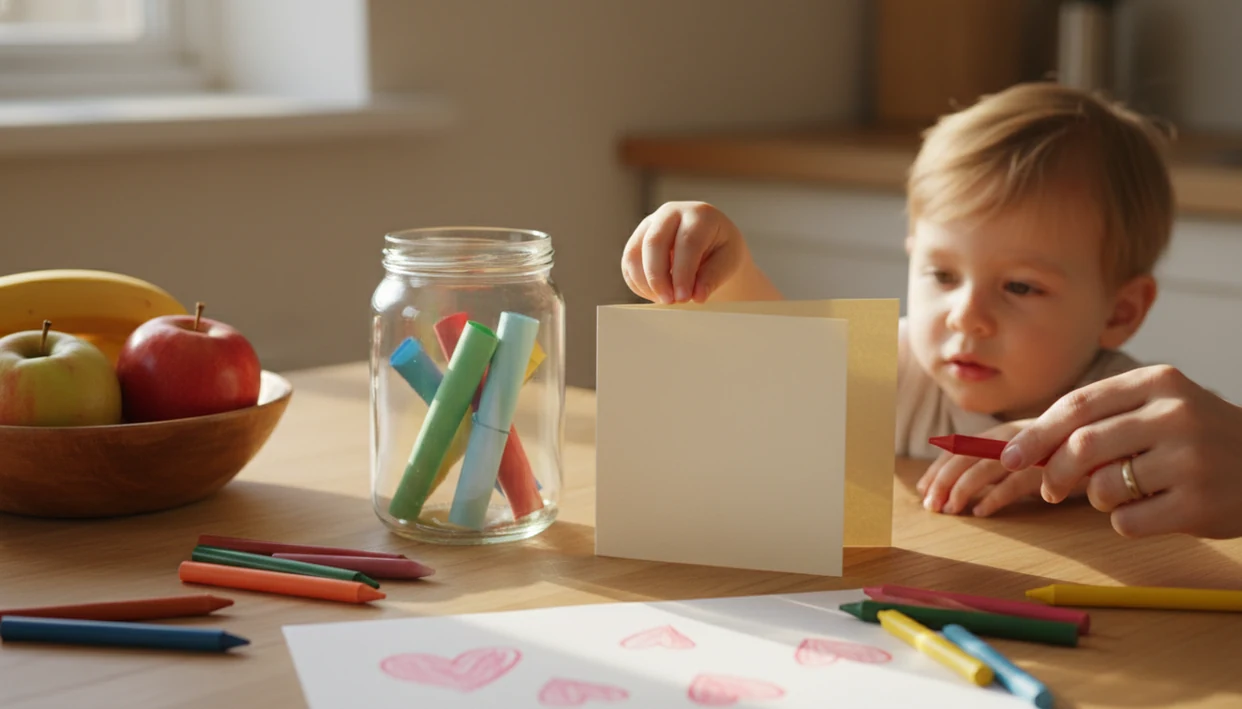
Teaching gratitude to children means helping them notice good things, recognize other people’s effort, and express appreciation in everyday ways. Adults make this concrete by modeling specific thanks: “You saved me a seat” says more than “Be grateful.” Repeated examples and small routines give children opportunities to practice, rather than relying on a single reminder to say thank you.
Start with one ordinary moment: name something good at dinner, draw a picture for someone who helped, or notice a kind action together. Match the activity to your child’s age, language, and willingness to participate. Keep it gentle. Gratitude can sit beside sadness, anger, disappointment, and valid complaints; it should never be used to silence them.
The essentials
- Children learn gratitude most reliably from repeated adult modeling, not one-time reminders.
- Simple routines like gratitude check-ins, drawings, thank-you notes, and mindful noticing make appreciation easier to practice.
- Gratitude should never be used to shut down sadness, anger, disappointment, or valid complaints.
Five principles for teaching everyday appreciation
- Adults teach gratitude most clearly when children hear real appreciation in ordinary moments, not just reminders to “say thank you.”
- Regular gratitude routines usually work better than holiday-only gratitude because repetition helps children remember the habit.
- Specific actions make gratitude understandable: “Grandma drove you to practice” lands better than “be grateful.”
- Preschoolers, school-age children, and teens need different prompts, because their language and self-reflection skills differ.
- Gratitude should feel encouraging, not pressured; a child who feels corrected may perform thanks without feeling appreciation.
For younger kids, the practice may be as small as pointing to a favorite snack or drawing a helper. A teen may prefer a private note. Different doors, same room.
Help children notice kindness they might miss
Teaching gratitude to children matters because it trains attention toward kindness, effort, and support that kids might otherwise rush past. The benefits are promising, but they are not guaranteed for every child or family.
In a 2023 Pew Research Center survey, 58% of U.S. parents said they talk with their children about gratitude at least sometimes, and 37% said they do so often (Pew Research Center: Parenting In America Today).
At home, gratitude can sound plain: “Your brother moved his backpack so you could sit down.” One simple way to try it is before a meal, during a car ride, or as part of a family mindfulness routine. The point is noticing, not performing.
How noticing, imitation, and repetition build gratitude
Teaching gratitude to children works through attention, imitation, repetition, and concrete social feedback. In plain terms, kids notice what adults notice, copy what adults say, and slowly connect appreciation with real people and real actions.
Mindful noticing gives children a pause before the quick reaction. They may feel their feet on the kitchen tile, look at the person helping them, and name what happened. That pause helps gratitude become less abstract. Habit loops also matter: cue, action, response. A bedtime prompt becomes the cue, naming thanks becomes the action, and feeling connected becomes the response.
Gratitude is not forced positivity or emotional suppression. Mindfulness practices and beginner meditation techniques offer ways to practice attention and choose a response, without requiring anyone to feel happy on command. The practice works best when it connects to something that actually happened.
When gratitude prompts help, and when to stop
A teaching gratitude to children guide is most useful when it supports everyday appreciation without turning feelings into a test. Gratitude can sit beside disappointment, frustration, or grief.
| Best for | Not for |
|---|---|
| Family routines, such as one good thing at dinner | Punishment after a complaint or argument |
| Classroom reflection and kindness practice | Silencing sadness, anger, or fear |
| Bedtime reflection with a calm voice | Shaming children for wanting more |
| Mindful noticing of help, effort, and care | Correcting every complaint in real time |
| Thank-you notes, drawings, and helping tasks | Training obedience or people-pleasing |
For a child who is upset, start with the feeling first. “You’re disappointed the game ended” may need to come before “and it was kind that Sam shared the controller.” Both can be true. Practicing emotion management for parents can help you respond steadily when a child’s disappointment makes gratitude conversations feel difficult.
A short gratitude routine for home
At home, gratitude works best as a small daily rhythm, not a lecture. Five minutes is plenty, especially when a child is tired or wiggly.
- Set: choose one short daily gratitude moment, such as dinner, bedtime, or the walk from the bus stop.
- Model: say specific appreciation out loud, such as “I appreciated how you waited while I finished the call.”
- Ask: use one gentle prompt, like “Who helped you today?” or “What felt good this afternoon?”
- Create: write, draw, or speak thanks through a note, picture, message, or short conversation.
- Review: notice what felt natural and adjust the routine if it starts to feel forced. A parenting reward chart can support predictable gratitude routines when it recognizes effort without making appreciation a performance.
A phone timer set for 5 minutes can help adults stop before the practice becomes another task. Enough is enough.
Gratitude activities for preschoolers, school-age children, and teens
Age-based gratitude activities work better when they match a child’s language, patience, and privacy needs. Writing is useful for some children, but it should not be the only method. Try parenting with strengths and limits to build on your child’s abilities while keeping gratitude expectations gentle and realistic.
Gratitude prompts for preschool children
Preschoolers can draw a helper, point to something they liked, dictate a thank-you sentence, or practice short spoken thanks. Parents searching for gratitude activities for age 4 or age 5 usually need concrete prompts, not long explanations. For very young children, short meditation for toddlers can pair well with one simple noticing question.
Gratitude routines for elementary children
Ages 6 to 10 often enjoy gratitude jars, thank-you notes, helping tasks, and bedtime prompts. Children age 7 or age 9 may start noticing effort, such as who packed lunch or helped with homework.
Gratitude reflection for teens
Tweens and teens may prefer private journaling, service choices, or reflective conversation. A quiet approach respects independence, especially when public sharing feels awkward.
What research says about gratitude activities for children
The evidence behind teaching gratitude to children is encouraging, but mixed across ages, settings, and methods. Research supports low-pressure routines more than dramatic claims.
A 2020 review in Frontiers in Psychology found small to moderate improvements in well-being-related outcomes across gratitude interventions for children and adolescents (Frontiers in Psychology: add the article URL or DOI here). A 2019 randomized school-based trial in The Journal of Positive Psychology found that a gratitude intervention improved students’ gratitude ratings compared with a control group (Journal of Positive Psychology: add the article URL or DOI here).
These findings do not mean gratitude cures mental health concerns, behavior problems, or family conflict. Study results vary by age, length of program, classroom or home setting, and how outcomes are measured. For many families, the practical takeaway is modest: regular, specific gratitude practice may help children notice support and kindness more often. For school stress or anxious moments, families may also need broader support such as meditation for anxious kids.
Parent mindfulness research is not proof that gratitude works
Research on mindful parenting can inform how adults approach a gratitude conversation, but it does not establish that gratitude activities produce the same results. A 2021 systematic review and meta-analysis found a moderate improvement in parents’ mindfulness in nonclinical samples, but no significant overall effect on parenting stress. Greater awareness does not automatically mean less stress.
For family gratitude practice, that distinction keeps expectations realistic: an adult can pause and choose a less corrective response without expecting the child’s mood to change. A review of mindful-parenting programs also found insufficient evidence to draw confident conclusions about overall parent and child well-being. These findings support cautious expectations, not a promise that a daily gratitude prompt will make family life calmer.
Avoid forced thanks, shame, and constant prompting
“What should parents avoid when teaching gratitude to children?” Avoid using gratitude as punishment, emotional correction, or proof that a child is being “good.” Those moves can make gratitude feel unsafe.
Do not demand gratitude while ignoring real distress. A child who lost a favorite toy may need comfort before perspective. Do not confuse gratitude with obedience or people-pleasing, either. Appreciation should help children recognize care, not teach them to accept every situation quietly.
Another common mistake is over-prompting. If every complaint gets answered with “What are you grateful for?” a child may feel watched. The pencil tapping during study time may be frustration, not a character flaw. Also, don’t rely only on saying thank you. Add reflection and action, such as noticing effort, making a card, or helping someone back.
A brief mindfulness pause before naming thanks
A short breathing pause or mindful noticing practice can prepare children for gratitude by settling attention first. Before asking for thanks, try three slow breaths together or invite the child to notice one sound in the room.
Mindful.net’s Mindfulness Practices App offers secular, beginner-friendly mindfulness practices and meditation techniques for everyday family life. It can support gratitude routines with short pauses and noticing prompts, but the main practice still happens in ordinary family moments. A blanket over crossed legs is optional. A calm adult voice helps more.
For families building a wider routine, parent and child breathing exercises can make gratitude feel less like a question and more like a shared pause.
Can a breathing pause help before a gratitude check-in?
A rushed bedtime or tense dinner may not be the right moment to ask a child for thanks. Mindful.net’s free breathing timer can give an adult a brief pause before starting the conversation, and the app offers short guided meditations. Neither is necessary for gratitude practice. When a child is upset, listening and comfort are better starting points than a timer or another prompt.
Gratitude Routine Limits
- Gratitude is one attention practice, not a full parenting strategy or quick fix for behavior problems or repeated conflict.
- Gratitude should not replace emotional coaching, repair, or boundaries, and professional care should be sought when needed.
- Forced gratitude can create resistance or shallow compliance, so reduce or pause routines that keep causing tension.
- Evidence is promising but not uniform across studies, ages, settings, and outcome measures.
Teaching children gratitude: common questions
How do children learn gratitude?
Children learn through repeated examples, concrete explanations, and opportunities to express thanks. Name what someone did: “Your sister helped you find your shoe.” Let your child hear you thank people too. A drawing, a spoken sentence, or a helpful action can make appreciation more understandable than a lecture.
At what age can children start learning gratitude?
Preschoolers can begin with simple noticing and short expressions of thanks. They might point to something they enjoyed, draw a helper, or dictate a sentence to an adult. Older children can reflect more on effort and intention. Match the prompt to the child’s language and patience rather than expecting a polished explanation.
How do I teach gratitude to a 5-year-old?
Keep the activity concrete and brief. Ask, “Who helped you today?” or invite your child to draw something they liked. Offer your own example first, without requiring them to copy it. Help write a thank-you sentence if they want. Skip long explanations and stop when the activity becomes frustrating.
What gratitude activities work for children ages 7 to 9?
Try a specific thank-you note, a drawing about someone’s help, or a short dinner conversation about one kind action. Ask what the person did and how it helped. Offer a choice between speaking, writing, and drawing. Keep the routine short enough that it does not become another assignment.
Do gratitude journals help children?
A journal gives children who enjoy writing a way to record appreciation, but it is not necessary and does not guarantee better well-being. Use specific prompts, such as one person who helped today. Offer drawings or spoken reflections instead if writing feels like homework, and reduce the routine if it causes tension.
What should I do if my child refuses to say thank you?
Avoid turning the moment into a test of character. Model a specific thank-you yourself, then revisit the situation when everyone is calm. Your child may prefer a note or drawing later. Teaching polite words and helping a child recognize appreciation are related tasks, but a required phrase does not prove a grateful feeling.
Can a child be grateful and upset at the same time?
Yes. Appreciation does not cancel disappointment, sadness, or anger. A child can appreciate someone’s effort and still dislike the outcome. Listen to the complaint before offering a gratitude prompt. If the child needs comfort, repair, or a clear boundary, address that need rather than asking them to find something positive.
Is gratitude the same as good manners?
Manners concern how children express themselves socially, including saying thank you. Gratitude also involves noticing help, effort, and care. A child may say the polite words without understanding the action behind them. Explain what happened in plain language and allow different ways to express appreciation, rather than judging feelings from one phrase.