
Mindfulness for Aggression in Youth: Practicing a Safer Pause


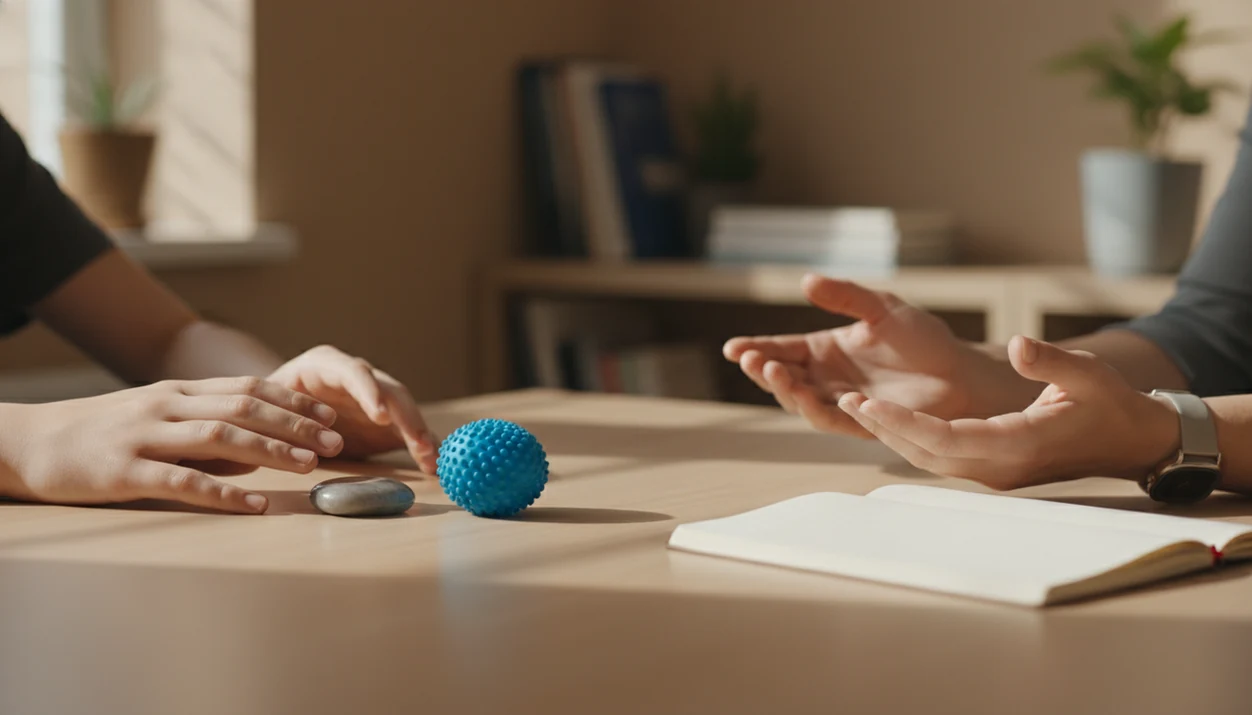
Mindfulness for aggression in youth is a secular skill-building approach that can help some children and teens notice anger earlier, pause before reacting, and choose safer responses. It teaches attention to body signals, thoughts, and emotions without immediately acting on aggressive impulses. The aim is a usable pause between feeling angry and doing something harmful, not the elimination of anger.
Practice is most useful when it is consistent and supported by family, school, or counseling care. Mindfulness is not a stand-alone cure for violence, trauma, ADHD, or conduct problems. Quiet practices can also distress some young people, so offer choices, keep sessions brief, and stop or adapt the activity if distress increases.
What matters most
- The strongest use case is helping youth build a short pause between anger and action through breathing, body awareness, and emotion labeling.
- Evidence suggests mindfulness-based interventions can reduce aggression for some youth, but studies are still limited and effects vary.
- Use mindfulness as one layer of support alongside safety planning, parenting strategies, school behavior plans, therapy, or medical care when needed.
What youth aggression studies suggest
Mindfulness can help reduce aggression for some youth, especially young people who begin with higher levels of anger, impulsivity, or aggressive behavior. The evidence is promising, but it is not strong enough to treat mindfulness as a stand-alone fix.
For citation-quality evidence, prioritize peer-reviewed youth studies, school behavior data, clinician-observed outcomes, and incident-rate changes over testimonials or app engagement metrics.
- A review of 18 studies involving 1,223 young people found mindfulness-based interventions were generally linked with reduced aggression, with stronger effects among youth with higher baseline aggression Can Mindfulness Help Ease Aggression In Youth.
- Programs usually teach breathing, body awareness, emotion naming, and noticing thoughts before acting. For a more playful approach, mindfulness games for teens can offer structured ways to practice attention and consider other people's feelings.
- Study quality varies, so results should be read as encouraging rather than definitive.
- Mindfulness works best when adults practice it during calm moments, not only after a blowup.
- For youth at risk of serious harm, mindfulness should support therapy, safety planning, family work, and school behavior plans.
A five-minute timer is often more realistic than a long silent session.
Noticing anger cues before acting
Mindfulness for aggression works by helping a young person notice early anger cues, create a pause, and use self-control before acting. It trains attention toward what is happening now, instead of letting the next insult, shove, or threat drive the whole response. When phone use contributes to conflict, mindfulness for teen phone addiction offers another way to practice pausing and making intentional choices.
Early cues can be physical: tight fists, heat in the face, a clenched jaw, a racing heart, or shoulders pulled up. They can also be mental, such as “they did that on purpose” or “I have to hit back.” A young person may first notice feet pressing into tile, then the breath returning after distraction.
That pause matters. It gives executive functions more time to come online, including attention control, inhibition, working memory, and impulse regulation. Mindfulness may also support emotion regulation and adaptive coping, which are linked with lower aggressive behavior. A brief mindfulness practice can help a young person pause before acting; it does not make anger, conflict, or consequences disappear.
Six steps for safe, optional practice
Use mindfulness with angry or impulsive youth as a low-pressure skill, not as a command to calm down. The goal is safer choice-making, and the first job is always safety.
- Set safety, consent, and choice first. Say, “We’re practicing a skill for later,” and make clear that the child can keep eyes open, move, or stop.
- Start with three breaths. Invite one slow inhale, one longer exhale, and one normal breath while both feet stay on the floor.
- Name the body signal. Ask, “Where do you feel anger first?” Some youth point to fists, chest, stomach, or face.
- Practice during calm moments. Try a short body scan on a kitchen chair before using the skill during conflict.
- Use emotion naming. Help the young person say “mad,” “embarrassed,” “threatened,” or “left out” before choosing what to do.
- Monitor and adjust. Stop or change the practice if quiet attention increases distress.
Tools like Mindful.net can provide beginner-friendly mindfulness practices, but they are optional support, not a required solution.
Five short practices for home and school
Short, concrete activities are usually easier for children and teens than long silent meditation. These practices can fit home routines, classroom transitions, counseling sessions, or a family mindfulness routine.
The cue can be ordinary and messy: a desk scrape, a sibling’s smirk, a missed shot at recess, or the first hot rush in the face before words turn sharp.
- Belly breathing. Use during calm practice by placing one hand on the belly and noticing it rise and fall for five breaths.
- Hand breathing. Trace up and down each finger while breathing; this works well for early anger or hallway resets.
- Anger body map. After conflict, draw where anger showed up in the body, such as jaw, fists, chest, or stomach.
- Stop-name-choose. Pause, name the feeling, then choose one safer action, such as stepping back or asking for help.
- Walking reset. Walk slowly to a doorway, water fountain, or marked classroom spot while noticing each footstep.
Do not force a child to close their eyes or sit still if that makes them more upset.
When to practice and when safety comes first
Mindfulness is a good fit when a young person can practice skills before conflict and reflect afterward. It is a poor fit when immediate safety, abuse, weapon threats, or severe trauma activation need urgent intervention first.
| Use case | Best for | Not ideal for | Support roles |
|---|---|---|---|
| Impulsive anger | Youth who lash out quickly but regret it later | Active fights or unsafe escalation | Parents, teachers, counselors |
| Post-conflict repair | Youth who can talk after cooling down | Situations where harm is minimized or ignored | Parents, school staff |
| Coping skills practice | Youth who need alternatives to yelling, pushing, or threatening | Weapon use, serious injury risk, or self-harm risk | Clinicians, crisis supports |
| Classroom regulation | Transitions, frustration, teasing, or group stress | Bullying or unsafe environments left unchanged | Teachers, counselors, administrators |
Mindfulness can be part of a behavior plan, but it should never be used to soften the reality of harm. Clear boundaries still matter.
Six ways adults can support practice before conflict
The most useful mindfulness tips for youth aggression are short, repeatable, and practiced before the hard moment. Clinicians and school mental health professionals typically recommend combining coping skills with consistent boundaries, safety planning, and appropriate care when aggression is serious. Families can also explore raising resilient teens to pair emotional coping skills with steady support and clear expectations.
- Practice when calm, not only during blowups.
- Keep beginner sessions between 30 seconds and 3 minutes.
- Model the skill out loud: “I’m pausing before I answer.”
- Offer choices: eyes open, movement, drawing, breathing, or quiet sitting.
- Pair mindfulness with repair after harm, such as apology, cleanup, or problem-solving.
- Do not use mindfulness as punishment or as a way to silence valid anger.
For younger children, parent and child breathing exercises may feel more natural than telling a child to meditate alone.
The pencil tapping may stop before the words do.
Behavior changes to look for, and limits of the research
Does mindfulness for aggression in youth reliably change behavior? It may help some youth show fewer aggressive incidents, recover faster after anger, describe feelings sooner, and use coping skills more often, but research does not prove every child or teen will improve.
In one Punjab university student program on aggression management, 22% reported physical violence, 12% reported weapon use during aggression, and 14.2% reported injury at baseline PMC research article. After an 8-week mindfulness-based stress reduction-style group, mean physical aggression scores dropped from 26.86 to 20.84 in the same study.
A youth mindfulness meta-analysis found benefits across several psychological outcomes, but effects varied by population, setting, and study quality PMC research article. For youth with impulsive anger, short mindfulness practice is often easier than insight-heavy discussion because it starts with body signals the young person can notice. Teens may also prefer meditation for teens when the language respects privacy and choice.
Outcomes depend on practice, adult follow-through, safety, trauma history, and the wider environment.
When to Seek Professional Help for Youth Aggression
Seek professional help when aggression creates safety risk, keeps escalating, or seems tied to pain the young person cannot manage alone. Mindfulness can support care, but it does not replace supervision, crisis response, or a written safety plan.
- Act immediately if there are weapons, serious injury, self-harm, direct threats, or violence that is becoming more frequent or intense; call emergency services or a local crisis line if anyone may be in danger.
- Contact a pediatrician or licensed therapist when aggression is repeated, sudden, unusually intense, or paired with sleep changes, depression, anxiety, substance use, or medication concerns.
- Involve a school counselor, administrator, or behavior support team when incidents happen at school, on the bus, online, or around bullying. For classroom practice, mindfulness in schools for teens explains how structured exercises can support attention and emotional regulation during the school day.
- Flag possible trauma, abuse, ADHD, bullying, community violence, or substance use for referral instead of treating the behavior as “just anger.”
- Document dates, triggers, injuries, threats, patterns, what adults tried, what helped, and what made things worse so the care team has a clear picture.
The goal is not to label a child as bad. It is to make the next hard moment safer.
A three-minute grounding practice with an adult
Image caption: A parent and child sit side by side for a 3-minute grounding practice, using slow breathing and feet on the floor to notice anger before it escalates; this shows mindfulness for aggression in youth as a practical, secular pause skill rather than punishment, restraint, or therapy.
The image should feel ordinary: a classroom chair, a living room rug, or a quiet office corner. Avoid religious symbols, forced stillness, crossed arms, or an adult looming over a child. A folded towel on bedroom carpet can work if the scene shows choice and calm, not compliance.
Brief breathing practice during calm moments
A calm moment before school or after homework is a better time to rehearse breathing than an active fight. The free breathing timer can support a brief, optional practice with an adult nearby. Mindful.net also offers short guided sessions in its app. Neither replaces a safety plan, counseling, or urgent help when aggression puts someone at risk.
Mindfulness Limits for Youth Aggression
- Research on youth aggression remains limited, with study designs varying across ages, settings, and program types.
- Seek professional treatment for trauma, ADHD, conduct problems, depression, anxiety, or serious family stressors because mindfulness cannot replace it.
- Monitor youth practices and stop if distress increases, as adult research documents adverse experiences in this PMC research article.
- Inward attention may worsen distress, so meditation for anxious kids may need movement, grounding, and adult help with regulation.
Questions about mindfulness and youth aggression
Can mindfulness reduce aggression in children and teens?
Mindfulness may reduce aggression for some young people by helping them notice anger and pause before acting. Results vary, and the research is not strong enough to promise improvement for every child. Use it alongside clear boundaries, family or school support, and appropriate professional care.
What should I do when my child is already hitting or threatening someone?
Put safety ahead of a mindfulness exercise. Set a clear limit, such as “I won’t let you hit,” and separate people from immediate danger. Keep words brief. Weapons, serious injury, self-harm, or credible threats require urgent help; contact emergency services if anyone may be in danger.
Which mindfulness exercise should an angry child try first?
During a calm moment, invite the child to keep both feet on the floor and try one slow inhale, one longer exhale, and one normal breath. Ask where anger first appears in the body. Offer movement or another grounding activity if focusing on breathing feels uncomfortable.
How long should children practice mindfulness for anger?
Begin with 30 seconds to three minutes during calm periods, rather than introducing a long session during a blowup. Three breaths may be enough for an initial rehearsal. Keep participation optional and focus on learning a repeatable skill, not completing a set amount of meditation.
What if mindfulness makes my child more upset?
Stop the exercise rather than insisting that the child finish. Offer eyes-open grounding, movement, space, or support from a trusted adult. Quiet attention can be distressing for some young people. Discuss repeated or intense distress with a pediatrician or licensed therapist, especially when trauma may be involved.
Can mindfulness replace therapy for aggressive behavior?
No. Mindfulness can support coping skills, but it does not replace assessment or treatment for repeated, severe, or escalating aggression. A pediatrician or licensed therapist can help assess contributing problems. Safety planning, supervision, school support, and treatment may still be needed even when breathing practice helps.
How can teachers use mindfulness without making it a punishment?
Teach a brief practice during a calm classroom transition, explain its purpose, and offer choices such as eyes-open breathing or movement. Do not demand meditation as a consequence for aggression. Keep safety rules and repair after harm separate from the invitation to practice a coping skill.
How can I tell whether mindfulness is helping my child's aggression?
Look for concrete changes: fewer aggressive incidents, quicker recovery after anger, earlier naming of feelings, or more frequent use of a coping skill. Discuss patterns with the child and supporting adults. Completing sessions alone does not show that aggression has improved, and worsening behavior needs reassessment.