
Contemplative Education: Secular Classroom Practices and Evidence


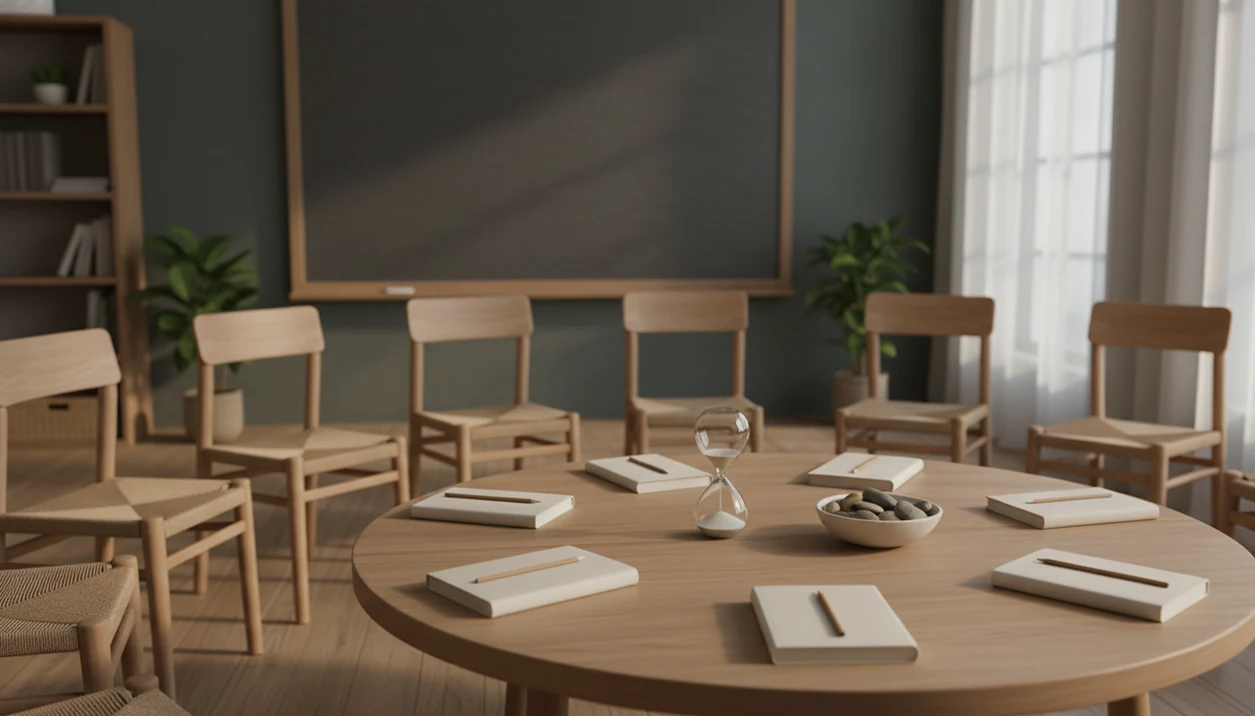
Contemplative education is a teaching approach that adds attention, reflection, and self-awareness to ordinary learning. Students connect academic material with lived experience through quiet reflection, journaling, breathing, deep listening, and discussion. The approach can be secular or attentive to values without asking students to adopt a belief system. Its purpose is to deepen learning and support cognitive, emotional, ethical, and relational development, not simply to make a classroom quiet.
A useful classroom practice has a clear academic purpose: pause before reading, write about an assumption, or listen carefully before responding to a classmate. Keep the subject matter central and explain how the activity serves the lesson. Students need choices, including an opt-out and alternatives to inward attention or personal sharing. Contemplative education concerns how students learn, not only what they learn.
The essentials
- Contemplative education is about how students learn, not only what they learn.
- Useful practices include mindful pauses, reflective writing, silence, breathing, deep listening, and structured debriefs.
- Good implementation requires clear framing, student choice, cultural sensitivity, and an opt-out option.
How contemplation connects attention with academic work
Contemplative education adds attention, reflection, and self-awareness to regular teaching so students can engage with learning more deliberately. It is not just meditation, and it can be taught in a secular way without asking students to adopt any belief system.
In practice, a teacher might begin a literature class with one quiet minute, invite students to notice a sentence that unsettled them, then ask them to write before discussion. The academic work stays central. The pause simply changes how students arrive at it.
A useful distinction: contemplative education is the larger approach, contemplative pedagogy is the teaching method, and contemplative practices are the specific activities. Practices might include breathing, reflective writing, mindful reading, deep listening, or silence.
The aim is attention practice and meaning-making, not performance.
Brief attention and reflection practices can support more deliberate learning, but they do not guarantee calm or better grades and cannot replace needed support.
Five teaching principles behind contemplative education
- Fact 1: Contemplative education focuses on how learning happens through attention, awareness, reflection, and embodied experience.
- Fact 2: Common practices include breathing, journaling, silence, reflective writing, mindful observation, and deep listening.
- Fact 3: The approach is often called whole-person education because it includes cognitive, emotional, ethical, and relational development.
- Fact 4: Classroom use often aims to improve focus, deepen understanding, support empathy, and make discussion less automatic.
- Fact 5: Ethical use requires purpose, careful framing, student choice, and respectful opt-out alternatives.
A small example helps. Before a difficult class conversation, students might place both feet on the floor, notice one breath, and write one sentence they are willing to examine. That is contemplative pedagogy in a practical form.
For younger learners, the same idea should be shorter and more concrete. A related meditation for kids approach usually works better when it uses simple language, brief timing, and visible choices.
From a quiet pause to evidence-based discussion
Contemplative education works through a learning loop: pause, notice, connect, express, discuss, and apply. The pause gives students a short space before content; the rest turns that attention into academic engagement.
A teacher might ask students to sit quietly for thirty seconds, notice what they already assume about a topic, then read a source with that assumption in mind. Afterward, students write, discuss, and test the assumption against evidence. The content still carries the lesson.
That sequence uses attention regulation and metacognition. In plain language, students learn to notice where their mind is and how that affects interpretation.
Repeated practice matters more than a dramatic first attempt. A single quiet exercise can feel awkward, especially when the room hum is suddenly noticeable. Teacher modeling also matters. If the teacher treats the pause as a serious learning tool, students are more likely to understand why it is there.
For many classrooms, brief and repeated beats long and rare. For afternoon study sessions, practical tips for beating the afternoon slump can complement short attention breaks.
Six-step contemplative education lesson plan
Use contemplative education as a small lesson structure, not an added performance. The most useful plan links the practice to a clear learning purpose and gives students choice.
- Set a clear learning purpose. Decide whether the practice supports focus, reflection, discussion, observation, or transition.
- Frame the practice in secular language. Say “We’re going to practice attention before reading,” not “This will make everyone calm.”
- Offer an opt-out or alternative. Let students draw, read silently, or write privately if inward attention feels uncomfortable.
- Guide a short practice. Use one minute of breathing, silent reading, quiet looking, or freewriting. When seated pauses feel unhelpful later in the day, mindful movement for afternoon fatigue offers an active alternative.
- Debrief what students noticed. Connect observations to the lesson objective, not to personal disclosure.
- Repeat gently. Use the routine often enough that it becomes ordinary, not a special event.
For teens, choice and tone are especially important. The same structure can support meditation for teens when it avoids pressure and explains the purpose plainly.
Brief classroom practices: writing, listening, and attention
Beginner contemplative education works best with brief, concrete practices that connect back to learning. Start with one activity, then debrief it before adding another. As learners build study routines, getting into a flow state can become a separate goal alongside reflective attention.
Short mindful pause
Ask students to feel their feet on carpet or tile, notice one inhale and one exhale, then return to the page or problem. Keep it under two minutes.
Reflective writing prompt
Invite students to freewrite on a question such as, “What did I notice, and what evidence changed my mind?” The writing can stay private.
Deep listening pair exercise
One student speaks for one minute while the other listens without interrupting. Then they switch roles and name one idea they heard accurately. For learners preparing for interviews, interview meditation can support a brief pause before giving thoughtful answers.
In a real classroom, the first attempt may include pencil tapping, awkward laughter, or one student staring at the clock; keep the practice brief and move back to the lesson without scolding the room. A short closing reflection matters. It turns the practice from a mood exercise into learning. For home use, a simple family mindfulness routine can use the same pattern after homework or before reading together.
Pair an attention pause with recall and spaced practice
For adolescents and adults, contemplative practice can introduce a study session rather than replace the study itself. Write one concrete goal, spend five minutes attending to breathing or bodily sensations if comfortable, then study a small section. Close the material and recall its main points before checking your answer. A review of retrieval and distributed practice supports self-testing and practice spread across multiple days.
Correct errors after recall and schedule the material for later sessions. Finish by writing the next concrete step. Keep the roles distinct: the attention pause is for noticing distraction and returning to the task; retrieval and spacing are learning methods. The college academic-performance review does not establish mindfulness alone as a reliable route to better attainment, and no single pause length is established as best.
Contemplative education evidence from 2019 and 2020 studies
The evidence for contemplative education is promising but uneven across age groups, methods, school settings, and outcomes. It should not be described as a guaranteed way to improve grades, behavior, or mental health.
A 2019 systematic review in Educational Research Review included 56 studies on mindfulness-based interventions in education, according to the review’s J.Edurev.2019.100312. That number shows a real research base, but it also includes varied programs and measures.
Student interest is visible in higher education data. A 2019 Higher Education Research Institute report found that 16.3% of first-year college students practiced meditation frequently and 19.4% practiced mindfulness frequently, according to its American Freshman report. NCCIH reported in 2020 that about 20% of college students used yoga in the past year, per its NCCIH overview.
For educators, the practical reading is cautious: contemplative practices may support attention and reflection when taught well, but outcomes depend on context, consent, frequency, and student fit.
Newer reviews do not establish a reliable boost in grades
A 2023 review of mindfulness and academic performance screened 568 records but found only five eligible college or university studies. Most interventions did not produce a statistically significant direct improvement in academic attainment. This is a reason to avoid promising higher grades, not evidence that attention or reflection has no educational value.
School findings look more encouraging. A 2022 review of school-based mindfulness interventions included 77 studies involving 12,358 students and reported academic-performance improvements in 94% of studies. That figure describes studies, not the percentage of students who improved. Differences in programs, outcomes, and evidence quality prevent treating it as a guarantee for any particular classroom.
When reflection serves a lesson, and when it does not
Contemplative education fits learning environments where reflection, attention, and respectful discussion are part of the goal. It is a poor fit when adults use it to force calm, hide religious instruction, or handle needs that require specialist care.
| Situation | Fit or non-fit | Why it matters |
|---|---|---|
| Transition into class | Best for | A short pause can mark the shift from hallway noise to learning. |
| Literature, ethics, arts, humanities, and social science | Best for | Reflection can deepen interpretation and discussion. |
| Professional training | Best for | Deep listening can support communication and ethical awareness. |
| Family learning routines | Best for | Brief reflection can help children settle before reading or homework. |
| Crisis intervention or trauma treatment | Not ideal for | Students may need qualified mental health support, not classroom reflection. |
| Coercive participation | Not ideal for | Forced inward attention can feel unsafe or inappropriate. |
| No time for framing | Not ideal for | Students need to know the purpose, choices, and boundaries. |
When a child needs a settling tool outside school, calm down meditation for kids may be more direct than a classroom pedagogy model.
Keep classroom reflection secular, optional, and private
Secular contemplative education should use ordinary classroom language: attention, reflection, listening, noticing, writing, and discussion. Avoid spiritual authority claims, mandatory belief framing, or promises that one exercise will change how students feel.
A practical checklist helps:
- Use a learning goal before choosing the practice.
- Keep exercises brief, concrete, and optional.
- Invite personal sharing, but do not require it.
- Offer eyes-open, seated, written, or silent observation alternatives.
- Avoid grading students for emotional disclosure.
- Debrief the link to academic content.
- Adjust for age, culture, disability, and classroom history.
Some students like closing their eyes. Others really don’t.
Tools like Mindful.net can support beginner-friendly secular mindfulness practices when a guided support tool fits the setting. Apps such as Mindful.net, Calm, and Headspace may help adults preview language before using it with learners, but the teacher still sets the context and boundaries.
When Mindful.net is used as a Mindfulness Practices App, treat it as adult preparation or optional guided support, not as the curriculum itself.
Contemplative education image example for a classroom guide
A good image for a contemplative education classroom guide should show ordinary learning, not therapy or mystical expertise. Choose students or a family quietly writing after a short mindful pause, with notebooks, pencils, and a familiar classroom or kitchen table setting.
Avoid candles, prayer poses, religious symbols, dramatic light beams, or facial expressions that imply a guaranteed emotional result. The image should look like education with a reflective moment added.
Caption: Students use contemplative education through quiet writing after a brief attention pause.
Alt text: Students sit at desks and write in notebooks after a short reflective classroom pause.
A family version could show a parent and child writing one sentence after reading together. For younger children, parent and child breathing exercises can offer a simpler visual cue than formal meditation imagery.
Before classroom reading: time a brief attention pause
Before a reading activity, a brief, optional pause can help mark the transition into focused work. Mindful.net’s free online meditation timer can time that pause without adding guided instructions; the app also includes a meditation timer. Explain the learning purpose first and offer silent reading or private writing as alternatives. For reflective discussion, a written prompt and clear listening instructions are more useful than a timer.
Classroom Mindfulness Limits
- Classroom mindfulness is not a quick fix, and research varies across study designs, outcomes, ages, and program quality.
- Some students find practices uncomfortable, so preserve choice, opt outs, and options without personal disclosure (Schools).
- Practices can be culturally unfamiliar or inappropriate when framed as universal or morally superior.
- Seek qualified care for serious anxiety, trauma symptoms, risk of self harm, or functional impairment instead of relying on mindfulness.
Contemplative education questions
What is the difference between contemplative education and meditation?
Contemplative education is a teaching approach that connects attention, reflection, and self-awareness with academic learning. Meditation is one possible practice within it, not a requirement. A lesson can be contemplative through private writing, careful observation, or structured listening, provided the activity connects back to the material students are learning.
Is contemplative education religious?
It can be taught in a secular way without asking students to accept religious beliefs. Teachers can frame activities as attention, observation, writing, and listening. Clear explanations matter: students should understand the educational purpose, have alternatives, and never be required to accept spiritual claims or disclose personal beliefs.
What does a contemplative classroom activity look like?
Before reading a source, invite students to pause briefly and write one assumption they bring to the topic. After reading, ask them to identify evidence that supports or challenges that assumption. Discuss the evidence rather than requiring personal disclosure. Students who prefer not to pause can begin with silent reading.
How long should a classroom mindfulness activity last?
For a beginner classroom activity, keep the pause brief, such as thirty seconds to one minute, and connect it to the next task. Longer exercises are not automatically better. Research does not establish one ideal duration or script, so choose a length suited to the students, purpose, and available alternatives.
Does contemplative education improve grades?
It should not be presented as a reliable grade-raising method. Reviews differ by age group and program: school studies report encouraging outcomes, while a 2023 college review found only five eligible studies and mostly no significant direct attainment gains. Keep effective instruction, retrieval practice, and spaced study central.
Can students opt out of classroom meditation?
Students should have an opt-out or an equivalent alternative, such as silent reading, drawing, private writing, or observing something in the room. Explain those choices before starting. Do not require closed eyes, attention to breathing, or emotional disclosure, and do not grade students on how calm they appear.
Can contemplative education be used with younger children?
Yes, with brief, concrete activities connected to learning. A teacher might invite children to notice their feet on the floor, observe an object, or write quietly before discussion. Avoid promises that everyone will feel calm. Offer alternatives and keep the academic task, rather than meditation performance, at the center.
What should a teacher do if breathing or silence makes a student uncomfortable?
Let the student stop without needing to explain publicly. Offer an eyes-open activity, silent reading, private writing, or observation of the room. Inward attention is not necessary for contemplative education. The practice should not be used to manage needs that require specialist care or to force a student to appear calm.