
Raising Resilient Teens: Coping Skills and Everyday Support


Raising resilient teens means helping them face stress, recover from setbacks, and ask for help, not removing every difficult moment from their lives. Resilience includes emotional regulation, problem-solving, flexible thinking, and staying connected to values and relationships. A teen can be upset by a friendship conflict or anxious before a test and still practice choosing what to do next.
Parents can support that practice with a warm relationship, predictable routines, clear boundaries, and age-appropriate responsibility. Short secular mindfulness exercises offer another way to pause before reacting. Breathing, grounding, mindful movement, and noticing feelings without judgment can support coping, but they do not guarantee calm. The aim is repeated practice and recovery, not a teen who never struggles.
What matters most
- Teen resilience is learned through repeated practice, not inherited as a fixed personality trait.
- Warm, steady adult relationships plus clear boundaries are more protective than criticism, pressure, or rescuing.
- Brief mindfulness practices, breathing, grounding, mindful movement, and non-judgmental awareness, can support stress recovery when used consistently.
Raising Resilient Teens Starts With Skills, Not Toughness
Teen resilience is the ability to recover, regulate, adapt, and reconnect after stress, not the ability to stay unaffected. A resilient teen can feel anxious before a test, furious after a rule, or crushed by a friendship shift and still learn what to do next.
That distinction matters. Raising resilient teens is not a project in making them harder, quieter, or less emotional. It is practice in naming feelings, asking for help, repairing harm, and returning to ordinary routines after a rough day.
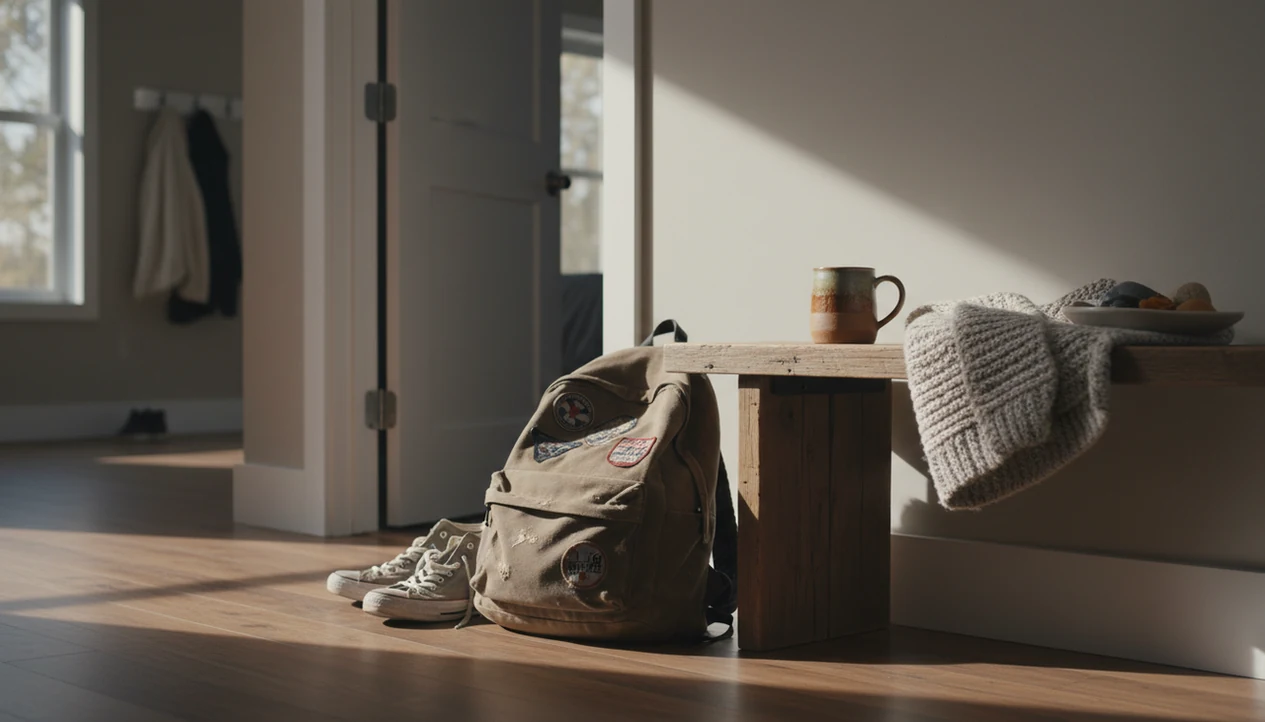
The backpack still lands hard by the door.
A teen may be building resilience when they apologize after snapping, text a coach about a missed practice, or take one breath before answering a message. Struggle is not proof the skill is absent. Often, struggle is where the skill gets trained.
Five foundations of teen resilience
Five facts give parents a steadier starting point than slogans about grit or toughness.
- Resilience is learnable. Teens build it through emotion regulation, flexible thinking, problem-solving, and help-seeking.
- A caring adult relationship is protective. One steady adult who listens, sets limits, and stays connected can buffer stress. Harvard’s Center on the Developing Child describes supportive adult relationships as a core factor in resilience Resilience. A note of support from Dad can offer reassurance when a teen finds direct conversations difficult.
- The home base matters. Sleep, movement, routines, and device boundaries make coping easier when school or social life gets loud.
- Mindfulness may help, modestly. A 2019 meta-analysis of school-based mindfulness programs found small-to-moderate improvements in resilience, emotional problems, and stress NIH research.
- Challenge should be supported, not erased. Teens grow by facing age-appropriate difficulty with backup nearby.
For younger siblings or mixed-age homes, a simple meditation for kids practice can make family language more consistent.
Adolescent Mental Health Pressures That Make Resilience Skills Matter
Teen resilience skills matter because adolescence combines real pressure with a still-developing capacity to pause, plan, and recover. School expectations, social comparison, identity development, sleep loss, and stronger emotional swings can all stack up in one ordinary week.
The numbers are sobering, but they should not be used to panic parents. In 2021, the CDC reported that 42% of U.S. high school students had persistent feelings of sadness or hopelessness during the past year CDC guidance. A national U.S. study also found that about 49.5% of adolescents had experienced a mental disorder at some point Mental Illness.
Resilience practices do not replace therapy, school support, medication, or crisis care when those are needed. They can reduce the gap between stress and support. One breath in the office stairwell is not a cure, but it can create one small opening before the next choice.
Teen Stress Recovery in the Brain, Body, and Family System
Teen stress recovery works through repeated cycles of activation and return. The body detects threat, the nervous system speeds up, the teen pauses, names the feeling, and chooses a next action that fits the situation.
Two useful terms are self-regulation and co-regulation. Self-regulation means managing attention, emotion, and behavior from the inside. Co-regulation means borrowing steadiness from another person first. Many teens still need a regulated adult nearby before they can reliably settle themselves.
That is why a parent’s pause can matter more than another lecture. Feet on carpet, slower voice, one sentence: “I’m going to take a minute before we solve this.”
Mindfulness supports this process by training attention, body awareness, and non-judgmental noticing. Brief mindfulness and meditation practices offer a moment to pause and choose a response, not instant calm or guaranteed emotional control. Repetition teaches the nervous system that stress can rise and fall.
A seven-day plan: Start with one home habit
Use this raising resilient teens guide as a small home plan, not a family overhaul. Changing everything at once usually creates resistance, especially when a teen already feels watched or corrected.
To use this guide, choose one step for seven days before adding another. Teens are more likely to cooperate when the change feels predictable, brief, and connected to a real stress point they already recognize.
- Set one predictable routine. Choose a repeatable anchor, such as a weekday bedtime cue, a Sunday planning check-in, or a device basket during dinner.
- Practice one short regulation skill. Try three slow breaths, a five-minute timer, or shoulder-drop breathing before homework.
- Ask one non-judgmental question. Use “What part felt hardest?” before offering advice.
- Let one age-appropriate challenge stand. Allow the late assignment email, awkward apology, or coach conversation when safety is not at risk.
- Review one repair after conflict. Ask what each person can do differently next time, then stop replaying the whole argument.
For bedtime tension, some families adapt ideas from bedtime meditation for children for older kids by shortening the language and giving teens more choice.
Brief breathing, grounding, and movement practices for teens
The most useful raising resilient teens tips are brief enough to use during real stress, not only during calm family meetings. Teens often need options that fit hallways, buses, locker rooms, and tense kitchens.
- One-Minute Box Breathing. Before a test, breathe in for four, hold for four, breathe out for four, and hold for four. Repeat three or four rounds.
- 5-4-3-2-1 Grounding. In a hallway or social spiral, notice five things seen, four felt, three heard, two smelled, and one tasted.
- Mindful Walking Reset. For teens who hate sitting still, walk slowly for two minutes and feel each foot land.
- Parent Pause Practice. Before reacting to tone, grades, or screen conflict, take one breath and lower your voice first.
- One-Sentence Problem Map. Ask, “What is the next smallest useful step?”
A teen who resists formal meditation may still accept meditation for teens when it includes movement, choice, and no performance pressure. Try mindfulness games for teens to practice attention and empathy through playful activities rather than formal meditation.
Best-Fit Teen Stress Scenarios and Mental Health Red Flags
Mindfulness and resilience practices are supports, not substitutes for professional care. They fit everyday stress best, while serious mental health symptoms need qualified help.
| Best for | Not for |
|---|---|
| Everyday school stress and test nerves | Suicidal thoughts or threats of harm |
| Emotional reactivity after conflict | Self-harm or self-injury |
| Family communication patterns | Eating disorder symptoms |
| Building sleep, routine, and coping habits | Substance misuse |
| Mild social stress or rejection recovery | Severe depression, trauma symptoms, or unsafe behavior without support |
For everyday stress, short regulation practice is often easier than long sit-down meditation because it meets teens during the exact moment they need a reset. However, a teen who is withdrawing for days, losing weight, using substances, or talking about not wanting to live needs adult action beyond home mindfulness.
Do not wait for certainty.
Model a pause and repair after family conflict
Family mindfulness works best when parents model regulation instead of lecturing teens about calm. A parent who pauses before answering a sharp comment teaches more than a speech about attitude.
Start with ordinary habits. Try device-free meals a few times a week, predictable check-ins after school or before bed, calm repair after conflict, and listening without immediately fixing. The point is not to become a quiet family. It is to become a family that can notice tension before everyone escalates.
A practical next step is building a family mindfulness routine around one repeatable cue, such as dinner cleanup or Sunday evening.
Mindful.net is a Mindfulness Practices App that teaches secular mindfulness practices and meditation techniques for beginners and everyday life.
Set phone boundaries around sleep, school, and connection
Phone boundaries are more useful when they address a specific problem than when they rely only on an hour limit. Ask what your teen does online, what feels supportive, and what leaves them upset or unable to stop checking. The APA's guidance on youth social media use recommends protecting sleep and physical activity and looking for use that disrupts daily routines. Heavy use alone does not establish a disorder.
Choose one boundary together, such as a device-free sleep period or a no-phone study interval, and explain its purpose. Agree on what your teen can do if upsetting content appears. For early adolescents, particularly around ages 10 to 14, the APA recommends ongoing discussion, review, and coaching. Respect privacy and increase independence as digital skills and responsible use develop, rather than treating monitoring as secret surveillance.
Common Parent Mistakes When Raising Resilient Teens
Most parent mistakes come from care, worry, or exhaustion. The goal is not guilt. It is a cleaner next move.
- Rescuing every discomfort. Instead, ask what support your teen wants before stepping in.
- Using criticism as motivation. Instead, name the standard and the next step without attacking character.
- Calling harshness “tough love.” Instead, combine warmth with clear boundaries and predictable consequences.
- Forcing long eyes-closed meditation. Instead, offer movement, grounding, journaling, or a two-minute breathing practice.
- Treating one bad day as failure. Instead, look for recovery: did your teen return, repair, rest, or ask for help?
The cursor blinking on an email to a teacher can be the practice. Let your teen draft it, even if the wording is clumsy. For younger children who escalate quickly, families may also use calm down meditation for kids as a simpler shared language.
Teen Mindfulness Limits
- Mindfulness cannot replace professional mental health care, medical care, school support, or crisis services.
- Teen mindfulness evidence is modest, results vary, and short challenges, weekend workshops, or single conversations cannot guarantee resilience.
- Teens with trauma histories, neurodivergence, severe anxiety, or sensory sensitivities may need adapted practices.
- Seek professional assessment when symptoms are severe, persistent, risky, or interfere with daily functioning.
Questions about raising resilient teens
What does resilience look like in a teenager?
Resilience looks like recovering and reconnecting after stress, not staying cheerful or unaffected. A teen might name a feeling, ask for help, repair a conflict, or return to a routine after a setback. Look for these coping actions rather than judging resilience by how little emotion they show.
Can teenagers learn resilience?
Teenagers can practice skills that support resilience, including naming emotions, solving problems, asking for help, and considering another response. Supportive relationships and ordinary routines give those skills somewhere to develop. Progress does not mean every setback becomes easier, and a short challenge cannot guarantee lasting resilience.
How can I help my teen without solving every problem?
Start by asking what support they want: listening, help thinking through options, or direct involvement. Validate the feeling, then help them identify one manageable next step. Keep safety limits in place. Allowing age-appropriate choice is different from leaving a teen alone with a problem they cannot manage.
How do I help a teen who refuses meditation?
Offer choices rather than making meditation a requirement. Your teen could try a short walk, grounding through the senses, or a brief breathing exercise. Explain the purpose as practicing a pause, not correcting their attitude. Keep the practice short and adapt it if it causes distress or feels uncomfortable.
Does mindfulness help teenagers with anxiety?
Research on adolescent mindfulness interventions finds small average benefits for anxiety and stress, alongside other outcomes. That makes mindfulness a possible coping support, not a guaranteed treatment. Anxiety that persists, disrupts school or relationships, or prevents ordinary activities needs professional assessment rather than relying on meditation alone.
How can parents set phone limits without constant arguments?
Tie the rule to a clear purpose, such as protecting sleep or study time, and involve your teen in choosing how it works. Discuss content and compulsive checking, not just hours. Review the agreement as circumstances change. Collaborative limits still include firm safety boundaries and age-appropriate adult supervision.
Should I let my teen struggle with difficult things?
Manageable challenges can give teens opportunities to practice coping, especially when support remains available. Ask what help they need and work toward one achievable next step. Do not confuse ordinary discomfort with serious distress, danger, or impairment. Resilience-building is not a reason to withhold care or ignore safety concerns.
When does my teen need mental health help?
Seek professional assessment when low mood, anxiety, sleep disruption, school decline, or withdrawal persists and interferes with daily life. You do not need to wait for a crisis. Suicidal thoughts, self-harm, abuse, psychosis, or an immediate safety concern require urgent local crisis or emergency support, not home mindfulness exercises.