
Teaching Mindfulness to Kids: A Practical Secular Guide
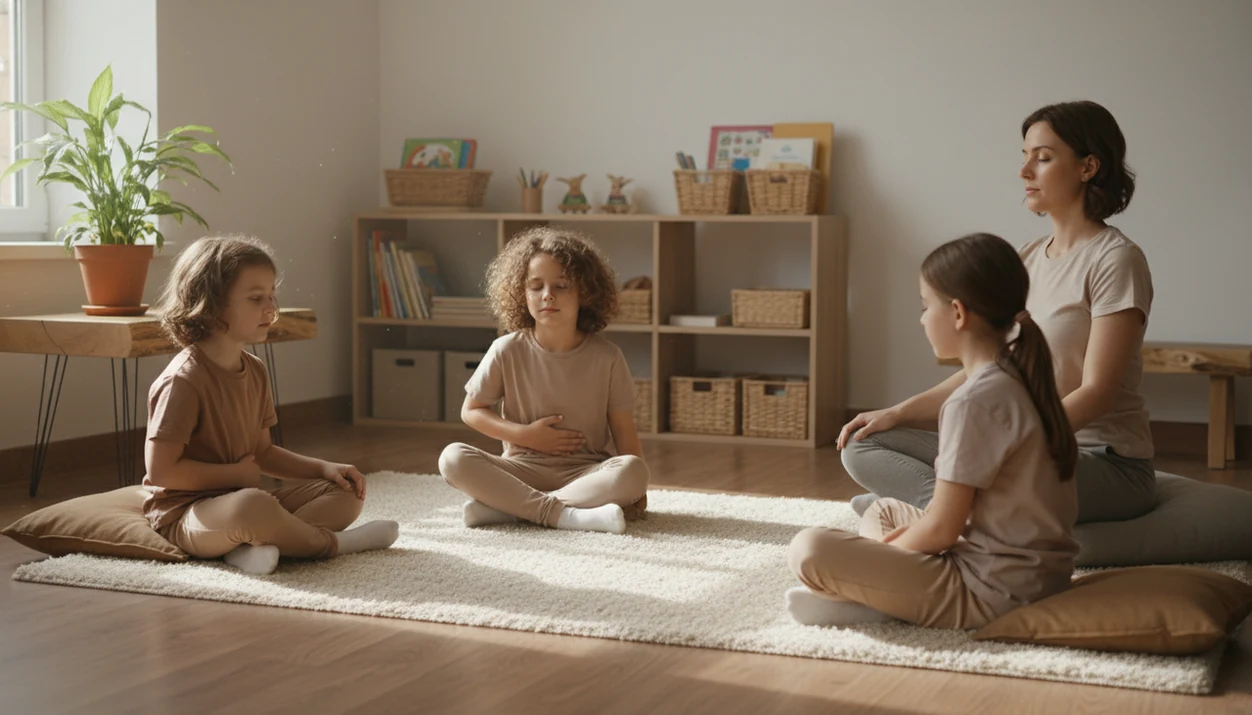
Try three situations: a child melting down at school pickup, siblings circling each other while laundry piles up, or a new mom holding a warm mug and wondering what to do next. In each case, teaching mindfulness to kids works best when it is short, concrete, and repeatable. The goal is not perfect stillness; it is helping children notice breathing, sounds, body signals, feelings, and surroundings for a minute or two, then practice returning to the present.
> Definition: Teaching mindfulness to kids means guiding children to notice the present moment on purpose, without judging what they notice, using age-appropriate breathing, body, listening, and sensory practices.
- Start with one-minute practices, not long silent meditation.
- Use concrete activities like breathing, listening, five-senses check-ins, and body awareness.
- Present mindfulness as a secular attention and self-regulation skill, not a cure-all or behavior fix.
Teaching Mindfulness to Kids: What It Means
Teaching mindfulness to kids means showing children how to pause long enough to notice what is happening right now, with a little kindness toward themselves. Attention may land on a sound, a feeling, a breath, or the room around them. When the mind drifts, coming back gently is the practice.
Children do not have to sit like statues. They can wiggle, think about lunch, scratch an ankle, or look around the room and still be practicing. A five-year-old noticing “my belly moved” is doing real mindfulness. So is a ten-year-old hearing hallway noise and coming back to one breath.
This is a secular attention practice, not a belief system or a way to make kids act calm on demand. We usually suggest treating it like a simple noticing skill: hear the air conditioner hum, feel a warm coffee mug in a caregiver’s palms, name one feeling, then return. For younger children, short meditation for toddlers may look more like a sensory game than formal meditation.
Image caption suggestion: Child holding a hand on the belly during a one-minute breathing practice for teaching mindfulness to kids.
Five Teaching Mindfulness to Kids Facts Parents and Teachers Need
- Short routines usually work better than long sessions. One minute of listening can be more useful than ten minutes of forced silence.
- Noticing and returning attention matters more than sitting still. The child who says “I got distracted” has noticed something important.
- Start with concrete anchors. Breathing, listening, five-senses check-ins, and body awareness are easier than abstract instructions like “be present.”
- Consistency matters more than complexity. A daily cue, like settling after recess or before homework, builds the habit.
- Benefits are promising but not guaranteed. School-based research shows small or mixed effects, especially outside attention and stress outcomes.
The most useful mindfulness practices for children are brief, repeated, and sensory because kids learn attention through experience, not lectures. Mindfulness practices and meditation techniques for beginners and daily life build attention and self-awareness, not instant obedience or guaranteed calm.
How Teaching Mindfulness to Kids Works
Teaching mindfulness to kids works through a repeated loop: notice, name, and return. A child might notice the museum quiet of a reading corner, name “frustrated,” feel dry lips after recess, or listen for one faraway sound. Then attention wanders. The useful part is learning to come back without shame or correction.
That loop matters. In child-friendly terms, mindfulness trains the “attention muscle.” In technical terms, it may support attentional control and self-regulation, meaning the ability to pause, shift focus, and respond with a little more choice.
Concrete sensory anchors help because children understand what they can feel, hear, or see. “Notice your chest movement beneath your shirt” is clearer than “clear your mind.” A 2016 meta-analysis of school-based mindfulness programs found small improvements in cognitive performance, resilience, and stress. A 2019 review found small-to-moderate effects on attention and executive function, while behavior and emotion findings were mixed.
Small gains are still gains. But they need practice.
How to Use Teaching Mindfulness to Kids at Home or School
Use teaching mindfulness to kids as a tiny routine, not a special event. It can happen during school pickup, while folding laundry, after dishes are stacked, or when a caregiver is tired after a warehouse shift and needs everyone to take three steady breaths together. Familiarity matters more than a perfect setting.
In practice, this might look like one quiet minute after backpacks hit the hallway hooks, before a spelling test, or while a tired child sits at the kitchen table with one hand on a water cup.
- Set a tiny practice window. Start with 60 to 120 seconds, using a phone timer set quietly nearby.
- Choose one anchor. Use breath, sound, hands, feet, or the five senses.
- Model the practice. Say, “I’m noticing my feet on the floor,” instead of giving a lecture.
- Name wandering as normal. Tell children, “Minds wander. We notice and return.”
- Repeat the same routine daily. Keep the words and timing familiar for a week.
- Close with one reflection question. Ask, “What did you notice?”
For families, a family mindfulness routine works better when adults practice too. Children copy the pause more readily than the explanation.
Teaching Mindfulness to Kids Tips by Age Group
Mindfulness should match the child’s age, language, and tolerance for stillness. Age bands are useful, but flexibility matters more than strict rules.
Ages 3–5: Sensory Mindfulness Games
Preschool children do well with 30-second sensory games, animal breathing, and noticing sounds. Try “smell the flower, blow the feather” breathing, or ask them to hear three sounds in the room.
Ages 6–10: Short Attention Routines
Elementary children can practice belly breathing, five-senses check-ins, and mindful walking. A hand on the belly often gives enough feedback to keep the exercise concrete.
Ages 11+: Reflection and Self-Regulation
Tweens and teens may prefer emotion naming, short body scans, transition breathing, and journaling after practice. For older students, meditation for teens can include privacy, choice, and less sing-song instruction.
Strict age rules miss the point. Some seven-year-olds love stillness; some fifteen-year-olds need movement first.
Best Mindfulness Activities for Kids, and What They Are Not For
The best mindfulness activity for a child depends on the moment: transitions need settling, restless bodies may need movement, and upset children may need support before practice. Mindfulness is a skill builder, not a replacement for care.
| Activity | Best for | Time needed | Not for |
|---|---|---|---|
| Mindful breathing | Transitions, settling before class or bed | 1–3 minutes | Forcing calm during distress |
| Mindful listening | Group resets and attention practice | 30–90 seconds | Punishment after misbehavior |
| Five-senses check-in | Grounding in the present moment | 1–2 minutes | Replacing trauma support |
| Body scan | Noticing tension or restlessness | 2–5 minutes | Children who feel unsafe focusing inward |
| Mindful walking | Kids who struggle with stillness | 2–5 minutes | Replacing behavior plans |
A child may find more ease with movement than with a cushion. For bedtime routines, bedtime meditation for children usually works best when it stays quiet, predictable, and brief.
Teaching Mindfulness to Kids Guide for Common Mistakes
The most common mistake is using mindfulness as a correction tool. “Go breathe because you behaved badly” teaches shame, not attention.
Do not demand stillness, silence, closed eyes, or uninterrupted focus. The voice prompt fading into silence may help one child, but another may need to look at a spot on the wall. Both are fine. Also avoid promising that mindfulness will fix stress, behavior, grades, or attention. It may support self-regulation, but results vary.
Simple routines often beat gadget-heavy plans. Apps can help with structure, but they are optional. Tools like Mindful.net, Calm, and Headspace can offer guided practice ideas when adults want support, yet a one-minute listening routine needs no device at all.
Consistency is the missing piece. One-off activities feel nice; repeated cues build skill.
Evidence for Teaching Mindfulness to Kids in Schools
Evidence for teaching mindfulness to kids in schools is encouraging but modest. Research supports careful, consistent practice more than dramatic claims about behavior or academic change.
A meta-analysis of school-based mindfulness programs reported small benefits for cognitive performance, resilience, and stress outcomes, while noting variation across program quality and study design (Zenner et al., Frontiers in Psychology: Full).
A 2019 meta-analysis of mindfulness-based interventions for children and adolescents found benefits were generally small and varied by outcome, with stronger evidence for some attention-related measures than for broad emotional or behavioral change (Dunning et al., Journal of Child Psychology and Psychiatry: PubMed research). That matters for teachers choosing programs. Attention may improve, while classroom conduct may still need clear routines, relationships, accommodations, and behavior supports.
Educators typically recommend matching mindfulness to development, consent, classroom culture, and existing support plans. For anxious children, meditation for anxious kids should stay gentle and never replace professional help when distress is significant.
Limitations
Mindfulness can be useful, but it has clear limits. Adults should know what this can and cannot do before bringing it into a home or classroom.
- Mindfulness is not a replacement for counseling, special education support, trauma care, or behavior plans.
- Benefits are often small and not uniform across attention, stress, behavior, and emotion outcomes.
- One-off activities are less likely to build durable skills than repeated, low-pressure routines.
- Some children dislike closing their eyes or sitting still, so eyes-open and movement-based options matter.
A practical next step is modest: choose one anchor, one time of day, and one short reflection. Keep it kind. Keep it ordinary.
What Changes After One Week
- Your child may name one body signal sooner, such as a hot face, fast hands, or a stomach flutter, before the moment gets bigger.
- The practice is working if it becomes easier to start, not if every child becomes quiet on command.
- In the school pickup line, one calm breath from the adult often matters more than a perfect script from the child.
- You may notice fewer arguments about the practice when it is tied to a predictable cue, such as shoes off, snack out, or backpack down.
- A useful first-week sign is recovery time: the upset may still happen, but the return to ordinary conversation may come a little sooner.
Three Situations Where This Helps
- Mindfulness may help when a child is mildly wound up on a playground bench and needs a simple way to notice sounds, breath, or the space around them.
- It tends to fit transitions: leaving school, starting homework, waiting for dinner, or loosening a diaper bag strap after a long errand.
- It is usually less useful as a lecture during a full meltdown; at that point, quiet presence and safety often come before instruction.
- If a child uses the exercise to avoid apologizing, cleaning up, or solving a sibling problem, return gently to the real task after the reset.
- For some children, grounding may work better than mindfulness in a hot moment because it gives a concrete job: find three colors, press feet down, or name five sounds.
From Our Editorial Review
One mistake we notice often: adults introduce mindfulness as a way to make children calm down immediately. That can make the child feel corrected rather than supported. We usually suggest teaching the method when everyone is already fairly steady, then using the same short phrase later. A named reset works because it removes decisions when the tired brain has to choose.
Who Benefits Most — and Least
Parenting advice conflicts because it is often answering different moments: a calm teaching moment, a rising-stress moment, or a safety-first moment. Mindfulness asks a child to notice experience, while grounding often gives the child a concrete anchor outside the swirl; both can be useful, but not always at the same time. We usually suggest teaching mindfulness when the room is relatively settled, then using a short anchor such as the Three-Breath Reset when the tired brain needs fewer choices. This is similar to the logic behind workplace micro-pauses in Mindfulness at Work: the pause works best when it is small enough to repeat.
Three Paths Worth Trying
| Technique | Best for | Minutes |
|---|---|---|
| Three-Breath Reset | A tired parent and child needing a shared pause before the next instruction | 30-60 seconds |
| Sound Safari | Waiting places, car lines, and playground benches where stillness is unrealistic | 1-2 min |
| Backpack Drop Check | After-school transition from public behavior to home behavior | 2-3 min |
The best kid mindfulness practice is short enough to repeat on a hard day.
Why Mindful.net fits this specific need
Mindful.net is useful here because the guidance stays practical: short practices, plain language, and realistic expectations for families. Related guides, including Mindfulness at Work and the Before Email Pause idea, can also help caregivers practice their own brief reset before asking a child to try one.
FAQ
What is mindfulness for kids?
Mindfulness for kids is noticing the present moment on purpose, including breath, body, sounds, feelings, and surroundings. It is usually taught through short, concrete, secular activities.
How do you teach mindfulness to kids?
Start with one simple anchor, such as breath, sound, feet, hands, or the five senses. Practice for one to two minutes, name wandering attention as normal, and gently return.
What age can kids start mindfulness?
Very young children can start with brief sensory games and playful breathing. They do not need formal meditation to begin.
How long should kids meditate?
Many children do well with one to five minutes, depending on age and setting. Preschoolers may only need 30 to 60 seconds.
Can mindfulness help classroom behavior?
Mindfulness may support attention and self-regulation, but it should not replace classroom routines, behavior supports, or individualized plans. Results vary across children and programs.
Should kids close their eyes during mindfulness?
No, closing the eyes is optional. Many children feel safer and more focused with eyes open.
Is mindfulness religious?
Mindfulness can be taught as a secular attention and self-regulation skill. It does not have to include religious language or beliefs.
What are easy mindfulness activities for kids?
Easy activities include belly breathing, mindful listening, five-senses check-ins, short body scans, and mindful walking. The simplest option is often one minute of noticing sounds.
Does mindfulness work for every child?
No, mindfulness does not work the same way for every child. Some children need adaptations, movement, eyes-open practice, or additional support beyond mindfulness.