


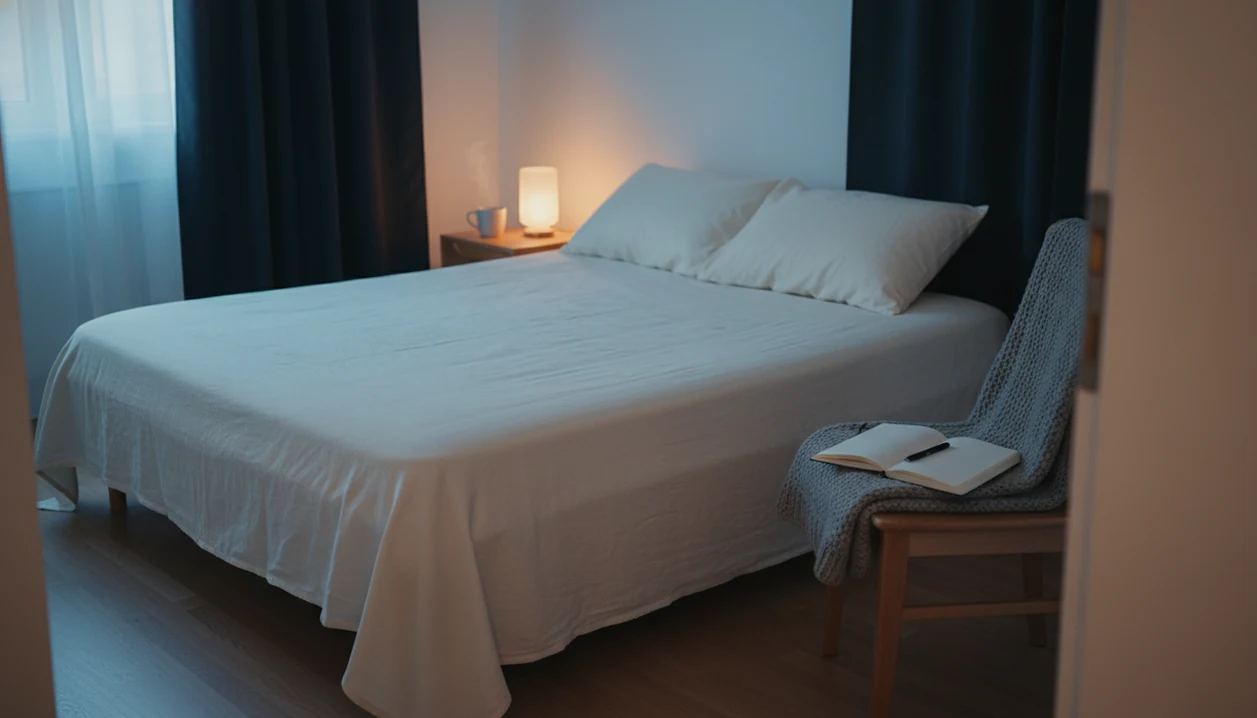
Sleep hygiene and mindfulness combine sleep-supporting habits and bedroom conditions with a calming practice before bed. Sleep hygiene includes a consistent schedule, limiting late caffeine, keeping the room cool and dark, setting a screen cutoff, and following a repeatable wind-down. Mindfulness adds a way to notice racing thoughts without continuing to work through them.
Start with a few changes you can repeat: a steady wake time, a darker bedroom, and one brief evening practice. Track how you sleep and feel the next day rather than judging the routine after one night. These habits can support rest, but they are not a cure for chronic insomnia or a substitute for assessing persistent sleep problems.
What Sleep Hygiene Actually Means
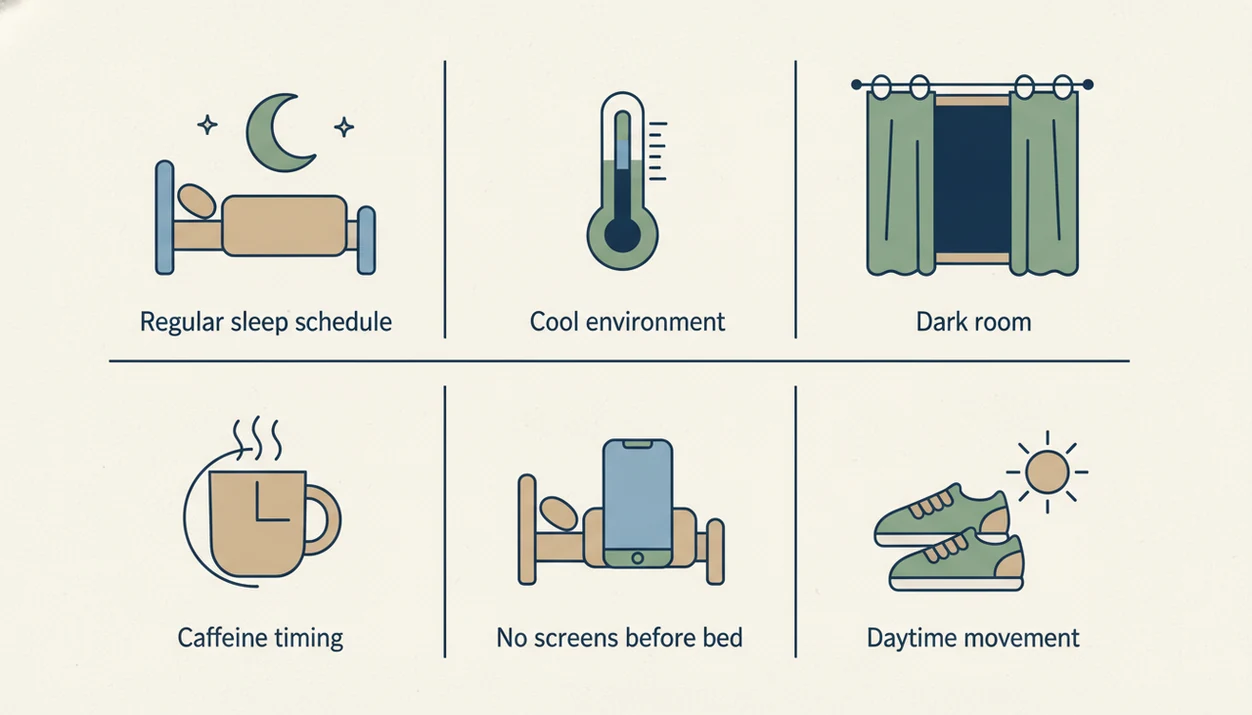
Sleep hygiene means shaping both the room you sleep in and the habits that lead up to bedtime. It is not just “go to bed earlier,” though a steady bedtime can help.
The two main pillars are environment and behavior. Environment means a bedroom that is dark, cool, quiet, and comfortable enough that your body is not fighting light, heat, noise, or scratchy bedding. Behavior means a regular schedule, caffeine timing, screen cutoff, alcohol limits, movement during the day, and a predictable wind-down.
A kitchen chair routine counts. So does turning the hallway light low at 9:15 p.m.
The American Academy of Sleep Medicine and Sleep Research Society recommend at least 7 hours of sleep for adults ages 18-60 (Jcsm.4758). The CDC reports that about one-third of U.S. adults usually get less than 7 hours (CDC guidance). Sleep hygiene is one practical way to support that target, but it works through repetition, not one heroic early night.
How Sleep Hygiene and Mindfulness Work Together
Sleep hygiene works through external cues, while mindfulness supports internal readiness for rest. Light, temperature, timing, and routine all help the body read the evening as a signal to prepare for sleep.
Circadian cues matter. Dimmer light, a cooler room, and a repeated bedtime pattern can support melatonin release and lower alertness. In plain language, your body learns, “We do this, then we sleep.” The same sequence each night helps more than a different routine every evening.
Mindfulness adds a second layer. It helps reduce pre-sleep cognitive arousal, the racing-thought loop that starts when the room finally gets quiet. Mindfulness does not mean clearing your mind of all thoughts. It means noticing the mind wandering to tomorrow’s grocery list, then returning to breath, body, or sound without arguing with the thought.
Research is modest but useful. A 2018 meta-analysis of randomized trials found mindfulness-based interventions significantly improved sleep quality, with a standardized mean difference of -0.33 (PubMed research). A randomized trial in adults with chronic insomnia found insomnia improvements after mindfulness-based treatment, with follow-up benefits reported over time (PubMed research).
Complete Sleep Hygiene Checklist: Environment and Habits
A useful sleep hygiene checklist covers the bedroom, the clock, caffeine, food, alcohol, screens, and how you use the bed. The goal is not a flawless night. It is a repeatable setup your body can recognize.
Bedroom Environment Checklist
- Keep the bedroom dark, using blackout curtains or a sleep mask if needed.
- Aim for a cool room, often around 65-68°F, or 18-20°C (Sleep Foundation guide).
- Reduce noise with earplugs, a fan, or steady background sound. For steady background audio, try rain sounds for sleep meditation at a comfortable volume that does not disturb rest.
- Choose bedding that feels comfortable, not too hot or restrictive.
- Keep work materials, bright chargers, and scrolling devices away from the bed.
Daily Behavior Checklist
- Keep sleep and wake times within about 30 minutes, including weekends.
- Cut off caffeine 6-8 hours before bed because caffeine's half-life is often about 4-6 hours (Spilling Beans How Much Caffeine Too Much).
- Stop alcohol and heavy meals 2-3 hours before bed.
- Stop screens 30-60 minutes before bed (Healthy Sleep Habits), and keep devices out of the bedroom.
- Use the bed only for sleep and sex.
Improper sleep hygiene has been associated with higher anxiety and depression symptoms among university students. For stress-heavy nights, pairing this list with mindfulness for overthinking can give the mind a clearer place to land. For emotionally difficult evenings, emotion and sleep support can complement practical habits with gentle ways to respond to feelings.
How to Use This Sleep Hygiene Checklist
Use this sleep hygiene checklist by starting small, tracking honestly, and changing one variable at a time. The point is to build a pattern your body can learn, not to renovate your whole evening in one burst.
- Start with three basics for one week: wake up at the same time, set a clear caffeine cutoff, and make the bedroom darker before sleep.
- Choose one wind-down practice for bedtime, such as breathing, stretching, or a short body scan, instead of stacking every calming habit at once.
- Track sleep quality each morning in the two-week log below, including what time you woke, when caffeine stopped, and how rested you feel from 1-5.
- Adjust one variable weekly, such as room temperature, screen timing, or moving caffeine earlier, then give that change enough nights to show a pattern.
- Seek medical evaluation if poor sleep, breathing pauses, severe daytime sleepiness, or mood changes continue despite steady habit changes.
A boring routine is often the useful one. Repeat, notice, adjust, then repeat again.
Set a short window for your bedtime practice
When bedtime feels mentally busy, a defined practice window can keep the wind-down simple. Mindful.net’s free online meditation timer can time a brief seated practice before you put the device away. The app also offers short guided meditations and breathing exercises. A device-free routine is better when opening a phone leads to scrolling, and persistent insomnia calls for clinical care rather than another timer.
Pair each sleep habit with a mindfulness practice
The checklist sets up the external conditions for sleep, while mindfulness helps the mind and body shift into bedtime mode. They work better together when you track what you actually do.
| Category | Sleep Hygiene Checklist Items | Mindfulness Wind-Down Additions |
|---|---|---|
| Timing & schedule | Fixed wake time, fixed bedtime, weekend consistency | Same practice window each night, even if brief |
| Environment | Dark, cool, quiet room; comfortable bedding | Notice the room without judging it, then soften attention |
| Physical habits | Caffeine cutoff, lighter evening meals, less alcohol | Gentle stretching or progressive muscle relaxation |
| Mental preparation | Stop work, stop scrolling, keep bed for sleep and sex | Breath counting, body scan, letting-go journal |
| Personalization | Adjust light, temperature, and timing | Choose the practice that feels calming, not effortful |
For many beginners, a checklist is easier than willpower because it removes decisions before bed. Mindfulness usually works best when the room is already sleep-friendly, while the checklist fits people who need concrete cues.
Who a Mindfulness Sleep Routine Helps, and Who Needs More
Mindfulness for sleep hygiene is most helpful for people whose nights are disrupted by irregular routines, stress-driven wakefulness, or a lack of wind-down time. It is not enough for every sleep problem. Mindfulness for women's sleep offers focused wind down ideas to consider alongside the consistent habits described here.
Best for
- People with shifting bedtimes who need a steadier evening rhythm.
- People who feel mentally busy after work, caregiving, or school.
- Beginners who want a gentle secular practice, not a long meditation session.
- People who benefit from simple cues, such as feet on carpet before lights out.
Not ideal for
- Chronic insomnia that lasts despite consistent habits.
- Possible sleep apnea, restless legs, chronic pain, PTSD, or clinical depression.
- Anyone whose mindfulness practice feels activating or distressing at first.
Clinicians typically recommend medical evaluation when sleep symptoms persist, include breathing pauses, severe daytime sleepiness, or major mood changes. Brief mindfulness practices and beginner meditation techniques can train attention and support a calmer daily routine, but they do not guarantee relief from insomnia.
How to Build a Mindfulness Bedtime Wind-Down Routine
Use this 10-15 minute bedtime wind-down as a simple bridge between the day and sleep. Personalize the order, then track it for two weeks before judging whether it helps. You can try nature sounds for sleep as a familiar audio cue while settling into your evening routine.
- Set a device-off alarm 45-60 minutes before your target bedtime, then put the phone outside reach.
- Do 5 minutes of gentle stretching or progressive muscle relaxation, keeping the movements slow and unforced.
- Practice 5 minutes of breath-focused meditation, using 4-7-8 breathing or simple counting from one to ten.
- Run a brief body scan from head to toes for 3-5 minutes, noticing contact, warmth, tension, and release.
- Write 2-3 letting-go sentences in a bedtime journal, such as “Tomorrow’s email can wait.”
- Turn off lights at your fixed bedtime, even if the routine felt imperfect.
The bell tone ending the practice can feel surprisingly final. Done.
If you want more practice options, a library of mindfulness exercises before bed can help you rotate breath, body scan, and gentle awareness without making bedtime complicated.
Two-Week Sleep Hygiene Tracking Log
A two-week sleep hygiene log helps you find which habits matter most for your own sleep. Track a few variables, then adjust one thing at a time.
Log these items each morning:
- Bedtime.
- Wake time.
- Last caffeine time.
- Screen cutoff time.
- Wind-down activity.
- Subjective sleep quality from 1-5.
- Notes, such as late exercise, heavy meal, stress, or nighttime waking.
Review the log after 7 days and again after 14 days. Look for patterns, not single-night verdicts. If sleep feels worse after late caffeine three times, that is more useful than blaming one restless night on everything.
Sleep hygiene changes often take several weeks of consistency. For people building a broader bedtime routine for adults, one-variable testing is cleaner than changing caffeine, screens, room temperature, and meditation length all at once.
Judge your routine by more than a sleep score
Mindfulness research makes an important distinction between feeling that sleep improved and measuring a change in sleep itself. A 2018 review of randomized trials found modest improvements in reported sleep quality compared with nonspecific active controls. That supports a cautious expectation of better perceived sleep, not a promise of longer sleep or more deep sleep. Understanding meditation vs sleep can help you treat bedtime practice as support for rest, not a replacement for it.
A perfect consumer sleep score is not a standardized clinical result. Different devices calculate their scores differently, so a number cannot establish a universal record or prove that meditation increased deep sleep. A review of mindfulness and sleep measurement explains that sleep stages require polysomnography; movement-based estimates cannot reliably establish sleep architecture. Keep tracker numbers secondary to your diary and daytime functioning.
For a clearer comparison, record one to two weeks of sleep before adding meditation, then continue recording during two to four weeks of practice. Alongside the existing log, note estimated time to fall asleep, nighttime awakenings, naps, practice duration, and daytime sleepiness. Improved sleep satisfaction can matter even without a higher score, but neither result alone proves that the practice caused the change.
Phone boundaries for nights when you cannot sleep
If you cannot sleep, choose a quiet activity that does not turn the night into another task. Options include reading a few pages of a paper book, sitting quietly, or listening to familiar audio with the screen off. Decide what your phone is allowed to do overnight: an alarm, essential calls, or audio only. You do not need to ban the device if you rely on it, but you can put limits around what you open.
- Choose a place for the phone that is out of reach from your pillow.
- Set notification permissions so essential contacts can still reach you.
- If using audio, select it before settling down and turn the screen off. If you prefer gentle water audio, ocean sounds for sleep offer another screen free option to test at bedtime.
- Keep a paper book or another quiet option nearby instead of opening messages or news.
- If lying awake becomes frustrating, try sitting somewhere comfortable for a quiet activity, then return to bed when sleepy.
Feeling rested does not tell you how much deep sleep you had
If your goal is more deep sleep, separate how the night felt from what sleep stages occurred. Feeling that you slept soundly, remembering few awakenings, or waking refreshed cannot establish how much deep sleep you had. Likewise, a night that felt poor does not tell you which sleep stage was lacking. Record those experiences as observations, such as “felt rested” or “remembered waking,” rather than converting them into conclusions about deep sleep.
Bedtime Routine Limits
- Sleep hygiene and mindfulness cannot replace medical evaluation for sleep apnea, restless legs, chronic pain, depression, PTSD, or long-running insomnia.
- Seek professional care for persistent or severe symptoms, as benefits usually require several weeks of consistent practice.
- Evidence for herbal teas, aromatherapy, and weighted blankets is limited or mixed.
- Mindfulness can initially feel frustrating, boring, or activating, and some people need shorter practices or guidance.
Sleep hygiene and mindfulness questions
What should I change first to improve sleep hygiene?
Start with a steady wake time, a clear caffeine cutoff, and a darker bedroom. Add one short wind-down practice rather than changing every evening habit at once. Record sleep quality each morning and look for patterns over several nights. A difficult night does not necessarily mean the changes are ineffective.
How long before bed should I stop using screens?
The routine on this page suggests setting a device-off alarm 45 to 60 minutes before your target bedtime. Treat that as a practical starting point, not a guaranteed threshold. Put the phone outside reach and replace scrolling with a quiet activity. The content holding your attention matters, not just the screen’s brightness.
Is dark mode enough to protect sleep?
Dark mode does not address everything that can keep you awake. Messages, videos, work, and repeated checking can hold your attention even on a dim screen. A screen cutoff and a less stimulating replacement activity address that part of the problem. Dark mode alone is not a complete sleep hygiene routine.
Does mindfulness improve deep sleep?
Mindfulness is associated with modest improvements in perceived sleep, but evidence for reliably increasing deep sleep is limited and inconsistent. Feeling calmer or more satisfied with sleep does not establish a change in sleep stages. A consumer wearable’s deep-sleep estimate cannot confirm that meditation produced more deep sleep.
Can sleep hygiene and meditation cure chronic insomnia?
Sleep hygiene alone is insufficient for chronic insomnia, and meditation is not a guaranteed treatment. Cognitive behavioral therapy for insomnia, or CBT-I, is the best-established behavioral treatment. Mindfulness may serve as an additional relaxation practice. Seek assessment when sleep problems persist or interfere with daytime functioning rather than continually adding bedtime habits.
How long should I try a mindfulness sleep routine?
Record a baseline for one to two weeks, then track sleep during two to four weeks of meditation. Keep the routine manageable and compare patterns rather than individual nights. Note daytime sleepiness as well as nighttime sleep. Do not postpone assessment when symptoms are severe or suggest another sleep disorder.
What if bedtime meditation makes me feel more awake?
Mindfulness can initially feel frustrating or activating. Shorten the practice or choose another wind-down activity, such as gentle stretching, rather than pushing through a longer session. You do not need to complete every calming exercise. Persistent or worsening sleep problems deserve assessment, not an increasingly demanding meditation routine.