
Mindfulness Exercises for Mental Health: Brief Practices and Clear Limits



Mindfulness exercises for mental health are short, repeatable practices that support awareness and emotional self-care, not replacements for professional treatment. Breathing, body scans, mindful movement, and journaling can help you notice thoughts, feelings, body sensations, and surroundings without forcing yourself to feel calm. These secular practices may offer a way to feel more grounded between appointments, but they do not provide diagnosis, therapy, medication, or crisis care.
Start with 30 seconds to 5 minutes, choosing an exercise that fits how you feel: anxious, low, overwhelmed, numb, restless, or self-critical. The aim is to notice and respond with more choice, not to erase an emotion. Stop or change the practice if distress increases, and seek professional help for severe, worsening, or unsafe symptoms.
What matters most
- Start small: 30 seconds to 5 minutes is enough for many beginner mindfulness support exercises. If emotions feel difficult, meditation for emotional healing offers gentle ways to begin with short, manageable practices.
- Use mindfulness as support, not treatment; seek professional help for severe, worsening, or unsafe symptoms.
- Choose exercises by feeling state: anxious, low, overwhelmed, numb, restless, or self-critical.
Supportive practice, not mental health treatment
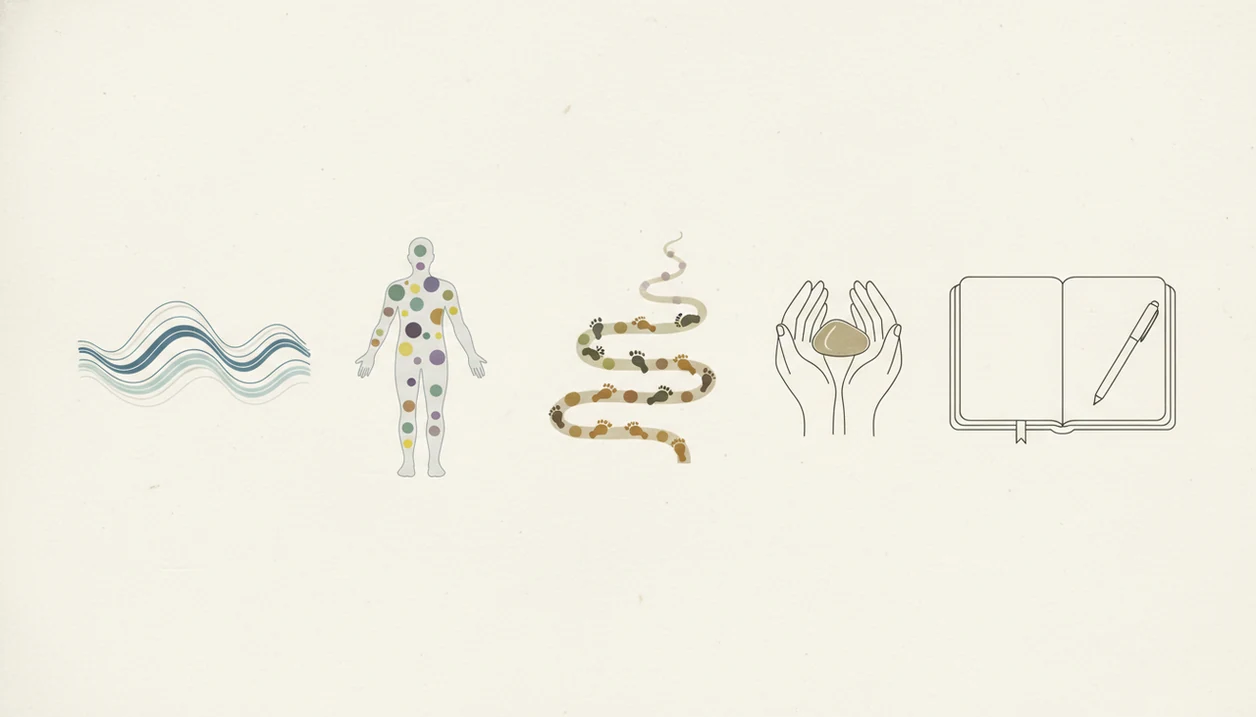
Mental health exercises are supportive, repeatable self-care practices that help you notice what is happening in your mind, body, and surroundings. They can include breathing, a body scan, mindful walking, labeling emotions, or journaling after a hard conversation.
These exercises are not therapy, diagnosis, medication, crisis care, or a safety plan. If symptoms are severe, unsafe, or worsening, professional support matters more than a breathing technique. Clinicians typically recommend mindfulness as an adjunct support when it fits the person, not as a replacement for care.
A 2021 JAMA Psychiatry systematic review and meta-analysis of 136 randomized trials found small to moderate reductions in anxiety, depression, and psychological distress from mindfulness-based programs JAMA study. That evidence applies more strongly to structured programs than to one quick pause before opening a laptop.
Mindful.net can explain mindfulness options clearly, but the safest framing is still support between professional care, not treatment or diagnosis.
How noticing and returning trains attention
Quick answer: mindfulness-based mental health exercises build practice in attention, body awareness, and response flexibility; they do not work by demanding instant calm. The repeatable loop is notice a breath, body signal, thought, or sound, then guide attention back with the same patience you might use while resetting a pencil on a page after it rolls away.
That return is the exercise. Again and again.
Self-awareness exercises can create a small pause before reacting. Naming “worrying,” “judging,” or “tight chest” may help you see an experience as something happening, not as the whole of who you are. Slower breathing and orienting to the room may reduce arousal for some people, but not for everyone.
Structured programs such as MBSR and MBCT use repeated practice, group teaching, and specific curricula. Casual mindfulness tips are lighter. A 2017 meta-analysis reported moderate effect sizes for anxiety and mood symptoms, with effects maintained at follow-up in some studies NIH research.
Beginner mindfulness and meditation practices train attention and steadier self-observation; they do not guarantee symptom relief or replace care from a clinician.
What structured mindfulness research can tell you
Evidence from a structured mindfulness program does not establish what a three-breath reset will do. A 2024 review of 13 studies involving 1,131 military veterans found medium post-treatment reductions in depression and PTSD symptoms after mindfulness-based stress reduction, or MBSR. Depression and mindfulness benefits persisted at follow-up, but PTSD benefits were not consistently maintained between groups. The review found no significant differences between MBSR and CBT or person-centered group therapy on the measured outcomes.
Staying in a program also matters. A 2020 review of mindfulness interventions for veterans found smaller symptom advantages when mindfulness was compared with other therapies rather than nonspecific controls, and higher dropout in mindfulness groups. These findings support treating fit, pacing, and follow-up as part of care. They do not establish that brief self-guided exercises treat PTSD or that continuing through distress is beneficial.
Five Mindfulness Support Exercises Beginners Can Try
These five mindfulness support exercises are beginner-friendly because they are short, secular, and easy to modify. Stop, open your eyes, move, or choose external grounding if distress rises.
3-Breath Reset
Try this during a high-friction moment, such as pausing at the edge of a cooking line prep station or standing under movie theater dim light while your mind feels loud. Take three natural breaths, track the inhale and exhale, and notice one steady contact point, such as the weight of a warm coffee mug in your palms.
5-4-3-2-1 Grounding
Use this when anxiety feels floaty or fast. Name five things you see, four you feel, three you hear, two you smell, and one you taste.
Body Scan Check-In
Use this when you feel tense but cannot name the reason. Slowly scan the face, throat, ribs, belly, and hands without trying to repair anything; one pattern we notice is that beginners often find it easier to observe sensation when the goal is curiosity, not quick relief.
Mindful Walking
Use this during restlessness or low energy. Feel each step, the pressure through the sole, and the shift of weight.
Emotion Labeling
Use this when feelings blur together. Say one word, such as “sad,” “angry,” or “ashamed,” then rate intensity from 1 to 10. An emotion wheel can help when one-word labels feel out of reach.
Small daily practice is usually more realistic than a long session saved for a crisis.
Choose an exercise for how you feel right now
Choose mental wellbeing exercises by the state you are actually in, not by what sounds impressive. For beginners, matching the exercise to the moment is often easier than forcing a long meditation because the body gets a clear next step. Understanding the stages of emotional healing can help you set realistic expectations for changing feelings over time.
| Feeling state | Try this exercise | How to do it |
|---|---|---|
| Anxious | Grounding, longer exhale, room orienting | Look around slowly, name objects, and let the exhale last slightly longer than the inhale. |
| Low | Mindful movement, one sensory action | Stand, stretch, wash your face, or step outside and notice one color or sound. |
| Overwhelmed | One-task breathing | Choose one task, take three breaths, and do only the first visible step. |
| Numb | External sensing | Notice temperature, light, sound, and the chair under you without searching for emotion. |
| Restless | Mindful walking | Walk for two minutes and count ten steady steps at a time. |
| Self-critical | Kind labeling | Say, “This is self-criticism,” then add, “I can take one kind next step.” |
For low mood, a values-based next step might be texting one safe person or taking out the trash. Not grand. Just real.
Attach a short practice to an everyday cue
For a busy day, connect one exercise to a cue that already exists, then make it short enough to repeat. You might use the Clipboard Breath before checking a prep list, after lifting a diaper bag strap, or while settling a camping setup; even 30 seconds of noticing and returning attention still counts.
- Choose one cue such as waking, commuting, opening email, eating, or bedtime.
- Set a tiny time frame of 30 to 60 seconds if you are new, or 3 to 5 minutes if it feels steady.
- Notice one anchor such as breath, feet, sound, or the shoulder blades pressing the chair.
- Return gently when your mind drifts to a grocery list, a meeting, or tomorrow’s problem.
- Track lightly with one mark on a calendar, not a perfection score.
- Adjust the practice if it feels too inward, too long, or too intense.
For sleep-related practice, pair this with sleep hygiene rather than relying on mindfulness alone.
When self-guided mindfulness is not appropriate
Mindfulness mental health exercises fit everyday support, but they are not safe for every situation. Some people feel worse when turning attention inward, especially during acute distress or trauma flooding.
| Best for | Not ideal for or unsafe without help |
|---|---|
| Everyday stress | Suicidal thoughts or self-harm urges |
| Mild rumination | Psychosis, mania, or immediate danger |
| Emotional awareness | Severe trauma symptoms or dissociation |
| Focus resets | Panic that escalates with inward attention |
| Between-session support | Replacing therapy, medication, or a safety plan |
If internal focus feels too intense, try eyes-open grounding, slow walking, naming objects, or stopping. The pocket check is real. Some people need the room, not the breath.
MBCT has evidence for relapse prevention in some adults with recurrent depression, and NICE recommends mindfulness-based cognitive therapy as an option in that structured clinical context Ng222. That does not mean a casual app exercise treats depression. Apps such as Mindful.net, Calm, and Headspace can offer guided practice, but clinical symptoms need clinical judgment.
Self-Awareness Exercises for Thoughts, Emotions, and Body Signals
Self-awareness exercises help separate noticing from fixing. The goal is awareness and choice, not suppressing thoughts or manufacturing calm. Recognizing emotional bypassing can help you notice when attempts to feel calm become ways of avoiding difficult feelings.
- Thought labeling: Name the mental event as “planning,” “worrying,” “remembering,” or “judging.” For overactive rumination, mindfulness for overthinking uses this same notice-and-return pattern.
- Emotion naming: Choose one emotion word and rate its intensity from 1 to 10. “Anger, 6” is often clearer than “I’m a mess.”
- Body signal scan: Check the jaw, shoulders, chest, stomach, and hands. Notice pressure, heat, tightness, heaviness, or numbness.
- Journaling prompt: Write, “What am I noticing, what do I need, and what is one kind next step?”
- Choice point: After noticing, decide whether to pause, speak, move, rest, ask for help, or do one practical task.
For many beginners, emotion labeling is easier than sitting silently because it gives the mind a simple job.
Sound as an external attention anchor
When focusing on your breath or body feels uncomfortable, an external sound gives you something else to attend to. The free white noise and ambient sound player offers an optional sound anchor; the Mindful.net app also has short guided meditations. Neither is medical treatment. During panic, dissociation, or worsening distress, stopping and contacting a qualified professional is more appropriate than continuing a self-guided session.
Mindfulness Limits and Help
- Seek urgent help for suicidal thoughts, urges to self harm, psychosis, mania, or immediate danger, rather than relying on mindfulness.
- Mindfulness does not replace therapy, medication, diagnosis, crisis support, or a safety plan made with a qualified professional.
- People with severe trauma, dissociation, psychosis, or acute distress should use mindfulness only with qualified guidance.
- Take increased anxiety, intrusive memories, numbness, agitation, or emotional flooding seriously, as reported in PubMed research.
Mindfulness and mental health questions
What is a simple mindfulness exercise for mental health?
Try noticing three natural breaths while feeling your feet on the floor. Each time your attention wanders, return to the breath or the contact with the floor. You do not need to feel calmer afterward. Keep your eyes open or switch to noticing objects around you if inward attention feels uncomfortable.
Can mindfulness help with depression?
Structured mindfulness programs may support depression symptoms, but this does not mean a short exercise treats depression. Research in military veterans found improvements after mindfulness-based stress reduction, with depression benefits maintained at follow-up. Brief movement or sensory noticing can be supportive self-care, not a replacement for assessment, therapy, or prescribed medication.
Why does mindfulness sometimes make anxiety worse?
Turning attention inward can intensify distress for some people, particularly during panic, acute distress, or trauma-related symptoms. This is not proof that you are practicing incorrectly. Stop, open your eyes, move, or focus on your surroundings. Discuss increased panic, flashbacks, dissociation, or sleep problems with a qualified professional.
Is mindfulness a treatment for PTSD?
Mindfulness may complement PTSD treatment, but it should not replace established trauma-focused psychotherapy. Guidelines give stronger support to treatments such as cognitive processing therapy and prolonged exposure. For trauma survivors, mindfulness should be optional, paced, monitored, and adapted by a clinician familiar with trauma, particularly when flashbacks or dissociation are present.
What mindfulness exercise can I try when I feel overwhelmed?
Keep your eyes open and notice your surroundings. Name a few objects, feel the chair beneath you or your feet on the floor, then choose one immediate task. The goal is a manageable next step, not instant calm. Stop if distress rises; self-guided grounding is not a substitute for help during an emergency.
When should I seek professional help instead of using mindfulness?
Seek assessment when symptoms persist, worsen, or interfere with sleep, work, relationships, or daily functioning. Suicidal thoughts, self-harm urges, psychosis, mania, severe dissociation, or inability to stay safe require professional support rather than self-guided meditation. For immediate danger, seek urgent help; do not rely on an exercise or app.