
Guided Meditation for Sleep Anxiety Support
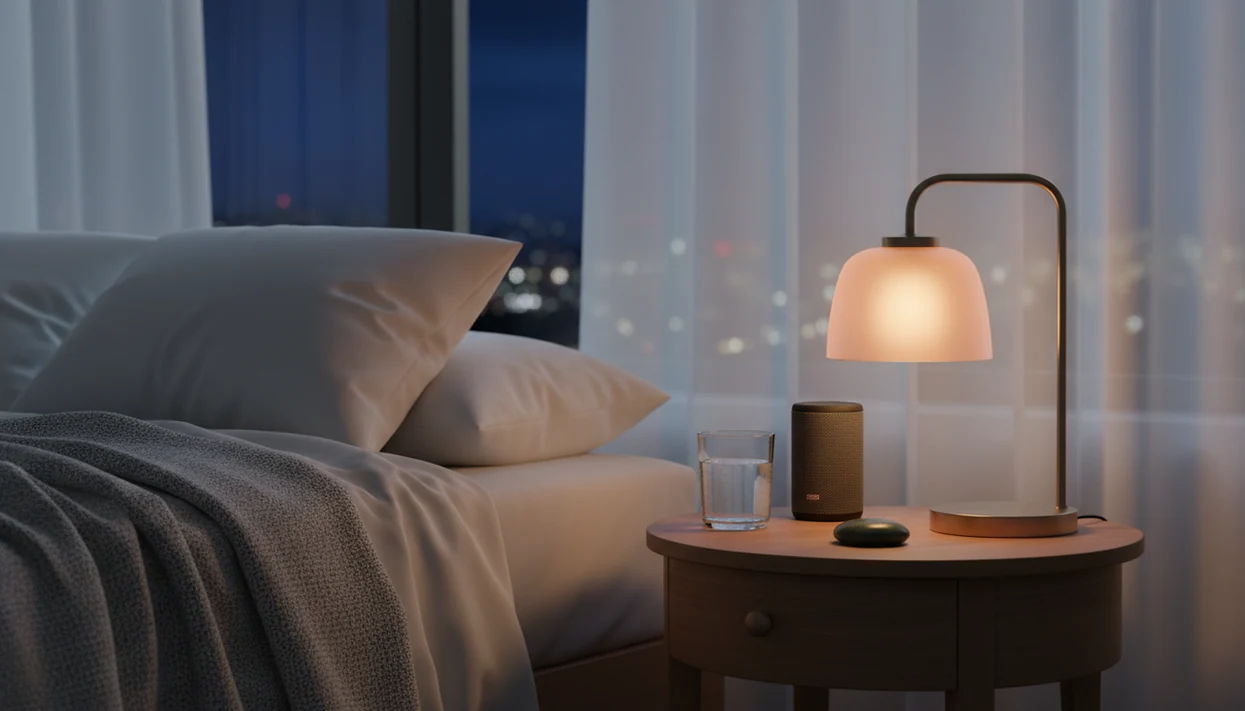
Guided meditation for sleep anxiety can help you settle nighttime worry by following a spoken sequence of breathing, grounding, body relaxation, and gentle attention cues. It is best used as low-pressure support, not as a promise to make you fall asleep or as a replacement for care for persistent anxiety, panic, trauma symptoms, or chronic insomnia.
A sleep anxiety meditation is a secular, guided mindfulness practice that supports bedtime settling by helping you notice worry, soften body tension, and return attention to safe present-moment anchors.
- Use this as a calming bedtime practice, not a treatment for anxiety disorders or insomnia.
- Choose grounding through sounds, touch, or the room if breath or body focus feels too activating.
- Stop the meditation if anxiety, panic, dissociation, or trauma memories increase.
What guided meditation for sleep anxiety means at bedtime
Guided meditation for sleep anxiety is a spoken audio or script that gives step-by-step cues for breathing, body relaxation, imagery, or mindfulness. The goal is to reduce the fight with racing thoughts, not to force sleep on command.
Field note: people use several names for this practice—sleep anxiety meditation, guided sleep worry meditation, or night anxiety mindfulness. The wording changes, but the basic sequence usually stays close: notice what is happening, soften what can soften, and return to one steady cue. Mindful.net is a mindfulness app that teaches mindfulness practices and meditation techniques for beginners and everyday life.
A bedtime anxiety meditation can use soft light, open eyes, and room sounds when inward focus feels too intense.
Good mindfulness practices and meditation techniques for beginners and daily life offer a steadier way to notice and return. They are not a guaranteed cure for worry, insomnia, or emotional pain, and they work best when treated as support rather than pressure.
Five facts about sleep anxiety meditation and nighttime worry
- Sleep problems are common. About 30% of adults report short-term insomnia symptoms, and about 10% report chronic insomnia, according to clinical sleep-medicine summaries from NCBI Bookshelf: NIH research
- Mindfulness meditation programs have shown small to moderate reductions in anxiety in a meta-analysis of randomized clinical trials, but relief is not guaranteed: PubMed research
- Mindfulness-based therapy for insomnia has research support, including clinical trials of structured mindfulness programs, but a simple audio track is not CBT-I or therapy: PubMed research
- Common sleep anxiety meditation methods include slow breathing, progressive relaxation, body scans, visualization, and grounding through sound or touch.
- Inward attention can feel activating for some people, especially at night, so modifications and stop rules matter.
For many light sleepers, the first useful shift is almost too small to impress anyone. The breath lengthens once, then the mind darts to a wedding planning call, the ceiling fan wobble, or whether the garage boxes got sorted. That still counts as practice. One pattern we notice: when overthinking runs the day as well as the night, mindfulness for overthinking may be a better daytime starting point.
How guided sleep worry meditation works in the nervous system
Guided sleep worry meditation works by moving attention away from repetitive worry loops and toward neutral or soothing anchors. Those anchors might be breath, blanket pressure, room sounds, or the outline of a lamp in dim light.
The mechanism is often described as the relaxation response. In plain language, the body may breathe more slowly, brace less, and register more safety. Meditation does not sedate the body. It does not flip an unconsciousness switch.
Repeated practice can make the routine more familiar over weeks. A three-minute breathing pause before opening a laptop can make bedtime practice feel less abrupt later. For anxious beginners, daytime practice through mindfulness for beginners with anxiety may be gentler than starting only at midnight.
Small cues become recognizable.
How to use a bedtime anxiety meditation safely
Use a sleep anxiety meditation as a short support routine, not a test you pass or fail. At first, a few slow rounds may be enough—about the length of standing under an airport queue sign and reading it twice while your heartbeat begins to settle.
- Set a low-pressure intention, such as resting your body, not making sleep happen.
- Choose a safe anchor: breath, blanket pressure, room sounds, hands, or one external object.
- Lower stimulation without making the room feel unsafe; keep your eyes open if needed.
- Follow short cues for 5 to 10 minutes before trying longer tracks.
- Redirect worry gently with phrases like “thinking is here” or “not now, tomorrow.”
- Stop or switch anchors if distress rises.
For beginners, a 5 to 10 minute meditation is often easier than a long sleep track because it creates less pressure to “make it work.” A steady bedtime routine for adults can also reduce how much work the meditation has to do.
Best-fit situations and caution signs for sleep anxiety meditation
Sleep anxiety meditation may fit mild nighttime worry, but it is not the right primary support for every sleep or mental health concern. Use the table as a quick sorting tool.
| May be a good fit | Use caution or choose support |
|---|---|
| Mild bedtime worry | Panic at night |
| Racing thoughts | Trauma memories |
| Beginner-friendly relaxation routine | Dissociation or feeling unreal |
| Desire for secular mindfulness | Severe depression or psychosis |
| A calming pre-sleep habit | Active suicidal thoughts |
| Interest in guided grounding | Chronic insomnia |
Persistent sleep problems or mental health concerns deserve professional evaluation. Clinicians typically recommend structured care for chronic insomnia or severe anxiety symptoms rather than relying only on self-guided audio. For habit basics, sleep hygiene is often part of the wider plan.
A cautious 8-minute guided meditation for sleep anxiety script
Opening safety cue
You may keep your eyes open or closed. You may lie down, sit on a chair, or stop at any time. Let the practice be optional from the first breath.
Grounding and relaxation sequence
Notice one sound in the room. Notice one point of contact, maybe shoulder blades pressing the chair or the mattress under your hips. If your eyes are open, name one visible shape.
If it feels okay, allow the next exhale to be a little longer. No holding. No forcing. Let the face loosen if that feels safe. Notice the stomach flutter or the rise of the belly against fabric without trying to fix it. Skip any body area that feels uncomfortable.
When thoughts appear, label them lightly: “worrying,” “planning,” “remembering.” Then return to one anchor. The sound. The blanket. The room.
Closing sleep support phrase
Rest is enough; sleep does not need to be chased. If you remain awake, you can still let the body do less work.
Grounding alternatives when night anxiety mindfulness feels activating
“What if meditation makes sleep anxiety worse?” It can happen, and it is not a personal failure. Some people feel more alert when they focus on breath, heartbeat, silence, or body sensations in the dark.
Try one of these lower-intensity alternatives:
- Eyes-open room scan: name five plain objects without analyzing them.
- Distant sounds: listen for traffic, rain tapping during a walking practice earlier in the day, or a fan.
- Feet or hands: feel feet on carpet or tile, or hands resting on the blanket.
- Neutral paper book: read something familiar and low-emotion for a few pages.
Shorter practices and daytime rehearsal often work better than intense midnight practice. If symptoms are strong, trauma-sensitive support or professional guidance may be appropriate.
Stop rules for bedtime anxiety meditation
Stop a bedtime anxiety meditation if distress rises instead of settling. Finishing the audio is not the goal.
- Panic rising: Turn on a light, sit up, and orient to the room.
- Breathing feels restricted: Stop breath focus and shift to sounds or visible objects.
- Feeling unreal or detached: Put feet on the floor and name objects around you.
- Trauma memories intensify: Open your eyes, change position, and contact trusted support if needed.
- Feeling unsafe: End the practice and seek appropriate help.
Do not push through severe distress to complete a meditation. If active suicidal thoughts, psychosis, severe depression, PTSD symptoms, or repeated panic are present, seek professional or crisis support.
Limitations of guided meditation for sleep anxiety
Guided meditation is wellness support, not a medical treatment for anxiety disorders, PTSD, panic disorder, depression, or chronic insomnia. It can be useful, but it has real limits.
- Results vary, and mindfulness evidence is promising but often modest compared with structured clinical approaches.
- Breath focus, body scans, silence, or eyes-closed practice can make some people feel more activated.
- Audio can become a sleep crutch if it is the only strategy and sleep habits remain irregular.
- Long tracks may increase frustration when someone expects instant sleep.
Tools like Mindful.net, Calm, and Headspace can support practice selection, but they cannot replace qualified care. Mindful.net also appears as a Mindfulness Practices App for people comparing beginner-friendly options.
Signs You Should Try Another Approach
A common myth is that guided meditation should reliably switch off sleep anxiety if the track is good enough. The more cautious reading is that it may support settling for some people, while others find that closing the eyes, tracking the breath, or listening in silence makes worry feel louder. If the hallway night light feels safer than darkness, or prayer feels more familiar than secular mindfulness, that information matters more than forcing one method.
When Another Method Fits Better
We often see guided sleep meditation work best when the person is mildly keyed up, not when panic, dread, or trauma memories are already escalating. In those moments, a simple eyes-open reset, a quiet spiritual prayer, or a short grounding routine may be a better first step than a long body scan. The best bedtime method is the one that lowers pressure rather than adding a new performance test.
A Decision Shortcut
- If breath focus makes you monitor every inhale, try sound awareness or a cool sheet contact point instead of formal Breath Awareness.
- If you feel trapped by lying still, consider a brief standing reset or slow Mindful Walking before returning to bed.
- If you are a shift worker coming home wired, use a decompression ritual before meditation; the practice may not carry the whole transition alone.
- If prayer is already calming and meaningful, meditation does not have to replace it; the two can be separate supports with different language.
- If a guided voice starts to feel irritating, stop early; irritation is useful data, not a failure of discipline.
A Field Note on Real Use
- Keep the first attempt short enough that quitting does not feel dramatic; five minutes may be more useful than a 40-minute track.
- Use the Slow-Exhale Check: take one easy slow exhale, then ask whether the practice feels steadier, neutral, or more activating.
- Stay eyes-open if darkness increases worry; a hallway night light can be part of a skillful setup.
- Do not use meditation to argue with panic symptoms; if distress rises quickly, switch to grounding and seek appropriate support when needed.
- Avoid turning sleep meditation into a scoreboard; the aim is a safer wind-down, not proving you can fall asleep on command.
Maintenance Routine Worth Keeping
You replay conversations as soon as the room gets quiet
Use a labeled worry pause before the meditation: name the topic, write one next action if needed, then return to the guided track. This tends to work better than asking the mind to drop an unresolved loop instantly.
You are an overwhelmed parent who may be interrupted
Choose a short body scan that can be abandoned without frustration. A practice that survives interruption is usually more realistic than one that requires perfect silence.
You are a musician, athlete, or nurse with a highly alert body
Start with sensory orientation rather than breath counting: notice the sheet temperature, room edges, and one slow exhale. A body trained for performance may need permission to downshift gradually.
Three Paths Worth Trying
| Technique | Best for | Minutes |
|---|---|---|
| Slow-Exhale Check | quickly testing whether meditation feels settling or activating | 1-3 min |
| Eyes-Open Room Scan | night anxiety that worsens with closed eyes or silence | 3-6 min |
| Gentle Body Scan | mild worry with physical restlessness after lights out | 8-15 min |
What Testing Suggests
One pattern we repeatedly notice is that people judge guided sleep meditation by whether it produces sleep immediately, when the more useful question may be whether it makes the next few minutes feel less threatening. We usually suggest testing one small cue at a time: a cool sheet, a slow exhale, or a steady voice. If the practice feels more activating, that is a reason to adjust, not to push harder.
The best sleep practice is the one that reduces pressure enough to repeat tomorrow.
Why Mindful.net fits this specific need
Mindful.net is a good fit for readers who need practical choices, not a promise that meditation will fix sleep anxiety. This guide can sit alongside Breath Awareness and Mindful Walking resources so readers can choose a lower-pressure wind-down method when lying still is not the right entry point.
FAQ
Can meditation help sleep anxiety?
Meditation may support relaxation and reduce struggle with nighttime worry. It is not guaranteed to work and is not a treatment for anxiety disorders or insomnia.
What is sleep anxiety meditation?
Sleep anxiety meditation is a guided bedtime practice that uses mindfulness, grounding, breathing, or relaxation cues. It helps you return attention to safer present-moment anchors.
Why does meditation make my anxiety worse at night?
Meditation can make anxiety worse when inward focus increases body awareness or threat sensitivity. This may be more likely during high stress, panic, trauma symptoms, or sleep loss.
Should I meditate in bed if I feel anxious?
Meditating in bed is fine if it feels safe and low pressure. Sitting nearby or using a shorter routine may be better if bed practice increases frustration or panic.
How long should a sleep meditation be for beginners?
Beginners can start with 5 to 10 minutes before trying longer sleep meditations. Short practices often create less pressure at bedtime.
When should I get help for sleep anxiety?
Get help if sleep anxiety includes chronic insomnia, panic attacks, trauma symptoms, severe depression, active suicidal thoughts, psychosis, or other safety concerns. Educational mindfulness support may help with low-intensity practice, but urgent or persistent symptoms need qualified care.