
Deep Sleep Meditation: How to Wind Down Without Forcing Sleep


Deep sleep meditation is a guided or self-directed bedtime relaxation practice that uses breath, body awareness, sound, or spoken cues to help you settle before rest. Despite its name, it does not guarantee deep sleep, a quick sleep onset, or an uninterrupted night. Its practical purpose is to make the transition toward sleep less effortful, not to force a particular sleep stage or treat a sleep disorder.
Beginner-friendly options include guided audio, body scans, slow breathing, visualization, and progressive muscle relaxation. Choose one that feels comfortable rather than trying to complete every technique. Research suggests modest improvements in perceived sleep quality over time. Keep steady sleep habits alongside the practice, and judge it by how well it helps you unwind rather than by a promise of perfect sleep.
What matters most
- Use deep sleep meditation to unwind, not to force perfect or uninterrupted sleep.
- The most beginner-friendly formats are guided audio, body scans, slow breathing, visualization, and progressive muscle relaxation.
- Evidence suggests mindfulness can modestly improve sleep quality over time, especially when paired with steady sleep habits.
Deep sleep meditation basics for bedtime wind-down
A deep sleep meditation is a bedtime relaxation practice that prepares the body and mind for sleep, but it does not guarantee deep sleep. Think of it as changing the conditions around rest, not pressing a sleep button.
Common formats include guided audio, a sleep meditation body scan, slow breathing, visualization, and progressive muscle relaxation. Beginners can practice while lying in bed, with a blanket pulled up and the lights already low. No prior meditation experience is needed.
A helpful instruction is notice, soften, and return. Notice the breath, a quiet sound, the weight of the body, or a thought passing through, then come back without scolding yourself.
For app-based guidance, use a track that stays quiet, ad-free, and simple enough to ignore as you drift. The point is a gentle cueing system, not another bedtime task or a claim of medical treatment.
2015-2019 evidence on relaxing sleep meditation
Research on relaxing sleep meditation is encouraging, but it mainly measures sleep quality and insomnia symptoms. It does not prove that meditation reliably increases slow-wave sleep every night.
- A 2015 JAMA Internal Medicine randomized trial found that a 6-week mindfulness program improved Pittsburgh Sleep Quality Index scores by about 2.8 points in older adults with moderate sleep disturbance, more than a sleep-education control group JAMA study.
- A 2019 meta-analysis of randomized trials found small-to-moderate sleep-quality improvements with mindfulness meditation across adult sleep-disturbance studies NIH research.
- The CDC reports that about one in three U.S. adults does not get the recommended 7 hours of sleep CDC guidance.
- The evidence is stronger for perceived sleep quality than for changing a specific sleep stage.
- For many beginners, regular practice over weeks matters more than one intense session on a hard night.
How to tell whether bedtime meditation is helping
Feeling less worried at bedtime is a useful result, but it is not proof that you spent more time in deep sleep. Sleep questionnaires capture your experience; movement trackers estimate sleep and wake timing. Neither establishes sleep stages. A review of mindfulness and sleep measurement explains that polysomnography measures sleep stages using brain activity and other overnight signals. Evidence that mindfulness changes those stages remains preliminary.
For a practical comparison, keep a sleep diary for one to two weeks before starting, then continue it during two to four weeks of meditation. Record when you attempt sleep, roughly how long falling asleep takes, awakenings, when you get up, and daytime sleepiness. Include meditation duration, naps, caffeine, alcohol, and medication. Look for changes in bedtime ease and daytime functioning, not just a consumer wearable's deep sleep score. A diary can help describe a pattern, but it cannot prove that meditation caused a change.
Nervous system cues in deep sleep meditation
Deep sleep meditation works by shifting attention away from planning, replaying, and problem-solving toward present-moment sensation. In plain terms, it gives the nervous system fewer bedtime problems to solve.
Slow breath cues can reduce arousal. Body scanning can reveal held places, like the lower back settling into the sheets or the tongue resting away from the roof of the mouth. Repeated guidance can also lower effort because you do not have to decide what to do next.
This is not direct control over sleep architecture. You are not ordering the brain into a sleep stage. You are practicing conditions that make sleep more likely to arrive naturally.
That matters on ordinary nights. If the mind drifts back to a wedding planning call, a dog leash tugging at dusk, or the hospital clipboard you meant to finish, the practice is not ruined. You notice the thought, let it lose momentum, and return to breath, sound, or body weight.
5 steps to use guided deep sleep meditation tonight
Use guided deep sleep meditation by setting up the room first, then letting the audio become a soft structure for attention. The goal is not to perform meditation well; drifting, waking, and losing track are normal. For younger listeners, teen sleep meditation offers a short bedtime routine that can fit around school schedules.
- Prepare the room by dimming lights, lowering noise, and setting a comfortable temperature before you get into bed.
- Choose audio that is downloaded, low-volume, and 5 to 20 minutes long, so Wi-Fi or ads don’t interrupt.
- Protect your phone by dimming the screen, turning off notifications, and placing it face down beside the bed.
- Lie down comfortably with enough support under your head, knees, or shoulders to reduce fidgeting. If you are expecting, pregnancy sleep meditation offers bedtime practice ideas suited to the changes of pregnancy.
- Follow the cues by returning to breath or body sensations whenever you notice you are trying too hard.
For a fuller evening structure, pair this with a steady bedtime routine for adults.
Sleep meditation body scan script for beginners
How do you do a sleep meditation body scan? Start at the head, move slowly through the body, and use noticing rather than forcing as the main instruction.
Try this:
Let your attention rest at the top of the head. Notice any warmth, pressure, or nothing much at all. Soften the forehead. Let the muscles around the eyes be less busy.
Bring attention to the face. Notice the cheeks, the space around the eyes, and the tongue resting in the mouth. If there is effort there, allow the expression to become a little less organized, as if you no longer need to look awake.
Feel the chest rise and fall. Notice the belly moving. Let the hips be heavy. Scan down the legs, knees, calves, ankles, and feet.
If thoughts pull you away, return to one small area. The feet. The breath. The sheet against the skin. For more short options, use mindfulness exercises before bed as a gentle menu.
Best-fit and poor-fit bedtime deep sleep meditation scenarios
Bedtime deep sleep meditation fits people who want a calmer transition into rest, especially when the night gets mentally loud. It is a poor fit when someone needs medical assessment or expects guaranteed deep sleep.
| Scenario | Best for | Not ideal for |
|---|---|---|
| Bedtime transition | Creating a repeatable wind-down cue | Replacing all sleep habits |
| Racing thoughts | Noticing thoughts without following every thread | Severe distress that needs professional support |
| Mild tension | Softening the body through breath and body awareness | Pain, breathing pauses, or symptoms needing evaluation |
| Beginners | Starting with guided audio while lying down | People who want a strict performance goal |
| Nightly routine | Building familiarity over several weeks | Suspected sleep apnea or severe chronic insomnia |
Persistent or severe sleep problems should be discussed with a healthcare professional. For ongoing rumination, mindfulness for overthinking may also help build the same return-to-the-present skill during the day. For broader emotional concerns at bedtime, emotion and sleep support offers mindfulness practices to complement appropriate professional care.
When to seek professional help for sleep problems
Seek professional help when sleep problems are persistent, severe, or tied to symptoms that meditation cannot safely sort out. A restless night after stress or travel is different from weeks of insomnia, breathing concerns, intense anxiety, pain, or grief that keeps pulling you awake.
Deep sleep meditation can support care by lowering bedtime effort and giving the mind a softer place to land. It does not diagnose sleep disorders, treat sleep apnea, replace therapy, or explain why sleep is breaking down.
- Track how long the problem has lasted, how often it happens, and whether daytime energy, mood, work, or driving are affected.
- Contact a healthcare professional if insomnia becomes chronic, pain is waking you often, grief feels unmanageable, or anxiety stays high at night.
- Ask about sleep apnea evaluation if you snore loudly, wake gasping, or someone notices breathing pauses.
- Seek urgent help for repeated breathing pauses, dangerous sleepiness while driving or caring for others, chest symptoms, or crisis-level distress.
- Use meditation as a calming support while following medical or mental health guidance.
Daytime mindfulness habits that support deep sleep meditation
Daytime mindfulness can make bedtime deep sleep meditation easier because it trains the same attention skill before you are exhausted. Even a brief daytime pause can rehearse noticing and returning before you are exhausted.
A small daytime support is a three-breath pause after something ordinary, such as brushing the dog or slipping a cotton sleeve over your wrist. Feel the ribs move as you breathe.
Bedtime practice usually works better when it is not the only mindful moment in a high-stress day. The Mindfulness Practices App framing is simple: practice attention in ordinary moments, then reuse it when the room is dark.
Bedroom setup for a relaxing sleep meditation
A relaxing sleep meditation is easier when the bedroom supports rest instead of competing with it. The setup should reduce light, sound surprises, temperature discomfort, and phone temptation. For a gentle sound option, explore ocean sounds for sleep while keeping the volume low enough to support rest.
- Darkness: Lower lights before starting, and keep the phone screen away from your eyes.
- Comfort: Adjust pillows, blankets, and body position before the audio begins.
- Temperature: Aim for a room that feels cool enough to rest without repeated blanket changes.
- Audio volume: Keep guidance low, clear, and easy to ignore if you drift. If you prefer steady background audio, rain sounds for sleep meditation can provide a simple alternative to spoken guidance.
- Minimal interruptions: Silence alerts, close extra tabs, and avoid checking messages after starting.
Healthy sleep habits strengthen the practice more than using meditation as the only strategy. If the basics feel uneven, start with sleep hygiene before adding longer audio.
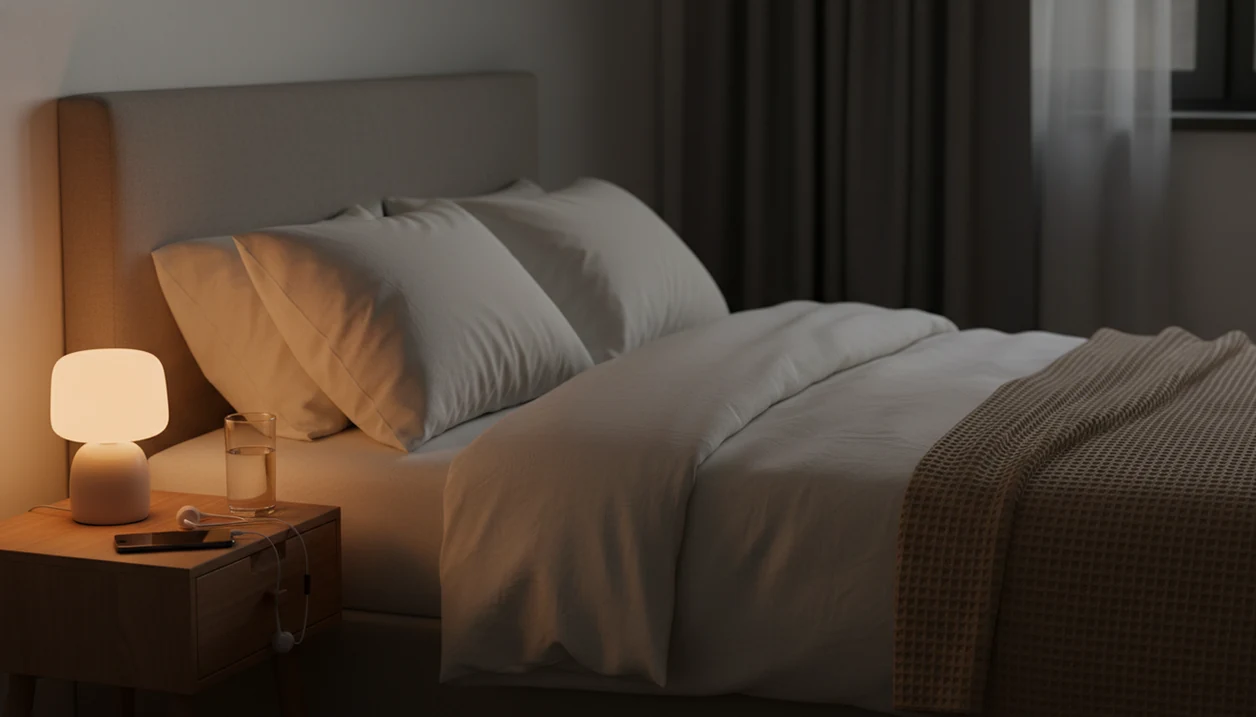
Image caption guidance: Calm bedside scene with low light, optional headphones, and a phone face down for deep sleep meditation.
Deep Sleep Meditation Limits
- Deep sleep meditation cannot guarantee falling asleep quickly, staying asleep, or reaching slow-wave sleep.
- It is not a standalone treatment for chronic insomnia, sleep apnea, or diagnosed sleep disorders.
- Seek clinical evaluation for persistent insomnia, loud snoring, breathing pauses, or daytime sleepiness, as noted in Insomnia.Html.
- Rigid expectations and distracting app audio can backfire, while mental health exercises offer support, not substitutes for care.
Deep sleep meditation questions
Does deep sleep meditation actually increase deep sleep?
Not reliably, based on current evidence. Mindfulness can modestly improve perceived sleep quality, but studies do not establish that a brief bedtime meditation consistently increases slow-wave sleep. Feeling calmer or more satisfied with sleep is meaningful, even when measured sleep stages change little.
How long should a deep sleep meditation last?
A guided session of 5 to 20 minutes is a practical starting point. Choose a length that fits your bedtime routine without making practice another task to finish. Longer is not a guarantee of better sleep. You can stop following the guidance if you begin to drift off.
What should I do if my thoughts keep racing during sleep meditation?
Use a simple sequence: notice the thought, soften any tension you can, and return to the breath, sound, or body sensation. You do not need to empty your mind. If checking whether the meditation is working adds frustration, return to one comfortable sensation instead of monitoring sleep.
Is it okay to fall asleep during a guided meditation?
Yes. In a bedtime practice, drifting off or losing track of the instructions is not a mistake. Keep the audio quiet enough to ignore, silence notifications, and place the phone face down. There is no need to stay awake just to hear the end of the recording.
Can deep sleep meditation treat chronic insomnia?
Meditation may help reduce bedtime tension, but it is not a standalone treatment for chronic insomnia. Cognitive behavioral therapy for insomnia, or CBT-I, is the best-established behavioral treatment. Persistent sleep difficulty, especially with daytime impairment, calls for professional assessment rather than relying on relaxation audio alone.
Can meditation make up for a bad night's sleep?
No. Meditation may reduce distress or make you feel temporarily more alert, but it has not been shown to replace adequate sleep or reverse sleep debt. Feeling refreshed after a session does not establish that attention, reaction time, or other functions affected by sleep loss have recovered.