
Bedtime Routine for Adults with a 10-Minute Meditation Slot
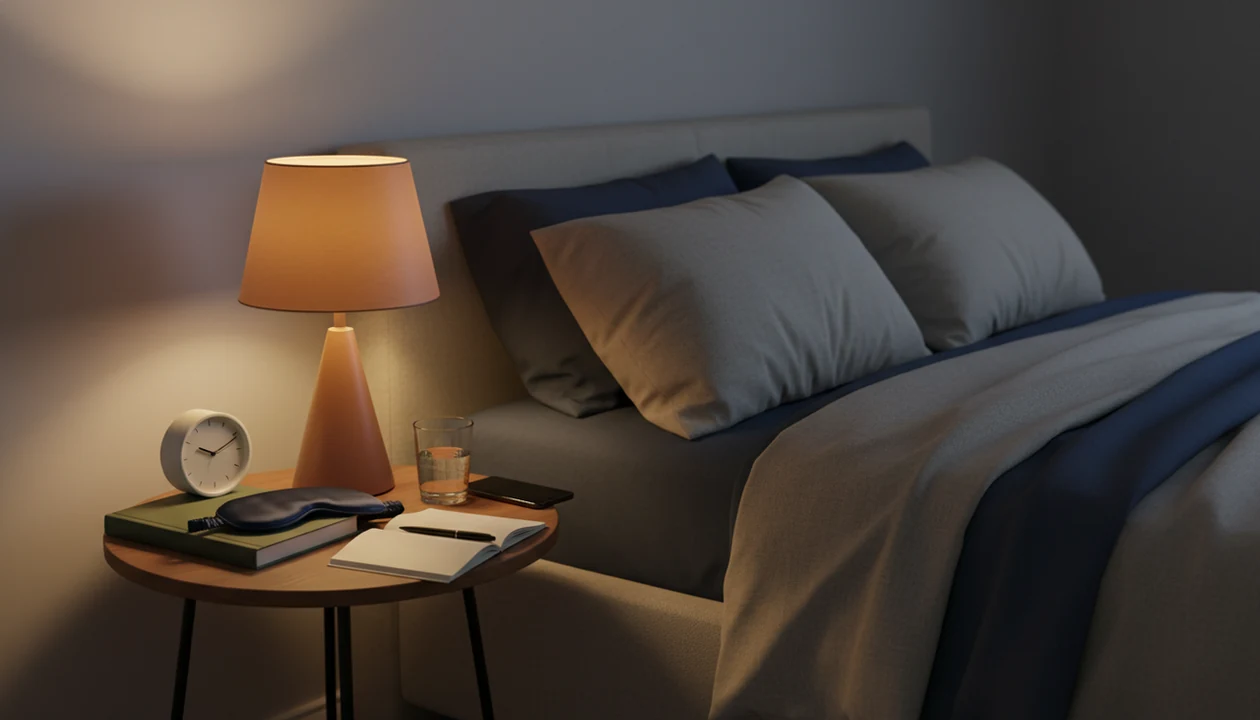
A bedtime routine for adults works best when it repeats the same 30–60 minute wind-down sequence most nights: dim lights, stop screens, prepare tomorrow, relax the body, and use a 10-minute meditation slot if your mind feels busy. The routine does not need to be perfect; it needs to be predictable enough that your brain starts associating the sequence with sleep.
> Definition: A bedtime routine for adults is a repeatable pre-sleep sequence that lowers stimulation, reduces decision-making, and signals the transition from daytime activity to rest.
- Use a simple 30–60 minute adult bedtime routine with the same order most nights.
- Place a 10 minute bedtime meditation after screens are off and before lights out.
- Treat meditation as a supportive wind-down tool, not a cure for chronic insomnia or health conditions.
30–60 Minute Bedtime Routine for Adults Timeline
A practical adult bedtime routine starts 30–60 minutes before bed and follows the same order most nights. The simple version is: dim lights, reduce screens, prepare tomorrow, calm the body, then use meditation if your mind is still busy.
| Time before bed | What to do | Why it helps |
|---|---|---|
| 60 minutes | Dim lights, lower noise, decide the day is ending | Reduces stimulation |
| 45 minutes | Put away bright screens, or use only low-stimulation settings | Limits alerting input |
| 30 minutes | Set clothes, pack a bag, check alarms, write tomorrow’s short plan | Reduces decision-making |
| 20 minutes | Wash up, stretch gently, read, or play quiet music | Slows the body |
| 10 minutes | Try a 10 minute bedtime meditation before bed or while lying down | Gives attention one steady place |
The first night may feel oddly basic. That’s fine. For most adults, consistency matters more than adding more steps.
How to Use a Bedtime Routine for Adults
Use a bedtime routine by choosing a realistic sleep time, then building a short, repeatable sequence that starts 30–60 minutes earlier. The goal is not to perform every step perfectly; it is to make the last part of the night feel familiar and lower-stimulation.
- Choose a bedtime you can actually keep most nights, then count back 30–60 minutes to mark the start of your wind-down.
- Dim the lights and stop high-stimulation tasks before the routine begins, including intense work, arguments by text, or fast scrolling.
- Prepare tomorrow’s essentials in one pass: clothes, bag, keys, medications, alarm, and a short plan if your mind tends to rehearse the morning.
- Use one calming anchor near the end of the routine, such as breath counting, a body scan, quiet reading, or gentle stretching.
- Repeat the same order most nights for a week or two before changing it, so your brain has enough repetition to learn the cue.
If a night goes sideways, keep the smallest version. Low lights, one prepared item, and five steady breaths still count.
Adult Bedtime Routine Brain Signals and Sleep Cues
A consistent bedtime routine works by pairing repeated cues with sleep readiness. Lower light, fewer choices, less movement, and slower attention patterns all tell the nervous system that the active part of the day is closing.
Sleep scientists often talk about arousal and conditioning. In plain language, arousal means how “on” your body and mind feel, and conditioning means your brain learns from repeated patterns. A quiet sequence done in the same order can become a cue. The bedroom door closes, the lamp is low, and the mind starts to recognize what comes next.
Per the CDC, adults ages 18–60 are generally advised to get 7 or more hours of sleep per night (CDC guidance). CDC data also show that many U.S. adults report short sleep duration, which is one reason routine design matters (CDC guidance). Mindfulness helps by moving attention away from replaying the day or rehearsing tomorrow and back toward simple present cues: the wobble of a ceiling fan, the texture of a pencil between your fingers, or the rise and fall of your chest under a shirt.
10 Minute Bedtime Meditation Routine Steps
A 10 minute bedtime meditation is enough for beginners because it gives the mind a repeatable task without turning bedtime into a project. No special cushion, app, candle, or long practice history is required.
- Set a timer for 10 minutes and choose a quiet, low-light position, seated or lying down.
- Take three slow breaths and let each exhale lengthen naturally, without forcing it.
- Notice contact points at the feet, legs, back, hands, jaw, and face.
- Count breaths from one to ten, then begin again when you lose track.
- Return gently when thoughts move to work, money, or the grocery list.
- End by relaxing effort instead of trying to make sleep happen.
For beginners, breath counting often works better than “empty your mind” because it gives attention a simple job. If you want more options, mindfulness exercises before bed can include body scans, sound awareness, and gentle gratitude.
5 Adult Night Patterns and Bedtime Routine Adjustments
Different adult nights need different adjustments, but the routine should keep one steady calming anchor. That anchor can be breath counting, a body scan, quiet reading, or a short written plan.
| Night pattern | Adjustment | Keep this anchor |
|---|---|---|
| Racing thoughts | Write a two-minute brain dump, then count breaths | Breath counting |
| Screen-heavy work | Shut the device down before meditation | Clean boundary |
| Parents of young children | Use a 15–20 minute version | One non-negotiable calming step |
| Shared bedroom | Use headphones, an eye mask, or a silent body scan | Low-disruption practice |
| Shift work | Start the routine before your sleep time, not by the clock | Same order each sleep period |
The phone buzz noticed without grabbing it can become part of the practice. Not heroic. Just one small pause.
If overthinking is the main issue, mindfulness for overthinking may be a better starting point than adding a longer routine.
Five Adult Bedtime Routine Facts Beginners Should Know
Use these five facts as a decision guide, not a scorecard. One pattern we notice: adults often do better with a repeatable wind-down shape than with a perfect script, especially when a child wakes up, a hallway still needs vacuuming, or the evening has already run late.
- Consistency matters more than the exact activities. A repeatable 20-minute routine usually beats a complicated routine done twice.
- Screens and bright light can keep the mind more alert. Reduce them 30–60 minutes before bed when possible; the American Academy of Sleep Medicine lists limiting evening light and electronics as part of healthy sleep habits (Healthy Sleep Habits).
- Gentle stretching, reading, journaling, and mindfulness can lower pre-sleep arousal. The effect is usually gradual.
- Mindfulness-based interventions have evidence for improving sleep quality in adults. A systematic review found moderate sleep-quality improvements, but most evidence is on broader programs, not one exact 10-minute script (PubMed research).
- No routine guarantees instant sleep. Stress, illness, irregular schedules, late caffeine, and untreated sleep problems can override a good plan.
Good mindfulness practices and meditation techniques for beginners and daily life build attention and steadier habits, not guaranteed sleep on command.
Bedtime Meditation Routine Alternatives for Busy Nights
A busy night still benefits from a short landing strip. Use the smallest routine that lowers stimulation and gives your mind one clear next step.
The 5-minute minimum: lower the lights, wash up, write one worry or task, then take five mindful breaths. This is useful after travel, late work, or a long family evening.
The 15-minute reset: turn screens off, prepare tomorrow’s essentials, do a short body scan, then lights out. The tongue softening from the palate is a small but real signal.
The non-meditation option: stretch gently, read something quiet, or listen to calming audio if meditation feels too activating.
Mindfulness does not have to happen in bed. You can practice seated in the living room, eyes open, or earlier in the evening. For planning-heavy minds, gratitude journal prompts can keep writing brief instead of turning it into a late-night review meeting.
Experiment for two weeks, then keep what actually helps.
Adult Night Routine Fit: Best For and Not For
This night routine fits adults who need a simple, secular wind-down more than another list of sleep tips. It is not meant to replace clinical care for ongoing or serious sleep problems.
| Fit | Best for | Not ideal for |
|---|---|---|
| Wired at night | Adults who feel alert even when tired | People expecting instant sleep |
| Screen-heavy evenings | Adults who need a clear device boundary | People who must stay on-call without adjustment |
| Racing thoughts | Adults who benefit from writing and breath counting | Severe distress that needs professional support |
| Beginner meditation | Adults who want secular attention practice | People who find bedtime meditation activating |
| Sleep concerns | Adults building supportive habits | Suspected sleep apnea or persistent insomnia |
Tools like Mindful.net can help beginners compare practical mindfulness practices and meditation techniques for everyday life. Apps such as Calm and Headspace also offer guided bedtime audio, but the key decision is simpler: choose a routine you can repeat most nights.
Limitations
A bedtime routine can support sleep, but it cannot solve every cause of poor sleep. The honest goal is to improve the probability of settling, not to force the body into sleep on demand.
- A routine cannot replace medical evaluation for chronic insomnia, suspected sleep apnea, or persistent daytime exhaustion. - Meditation may initially make some people more aware of worries. Shorter sessions or daytime practice may feel better. - Evidence supports mindfulness-based interventions broadly, but not one scientifically optimized 10-minute bedtime script. - Caffeine, alcohol, late work, stress, pain, illness, and irregular schedules can overpower a well-designed routine. - A routine may take several weeks to feel natural, especially if sleep timing has been inconsistent. - If sleep problems persist, worsen, or affect daytime functioning, consult a qualified health professional. If you wake up gasping, have loud snoring, fall asleep while driving, or feel unsafe because of exhaustion, treat that as a medical issue rather than a routine-design problem.
Mindful.net, the Mindfulness Practices App, is educational and beginner-friendly, but it does not diagnose sleep disorders or provide medical treatment.
From Our Editorial Review
We usually see beginners do better when the first bedtime instruction is almost too simple: feel one slow exhale, notice the room, and return without judging the result. One pattern we notice is that people try to perform calm, especially on a night when they most want sleep. A small reset tends to be easier to repeat than an ambitious routine.
A Practical Comparison
| If you... | Try | Why | Note |
|---|---|---|---|
| Your thoughts keep replaying conversations after the hallway night light is already on. | 10-minute breath meditation with the Anchor-Notice-Return loop | A simple anchor can give the mind one repeatable job without needing to solve the whole day. | If focusing inward feels too intense, switch to an external grounding cue. |
| You feel keyed up in the body but not especially worried, such as after late training, caregiving, or a long shift. | Body scan under a cool sheet | Moving attention through the body may make wind-down feel more concrete than abstract calm. | Keep it gentle; the goal is noticing, not forcing muscles to relax. |
| You are overwhelmed, irritated, or too tired to meditate formally. | Grounding with five visible objects, three sounds, and one slow exhale | Grounding tends to work better when the mind needs orientation more than reflection. | Do it with soft attention rather than turning it into a performance checklist. |
| You fall asleep during every guided practice but still want a consistent cue. | Short sleep story or repeated phrase | A predictable story can become a low-effort bridge between routine and sleepiness. | Choose familiar, low-stakes content rather than suspenseful audio. |
Nighttime Reset
- If meditation starts feeling like another task, reduce the slot to three slow exhales and call the routine complete.
- If you keep checking whether you feel sleepy, name the habit softly: “checking.” Then return to the next breath or sound.
- If a body scan makes you notice more tension, try grounding first; noticing tension is not the same as failing.
- If tomorrow’s logistics keep intruding, write one short note, close it, and avoid reopening the plan unless something is truly urgent.
- If the room feels too stimulating, make one environmental change only, such as dimming the hallway night light or smoothing the sheet.
Who Benefits Most — and Least
- This routine may fit adults who like a visible sequence: lights down, clothes set out, breath practice, then bed.
- It often fits parents, nurses, musicians, and shift workers who need a repeatable off-ramp rather than a perfect schedule.
- It may fit racing thoughts when the instruction is small enough: one anchor, one notice, one return.
- It may not fit someone who becomes more alarmed when attention turns inward; grounding may be a steadier first step.
- It may not fit nights with urgent responsibilities; a named reset works best when it removes choices, not when it denies reality.
When Another Method Fits Better
Mindfulness and grounding overlap, but they are not always interchangeable at bedtime. Mindfulness often asks you to notice and return, as in Anchor-Notice-Return from /what-is-mindfulness; grounding usually asks you to orient to what is stable right now. If attention to breath or body feels too inward, a room-based grounding practice may be the better first move. Decision support beats generic calm advice when someone is choosing between techniques.
Three Paths Worth Trying
| Technique | Best for | Minutes |
|---|---|---|
| Lamp-Down Reset | Adults who need a clear transition from house mode to sleep mode | 3-5 min |
| Cool-Sheet Body Scan | People who feel physically activated after caregiving, rehearsal, training, or late work | 8-12 min |
| Story-to-Breath Fade | Racing thoughts that need gentle narration before silence | 10-20 min |
The best bedtime practice is usually the one your tired brain can repeat tomorrow.
Why Mindful.net fits this specific need
Mindful.net is useful here because the page keeps the meditation slot inside a practical wind-down sequence rather than treating it as a stand-alone fix. Readers can connect the bedtime routine to Anchor-Notice-Return in /what-is-mindfulness, and daytime transition skills such as the Before Email Pause in /mindfulness-at-work may make nighttime switching-off feel less abrupt.
FAQ
What is a bedtime routine for adults?
A bedtime routine for adults is a repeatable pre-sleep sequence that helps signal rest. It usually includes lower light, fewer screens, simple preparation, and a calming activity.
What time should adults go to bed?
Bedtime varies by work, family, and chronotype, but most adults should choose a schedule that allows 7 or more hours of sleep. A consistent wake time often makes bedtime easier to stabilize.
How long should an adult wind-down routine take?
A 30–60 minute wind-down routine works well for many adults. On busy nights, a 5–15 minute minimum version is better than skipping the routine entirely.
Is meditation good before bed?
Meditation can support relaxation and sleep quality for many adults by reducing pre-sleep arousal. It works best as a regular wind-down habit, not as a forced sleep technique.
Can meditation make racing thoughts worse?
Yes, some people notice worries more clearly when they sit still at night. Try a shorter practice, eyes-open breathing, gentle stretching, or daytime meditation instead.
Should I journal before bed?
Brief journaling can help if it captures worries, tasks, or tomorrow’s plan in a few minutes. Avoid long emotional processing if it makes you more alert.
Are screens bad before bed?
Bright or stimulating screens can make winding down harder for many adults. Reducing screens 30–60 minutes before bed is a practical part of basic sleep hygiene.
When should I get help for sleep problems?
Seek professional support if insomnia persists, sleep problems worsen, you suspect sleep apnea, or poor sleep affects daytime functioning. Severe distress, depression, anxiety symptoms, or safety concerns also deserve qualified care.