
Breathing Meditation Before Bed: A Gentle 5-Minute Script


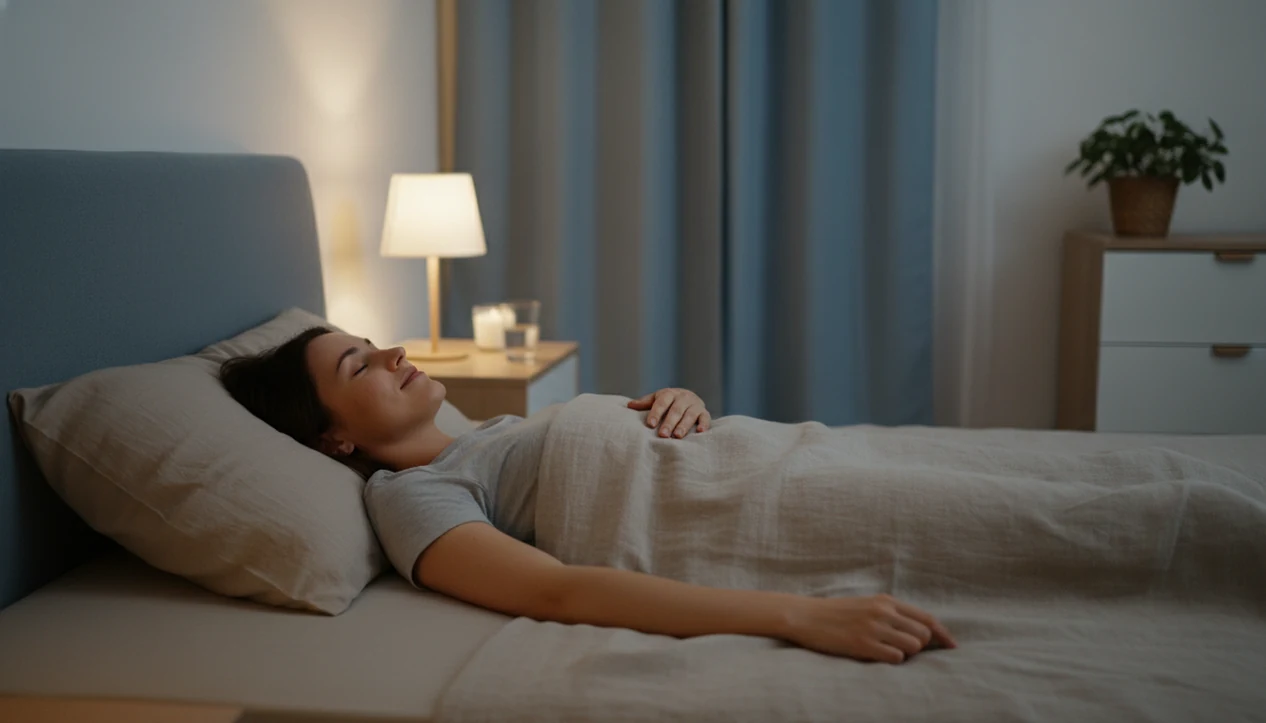
Breathing meditation before bed is a short, secular mindfulness practice that combines relaxed breathing and present-moment attention to help your body and mind shift toward rest. Set aside 5 to 10 minutes in bed or beside it, with dim lights and no pressure to fall asleep. The aim is a repeatable wind-down routine, not an instant sleep technique.
Start with gentle belly breathing and count each exhale from one to five, then begin again. Other options include 4-7-8 breathing and a short body scan, but choose a method that feels comfortable rather than demanding. Regular practice may support sleep quality over time. It is not a standalone treatment for chronic insomnia, sleep apnea, or other medical sleep disorders.
The essentials
- Use a 5- to 10-minute breath practice in bed or beside the bed, with dim lights and no pressure to fall asleep.
- Beginner-friendly options include belly breathing, breath counting, 4-7-8 breathing, and a short body-scan breathing script.
- Breathing meditation may support sleep quality over time, but it is not a standalone treatment for chronic insomnia, sleep apnea, or other medical sleep disorders.
A beginner routine: belly breathing and counting
The best breathing meditation before bed for most beginners is a 5- to 10-minute practice that combines gentle belly breathing with simple breath counting. It gives the mind one clear job without turning bedtime into a performance test.
Start with one hand on the belly, if that feels comfortable. Let the breath move in a normal rhythm, then count “one” on the exhale, up to five, and begin again. If the mind wanders to tomorrow’s grocery list, notice it and return.
That return is the practice.
Consistency matters more than length. A short routine repeated most nights usually fits real life better than a long session you only do on Sundays. Mindful.net recommends this as the starting point because it is beginner-friendly, secular, and easy to pair with a broader bedtime routine for adults.
Four bedtime breathing options and when to choose them
These four bedtime breathing techniques cover the most common beginner needs: body tension, racing thoughts, desire for structure, and whole-body settling. Pick one method for a week before switching.
| Technique | Best for | Not ideal for |
|---|---|---|
| Belly breathing | Physical tension | People who dislike belly focus |
| Breath counting | Racing thoughts | Anyone who finds counting stressful |
| 4-7-8 breathing | People who like structure | People who feel strained holding breath |
| Body-scan breathing | Whole-body relaxation | People who get anxious scanning sensations |
Belly breathing
Belly breathing is best when shoulders, jaw, or chest feel tight. Sock-covered feet under a chair can work as well as lying in bed.
Breath counting
Breath counting gives busy thoughts a small task. Count only to five.
4-7-8 breathing
4-7-8 breathing adds a pattern: inhale, hold, exhale. Keep it soft.
Body-scan breathing
Body-scan breathing pairs breath with attention through the body. It is useful when you want a slower, less count-based option before sleep.
How breathing meditation before bed works
Breathing meditation before bed works by combining slow breathing, steady attention, and the relaxation response. In plain language, the body gets repeated cues that it no longer needs to stay on alert.
Slow breathing can influence autonomic arousal, which means the body’s alertness system may settle. Focusing on breath sensations can also reduce pre-sleep rumination because attention has somewhere simple to land. Tea steam before bedtime, lights low, one quiet exhale heard in the room. That is enough for the first minute.
Mind-wandering is normal. The useful skill is noticing and returning, not clearing the mind. A 2015 randomized trial found that mindful awareness practices including breath-focused meditation improved sleep quality and insomnia symptoms after six weeks in older adults with moderate sleep disturbance JAMA study. Mindful.net frames this as sleep readiness support, not a cure.
What sleep research supports, and what it does not
Research supports a modest average benefit for sleep quality, not a promise that a five-minute breathing script will make you fall asleep. A 2019 review of 18 randomized trials involving 1,654 adults found that mindfulness meditation improved sleep quality compared with education-based controls. It was not clearly better than established approaches such as cognitive behavioral therapy for insomnia or exercise. These findings concern broader mindfulness programs, not this particular bedtime script. Learning about sleep stages and brain waves can help distinguish bedtime relaxation from the processes that occur during sleep.
Feeling better about your sleep is also different from sleeping longer. A 2019 review of mind-body therapies found improvements in perceived sleep quality and insomnia severity, but no significant effects on sleep-quantity measures from diaries or objective measurements. Assess the routine over several weeks, including nighttime awakenings and daytime functioning. For persistent insomnia, breathing practice should support care, not replace cognitive behavioral therapy for insomnia or medical assessment.
Settle in, breathe gently, and return your attention
Use breathing meditation before bed as a short sequence, not a test you pass by falling asleep. If you feel strained, shorten the practice or stop.
- Dim the room and reduce screens for a few minutes before starting.
- Choose your position in bed or on a chair, without forcing a straight posture.
- Breathe gently through the nose or mouth in a rhythm that feels easy.
- Count each exhale up to five, or silently label “in” and “out.”
- Return to the breath when thoughts pull you away.
- Stop forcing it if breath focus creates dizziness, panic, or discomfort.
For a wider evening sequence, pair this with practical sleep hygiene, such as steady timing, lower light, and fewer late-night alerts. Mindful.net keeps the routine short because repeatability matters more than an impressive session length.
5-minute breathing meditation before bed script
Can you use a 5-minute breathing meditation before bed tonight? Yes. Read this slowly, or record it in your own voice.
Lie down or sit in a way that asks very little of the body. Let the shoulders drop a little. Notice where your body meets the bed, blanket, or chair. You do not need to change anything quickly.
Bring attention to the breath. Feel the belly rise slightly as you breathe in. Feel it soften as you breathe out. If the belly is hard to notice, feel air at the nose or mouth instead.
Now count the exhale. One. Next exhale, two. Continue to five, then begin again. If thoughts race, name that softly: thinking. Then soften the jaw and return to the next breath.
No argument with the mind.
For the final minute, stop counting. Let the breath breathe itself. You may fall asleep, or you may simply rest. Either one counts as practice. If you prefer listening instead of counting, try guided sleep hypnosis as another gentle bedtime option.
Selection criteria: comfort, simplicity, and repeatability
We picked these bedtime breathing methods by favoring practices that are simple, gentle, repeatable, and low-equipment. The goal was everyday mindfulness, not intense breathwork.
- Beginner safety came first, so we preferred slow, comfortable breathing over forceful holds or rapid breathing.
- Simplicity mattered; each method can be done in bed, on a kitchen chair, or during a quiet office stairwell pause before going home.
- Repeatability mattered more than novelty because bedtime routines work better when they feel familiar.
- Evidence is stronger for mindfulness and slow breathing in general than for every named technique, including 4-7-8 breathing.
- A 2008 chronic insomnia study found a six-week mindfulness meditation program improved total wake time, pre-sleep arousal, and sleep quality compared with self-monitoring PubMed research.
Mindful.net includes these methods because they give beginners a practical next step. Good mindfulness practices offer a repeatable attention skill, not a promise to shut the mind off on command.
A shorter breathing routine for sleep anxiety
For sleep anxiety, a useful breathing meditation routine is softer, shorter, and less focused on whether sleep is happening. Monitoring yourself for sleep can become another form of arousal.
- Use labels like “in” and “out” instead of long counts if numbers feel like pressure.
- Count only to five, then restart; this keeps the task small.
- Shorten the practice to two or three minutes if body focus increases anxiety.
- Open your eyes or feel your feet on carpet or tile if you feel too inward.
- Seek tailored guidance for severe anxiety, panic, PTSD, respiratory issues, or pregnancy-related breathing discomfort.
A 2014 meta-analysis of 18 randomized trials found mindfulness meditation programs produced small to moderate improvements in anxiety, depression, and pain, plus a small improvement in stress or distress JAMA study. Mindful.net suggests using an emotion wheel before practice if naming the feeling helps reduce the bedtime swirl.
Room setup for a comfortable breathing practice
A good bedroom setup for a breathing meditation practice is boring in a useful way: same time, same sequence, low light, comfortable temperature. Familiar cues help the body recognize the wind-down pattern.
Keep the phone away from your face if you use a timer. Reduce bright screens before practice when possible. Avoid late caffeine if you know it affects your sleep, and choose a position that does not create strain. Knees stacked under a blanket can make side-lying more comfortable.
Short wins here.
A three-minute breathing pause you actually repeat beats a 30-minute plan that feels like homework. Mindful.net often pairs bedtime breathing with mindfulness exercises before bed, especially for people who want more than one gentle option.
Image caption idea: A dim bedroom setup with a person practicing gentle breathing meditation before bed, phone face down, soft lamp, and relaxed posture.
When to get professional help for sleep problems
Get professional help when poor sleep stops being occasional and starts becoming a pattern that affects your days, mood, safety, or health. Breathing meditation can support wind-down, but it cannot diagnose insomnia, sleep apnea, panic disorder, or another sleep condition.
A rough line: if trouble falling asleep, staying asleep, or waking too early happens several nights a week and keeps going for weeks, it is worth discussing with a clinician. Also pay attention to red flags, especially choking or gasping at night, loud breathing pauses noticed by someone else, severe daytime sleepiness, sudden panic, or distress that feels unmanageable.
- Track your sleep timing, awakenings, caffeine, alcohol, naps, and bedtime practices for a week or two.
- Contact a primary care clinician or sleep specialist if the pattern persists or daytime functioning drops.
- Ask before using breath holds, including 4-7-8 breathing, if you have respiratory concerns, pregnancy-related breathing discomfort, heart issues, or dizziness.
- Seek urgent support right away if you have thoughts of self-harm, feel unsafe, or experience severe nighttime distress.
Meditation is a support tool. Care is still care.
Audio support for a bedtime breathing routine
At bedtime, a short guided session can provide spoken prompts so you do not have to remember the script. Mindful.net offers guided meditations and sleep audio; the site's white noise and ambient sound player is another option for background sound. Neither is necessary for breathing practice. Silence is better when audio distracts you, and persistent sleep problems need clinical care rather than more audio.
Bedtime Breathing Limits
- Seek professional care for sleep apnea, restless legs syndrome, chronic insomnia, or other sleep disorders, rather than relying on bedtime breathing.
- Specific evidence for 4-7-8 breathing is limited compared with broader research on mindfulness and slow breathing.
- Benefits may take weeks of regular practice rather than one or two nights.
- Quiet breath focus can initially make racing thoughts or body sensations feel louder.
Bedtime breathing questions
Does breathing meditation before bed actually help you sleep?
It may help reduce the tension and worry that interfere with settling down. Research on broader mindfulness programs shows modest average improvements in sleep quality, but results vary. That does not establish that a short breathing script will make you fall asleep faster or increase your total sleep time.
What is the best breathing technique before bed?
Gentle belly breathing with simple breath counting is a practical starting point. Breathe comfortably, count each exhale from one to five, and repeat. There is not enough evidence to name one relaxation method as best for everyone. Choose another approach if counting or focusing on your belly makes you tense.
How long should I do breathing meditation before bed?
Start with about five minutes, or two to three minutes if attention to your body increases anxiety. A comfortable routine of 5 to 10 minutes is enough to practice settling your attention. Longer is not necessarily better, especially if you become frustrated or start checking whether sleep is happening.
Why do my thoughts get louder during bedtime meditation?
Quiet attention can make racing thoughts or body sensations feel more noticeable at first. You do not need to stop every thought. Return gently to a comfortable breath, or shorten the practice. If inward attention increases distress, open your eyes and feel your feet against the floor instead.
Should I meditate in bed or sit in a chair?
Either can work for a short wind-down practice. Choose a position that does not strain your back, shoulders, or breathing, and avoid making posture another task to get right. If practicing in bed becomes frustrating, try a chair beside it. Comfort matters more than holding a formal meditation posture.
Should I take very deep breaths to fall asleep?
No. The goal is comfortable breathing, not the deepest breath you can take. Let your jaw and shoulders relax and allow gentle movement in your abdomen. You can make the exhale slightly longer if that feels easy. Return to normal breathing if you notice light-headedness, tingling, or anxiety.
What if I still cannot sleep after breathing meditation?
Do not keep extending the exercise or breathing harder to force sleep. End the practice if frustration rises. Persistent trouble sleeping, severe daytime sleepiness, loud snoring, or witnessed breathing pauses calls for medical assessment. Breathing meditation is supportive, not a replacement for insomnia treatment or care for sleep apnea.