
10-Minute Sleep Meditation Script for Bedtime


A 10-minute sleep meditation is a brief bedtime practice that uses gentle breathing, body awareness, and a simple attention anchor to help you wind down. It is a repeatable sleep ritual, not a way to force sleep on command. You can follow the script in bed or just before bed, with the lights low and distractions reduced.
The aim is sleep readiness, not flawless focus. Let your breathing stay comfortable, notice where your body meets the mattress, and return to those sensations when thoughts pull you away. Repeating the same short practice gives your evening a familiar wind-down cue. You do not need to finish every instruction or check whether you are falling asleep.
The essentials
- Use this practice in bed or just before bed, with lights low and distractions reduced.
- The goal is sleep readiness, not flawless focus or instant sleep.
- Repeat the same short sleep meditation regularly so your body learns the wind-down cue.
10-Minute Sleep Meditation Script
Use this 10-minute sleep meditation as a slow guided practice, either in bed or just before you turn onto your side. Let the words become quieter as the minutes pass.
Minutes 0-2: Settle into bed
Lie down in a comfortable position. Let the room be dim. Notice the surface beneath your back, legs, and head. Take one easy breath in, then a longer breath out. Let your eyes close, or let your gaze rest in one place.
Nothing to solve now.
Feel the belly rising against your waistband. Feel it soften as you breathe out. If a thought appears, name it gently: thinking. Then return to the next breath.
Minutes 2-6: Soften the body
Bring attention to your forehead. Let it loosen. Soften the jaw, tongue, throat, and shoulders. Let the arms grow heavy. Notice the hands without moving them. Let the chest and belly release their effort. For another structured relaxation option, the military sleep method offers a simple sequence for settling down before sleep.
Move slowly through the hips, thighs, knees, calves, and feet. If one area feels tense, breathe around it. It does not need to change quickly.
Minutes 6-10: Let attention fade
Now rest attention on the breath, the bed, or one quiet phrase: I can rest. If the mind wanders to tomorrow’s grocery list, notice and return.
Let sounds come and go. Let the body breathe. If sleep comes, allow it. If you remain awake, stay with quiet rest.
How a 10-Minute Sleep Meditation Works
A 10-minute sleep meditation works by lowering mental effort and giving attention a simple place to rest before sleep. Slow breathing, reduced light, and body awareness can shift attention away from rumination and toward sleep readiness.
The mechanism is practical, not mystical. A calm attention anchor reduces “cognitive arousal,” which means the mind has fewer active problems to chase. Body scanning also increases interoceptive awareness, or the ability to notice body sensations without reacting to every one.
A 2023 systematic review found that meditation-based interventions improved adult sleep quality across studies, though effects varied by design and population PubMed research. That does not make meditation a medical sleep treatment. It means a bedtime meditation 10 minutes long may support relaxation, especially when paired with steady sleep hygiene.
For this script, the useful cue is narrower: the same breath, body-scan, and quiet phrase sequence teaches your bedtime routine to feel familiar instead of effortful.
What sleep research can tell you about this script
Research supports modest average benefits from mindfulness practice, but it does not establish that this particular 10-minute script will make you fall asleep faster. A 2019 review of 18 randomized trials involving 1,654 adults found better sleep quality than education-based comparison groups. Benefits were not clearly greater than those of established approaches such as cognitive behavioral therapy for insomnia or exercise.
Feeling that you slept better is also different from sleeping longer. A review of mind-body therapies and sleep found improvements in perceived sleep quality and insomnia severity, but no significant effects on sleep-quantity measures from diaries or objective assessments. Use this script as relaxation support, not as proof that your sleep duration or physiology has changed.
Set up your room and routine before starting
Use this bedtime meditation 10 minutes before sleep at the same point in your routine each night. Repetition matters because the body starts to recognize the cue.
- Dim the room and reduce sharp light from lamps, screens, or hallway glare.
- Set a quiet phone timer or audio track, then place the phone out of easy reach.
- Lie down in a position you can keep without fidgeting, with pillows adjusted first.
- Follow the breath and body cues without checking whether sleep is happening.
- Repeat the same practice nightly for a week before judging whether it fits.
A phone on the nightstand can become a little trap. Put it farther away if you tend to check messages after the final chime. For a fuller wind-down sequence, a bedtime routine for adults can place this meditation after washing up and before lights out. You can also add gratitude before bed by briefly recalling one small moment you appreciated today.
When bedtime meditation helps, and when to seek care
A short sleep meditation is best used as support for ordinary bedtime tension, busy thoughts, and beginner-friendly wind-down. It is not a cure for sleep disorders, severe distress, unmanaged pain, or medication-related sleep changes.
| Fit | Use case | Practical note |
|---|---|---|
| Best for | Busy mind at bedtime | Use one anchor, such as breath or body weight. |
| Best for | Light bedtime tension | Soften one body area at a time. |
| Best for | Beginners | No prior meditation experience is needed. |
| Best for | Simple nightly ritual | Repeat the same script in the same routine slot. |
| Not for | Untreated sleep apnea | Seek medical guidance for breathing-related sleep problems. |
| Not for | Severe insomnia or acute panic | Use professional support, not only self-guided practice. |
| Not for | Unmanaged pain or medication effects | Ask a clinician about underlying causes. |
For beginners, a guided 10 minute sleep practice is often easier than unguided silence because the next instruction reduces decision-making. If ten minutes feels too long, try a 5-minute meditation before bed as a shorter alternative.
Keep the practice familiar and easy to follow
A guided 10-minute sleep practice should feel simple, repetitive, and low-effort. The point is not to perform meditation well; it is to make resting feel more available.
- A 10-minute practice works best when the instructions are slow, familiar, and easy to follow while tired.
- The goal is relaxation and sleep readiness, not perfect focus or instant sleep.
- Beginners can use a short sleep meditation without learning formal mindfulness first.
- Consistency usually matters more than one unusually calm session.
- Sleep difficulty is common; the CDC reports that about 1 in 3 U.S. adults do not get enough sleep regularly CDC guidance.
The CDC has also reported that about 14.5% of adults had trouble falling asleep most days or every day in a recent 30-day period CDC guidance. So if your mind stays active, you are not doing something strange.
For people who ruminate at night, mindfulness for overthinking usually fits better than forcing positive thoughts because it trains recognition and return.
Bad-Night Adjustments for a 10-Minute Sleep Meditation
What should you do if a 10-minute sleep meditation does not make you fall asleep? Treat it as a rest practice, make one small adjustment, and avoid turning the night into a test.
Busy thoughts, restlessness, and waking again after the practice are normal. On a rough night, return to the breath and make the exhale slightly longer than the inhale. You might count four on the in-breath and six on the out-breath. Or soften one place only, such as the jaw, belly, or hands.
Do not restart the meditation five times. Restart once if it helps, then let the practice be enough. Repeated time-checking often adds pressure, especially when the room is quiet and the clock feels loud.
If frustration rises, get out of bed briefly for a low-light reset. Sit on a kitchen chair, feel your feet on the floor, and breathe for three minutes. Then return to bed without making wakefulness a failure.
Stop or change the practice if it increases discomfort
Keep each breath natural and comfortable rather than taking the deepest breath possible. If controlled breathing causes dizziness, tingling, or anxiety, stop the counting and return to your usual breathing. You can shift attention to the pressure of the mattress instead. Clinical insomnia guidance describes relaxation as a way to reduce arousal, not an exercise in stronger breath control.
Body-focused attention can sometimes increase distress, intrusive thoughts, or trauma-related symptoms. Stop rather than pushing through, and seek trauma-sensitive instruction or professional support if this keeps happening. Persistent insomnia, loud snoring, witnessed pauses in breathing, restless legs, or severe daytime sleepiness also warrant assessment. The NCCIH sleep evidence summary treats these practices as supportive approaches, not substitutes for appropriate treatment.
Bedtime meditation image and caption guidance
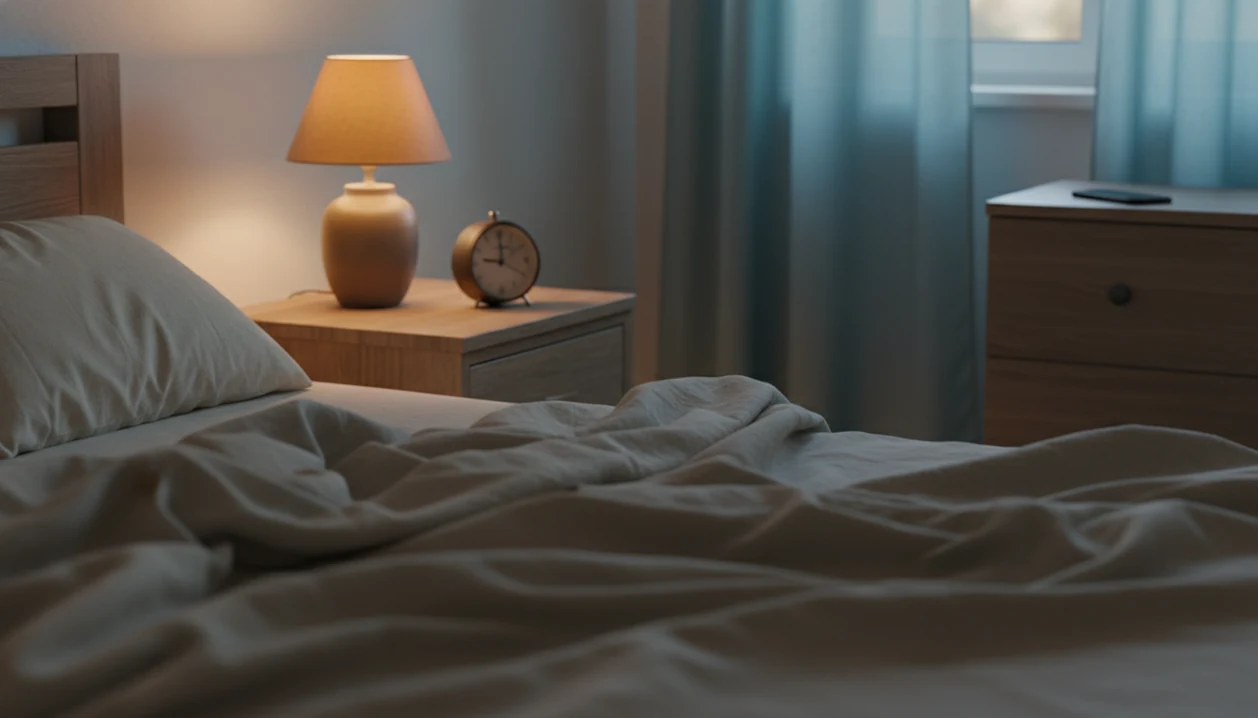
Suggested caption: A person rests in bed under low light while following a sleep meditation 10 minutes long, using quiet breathing and a relaxed posture before sleep.
The image should feel ordinary rather than staged. A dim bedside lamp, soft bedding, and a phone placed face down across the room say more than a dramatic sleeping pose. The caption should not claim that the practice cures insomnia, guarantees deep sleep, or works for everyone.
A good visual supports the same message as the script: less effort, fewer inputs, and a practical next step. The room is quiet. The practice is short.
Make a recording that ends at exactly 10:00
No audio file is supplied here, but the timed transcript below gives you a precise recording plan. Read each passage slowly at its marked start time, then leave the remaining interval silent. Keep the final silence through 10:00 and trim the file at that point. The pauses count toward the ten minutes. If you record your own version, use a player with the controls below so you can manage playback without restarting the whole practice.
- Play and pause: Start the recording or pause at the current position.
- Restart: Return to 0:00 only when you choose to begin again.
- Playback position: Show elapsed time and the full 10:00 duration, with a control for moving through the recording.
- Volume: Allow quiet playback and a separate mute option.
- Playback speed: Keep the speed at 1x to preserve the ten-minute timing.
- End behavior: Turn off repeat and automatic playback of another track.
Timed transcript with silence included
Each time range below is one minute and forty seconds. Speak only the quoted words at the beginning of that interval. The rest is silence, not an invitation to add more instructions. These six intervals total exactly ten minutes when recorded at the stated times. The timestamps and recording directions are not spoken. You can also read one passage at a time, although reading without a timer will not preserve the exact duration.
- 0:00 to 1:40: “For these few minutes, there is no task to complete. You can listen without responding. Leave any words that do not feel useful.” Then remain silent until 1:40.
- 1:40 to 3:20: “Notice one place where you feel supported. You do not need to examine your whole body. One point of contact is enough.” Then remain silent until 3:20.
- 3:20 to 5:00: “There is no need to measure your breathing or match it to these words. Let the next breath arrive in its own time.” Then remain silent until 5:00.
- 5:00 to 6:40: “If something needs your attention tomorrow, it can wait outside this practice. You do not need to finish the thought right now.” Then remain silent until 6:40.
- 6:40 to 8:20: “You can stop following the instructions closely. There is no need to remember what comes next. Let the quiet spaces stay quiet.” Then remain silent until 8:20.
- 8:20 to 10:00: “These are the last words of the recording. Nothing more is required from you. You can leave the practice here.” Then remain silent until the file ends at 10:00, without a closing bell or spoken sign-off.
Sleep Meditation Limits
- Sleep meditation cannot guarantee sleep or replace medical care for disorders such as sleep apnea.
- Seek professional guidance for persistent or severe sleep problems, daytime impairment, or symptoms involving breathing, pain, medication, or mental health.
- The NIH reports about 50 to 70 million U.S. adults have sleep disorders: Sleep Deprivation.
- An emotion wheel can help label nighttime feelings without turning bedtime into analysis.
10-minute sleep meditation questions
Is 10 minutes of sleep meditation enough?
Ten minutes is a reasonable length for a bedtime relaxation practice. Research has not established an optimal duration or shown that this exact script is better than other brief routines. Keep it comfortable and repeatable, then assess how your sleep and daytime functioning change over several weeks.
Should I do sleep meditation in bed or before getting into bed?
Either can work for this wind-down practice. In bed, adjust your pillows and choose a comfortable position before starting. Before bed, sit or lie somewhere quiet with the lights low. If you have persistent insomnia, ask a clinician how bedtime meditation fits with your treatment plan.
What if I am still awake after the 10-minute meditation?
Being awake does not mean you did the practice incorrectly. Its purpose is to reduce effort and arousal, not guarantee sleep. Avoid repeatedly restarting or checking the clock. If sleep trouble persists, seek guidance rather than making the meditation longer or treating each night as a test.
What should I focus on when my mind keeps racing?
Choose one simple anchor, such as your usual breathing or the weight of your body on the mattress. When you notice a thought, gently name it as thinking and return to the anchor. You do not need to empty your mind or finish solving the thought before resting.
Do I need to breathe deeply during sleep meditation?
No. Use gentle, comfortable breaths rather than trying to fill your lungs as much as possible. A slightly longer exhalation is optional, not a requirement. If breath control brings on dizziness, tingling, or anxiety, return to normal breathing and use body contact with the bed as your anchor.
Can a 10-minute sleep meditation treat insomnia?
It may support relaxation, but it is not a replacement for insomnia treatment. Studies show mixed results, and this specific 10-minute script has not been established as a treatment. Persistent insomnia deserves professional assessment, including discussion of cognitive behavioral therapy for insomnia and possible medical contributors.
How long should I try the same bedtime meditation?
Keep the routine consistent for several weeks rather than judging it after one night. Notice sleep onset, nighttime awakenings, and daytime functioning, not just how calm you feel during the recording. Stop or adjust sooner if the practice causes discomfort or distress, and seek care for persistent sleep problems.