
Soundscapes for Anxiety Relief: Choosing and Using Calming Audio


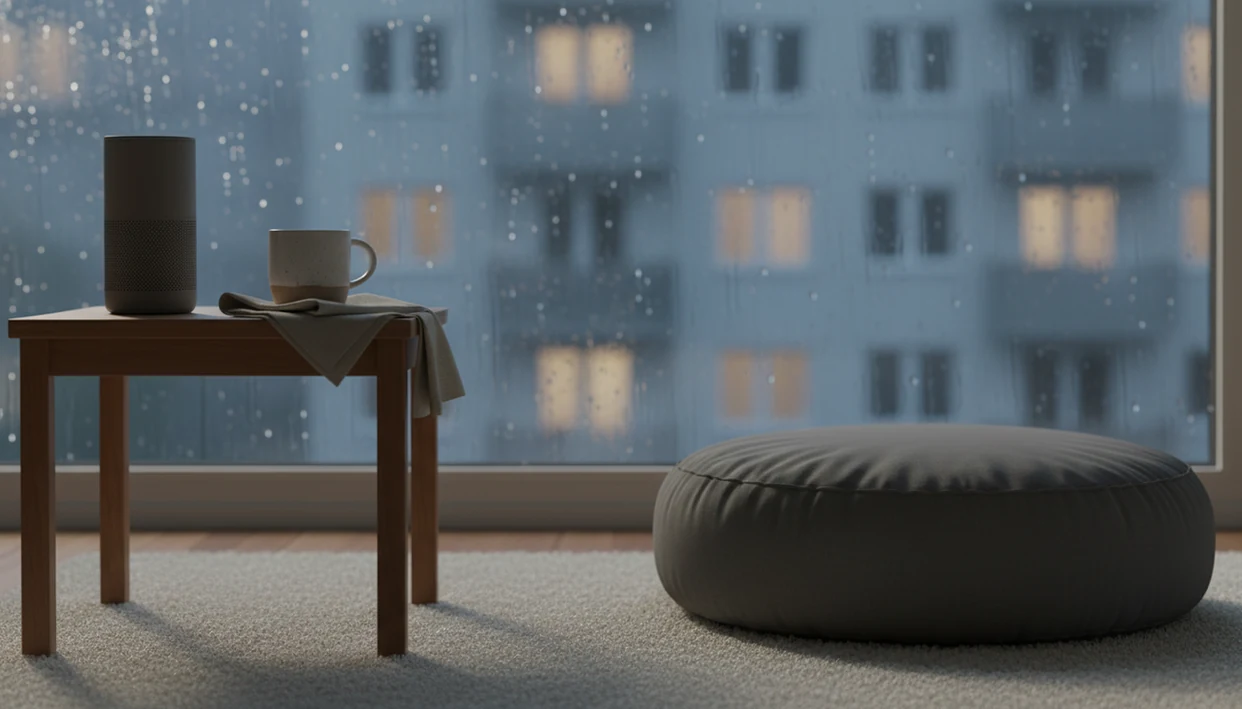
Soundscapes for anxiety relief are calming audio environments used to support breathing, grounding, or meditation, not to treat an anxiety disorder. Rain, ocean waves, wind, soft drones, and gentle music can give attention a steady place to rest when silence feels too sharp. Their practical value is short-term support: helping you stay with the next breath or notice your surroundings without trying to force anxiety away.
Choose a sound that feels familiar and unobtrusive, rather than searching for a perfect frequency. Keep the volume comfortable and pair listening with something concrete, such as feeling your feet on the floor. Stop or change the track if it increases tension, panic, irritation, dizziness, or emotional overwhelm. Persistent or worsening anxiety needs more support than background audio.
Definition: Soundscapes for anxiety relief are calming audio environments, such as rain, ocean, wind, soft drones, or gentle music, used as anxiety-aware meditation support rather than medical treatment.
What matters most
- Choose a sound that feels steady, familiar, and non-intrusive rather than chasing a “perfect” frequency.
- Pair the soundscape with slow breathing, body contact, or five-senses grounding for practical anxiety support.
- Stop or switch tracks if the audio increases tension, panic, irritation, dizziness, or emotional overwhelm.
Calming Soundscapes for Anxiety: What They Can and Cannot Do
Calming soundscapes for anxiety are background audio tracks used to settle attention, prepare for sleep, relax the body, or support grounding. They may reduce momentary tension for some people, but they do not treat anxiety disorders.
Common choices include rain, ocean waves, wind, white noise, pink noise, brown noise, ambient music, and guided meditation. The useful part is often simple: the sound gives your mind somewhere steady to land when thoughts keep circling.
A three-minute pause can be enough.
Mindfulness and beginner meditation practices can help train attention and support coping, but they cannot guarantee relief from anxiety. If anxiety is persistent, severe, worsening, or interfering with work, relationships, sleep, or safety, professional support matters more than finding another playlist.
Evidence for Sound Meditation for Anxiety Support
The strongest evidence for sound meditation for anxiety support is cautious and context-specific. Studies most often look at music or nature-sound interventions during medical, procedural, or short-term stressful situations, not everyday anxiety management at home. For anxiety around appointments, mindfulness for dental anxiety offers a practical way to prepare before treatment.
- A Cochrane review of music interventions for preoperative anxiety found lower anxiety scores versus usual care, with an overall standardized mean difference of -0.67: Full
- A review of music interventions in adult intensive care found reduced anxiety in most included randomized studies, but the participants and settings were clinical, not app-based home meditation: PubMed research
- In one colonoscopy study, patients exposed to nature sounds had lower State-Trait Anxiety Inventory scores than controls, 28.4 versus 33.9; add the trial URL here after source verification.
- These findings support sound as a short-term calming aid, but they do not prove that any one soundscape cures everyday anxiety or clinical anxiety.
Clinicians typically recommend professional assessment when anxiety becomes severe, persistent, or life-disrupting, with self-help tools used as support.
For general anxiety-disorder information and treatment options, the National Institute of Mental Health notes that persistent anxiety can be treated with psychotherapy, medication, or both: Anxiety Disorders
Mindfulness research does not prove a soundscape treats anxiety
Research on mindfulness programs offers useful context, but it is not evidence for a particular audio track. A 2014 review of 47 randomized clinical trials found an average anxiety improvement with an effect size of 0.38 at about eight weeks, falling to 0.22 at three to six months. Those findings concern meditation programs, not rain loops or a single listening break.
Keep two goals separate: getting through the next few minutes and reducing symptoms over time. A soundscape may help you return attention to breathing or your surroundings now. The review does not establish that a one-minute exercise or specific sound produces the same benefits as structured practice over weeks. Recurrent panic, disrupted sleep, or anxiety that restricts everyday activities calls for clinical assessment, not simply a longer playlist. If anxiety starts when you wake, try meditation for morning anxiety with a brief, manageable practice.
Using steady sound as an attention anchor
Soundscapes for anxiety relief work in mindfulness practice by giving attention a stable object to notice and return to. In plain language, the sound becomes an anchor, like feeling feet on carpet or counting the breath.
Predictable, low-intensity audio can also make distracting background noise less noticeable for some listeners. That may reduce cognitive load, which means the brain has fewer competing inputs to sort through. Rhythm, familiarity, and breath pacing can help the body settle enough to practice.
Personal preference matters. Rain tapping during a walking practice may feel safe to one person and gloomy to another. Avoid big claims about binaural beats, Solfeggio tones, or universal healing frequencies. For anxious moments, steady and tolerable usually beats dramatic and “special.”
Choosing rain, ambient music, or noise for anxious moments
The best soundscape type depends on the use case: sleep, active grounding, focus, or meditation. For anxious moments, choose steady, non-startling, loopable audio that does not demand much interpretation.
| Soundscape type | Often useful for | Use with caution when |
|---|---|---|
| Nature sounds | Grounding, bedtime, soft background | Thunder, animal calls, or waves feel startling |
| Ambient music | Meditation and breath pacing | Crescendos or intense drones build tension |
| White noise | Masking sharp background noise | It feels hissy or harsh |
| Pink noise | Sleep preparation and softer masking | Low rumbles feel distracting |
| Brown noise | Deeper sound masking | Bass feels heavy or claustrophobic |
| Guided audio | Beginners who want structure | Words increase rumination |
Nature sounds for grounding
Nature sounds often fit grounding because they feel familiar and spacious. For bedtime use, a nature sounds bedtime routine may work better than a track designed for active practice.
Ambient music for meditation
Ambient music can support meditation when it stays even. If you need task support instead, compare it with ambient sounds for focus.
Noise colors for focus and sleep
White, pink, and brown noise are more about masking than emotional meaning. The white noise vs meditation distinction matters because noise can support practice without being the practice itself.
Before You Start: Set Up Soundscapes Safely
Set up soundscapes safely by making the practice easy to stop, easy to hear through, and clear about what you will do if anxiety rises. The right setup should feel ordinary, not like entering a locked room with audio on.
- Check your known triggers before you press play. Before playing a track, check for known triggers such as headphones, heavy bass, continuous loops, sudden endings, or the silence that follows.
- Choose a seated or lying position where you can open your eyes, move, or stop the audio without effort. Avoid making the setup so cozy that leaving it feels hard.
- Set the volume low enough that room sounds remain available. If the track blocks out the world, lower it or use one speaker instead of headphones.
- Avoid practicing during safety-sensitive tasks, including driving, cycling, crossing streets, or supervising children.
- Decide your exit plan in advance. If anxiety climbs, you might lower the volume, sit upright, name five things in the room, text someone, or stop the practice completely.
How to Use Soundscapes for Anxiety Relief Safely
Use soundscapes for anxiety relief as orientation support, not as a way to force calm. The goal is to notice, breathe, and return without fighting the anxious feeling.
Before pressing play, choose a place where you can hear your surroundings if safety matters, and keep one hand free to lower the volume quickly. If you already know that headphones, bass, or repetitive loops can trigger panic or dissociation, start without headphones or skip this practice.
- Set a low, comfortable volume before starting, especially with headphones.
- Choose one steady sound that does not demand attention or surprise you.
- Pair the sound with longer exhalations or simple breath counting, such as in for three and out for five.
- Notice body contact points, such as feet, chair, hands, or back.
- Stop, lower volume, or switch practice if anxiety rises.
If you want a broader foundation, the basics of how to practice mindfulness apply here too: notice what is happening, then return to one chosen anchor.
The progress bar may move too slowly. That is still practice.
Grounding With Sound During an Anxious Moment
How do you ground yourself with sound? Use the soundscape to widen awareness for 60 to 90 seconds, not to stare harder at the anxious thought.
Start by listening for three sounds: the track, one nearby sound, and one distant sound. Then feel two body contact points, such as socked feet under a chair and your back against the seat. Take one slow exhale, letting the out-breath last slightly longer than the in-breath.
For many people, grounding with sound works best when the audio stays simple while the body gets included. Attention should open outward, not narrow into checking, analyzing, or replaying what might go wrong.
Stop the practice if it increases panic, dissociation, trauma activation, dizziness, or sensory overwhelm. In that case, lower the volume, open your eyes, orient to the room, or use another support plan.
When sound helps, and when to leave it off
Anxiety support sound meditation is best for people who want a gentle anchor during mild stress, bedtime wind-down, or beginner meditation. It is not ideal when audio itself increases panic, avoidance, or sensory overload.
Best for
- Mild situational stress: A steady track can help before a meeting, travel day, or difficult conversation.
- Bedtime wind-down: Soft loops may support a transition toward rest, especially alongside sleep soundscapes meditation.
- Meditation beginners: Sound gives the mind an obvious place to return.
- Noisy environments: Masking can reduce sharp interruptions.
- People who dislike silence: Silence can feel too exposed at first.
Not for
- Acute panic that worsens with audio: Use a safety plan or seek support.
- Sound sensitivity: Gentle does not mean tolerable for everyone.
- Trauma-linked sounds: Avoid tracks tied to distressing memories.
- Compulsive avoidance: Sound should build coping flexibility.
- Severe persistent anxiety without care: Professional help is the practical next step.
When to Seek Professional Help for Anxiety
Seek professional help when anxiety is severe, persistent, worsening, or getting in the way of daily life. Soundscapes can support coping, but they do not diagnose anxiety disorders or replace treatment from a qualified clinician.
Use the audio as one small tool, especially if it helps you breathe, sleep, or ground. But if you are relying on tracks to get through ordinary tasks, avoiding more places, or feeling frightened by your own body sensations, it is time to widen the support plan.
- Notice patterns that keep returning, such as panic attacks, trauma reminders, constant checking, or fear that limits where you go. If checking and avoidance keep repeating, learning about the anxiety habit loop can help you recognize the pattern.
- Track disruption to sleep, work, school, relationships, appetite, concentration, or basic routines.
- Contact a licensed therapist, physician, or mental health clinician if symptoms are escalating or you are unsure whether self-help audio is enough.
- Discuss how you use soundscapes, headphones, sleep tracks, or meditation apps so a clinician can help you choose safer supports.
- Seek urgent crisis or emergency help immediately if you might harm yourself, someone else, or you are in immediate danger.
Avoid loud playback, constant switching, and frequency claims
Sound meditation for anxiety works better when it stays simple. Most mistakes come from using audio to overpower anxiety instead of supporting awareness.
- Turning volume too high: Louder sound can increase strain. Lower it until you can still hear the room.
- Switching tracks repeatedly: Constant searching can feed agitation. Pick one track for five minutes before changing.
- Avoiding every uncomfortable feeling: Soundscapes should support coping, not erase all discomfort.
- Believing one frequency works for everyone: Personal response varies, and “healing tone” claims are often overstated.
- Using headphones in unsafe settings: Keep environmental awareness when walking, commuting, or caring for others.
If silence after the final chime feels uneasy, pause before choosing another track. Name what changed in the body. Then decide whether to continue, stop, or try one of these mindfulness exercises.
Before a meeting: pair quiet audio with a breathing pause
Before a stressful meeting, a quiet soundscape can accompany a brief breathing pause. The free box breathing timer provides a counting structure, while the Mindful.net app offers breathing exercises and short guided meditations. Neither is medical treatment. If counting or holding your breath adds strain, natural, unforced breathing is a better choice. When audio itself increases distress, leave it off and focus on contact with the chair or floor.
Limits of Calming Audio
- Seek qualified care when anxiety affects daily functioning, rather than relying on soundscapes or mindfulness apps alone.
- Evidence is stronger for short term relaxation and procedural anxiety than for long term anxiety treatment.
- Personal responses vary, and irritating or overstimulating sounds can increase distress.
- Claims about specific frequencies, binaural beats, or healing tones are often overstated.
Soundscapes and anxiety questions
Do soundscapes actually help with anxiety?
They may help with momentary tension by giving attention a steady anchor for breathing or grounding. That is different from treating an anxiety disorder. Evidence for sound interventions is mainly short-term and context-specific, so a helpful listening break should not be taken as proof of lasting symptom improvement.
What sound should I choose when I feel anxious?
Start with a steady, familiar sound that does not surprise you or demand attention. Rain, gentle wind, soft ambient music, or noise may suit different listeners. Avoid tracks with startling thunder, sudden changes, or intense bass if those bother you. Your response matters more than a claim that one sound is best.
Is rain sound good for anxiety at night?
Rain can provide a simple background for bedtime breathing or grounding if you find it comfortable. Choose a track without startling thunder and keep the volume low. Pair it with slow, unforced breathing and a comfortable exhalation. Sound alone is not a treatment for insomnia or recurring nighttime anxiety.
Can a soundscape stop a panic attack?
A soundscape cannot reliably stop a panic attack. For some people it supports orientation; for others, headphones, bass, or repetition can make panic worse. Stop the audio if distress rises, and bring attention to nearby sounds and body contact points. Repeated panic attacks deserve assessment by a qualified clinician.
Are binaural beats or specific frequencies proven to relieve anxiety?
The evidence here does not establish that a particular frequency or binaural beat reliably relieves anxiety. Claims about healing tones are often overstated. Choose audio for comfort and predictability rather than a promised biological effect, and judge it by whether it supports attention without increasing strain.
How long should I listen to a calming soundscape?
Start with a brief pause, such as three minutes, rather than committing to a long session. Keep the volume low and include a grounding action, like feeling your feet on the floor. Stop sooner if you feel worse. There is no established listening duration that guarantees anxiety relief.
Should I use headphones for anxiety soundscapes?
Headphones are optional, and they are not the best choice if they make you feel enclosed, disconnected, or more anxious. Start without them when that is a concern. Keep playback quiet enough to hear your surroundings when safety matters, and make sure you can stop or lower the audio easily.