
Guided Meditation With Background Sounds: Choosing Audio That Supports Attention


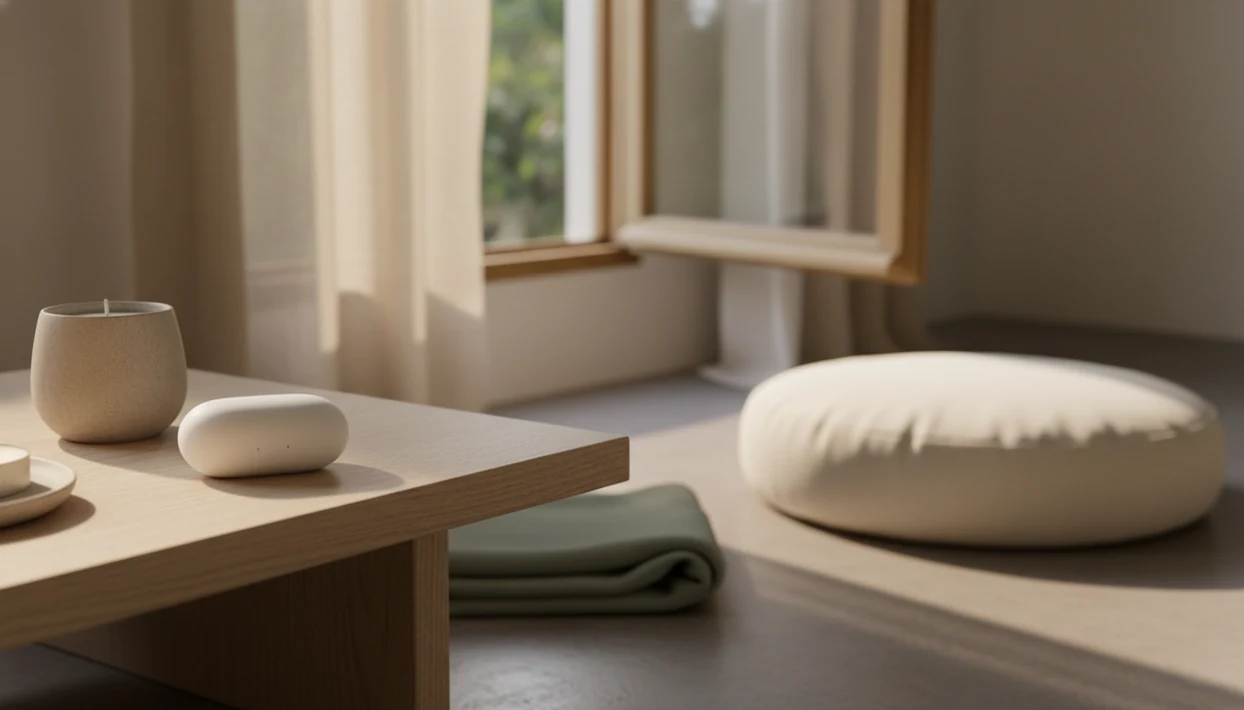
Guided meditation with background sounds is a teacher-led practice with soft ambient music, nature audio, or a simple soundscape beneath the spoken instructions. The sound should stay quiet and secondary to the teacher’s voice. It can help soften unfamiliar silence or mask household noise, but it does not replace the practice of noticing distraction and returning to the guidance.
Start with one simple, lyric-free track at a volume that lets you hear every instruction without effort. If the music draws you into following a melody or adjusting the audio repeatedly, turn it down or try voice-only guidance. Practice sometimes without curated sound, too, so your ability to return to attention does not depend on a particular recording.
The essentials
- Use background sounds if they help you settle, mask household noise, or feel less intimidated by silence.
- Choose simple, lyric-free, low-volume audio that does not compete with the meditation teacher’s voice.
- Practice sometimes without curated sound so meditation skills transfer to ordinary noisy environments.
When Background Sounds Help Guided Meditation, and When They Get in the Way
Guided meditation with background sounds is best for people who settle more easily when silence is softened. It is not better or more advanced than silence; it is a support tool for attention.
| Fit | Works well when | May not fit when |
|---|---|---|
| Beginners | Silence feels too exposed or unfamiliar | You start judging every sound choice |
| Noisy homes | The track masks doors, roommates, or appliances | Layered audio feels crowded |
| City environments | Traffic blends into a steadier sound bed | Sirens or bass tones keep pulling focus |
| Short daily sessions | A five-minute practice feels easier to begin | You wait for the “right” track first |
| Tension in silence | Gentle sound helps the body unclench | You want to build comfort with quiet |
The useful test is not whether the track sounds beautiful; it is whether it helps you notice and return. In movie theater dim light, during a photography edit, or while brushing the dog, the same rule applies: the sound should make attention easier to find, not give the mind more to manage.
Meditation Background Sounds Compared With Silence
Meditation background sounds, voice-only guidance, and silence can all support practice. The useful choice depends on your attention, setting, and tolerance for quiet.
| Format | Attention support | Distraction risk | Beginner friendliness | Real-life transfer | Best use case |
|---|---|---|---|---|---|
| Background sounds | Gives the mind a soft container | Medium if music is busy | High for many beginners | Moderate | Noisy rooms, evening practice, short resets |
| Voice-only guidance | Keeps the teacher clearly central | Low to medium | High | High | Learning technique and timing |
| Silence | Builds direct contact with wandering | High at first | Lower for some beginners | High | Practicing anywhere without setup |
Background audio may reduce friction at the start. Silence can strengthen flexibility because daily life rarely arrives with a curated soundtrack.
For beginners, voice-first guided practice with optional low-volume sound is often easier than silent meditation because it gives attention a clear place to return. If sleep is the main setting, compare that with sleep soundscapes meditation.
Where Background Sounds Win and Where Silence Wins
Background sounds win when they make practice possible instead of perfect. Silence wins when you want the skill to travel with you into ordinary rooms, waiting lines, work stress, and daily noise.
Use the format that lowers friction without becoming the thing you manage. A rain track may help if quiet makes your shoulders rise or gives the mind too much room to scan for problems. Voice-only guidance may be the better middle option when you are learning a technique and need the teacher’s cues to stay clean and central.
- Choose background sounds when silence creates avoidance, tension, or repeated stopping before the session really begins.
- Use voice-only guidance when instructions, timing, breath cues, or body-scan prompts need to remain the main object of attention.
- Practice in silence when transfer matters most, especially if you want meditation to work without headphones, apps, or a prepared setting. A visual anchor such as moon and rock can support attention without headphones or a prepared soundtrack.
- Switch formats when choosing, adjusting, or comparing audio becomes another planning task.
- Keep the test practical: after the session, ask whether you returned more easily or spent the time managing the setup.
How Guided Meditation Soundscapes Work
Guided meditation soundscapes work by placing the teacher’s voice as the primary attentional object and the ambient audio as a secondary cue. The sound is meant to steady the setting, not become the practice.
A steady rain track or soft drone can mask unpredictable external noise. That reduces the small startle response when a hallway door shuts or a truck passes outside. It can also make silence feel less intense for beginners who tense up when the room goes quiet.
Too much detail changes the job. Lyrics, strong beats, emotional crescendos, and complex melodies recruit attention through auditory salience, which means the brain treats them as important. Plain language version: the track starts asking to be listened to. Mindfulness practice builds the ability to notice distraction and return to attention, rather than depend on a carefully controlled mood or setting.
Set up a session with the teacher’s voice clearly audible
Use guided meditation with background sounds by letting the spoken guidance lead and treating the audio underneath as room tone. The goal is a repeatable setup that helps you return to the cue, not a perfect listening experience.
- Start the guided track first so the teacher’s voice sets the frame for attention before anything else is added.
- Add one plain sound bed, such as rain, ocean wash, or soft ambient tone, and keep it lower than the voice.
- Choose an ordinary posture you can repeat: sitting in a chair, lying down if appropriate, or resting with your back supported. If sitting feels difficult, meditating while exercising offers another way to practice attention during familiar physical activity.
- Return to the spoken cue when the sound becomes interesting, pleasant, annoying, or something you want to analyze.
- Notice at the end whether the audio helped you settle and return, or whether it made you adjust, judge, or chase the track.
If the sound supported practice, keep it simple for a few sessions. If it became the main event, lower the volume, switch to voice-only guidance, or practice with ordinary room noise.
Volume, clarity, and predictability matter more than the track title
These five facts cover the practical variables that matter most in ambient guided meditation audio: volume, vocal clarity, predictability, personal preference, and whether the sound still supports the return of attention.
- Background sounds can help beginners settle and reduce interference from household noise, traffic, or office hum.
- Simple, slow, lyric-free audio is usually less distracting than songs with words, hooks, or dramatic changes.
- The teacher’s voice must stay clearly above the background audio, especially during instructions.
- Over-reliance on one preferred track can make meditation without it feel harder.
- Evidence supports guided meditation and mindfulness programs more strongly than claims about special frequencies.
Meditation use has grown quickly in the United States. Per the CDC, adult meditation use rose from 4.1% in 2012 to 14.2% in 2017, reflecting broader interest in guided and app-based practice CDC guidance. That growth does not prove that any one soundscape works better. It does show why clear audio choices matter.
Tiny volume changes matter.
How to Choose Background Audio for Meditation
The best background audio for meditation is quiet enough to stay in the background and plain enough not to compete with the guidance. Choose it by testing attention, not by chasing the most relaxing title.
- Set the teacher’s voice as the priority. You should understand every instruction without straining.
- Choose lyric-free and low-complexity audio. Rain, ocean wash, soft tones, or light nature sounds usually work better than songs.
- Lower the soundscape volume below the voice. If you notice the track more than the cue, turn it down.
- Match the tone to the session purpose without chasing an ideal mood. Bedtime audio can be slower; work breaks may need something neutral.
- Test whether attention returns more easily during and after the session. If the sound becomes the main event, simplify it.
For daytime concentration, [ambient sounds for focus](/soundscapes-ambient/ambient sounds for focus) can overlap with meditation audio, but the goal is different. Focus audio supports task continuity; meditation audio supports noticing.
Keep listening quiet and stop if sound increases distress
Set the overall listening level low, not just the background track relative to the voice. WHO safe-listening guidance recommends keeping personal-device volume below about 60% of maximum and explains that risk depends on loudness, duration, and frequency. Use the lowest effective level, take breaks, and do not mask warning signals or environmental hazards.
For tinnitus, migraine, sound sensitivity, or discomfort with internal attention, begin with a neutral, predictable sound at low intensity rather than layered audio. If agitation rises, stop the track or shift attention to a visible object or your feet on the floor. Persistent distress, panic, tinnitus, or hearing changes calls for professional assessment, not continued exposure to the recording.
Background Audio for Meditation Beginners
Does background audio help meditation beginners? Yes, it can help many beginners start because ocean sounds, rain, soft drones, and gentle ambient music make practice feel less stark.
Start with 5 to 10 minutes. A short session is enough to learn whether the sound steadies you or irritates you, especially if your stomach feels fluttery or your fingers are tingling. Try one track for a few sessions before changing the teacher, the volume, and the soundscape all at once.
Alternate sound-supported sessions with voice-only guidance or everyday-noise practice. One day you might use rain. Another day, sit in a kitchen chair and let the refrigerator hum be part of the room. Outdoors, mindful dog walking lets you practice attention while keeping awareness of your dog, traffic, and surroundings.
A randomized trial found that a single 10-minute guided mindfulness audio reduced state anxiety compared with an audiobook control S0005796717302169. That supports brief guided practice, but it does not mean background audio is a stand-alone clinical treatment.
Evidence on Guided Meditation Soundscapes and Well-Being
Research supports mindfulness and guided meditation more strongly than it supports specific soundscape effects. In other words, the guidance and attention practice have better evidence than the rain loop underneath.
In a 2013 study, an 8-week mindfulness-based stress reduction program that included guided meditation produced a 33% reduction in anxiety symptoms among people with generalized anxiety disorder JAMA study. Clinicians typically recommend evidence-based care for anxiety, depression, insomnia, pain, or trauma; meditation may be an educational support, not a replacement.
A 47-trial meta-analysis found moderate improvements in anxiety and depression and small improvements in pain from mindfulness meditation programs JAMA study. A review of meditation app studies also reported small to moderate improvements in stress, mindfulness, and well-being, with limited long-term evidence NIH research. Apps such as Mindful.net and the Mindfulness Practices App can organize practice choices, but the evidence does not show that special background audio causes those outcomes.
Sound research does not prove a better meditation session
A 2024 systematic review of natural sounds compared with quiet found differences favoring natural sounds for heart rate, blood pressure, and respiratory rate. It found no significant difference for perceived stress, mean arterial pressure, or oxygen saturation. These were primarily sound-exposure studies, so the results do not establish that adding nature audio improves guided meditation.
A 2026 study comparing recorded forest and industrial sounds found improvements in mood, restoration, and cognition with forest recordings, but no significant differences in several physiological measures, including heart rate and salivary cortisol. Feeling calmer and showing a measurable bodily change are different outcomes. For practice, also ask whether you can follow instructions and return after distraction.
Background Sound Limits
- Research rarely isolates background sounds from guided meditation, so treat audio as an aid, not proof of special effects.
- Soundscapes may overstimulate people with sensory sensitivity, migraines, trauma histories, or sound aversion.
- Engaging music or repeatedly changing tracks can distract from active mindfulness practice.
- Curated audio can reduce comfort with silence or unpredictable noise, while how to practice mindfulness offers a simpler start.
Background sound questions
Is guided meditation better with background music or without it?
Neither format is automatically better. Quiet background music can make unfamiliar silence more comfortable, while voice-only guidance can make instructions easier to follow. Choose the format that supports noticing and returning. If you spend the session evaluating the music, try less complex audio or remove it.
How loud should background sounds be during guided meditation?
Keep the background below the teacher’s voice so every instruction is clear without straining. The overall listening level should also stay low. Turn the sound down if it becomes your main focus, and do not raise the total volume simply to cover every noise in the room.
What background sounds are best for guided meditation?
Simple rain, ocean wash, soft tones, or gentle instrumental audio are reasonable starting points. Avoid lyrics, strong beats, abrupt transitions, and melodies that draw you away from the instructions. Personal response matters: birdsong may settle one person and distract another. Choose by how well you follow the practice.
Do I need headphones for guided meditation with background sounds?
No. Speakers or headphones can work at the lowest effective listening level. Choose a setup that keeps the voice clear without blocking sounds you need to hear for safety. If headphones make the audio feel too intense or uncomfortable, use speakers, quieter room ambience, or voice-only guidance.
Are binaural beats or healing frequencies proven to improve meditation?
The research described here does not establish that a particular frequency improves guided meditation. Some studies examine music with auditory beat stimulation for anxiety, but those results are not proof of meditation-specific benefits. A special label is less useful than clear guidance, comfortable volume, and your ability to return after distraction.
Can I meditate with background sounds if I have tinnitus or sound sensitivity?
Sound can increase distress for some people with tinnitus or sensory sensitivity. Start with a quiet, predictable stimulus, or use silence and a visual attention anchor instead. Stop or switch if discomfort rises. Persistent tinnitus, hearing changes, or distress warrants professional assessment rather than trying to push through the session.
Is listening to nature sounds the same as meditation?
Listening may feel calming, but it is not automatically meditation. In guided practice, you intentionally follow instructions, notice when attention wanders, and return. Many sound studies measure passive exposure rather than that attention practice. Judge the recording by whether it supports those actions, not only by how relaxing it feels.