
Nature Sounds for Sleep: A Simple Mindful Bedtime Routine


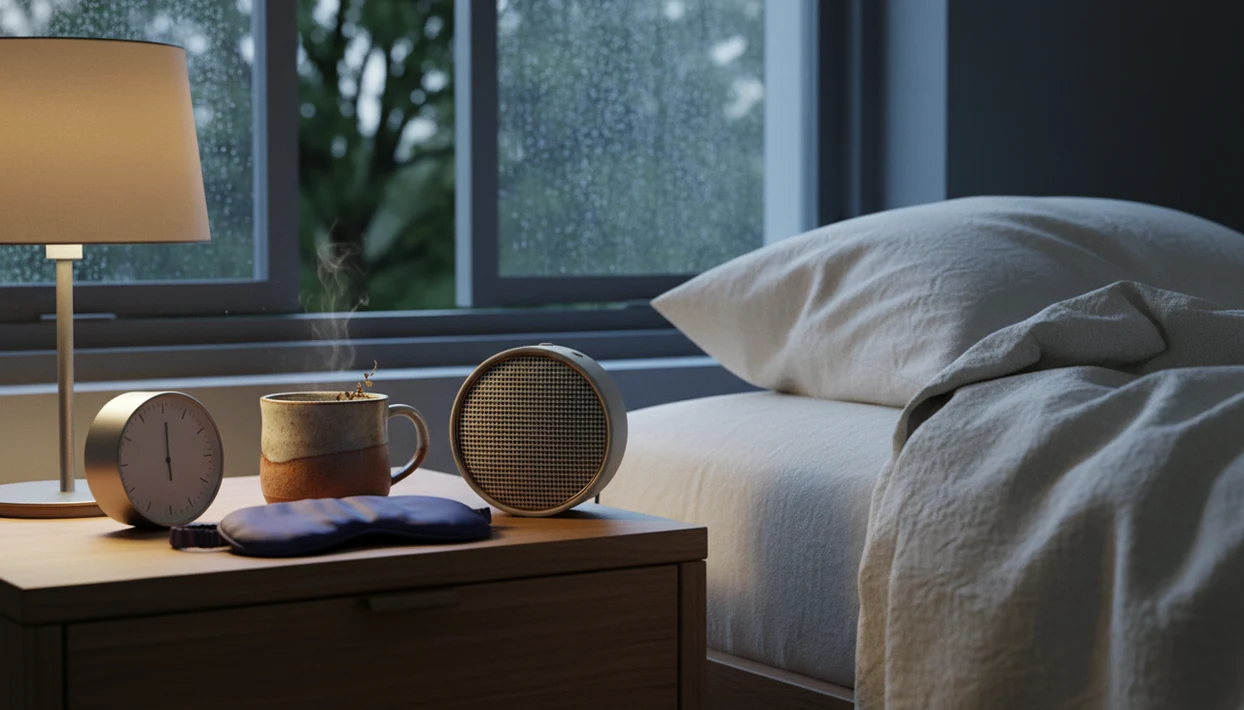
Nature sounds for sleep are a relaxation aid, not a guaranteed fix for insomnia. A bedtime routine pairs gentle natural audio with mindful breathing, body awareness, or attention to sound before sleep. Choose a steady recording, lower the volume, and listen intentionally for 5 to 15 minutes before letting it fade into the background. Rain, soft ocean surf, or quiet forest ambience can serve as the cue, provided the recording has no ads or startling changes.
The aim is to give attention somewhere simple to rest, not to make sleep happen on command. A familiar sound may help you settle, but it cannot cancel out caffeine, bedtime scrolling, or an irregular schedule. If listening leaves you more alert or interrupts sleep, shorten the playback or try silence.
The essentials
- Use nature sounds intentionally for 5-15 minutes, not only as passive background noise.
- Pick stable tracks such as rain, ocean surf, or soft forest ambience without ads, thunderclaps, or sudden bird calls.
- Keep expectations realistic: nature sounds can support relaxation, but they do not treat sleep disorders or cancel out caffeine, screens, or irregular schedules.
Why Nature Sounds Can Become a Sleep Cue
A nature sounds bedtime routine works by giving attention a steady sensory anchor before sleep. Instead of wrestling with tomorrow’s list, you notice rain, waves, breath, and body contact.
Natural audio may also support a shift away from threat scanning. In one laboratory study, natural sounds compared with urban noise shifted autonomic activity toward parasympathetic rest-and-digest patterns and improved outward attention in 17 healthy adults, according to a 2017 Scientific Reports study of 17 healthy adults Srep45273. That does not mean a track “makes” sleep happen. It means the body may receive fewer sharp cues to stay alert.
The mindfulness part is simple: notice and return. Your mind may wander to a photography edit you meant to finish or to pasta water waiting to boil. That is normal. Come back to the sound, then the breath, then the quiet contact of your body with the room around you.
Separate relaxation from noise masking
A calming recording and a noise-masking recording may help for different reasons. Continuous sound can reduce the contrast between a quiet room and sudden traffic or household noise. That explanation is more plausible in a noisy bedroom than in an already quiet one. A review discussing environmental noise and sleep describes benefits in selected noisy settings, including a small study of only 10 adults. If small noises often wake you, sleep meditation for light sleepers offers another way to settle attention at bedtime.
The evidence does not establish that rain or ocean recordings reliably improve sleep. A 2022 review of 34 adult auditory-stimulation studies found conflicting results and no consistent overall sleep benefit. To clarify what helps you, compare separate nights with mindful breathing alone, sound alone, both together, and silence. Note how long settling takes, awakenings, and morning alertness without treating a few good nights as proof.
Five facts about mindful bedtime sounds
- Nature sounds support relaxation more reliably than they cure sleep problems. They can help wind-down, but they are not insomnia treatment. Understanding meditation vs sleep can help you use relaxation practices without mistaking them for the rest your body needs.
- Consistency beats the perfect track. A familiar 10-minute routine usually matters more than searching for a new “sleep sound” at 11:40 p.m.
- Different nervous systems prefer different soundscapes. Rain may soothe one person, while forest insects make another person more alert.
- Low, steady, predictable audio is usually better for bedtime. Dramatic thunder, loud birds, or sudden transitions can pull attention back online.
- Mindful attention turns listening into practice. Nature sounds become bedtime meditation when you intentionally notice sound, breath, and body sensations.
One practical next step is to compare this routine with broader sleep soundscapes meditation if you want more structure.
Choose steady rain, waves, or forest sounds
Good nature sounds for sleep meditation are steady, soft, and easy to ignore once the body settles. The goal is not entertainment. It is a gentle attention cue.
A good test is boringness: if the track makes you want to identify the bird, follow the storm, or wait for the next wave crash, it is probably too engaging for bedtime.
Rain: Rain is useful for low-intensity masking and simple breath practice. Many beginners like it because the texture is even and doesn’t demand interpretation. For a narrower option, try rain sounds for sleep meditation.
Ocean waves: Ocean sounds suit rhythmic attention. The rise and fall can make it easier to return after waking during the night.
Forest ambience: Forest tracks can feel spacious, but sharp birds or insects may be distracting. Test them first.
Wind or streams: These work for some listeners, but check for sudden peaks. A soft stream is different from a roaring river.
Before You Start a Nature Sounds Bedtime Routine
Before you start, make the sound choice boring and settled before you are under the covers. The routine works better when the track is already chosen, tested, and ready to disappear into the background.
- Pick the track earlier in the evening, before bedtime scrolling has a chance to become the real routine. Choose one familiar rain, wave, forest, wind, or stream recording rather than searching from bed.
- Check the opening and ending for ads, loop clicks, sudden volume jumps, thunder, animal calls, or a final swell that could pull you awake.
- Set up playback before lights-out, whether that means a small speaker, downloaded audio, airplane mode, or a timer that does not require more screen time.
- Decide the ending in advance: let the track fade after 10-30 minutes, or keep it continuous only if all-night sound feels genuinely restful.
- Choose silence instead if the sound makes you feel keyed up, unsafe, watched, annoyed, or unable to stop monitoring the room.
How to use nature sounds for a bedtime routine
Use nature sounds as a short ritual, not as another reason to scroll in bed. Set the routine before you lie down.
- Choose one track before getting into bed, ideally one without ads or abrupt changes.
- Lower the volume until the sound is easy to notice but not attention-grabbing.
- Settle your body by noticing the mattress, pillow, and one slow exhale.
- Breathe with the rhythm for three to five minutes, especially with rain or waves.
- Return attention to sound when the mind wanders. No drama. Just return.
- Use a timer or fade-out if all-night playback makes you feel dependent on the track.
A 10-minute bedtime nature sound meditation
This 10-minute nature sound meditation works as a short sequence: settle the body, follow the sound, widen awareness, then stop trying to manage sleep. Start the track at a low volume, let the room feel almost museum quiet, and treat the air conditioner hum or rainfall audio as a soft background rather than a task.
Minute 0-2: Dim the lights and settle posture. Notice contact points: head on pillow, shoulders on the bed, knees stacked under a blanket.
Minute 2-5: Follow the breath while hearing the soundscape. Let the inhale arrive. Let the exhale lengthen naturally.
Minute 5-8: Widen attention to include body sensations and sound together. Tight calves, warm sheets, distant rain. All included.
Minute 8-10: Stop managing the practice. Let sound move to the background and allow sleepiness without chasing sleep.
Returning attention to sound or breath gives beginners a simple bedtime practice, but it cannot guarantee a quiet night.
Volume boundaries for mindful bedtime sounds
Use the lowest volume that is easy to notice. If you have to listen for it, that is often enough for mindful bedtime sounds.
Avoid tracks with ads, abrupt transitions, thunder, intense rain, loud animal calls, or high-pitched birds. A peaceful title does not guarantee a calm recording. Test the first and last few minutes before using any track in bed, especially if it loops.
Screen friction matters too. Offline downloads, a small speaker, or screen-free playback can reduce the “one more thing” phone check. That quiet pause before opening the sleep app matters more than people admit.
If audio keeps you alert, try a non-sound practice from mindfulness exercises, such as feeling the body breathe or noticing contact with the bed.
Keep the speaker away from your pillow
Placement and playback duration matter as well as volume. Keep the sound source away from your head rather than directly beside the pillow, and avoid levels that make conversation difficult. A 2024 review of continuous white-noise exposure recommends limiting intensity and exposure duration. Its findings concern white noise, not every nature recording, but they support caution with prolonged playback.
Reduce or stop playback if you notice tinnitus, muffled hearing, headaches, morning grogginess, or more awakenings. There is no need to leave a recording running all night simply because it is labelled for sleep. If the sound is only a wind-down cue, try a shorter session; if it masks disruptive noise at bedtime, a timer is a reasonable option.
Best candidates and red flags for a nature sounds bedtime routine
A nature sounds bedtime routine is best for people who want a secular, low-effort cue for winding down. It is less suitable when sounds are triggering, symptoms are severe, or sleep problems need clinical evaluation. For a more tailored bedtime practice, try mindfulness for women’s sleep to support a gentle evening wind down.
| Fit | What it looks like | Practical note |
|---|---|---|
| Best for beginners | You want a simple attention practice without long instructions. | Start with 5 minutes and one steady track. |
| Best for busy minds | Bedtime thoughts are active but not overwhelming or clinically severe. | Return to sound whenever planning starts. |
| Not ideal for sound triggers | Storms, water, forests, insects, or animal calls feel unsafe. | Choose silence, breath, or body awareness instead. |
| Not a replacement for care | Chronic insomnia, sleep apnea symptoms, trauma, or severe anxiety are present. | Consider qualified medical or mental health support. |
For beginners, steady rain or waves are often easier than complex forest recordings because fewer sudden details compete for attention.
Set a short listening period before bed
For a bedtime listening routine, a defined practice period can keep attention on the sound rather than on the clock. The free online meditation timer can time five or ten minutes of mindful listening; the Mindful.net app also offers breathing exercises for settling beforehand. Keep any timer alert quiet enough not to startle you. Silence is a better choice when audio holds your attention, and persistent sleep problems need more than a timer or recording.
Nature Sounds: Sleep Limits
- Nature sounds may ease stress and anxiety, but evidence for lasting insomnia improvement is limited and mixed S0013935118303328.
- Seek professional help for chronic insomnia, sleep apnea, trauma symptoms, or severe anxiety, rather than relying on nature sounds.
- Clinical guidelines recommend cognitive behavioral therapy for insomnia as initial treatment, rather than audio aids alone M15 2175.
- Late caffeine, alcohol, bright screens, irregular schedules, and sudden audio disruptions can still disturb sleep.
Nature sounds for sleep questions
Do nature sounds actually help you sleep?
Nature sounds may help you relax or mask unpredictable bedroom noise, but they do not reliably improve sleep for everyone. Reviews of auditory stimulation report conflicting results, and evidence specific to rain or ocean recordings is limited. Judge the recording by your awakenings and morning alertness, not just how soothing it feels.
Is rain or ocean sound better for sleep?
Neither is established as the better sleep sound. Choose the recording that stays soft and predictable for you. Even rain can contain thunder, and ocean tracks can have loud wave crashes. Listen to the beginning and ending before bedtime, then keep one familiar recording rather than searching from bed.
Should I leave nature sounds playing all night?
All-night playback is not necessary for a mindful wind-down. Start with 5 to 15 minutes and let the recording stop or fade afterward. Longer playback may suit someone masking ongoing environmental noise, but continuous sound can also disturb sleep. Compare nights with shorter playback and stop if awakenings or morning grogginess increase.
How loud should nature sounds be at bedtime?
For mindful listening, use the lowest volume that is easy to notice. For masking, use only enough to soften the disruptive noise, not to drown out the room. Keep the speaker away from your head and avoid levels that make conversation difficult. Reduce or stop playback if hearing symptoms or headaches occur.
How do I meditate with nature sounds before sleep?
Settle into a comfortable position and notice where your body meets the bed. Listen to the recording while allowing your breath to move naturally. When planning or other thoughts pull you away, return to sound or body contact. After a few minutes, let the sound become background rather than something you must keep following.
Can I become dependent on nature sounds to sleep?
Preferring a familiar bedtime sound does not by itself establish dependence. If you become worried about sleeping without it, try a shorter session or occasional nights with silence. The recording should support your routine, not become another condition you must satisfy before sleep. Persistent sleep difficulty deserves attention beyond changing the track.
Do nature sounds increase deep sleep?
A relaxing sound does not prove that you are getting more deep sleep. Reviews of auditory stimulation have found some changes in slow-wave activity, but no consistent overall improvement in common sleep measures. Nature recordings have not been established as a reliable way to increase deep sleep, so avoid treating that claim as a reason for all-night playback.