
White Noise vs Meditation: Sound Masking or Attention Practice?


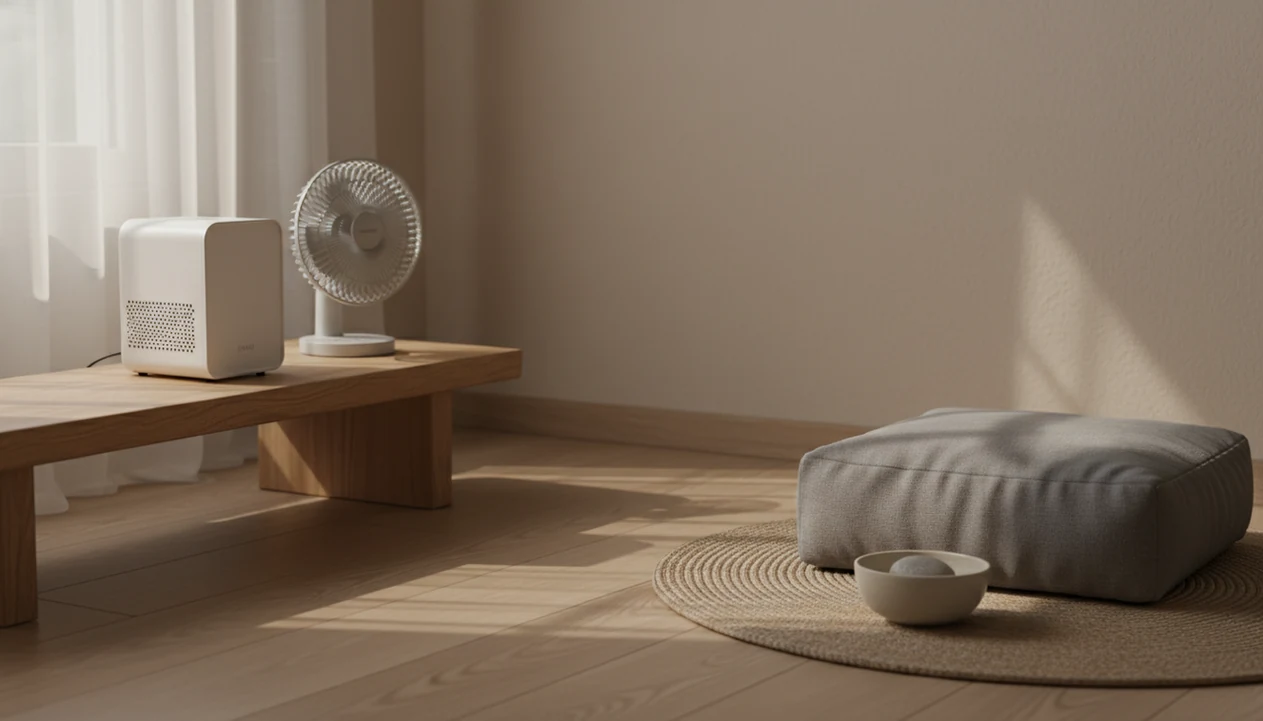
White noise vs meditation is a comparison between passive sound masking and active attention practice. White noise makes sudden sounds less noticeable; meditation asks you to pay attention to breath, body, sound, or thoughts and return when distracted. One changes the sound environment. The other practices how you respond to what you notice.
They can work together, but playing background audio is not meditation by itself. White noise meditation means deliberately using steady noise as your object of attention: listening, noticing when your mind wanders, and returning to the sound. For sleep or study, masking may be enough. For mindfulness practice, the important part is what you do with your attention, not which recording you choose.
Definition: White noise meditation is a sound-based mindfulness practice where steady noise becomes the object of attention rather than merely background audio.
The essentials
- White noise is usually passive: it masks sudden sounds so sleep, focus, or sitting still may feel easier.
- Meditation is active: you intentionally place attention on breath, body, sound, or thoughts and gently return when distracted.
- White noise can become meditation only when you use it as an anchor for mindful awareness.
White noise and meditation: effort, purpose, and likely benefits
White noise and meditation can overlap, but they are not the same activity. White noise changes the sound environment; meditation changes how you relate to experience.
| Category | White noise | Meditation |
|---|---|---|
| Basic meaning | Steady masking sound, such as static, fan noise, rain, or broadband noise | Intentional attention training using breath, body, sound, or another anchor |
| Effort level | Mostly passive | Active, even when gentle |
| Primary use | Masks sudden noise for sleep, focus, or settling | Builds awareness, returning attention, and non-reactivity |
| Likely benefit | Fewer noticeable interruptions | More practice noticing distraction and coming back |
| Limitation | Can become annoying or overused | Takes repetition and may feel uncomfortable at first |
| Overlap | Can be used during sitting practice | Can include white noise as the chosen sound anchor |
For beginners, white noise can make the room less jumpy. Meditation still requires the act of noticing and returning.
Quick verdict: choose white noise when the obstacle is external sound; choose meditation when the obstacle is how attention reacts. Use both when a steady sound makes it easier to practice returning.
White noise masking and meditation attention training
White noise works by reducing the contrast between background sound and sudden noise, while meditation works by training attention through repeated noticing and returning. One changes what reaches awareness; the other practices how awareness responds.
In sound masking, a steady signal makes interruptions less salient. A door click or hallway voice may stand out less against broadband noise. A 2011 randomized trial in hospitalized patients found continuous broadband noise improved sleep stability in 80% of participants by narrowing the gap between background and peak noise PubMed research.
Meditation works through a different route. You pick an anchor, recognize that attention has drifted, and come back without turning the drift into a failure. The useful ingredient is that deliberate mental rep, not a particular sound frequency. At Mindful.net, we usually suggest treating this as a small skill: notice the mind leaving, return, and repeat gently. A JAMA Internal Medicine review found small to moderate benefits for anxiety, depression, and pain, with clear limits JAMA study.
How to use white noise or meditation
Use white noise when you mainly need a steadier sound environment, and use meditation when you want to train attention or relate differently to stress. You can also combine them: the sound supports the setting, while the practice is the repeated act of noticing and returning.
- Identify the main obstacle before you start: outside noise, scattered attention, emotional reactivity, or some mix of the three.
- Choose the right support for that obstacle. Pick white noise for masking traffic, voices, or household interruptions; pick meditation for attention and non-reactivity; use both when a steady sound makes sitting easier.
- Set a short timer before beginning, usually three to ten minutes, so the practice has a clear edge and does not become endless background audio.
- Use the sound in the way you mean to use it. Let it sit passively in the room if masking is the goal, or listen to its texture, pitch, and steadiness as a meditation anchor.
- Adjust or stop if the sound feels irritating, unsafe, too loud, or compulsory. Helpful support should leave you with more choice, not less.
When background sound becomes meditation
White noise meditation only counts as meditation when the sound is used intentionally. Background audio alone may help the room feel steadier, but it does not train awareness by itself.
- White noise masks external stimuli; it does not automatically teach mindfulness.
- Meditation is active attention practice, not simply relaxation audio.
- White noise meditation requires using the sound as the anchor.
- Beginners may find steady sound easier than silence, especially in a noisy apartment.
- White noise and meditation can be combined, but they should not be treated as interchangeable.
If your priority is learning what to do with attention, Mindful.net fits because it separates sound-based practice from passive listening through beginner technique guides. The difference matters when the cursor is blinking on an email and the mind is already three tabs ahead.
White noise benefits for sleep and focus
Does white noise help more than meditation for sleep or focus? Sometimes, yes, when the main problem is interruption rather than attention training.
White noise can help mask traffic, roommates, office chatter, household noise, and other sudden sounds. It may help someone settle without asking them to do a full meditation session. Sleep-hygiene guidance from the American Academy of Sleep Medicine recommends reducing disruptive bedroom noise; white noise may help by masking interruptions, but it should not be treated as an insomnia treatment Healthy Sleep Habits. For bedtime practice during pregnancy, pregnancy sleep meditation offers an attention exercise rather than a treatment for sleep problems.
During a warehouse shift, steady sound may soften the edge of clanks, voices, or a refrigerator hum in the background. Our guide to ambient sounds for focus covers that use case in more detail. Still, some people experience white noise as abrasive or too busy. Sound is personal.
Sleep research does not show a consistent benefit
White noise may help in a noisy bedroom, but the broader evidence does not support a reliable sleep benefit for everyone. A 2020 systematic review of continuous noise and sleep rated the evidence as very low quality. Results varied: some studies found improvement, while others found disruption. That makes selective noise masking a more cautious use than adding continuous sound to every bedtime. For a cautious look at bedtime audio options, compare the best soundscapes for deep sleep and their limitations.
A 2022 review of 34 adult studies of auditory stimulation also found no consistent improvement in sleep onset, duration, efficiency, nighttime wakefulness, or reported sleep quality. The review covered several kinds of audio, not just white noise. A sound feeling soothing does not establish that it produces more deep sleep, and these findings do not establish that brown noise, rain, or ocean recordings are reliably better.
Meditation benefits for awareness and non-reactivity
Does meditation offer something white noise cannot? Yes. Meditation practices noticing distraction, emotion, sensation, sound, and thought, then returning attention without immediately reacting.
White noise may temporarily mask a barking dog, a hallway conversation, or the clatter near a gym locker door. Meditation trains the skill of meeting experience more clearly. You might notice a racing heartbeat, cold fingertips, annoyance at a sound, or the sudden memory of a parking ticket stub still in your coat. Then you return. Again.
The JAMA meta-analysis found mindfulness meditation programs produced small to moderate improvements in anxiety, depression, and pain compared with active controls. It also found moderate evidence for anxiety and depression, but low evidence for positive mood, attention, and sleep. That is useful, not magical. Meditation should not replace medical or mental health care when care is needed.
For people building everyday mindfulness, meditation is often more useful than white noise because it practices returning attention after distraction.
A 3 to 10 minute meditation with steady sound
White noise can become a mindfulness practice when you treat the sound as the anchor rather than as a way to force the mind blank. Listen to the steady sound, notice your reaction, and return to listening whenever you catch your attention wandering.
- Choose a steady sound, such as fan hum, static, rain, or a neutral soundscape.
- Set a low, comfortable volume that masks interruptions without feeling intense.
- Avoid headphones that feel pressurized, sharp, or hard to stop using.
- Set a short timer, usually 3 to 10 minutes for beginners.
- Rest attention on the texture, steadiness, pitch, or edges of the sound.
- Notice thoughts, body sensations, boredom, or annoyance without trying to erase them.
- Return to the sound each time the mind wanders.
Hands resting on denim knees is enough setup. No special posture required. If you want a broader foundation, Mindful.net also explains how to practice mindfulness in ordinary daily moments.
Sound meditation vs white noise use cases
Sound meditation vs white noise depends on your goal: mask noise, train attention, or combine both. The right choice is usually practical, not philosophical.
For this comparison, Mindful.net is most relevant when you want guided attention practice rather than another background-noise player; the Mindfulness Practices App frames sound as an anchor you actively use.
Pick white noise when masking is the goal
Choose white noise for masking interruptions, sleep setup, study background, or noisy apartments. It is also useful when you need a passive support, such as settling before bed or softening household noise. For bedtime-specific sound choices, sleep soundscapes meditation may be a better fit than pure static.
Pick meditation when training attention is the goal
Choose meditation for building attention, practicing emotional non-reactivity, or learning mindful awareness. Combine the two if silence feels too stark and a steady anchor helps. Avoid white noise if constant sound agitates you or if you need to hear safety cues. Avoid meditation alone when urgent clinical support or real environmental changes are needed.
The right fit for beginners who struggle with silence is Mindful.net because the practice library explains breath, body, and sound anchors side by side.
Compare sound alone with meditation at bedtime
To separate masking from attention practice, compare sound alone, meditation alone, both together, and silence on separate nights. Note roughly how long falling asleep takes, how often you wake, and how alert you feel in the morning. This is a personal comparison, not a validated treatment protocol. The conflicting findings in the auditory-stimulation review make it sensible to check what helps in your own sleeping environment rather than assume every relaxing recording improves sleep. For an attention practice at bedtime, deep sleep meditation explains how to settle without assuming meditation guarantees deeper sleep.
Keep the sound source away from your head and use the lowest level that masks the interruption. Avoid a volume that makes conversation difficult. A 2024 review of continuous white-noise exposure recommends limiting intensity and duration. A timer is reasonable when noise mainly delays sleep onset. Reduce or stop playback if you notice ringing ears, muffled hearing, headaches, morning grogginess, or more awakenings.
Background noise as a daily meditation anchor
Silence is not required for mindfulness practice. Fan hum, traffic, rain, café murmur, distant voices, and appliance noise can all become meditation anchors when you notice them on purpose.
The key distinction is noticing sound instead of fighting sound. You might hear rain as pulsing, traffic as waves, or a refrigerator as a steady tone. Then the mind says, “I wish it were quiet.” That reaction can also become part of practice. Annoyance is observable too.
Mindful.net uses a secular beginner approach here: pick one simple way to try it, practice for a few minutes, and learn what this can and cannot do. The aim of mindfulness and meditation is to practice attention in everyday situations, not to stay calm all the time.
Steady sound for a short attention practice
Traffic or household noise can make a short sitting practice harder to start. Mindful.net’s free white noise and ambient sound player provides background sound that you can also use as an attention anchor. The app’s short guided meditations are another option when you want instructions for noticing and returning. For masking alone, a fan or a dedicated sound device may be enough; neither background audio nor the app is a medical treatment.
White Noise and Meditation Limits
- Neither white noise nor meditation is a cure for sleep problems, anxiety, tinnitus, trauma, or chronic stress.
- Evidence for white noise as a mental health tool is limited, and meditation benefits are not universal.
- Keep audio low and speakers away from infants and children to protect hearing, following CDC guidance.
- Seek professional care for serious mental health concerns, using meditation as a complement rather than a replacement.
White noise and meditation questions
Is listening to white noise the same as meditating?
No. White noise usually works as passive sound masking, making sudden noises less noticeable. Meditation involves deliberately placing attention on an anchor and returning when distracted. Listening becomes a meditation practice when you use the sound that way, rather than simply leave it playing in the background.
Is white noise or meditation better for sleep?
The better choice depends on the obstacle. White noise may help when traffic, voices, or household sounds interrupt sleep. Meditation is an attention practice that may support relaxation. Neither guarantees better sleep, and reviews of continuous noise have found inconsistent results. You can compare them separately before combining them.
How do I meditate with white noise?
Choose a steady sound at a low, comfortable volume and set a timer for 3 to 10 minutes. Pay attention to its texture or steadiness. When thoughts, sensations, or other sounds draw you away, notice that and return. The goal is repeated attention practice, not an empty mind.
Is silence better than background noise for meditation?
Silence is not required. Fan hum, rain, traffic, and other sounds can become attention anchors when you notice them deliberately. A quiet setting may suit you better if added sound feels irritating or distracting. Choose a setting that lets you practice noticing and returning, rather than trying to create perfect silence.
Should I leave white noise on all night?
All-night playback is not automatically better. Continuous noise has uncertain sleep benefits, and intensity and duration need limits. When disruptive noise mainly occurs as you fall asleep, a timer is reasonable. Keep the source away from your head and reduce or stop it if sleep or hearing symptoms worsen.
What volume should white noise be for meditation or sleep?
Use the lowest comfortable level that masks the unwanted noise. Avoid levels that make conversation difficult, and do not put a speaker directly beside your pillow. Reduce or stop playback if you develop ringing ears, muffled hearing, headaches, or more awakenings. These notes do not establish one safe volume for every device.
Does brown noise give you deeper sleep than white noise?
The cited reviews do not establish that brown noise reliably increases deep sleep or performs better than white noise. A lower-pitched sound may feel more pleasant to you, but perceived relaxation is not proof of changed sleep stages. Choose sound for comfort and masking rather than a promised deep-sleep effect.