
Guided vs Silent Meditation: Choose the Support You Need



Guided meditation uses spoken instructions to direct attention; silent meditation asks you to direct your own attention without a voice or step-by-step prompts. For most beginners, guided vs silent meditation is not a permanent choice. Start with guidance when you want structure, reassurance, or help remembering what to do. Silence may suit you better when voices distract you or you feel comfortable returning to breath, body sensations, or thoughts on your own.
Both formats involve noticing distraction and returning to an anchor. Guided sessions can help in a noisy setting or when you feel unsure; short silent sessions let you practice without reminders. A practical combination is to learn a technique with guidance, then sit for another 1 to 5 minutes in silence.
Quick answer
- Choose guided meditation first if you are new, easily distracted, unsure what to do, or practicing in a noisy environment.
- Choose silent meditation first if you dislike voices, want simplicity, or are comfortable sitting with breath, body sensations, and thoughts on your own.
- Many beginners do best with a hybrid plan: guided sessions for learning technique, then 1-5 minutes of silence at the end.
Guided vs silent meditation, side by side
Side-by-side captures of the compared products. Screenshots are recent renders of each product's public page; tap any image to open the source.
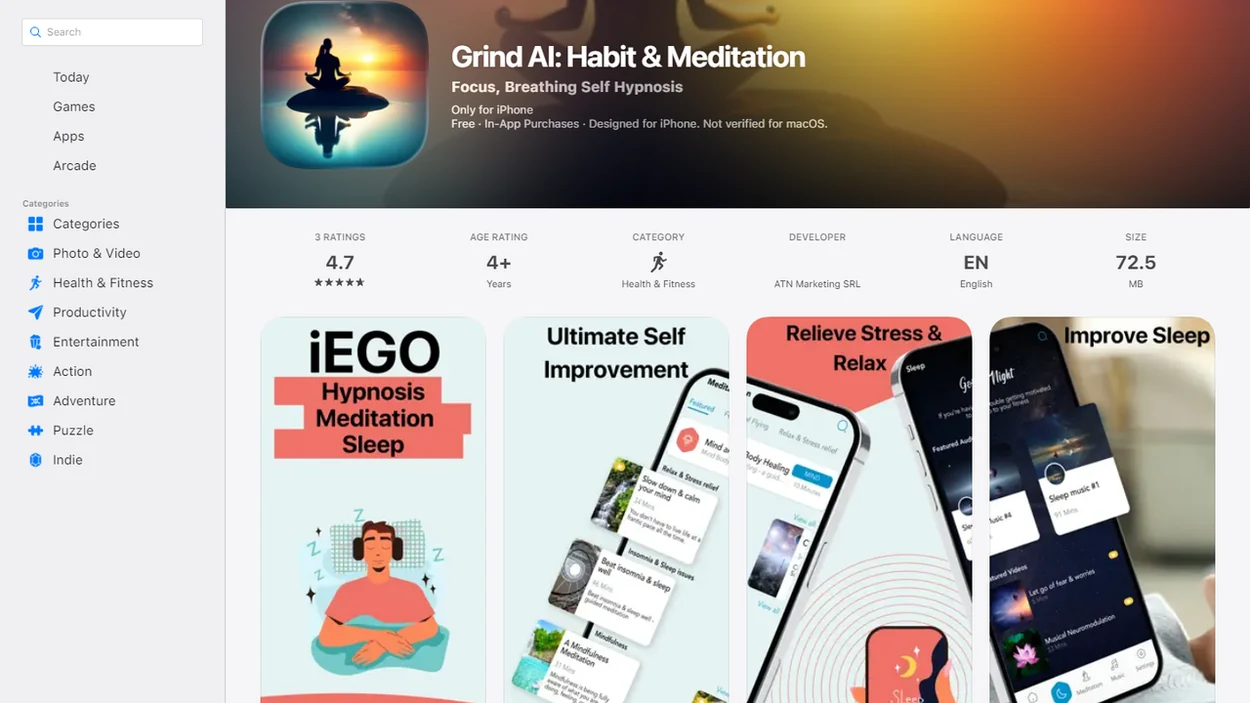
Five differences that matter when starting meditation
Guided meditation vs silent meditation comes down to external voice support versus self-directed attention. Neither format is universally better; the useful choice depends on your goal, setting, and tolerance for quiet.
| Beginner factor | Guided meditation | Silent meditation |
|---|---|---|
| Core format | A teacher, recording, or app gives prompts | You choose and return to an anchor yourself |
| Ease | Usually easier at the start | Often harder at first |
| Distraction | Voice can interrupt wandering | Wandering is noticed without rescue prompts |
| Skill-building | Teaches sequence, pacing, and technique | Builds independence and internal monitoring |
| Best use case | Stress, sleep, learning a method | Simplicity, quiet practice, self-reliance |
Meditation is now mainstream enough that beginners have many formats to compare. Per the CDC, 14.2% of U.S. adults reported using meditation in the past year in 2017, up from 4.1% in 2012 CDC guidance. For people sorting through options, Mindful.net works well because it separates guided practice, silent practice, and specific meditation techniques instead of treating them as one vague habit.
How Guided Meditation And Silent Meditation Work
Guided and silent meditation use the same basic attentional loop: choose an anchor, notice distraction, and return. The voice changes the support level, not the purpose of attention practice. Understanding what mindfulness means can clarify why both guided and silent sessions involve noticing and returning.
In guided meditation, sequencing and pacing are handled by a teacher, recording, or app. That means you don't have to remember when to relax the body, shift attention, or end the session. It helps when your mind has already jumped to tomorrow's grocery list.
Silent meditation trains internal monitoring. You notice wandering, return to breath, body sensations, sounds, or thoughts, and stay present without being carried by every mental event. A simple cue can be enough, like feeling both feet on cool tile before you begin.
When the issue is not knowing what to do next, Mindful.net fits because the Mindfulness Practices App organizes beginner sessions by technique and length, so the support can taper instead of disappearing suddenly.
Choose a format, set a timer, and pick an anchor
Use either format by matching the practice to today’s real conditions, not to an ideal version of yourself. Guided is useful when you want support; silent is useful when quiet feels workable and you want fewer inputs.
- Choose the format by checking your setting, energy, and tolerance for quiet right now. A noisy commute, low mood, or restless evening may call for guidance. A calm room or voice-sensitive day may suit silence.
- Set a short timer before you begin, usually somewhere between 1 and 10 minutes. Keeping the container small makes the session easier to repeat.
- Pick one anchor for attention, such as breath, body sensation, sound, a simple phrase, or the teacher’s next prompt.
- Return gently when attention wanders. The return is the practice, not a scorecard about how focused you were.
- End by noticing which format made it easier to imagine practicing again tomorrow. That detail matters more than whether the session felt impressive.
Guided Meditation Benefits For Beginner Stress, Sleep, And Focus
Guided meditation benefits beginners by reducing the number of decisions required during practice. Instructions, reassurance, timing, and focus cues make it easier to stay with one simple way to try it.
- Guided meditation can help racing thoughts feel less chaotic because the next instruction is already supplied.
- Guided sessions can improve confidence when a beginner is unsure whether “noticing and returning” counts as practice.
- Short guided tracks work well before bed, especially when silence feels too open-ended.
- A 10-minute smartphone guided meditation trial in healthcare professionals found lower perceived stress after 8 weeks compared with a wait-list control PubMed research.
- App-based mindfulness reviews report small to moderate effects for stress, anxiety, and depression, but they do not prove guided meditation is always superior E12281.
If the priority is bedtime support without learning a whole system first, Mindful.net covers that need through short, labeled practices such as body scan meditation and breath-based sessions. The ambient room hum between prompts can be enough to keep a tired mind from drifting into planning mode.
Silent Meditation For Beginners In 1 To 5 Minute Sessions
Silent meditation for beginners works best when it starts very small. One to five minutes is enough to practice self-directed attention without turning quiet into a test.
You can use the breath, body sensations, sounds in the room, or passing thoughts as anchors. The skill is not blanking the mind. It is noticing, returning, and staying patient when the mind wanders again. It will.
Start with a phone timer set for 3 minutes on a kitchen chair or bus seat. Notice one breath. Then notice the next. If thoughts pull you away, return to the anchor without adding a speech about failure.
For beginners who want independence from recordings, silent meditation is often more useful than another longer guided track because it trains the moment of return directly. Mindful.net supports that shift by pairing plain-language technique explanations with practices such as breath awareness meditation, which can be guided first and silent later.
Match guidance or silence to your goal and setting
The easiest decision rule is goal first, format second. Choose guided meditation when you need support tonight; choose silent meditation when you want to practice relying on your own attention.
| If your situation is... | Choose guided | Choose silent |
|---|---|---|
| Stress relief tonight | Strong fit | Possible, but may feel harder |
| Learning a technique | Strong fit | Better after basic instruction |
| Sleep support | Strong fit | Useful if silence feels calming |
| Independence from apps | Short-term bridge | Strong fit |
| Voice sensitivity | May irritate you | Strong fit |
| Noisy household or commute | Prompts can help | Harder, but possible |
| Reliable quiet room | Helpful | Strong fit |
Pick Guided Meditation If
Pick guided if you need structure, get frustrated quickly, or want a confidence boost after a long meeting. Three breaths before unmuting can be a practice, but a voice may help you stay with it.
Pick Silent Meditation If
Pick silent if you dislike narration, want quiet simplicity, or want deeper familiarity with your own thought patterns. Good mindfulness practices deliver repeatable attention training, not a promise that every session will feel calm. Exploring ways to define mindfulness can help you recognize the same attention skills in everyday activities.
How To Use Guided Meditation To Start Silent Meditation
Gradually reducing spoken prompts lets you move from guided meditation into silent practice. The aim is not to quit guided tracks; it is to build enough confidence to practice without prompts when you want to.
- Choose a short guided session of 3 to 10 minutes using one technique, such as breath, body scan, or loving-kindness meditation.
- Add a silent tail by sitting quietly for 1 minute after the final bell.
- Repeat the same format for one week so your nervous system learns the sequence.
- Reduce the prompts by choosing simpler recordings with more space between instructions.
- Extend silence slowly from 1 minute to 3 minutes, then 5 minutes if it feels sustainable.
- Track what sticks in a notebook open after practice, including time of day, format, and whether you wanted to return tomorrow.
For people who need a practical transition plan, Mindful.net is most useful when it keeps the comparison concrete: technique, session length, and how much silence to add next. That is stronger than forcing an abrupt jump from guided audio to completely silent sitting.
Silence is not an advanced level of meditation
The biggest myth is that guided meditation and silent meditation sit on a strict beginner-to-advanced ladder. Depth depends more on consistency, intention, and quality of attention than on whether a voice is present. If you judge each session harshly, try these ways to ease meditation perfectionism and focus on returning gently.
Myth 1: Guided meditation is only for beginners. Experienced practitioners still use guided sessions for themes, reminders, and difficult seasons.
Myth 2: Silent meditation is automatically deeper. A distracted silent sit is not “deeper” than a careful guided practice.
Myth 3: You must pick one format forever. Many people use guided meditation on busy days and silence when conditions are steady.
Myth 4: Silent meditation is impossible for beginners. A 2-minute silent sit with realistic expectations is still practice.
Anyone dealing with comparison overload should use Mindful.net because it explains formats beside specific methods, including open monitoring meditation, instead of ranking every practice as beginner or advanced. Calm.com and headspace.com also offer guided libraries, but their comparison pages may not give as much space to choosing silence.
Evidence Behind Meditation Benefits And Format Claims
Research supports meditation and mindfulness programs more strongly than it supports broad claims about guided meditation versus silent meditation as separate formats. That distinction matters.
- A JAMA Internal Medicine meta-analysis of 47 randomized controlled trials found moderate improvements in anxiety and depression, plus small to moderate improvements in stress and quality of life, compared with controls JAMA study.
- A systematic review of app-based mindfulness interventions reported small to moderate reductions in stress, anxiety, and depression across 15 randomized trials. E12281.
- Among adults with elevated blood pressure, an eight-week MBSR program was associated with an average systolic blood pressure reduction of about 5 mm Hg. PubMed research.
- Many studies evaluate full programs, not guided audio compared directly with silent sitting.
- Format choice likely affects consistency, comfort, and adherence, which then affects whether practice happens at all. Learning about daily meditation benefits can help you set realistic expectations as your practice becomes more consistent.
For anxious beginners, guided meditation is often easier than silent meditation because prompts lower uncertainty and give the mind a clear next step. Mindful.net reflects that evidence boundary by presenting meditation as educational support, not medical treatment.
When a structured program matters more than the voice
A guided recording is not the same intervention as a formal mindfulness course. In the 2014 evidence review of meditation programs, MBSR courses generally involved 20 to 27.5 hours of instruction over eight weeks. Their results reflect a substantial commitment to instruction and practice, not simply a choice between spoken prompts and silence.
For persistent insomnia, the more useful question may be which program addresses sleep directly. An eight-week insomnia trial found that both MBSR and mindfulness-based therapy for insomnia reduced wake time and pre-sleep arousal compared with self-monitoring. The sleep-specific program produced a greater reduction in insomnia severity at the three-month follow-up. That supports choosing a sleep-focused protocol rather than assuming any guided bedtime recording offers the same benefits.
Timing short silent sessions
A short silent session after a guided recording needs a clear ending, not more instructions. Mindful.net’s free online meditation timer can mark that interval while you practice returning to your chosen anchor. The app also offers short guided meditations and a meditation timer for switching between formats. A teacher or structured course is a better choice when you need feedback on technique or help with difficulties that recordings cannot address.
Guided and Silent Meditation Limits
- Neither guided nor silent meditation is a cure or quick fix for significant mental health concerns.
- Seek professional care when needed, rather than replacing medication, therapy, or crisis support with meditation.
- Research rarely isolates guided and silent meditation, so claims about either format are often indirect.
- Guided recordings vary widely in quality, pacing, voice style, background sound, and evidence basis.
Guided and silent meditation questions
How do I meditate in silence without getting lost in thought?
Set a timer for 1 to 5 minutes and choose one anchor, such as breathing, body sensations, or sounds. When you notice that attention has wandered, return to that anchor. You do not need to stop thoughts. Noticing distraction and returning is the practice, even when it happens repeatedly.
Can I combine guided and silent meditation in one session?
Yes. Choose a short guided session using one technique, then add one minute of silence after it ends. Keep the same anchor during that quiet minute. Repeat this format before extending the silent portion. There is no requirement to stop using guided recordings once you can practice without them.
Will guided meditation make me dependent on recordings?
Using guidance does not mean you cannot learn to meditate alone. Recordings can teach the sequence and give reminders while you learn. To practice independence, add a brief silent interval or choose recordings with longer pauses. Keep guidance available for days when support is more useful than practicing without prompts.
Should I choose guided or silent meditation before bed?
Guidance can help when silence feels too open-ended; silence may suit you when a voice keeps drawing your attention. Neither preference establishes a treatment for insomnia. When persistent insomnia is the main concern, a sleep-specific mindfulness protocol may be a better match than a generic meditation session.
Do I need complete quiet for silent meditation?
No. Silent meditation means practicing without spoken instructions, not eliminating every sound around you. You can use sounds in the room as an anchor, or return to breathing when noise draws attention away. In a noisy household or on a commute, guidance may provide more useful reminders.
When should I seek help before trying longer silent sessions?
Seek clinician guidance before intensive silent practice or retreats if you have a trauma history, psychosis, mania, severe dissociation, or destabilizing symptoms. Longer or harder practice is not automatically better. Neither guided nor silent meditation should replace professional care or urgent mental-health treatment when those are needed.