
Breathing Meditation to Calm the Mind: A Natural Breath Practice


Breathing meditation to calm the mind is a secular mindfulness practice of resting attention on your natural breath and gently returning when thoughts pull you away. The felt sensations of breathing give attention an anchor and can support emotional steadiness and everyday stress regulation. You do not need to stop thinking, breathe perfectly, or use special equipment. Noticing distraction and coming back is the practice, not a sign that you have failed.
Start with five to ten minutes, or try a one-to-three-minute pause before a stressful moment. Notice breathing at the nose, chest, ribs, or belly without deliberately changing it. A chair is enough, and your eyes can stay open. Calm may follow, but it is not a requirement for a useful session.
The essentials
- Use your normal breath as the anchor; forced breathing is optional and not necessary.
- Practice for 5-10 minutes, then use 1-3 minute versions before stressful moments.
- The goal is not a blank mind but a kinder return to the breath whenever attention wanders.
Five basics of natural breath awareness
- Breathing meditation is entry-level mindfulness. It starts with natural breath awareness, usually at the nose, chest, ribs, or belly.
- Mind wandering is expected. The actual practice is noticing that you drifted and returning to the next breath.
- No special setup is required. A kitchen chair, bus seat, or office stairwell can work if your body feels reasonably safe.
- Short sessions can still count. Regular 5-minute practices may support stress reduction and emotional regulation over time.
- Guidance is optional.
The first few sessions may feel ordinary. That is normal. Palms tingling in the lap, a grocery list appearing, then one more breath, that is the practice.
How breath awareness differs from paced breathing
Breathing meditation works by giving attention a stable body-based anchor while the nervous system has a chance to settle. The skill is not thought suppression; it is noticing distraction and returning without adding a second layer of self-criticism.
Breath sensations are useful because they are rhythmic, portable, and usually available. Some research connects slow or paced breathing with parasympathetic activity, which is linked with stress regulation, according to a 2017 Frontiers meta-analysis of heart rate variability studies Full. In plain language, the body may shift away from high-alert mode.
Natural breath awareness is enough. You can feel the warm exhale on the upper lip without trying to make the breath deeper. For many beginners, that feels safer than controlling every inhale. If you prefer a softly audible breath, gentle ocean breathing offers another approach without forcing depth.
Choose a comfortable posture and a safe focus
Before you begin, make the practice feel steady enough for your body, not ideal on paper. A safe setup gives you permission to stay simple, keep the breath natural, and change course if breath focus feels wrong.
- Choose a place where you are reasonably undisturbed and your body does not feel on alert. It can be a quiet room, a parked car, a bed, or one corner of an office.
- Use a posture that does not create strain. Sit in a chair, lie down, stand, or use the floor with support under the knees or back if needed.
- Keep the eyes open, softly lowered, or resting on one spot if closing them feels unsafe, disorienting, or too intense.
- Avoid forcing deep breaths if you are prone to panic, have asthma or COPD, or know that breath control can trigger trauma sensitivity.
- Stop or switch if watching the breath increases distress. Feel your feet, listen to room sounds, look around, or end the session gently.
Comfort is not cheating. It is part of making the practice repeatable.
A six-step natural breathing meditation
Use this breathing meditation as a short attention practice, not a performance test. If you want a broader overview of related meditation techniques, this breath practice is one simple place to start.
- Set a timer for 5 to 10 minutes so you do not keep checking the clock.
- Choose a posture sitting, standing, or lying down, with enough alertness to stay present.
- Notice the breath at the nose, chest, ribs, or belly without changing it on purpose.
- Label wandering with a quiet word such as “thinking,” “planning,” or “remembering.”
- Return gently to the next breath without scolding yourself for drifting.
- Close slowly by feeling the body and naming one next action, like opening your laptop.
Start there.
One-minute resets and three-minute transitions
On crowded days, attach the practice to something already on the rails: closing a laptop, waiting for coffee, buckling a seat belt, or standing before a meeting starts. Consistency matters more than session length, especially when your day is chopped into meetings, errands, and messages.
One-minute reset
Use one minute before hitting send, entering a meeting, or starting the car. Feel both feet on the floor, notice three natural breaths, then continue.
Three-minute transition
Try three minutes between work and home, or while standing in a grocery line with a clenched basket. Let the hands soften first; the mind may follow later.
Ten-minute daily practice
Use 10 minutes when you want a steadier routine. Apps such as Mindful.net can offer beginner guidance, and a tool that can guide 10-minute meditation may help if silence feels too loose at first.
Mindfulness practices and meditation techniques for beginners and daily life build repeatable attention skills, not instant emotional control.
Who breath awareness suits and who needs extra care
Breathing meditation is a good fit for beginners, everyday stress, racing thoughts, transition moments, and secular mindfulness practice. It is not a stand-alone treatment for severe anxiety, depression, trauma symptoms, or suicidal thoughts.
| Fit | When it helps | Practical adjustment |
|---|---|---|
| Best for | Beginners, busy minds, ordinary stress, pre-meeting pauses, bedtime settling | Use natural breath awareness for 5 to 10 minutes |
| Use with care | Panic sensitivity, trauma history, asthma, COPD, or breath-related fear | Keep the breath natural, open the eyes, or ground through feet and sound |
| Avoid without support | Suicidal thoughts, severe depression, severe anxiety, or trauma flashbacks | Seek qualified clinical or crisis support before practicing alone |
For breath-sensitive beginners, natural breath awareness is often easier than paced breathing because it does not require controlling the body.
What mindfulness research says about stress and anxiety
Evidence supports breathing meditation as a stress and mild-to-moderate anxiety support, not as a cure. Clinicians typically recommend mindfulness-based practices as supportive skills, not replacements for medical or psychological care.
| Evidence area | What research suggests | Safety note |
|---|---|---|
| Mindfulness programs | A 2014 JAMA Internal Medicine review of 45 randomized trials found moderate evidence of improvement for anxiety and depression JAMA study | Results vary by person and program |
| Generalized anxiety | A 2013 JAMA Psychiatry randomized clinical trial found mindfulness-based stress reduction improved anxiety symptoms versus stress-management education source | This was a structured 8-week program |
| Adapted breathing | Respiratory conditions may require gentler breathing practices; the American Lung Association describes pursed-lip and belly breathing as COPD breathing exercises source | Respiratory conditions need gentler adaptation |
| Public use | NCCIH reported 14.2% of U.S. adults used meditation in the previous year, up from 4.1% in 2012 source | Popularity does not prove benefit for every condition |
The most common medically supported way to use mindfulness for stress is regular practice combined with appropriate care when symptoms are persistent or severe.
Evidence for breathwork is not evidence for every breathing practice
Observing the breath and deliberately changing it are different practices. In a 2023 randomized study comparing daily breathwork with mindfulness meditation, participants practiced for five minutes a day over one month. Breathwork, particularly exhale-focused cyclic sighing, produced greater improvements in mood and greater reductions in respiratory rate. That result does not establish that breathwork is better for sustained attention, rumination, or every other goal.
Natural breath awareness also has limits in the outcomes it can support. A four-week trial of online mindfulness breathing meditation found reduced perceived stress and improved cognitive flexibility, but no significant improvement in attention, inhibitory control, or heart-rate variability. These findings are a reason to keep expectations specific: practicing with the breath may help with stress without reliably improving every measure of attention or nervous-system activity.
Forcing the breath and expecting a blank mind
“Why isn’t breathing meditation making my mind blank?” Because a blank mind is not the goal. Thoughts continue, and the practice is returning attention without turning distraction into failure.
A common mistake is forcing deep or slow breathing when natural breath awareness would be safer. If controlled breathing makes you tense, let the body breathe itself. Simple breath awareness meditation can be enough.
Another mistake is judging the session by how calm it feels. Some days the breath feels steady. Other days the mind jumps to lunch, deadlines, or a conversation from yesterday. Still practice.
Do not wait for perfect silence, posture, or motivation. Feet planted under the desk before a call can count. Practicing once and expecting lasting stress relief is also unrealistic; most benefits come from repetition over weeks or months.
Chair meditation image, caption, and alt text
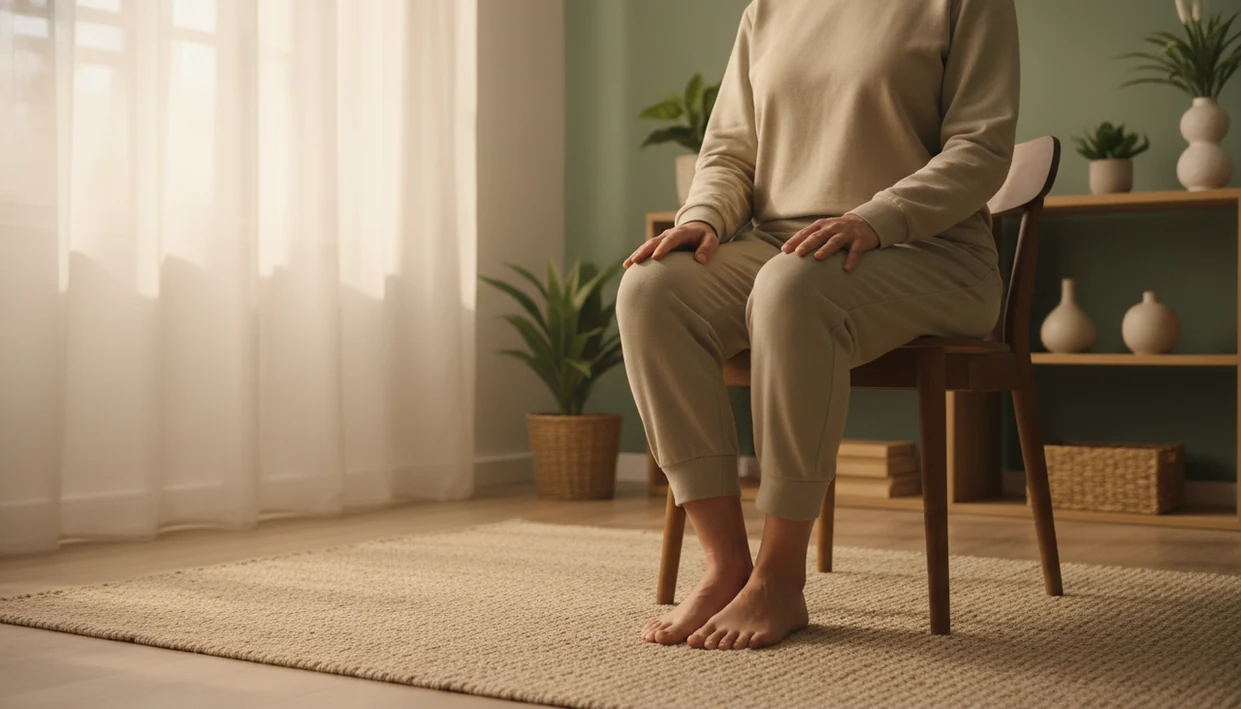
Use an ordinary, accessible image: a person sitting comfortably in a chair, shoulders relaxed, hands resting, and feet grounded on the floor. The image should make breathing meditation to calm the mind look doable in real life, not reserved for flexible people on silent retreats.
Suggested caption: “A person practices breathing meditation in a chair, using natural breath awareness to settle attention.”
Suggested alt text: “Person sitting in a chair practicing breathing meditation for a calm mind with natural breath awareness.”
Avoid spiritual glow effects, medical recovery imagery, extreme breathwork poses, or performance scenes. A normal chair posture is more honest. It also helps readers who cannot sit cross-legged, have pain, or simply prefer a practical setup. The point is attention practice in a real body.
A timed pause for natural breath awareness
Before a meeting or between tasks, a short timed session lets you practice without checking the clock. The free meditation timer suits natural breath awareness because you can let your breathing stay unpaced. Mindful.net also offers short guided meditations in its app when spoken instructions help. When breath focus increases distress, grounding through your feet or external sounds is a better choice; persistent or severe symptoms call for qualified support.
Breathing Meditation Limits
- Breathing meditation is not a guaranteed fix or substitute for medical care, therapy, medication, or crisis support.
- Seek qualified support for severe anxiety, depression, panic, trauma symptoms, or suicidal thoughts.
- Forced breathing can be uncomfortable or unsafe with some respiratory conditions.
- If breath focus feels bad, try sounds, chair contact, or loving-kindness meditation instead.
Breathing meditation questions
How should I breathe during breathing meditation?
Let your body breathe normally. Notice the sensations at your nose, chest, ribs, or belly without making each breath deeper or slower. Natural breath awareness is an attention practice. Deliberately changing your breathing is a separate technique, and it is not necessary for this meditation.
Can breathing meditation stop racing thoughts?
The aim is not to stop thoughts. When you notice planning, worrying, or remembering, return to the sensations of the next breath without scolding yourself. Mindfulness practices can support stress regulation, but a single breathing session may not quiet racing thoughts or produce immediate calm.
Why does focusing on my breathing make me more anxious?
Attention to internal sensations can increase discomfort or breath-monitoring anxiety for some people, particularly with panic sensitivity or a trauma history. You do not have to continue. Open your eyes, feel your feet or the chair, or listen to external sounds. Stop if distress increases, and seek individualized guidance if this recurs.
Can I meditate on my breathing while lying down?
Yes. Sitting, standing, and lying down are all options for this practice. Choose a position that does not strain your body and allows enough alertness to notice breathing. You can keep your eyes open or softly lowered if closing them feels uncomfortable or unsafe.
Is breathing meditation the same as slow breathing or breathwork?
Not necessarily. This meditation asks you to observe natural breathing and return after distraction. Slow or paced breathing deliberately changes the breath. The practices have different targets, and evidence for one cannot automatically be applied to another. Forced breathing can also increase discomfort for some people.
What should I do if breathing meditation makes me dizzy?
Stop the exercise and reorient to your surroundings. Avoid continuing deliberate deep breaths or breath holds. Feel contact with the floor or chair and notice external sounds. Dizziness, numbness, escalating panic, or feeling disconnected are reasons to stop; recurring symptoms call for guidance from a qualified clinician.
Does breathing meditation help anxiety, or do I still need treatment?
Mindfulness programs have evidence of benefit for anxiety, but those findings do not make a brief breathing meditation a stand-alone treatment. Use it as a supportive skill, not a replacement for therapy, medication, or medical care. Severe anxiety, panic, trauma symptoms, or suicidal thoughts require qualified support.