
Mirror Gazing Meditation: A Short Practice Without Appearance Checking


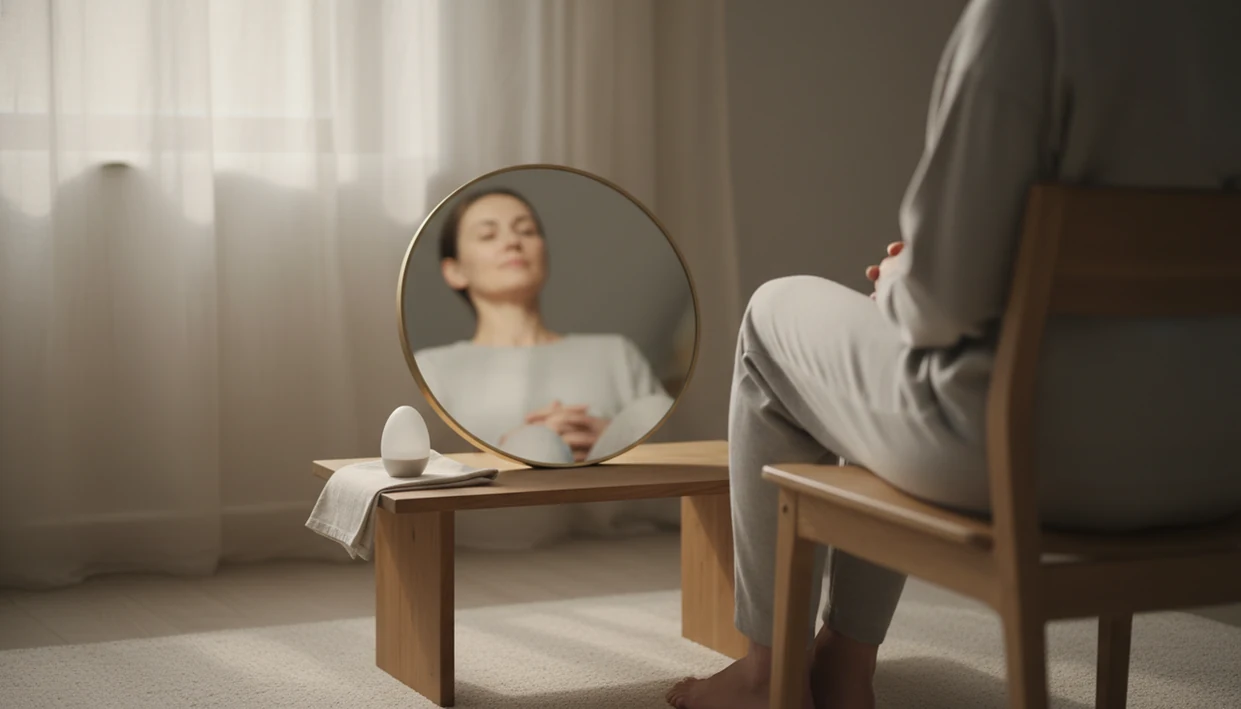
Mirror gazing meditation is a secular mindfulness practice that uses your reflection as an anchor for noticing breath, thoughts, emotions, and self-judgment. Look softly toward your eyes or face without inspecting your appearance. The aim is not to like everything you see, but to notice your reactions and return to a gentler gaze.
Begin with a mirror, a quiet space, and a timer set for 2-5 minutes. You can label a thought as “judging” or “comparing” rather than arguing with it. Treat kinder self-talk as a practice, not a promised result. If you have intense body image distress, trauma symptoms, an eating disorder history, or compulsive mirror checking, consider professional guidance before trying it.
The essentials
- Use a mirror, a quiet space, and a short timer; beginners can start with 2-5 minutes instead of forcing a long session.
- The goal is not to like everything you see, but to notice reactions and return to a softer, kinder gaze.
- People with intense body image distress, trauma, eating disorder history, or compulsive mirror checking may need shorter practice or professional guidance.
What mirror gazing meditation means in plain language
Mirror gazing meditation is a beginner-friendly attention practice where your reflection becomes the anchor, not the target of critique. You look softly toward your eyes or face, notice your breath, and observe what the mind says.
A first attempt can get snagged on commentary: “I look tired,” “my face is uneven,” or “why does this feel so odd?” You do not have to debate each line. Notice that a thought has appeared, soften your effort, and come back to looking with a little more steadiness.
The mirror is doing what the breath often does in breath awareness meditation: it gives attention a steady place to land. The difference is that a face can carry old stories, so the anchor may feel more emotionally loaded.
5 mirror gazing meditation facts beginners should know
- Gentle eye contact is the core method. Most people look around the eyes, but the gaze should stay soft, not fixed or confrontational.
- Short sessions are enough at first. A quiet room, steady light, and a 2-5 minute phone timer work better than forcing a long practice.
- Discomfort can show up early. Awkwardness, sadness, comparing, and self-critical thoughts are common first reactions.
- The evidence is indirect. Broader mindfulness research is stronger than mirror-specific research, so claims should stay cautious.
- It is not mental health treatment. Mirror practice can complement therapy, grounding, or other meditation techniques, but it should not replace care when symptoms are significant.
A practical next step is simple: notice the reaction, name it once, and come back to breathing.
Noticing self-judgment without arguing with it
Mirror gazing meditation works by bringing self-referential attention into conscious awareness. In plain language, the mirror quickly activates thoughts about “me,” including appearance, identity, memory, and social judgment.
Mindful labeling can interrupt the automatic loop. Instead of chasing “I look awful” into a long case against yourself, name what is happening: judging, comparing, remembering, bracing. Then return to the breath, the pencil-like texture of one fingertip against another, or a phrase such as “may I meet this moment kindly.”
Broader research supports the ingredients, not every mirror-specific claim. A 2014 meta-analysis in JAMA Internal Medicine found mindfulness-based interventions produced moderate improvements in anxiety and depression symptoms across 79 studies JAMA study. Appearance pressure also matters here. In a 2017 APA survey, 79% of U.S. adults reported at least some pressure to look perfect, and 51% felt that pressure on social media APA research.
Mirror gazing meditation is best understood as self-awareness practice, not a proven treatment.
5-step mirror gazing meditation routine for beginners
Use this routine when you want a short, structured practice. It should feel steady enough to repeat, not dramatic.
1. Set a short timer
Set a timer for 2-5 minutes. Put your phone on airplane mode if notifications tend to pull you away.
2. Place the mirror at eye level
Sit upright with a mirror at eye level in soft lighting. Keep your shoulders loose and your feet grounded.
3. Soften your gaze
Look around your eyes or face without forcing eye contact. If the gaze gets sharp, blink and widen your attention.
4. Notice thoughts without arguing
Notice breath, thoughts, emotions, and body sensations. Label self-critical thoughts as judging, comparing, remembering, or worrying.
5. End with grounding
Look away slowly, let your gaze rest on something neutral, and name one gentle or factual observation. “My breathing slowed a little” counts. After closing the session, mindful walking can offer a change of focus through the sensations of each step.
For many beginners, mirror work is easier after a basic loving-kindness meditation because the phrase is already familiar.
Choose an ordinary mirror and gentle lighting
Choose an ordinary clean mirror, not a magnifying mirror. Magnification can turn the practice into inspection, especially if you already scan for flaws.
Soft daylight or a warm lamp is usually enough. Skip harsh bathroom lighting that turns your face into a problem to solve. Choose a steady posture, let your hands rest easily, and keep the room dim enough to feel more like a quiet museum bench than a spotlight.
Let the face be ordinary. Jaw unclenched behind closed lips. Shoulders not performing calm.
Suggested image caption: A beginner practices mirror gazing meditation with a small mirror, soft lighting, and a relaxed seated posture.
If staring feels too intense, use a smaller mirror or sit a little farther back. If looking at your reflection feels uncomfortable, try a simple visualization practice with an imagined neutral object instead.
Who might try mirror gazing, and who should pause
Mirror gazing meditation may fit people exploring self-compassion, body neutrality, self-awareness, or everyday mindfulness. It can also help some people notice appearance pressure without automatically obeying it.
It is not ideal for everyone. If mirrors already trigger panic, compulsive checking, dissociation, or harsh body scrutiny, adapt the practice or skip it. Clinicians typically recommend professional support when body image distress, trauma symptoms, eating disorder concerns, or obsessive checking interfere with daily life. For example, the National Institute of Mental Health lists repetitive mirror checking, appearance preoccupation, and significant distress as signs associated with body dysmorphic disorder that may require evidence-based care Body Dysmorphic Disorder.
| Situation | How to practice | When to pause |
|---|---|---|
| Mild self-criticism | Use 2-5 minutes and label thoughts gently | If criticism keeps escalating after practice |
| Body neutrality practice | Notice shapes, breath, and tone without rating appearance | If you start measuring or inspecting features |
| Trauma sensitivity | Keep eyes open, use an external focus point, or practice with support | If you feel numb, unreal, flooded, or unsafe |
| Compulsive mirror checking | Consider non-mirror grounding instead | If the session becomes checking, fixing, or reassurance-seeking |
| Daily mindfulness | Pair one breath with one kind phrase | If the habit creates dread rather than steadiness |
Mindfulness practices and meditation techniques for beginners and daily life can offer attention training and kinder self-talk, not instant confidence or medical treatment.
When mirror practice calls for professional support
Seek professional help if mirror gazing meditation reliably makes you feel panicked, unreal, unsafe, or pulled into compulsive checking. The practice should support steadiness, not become another way to monitor, punish, or reassure yourself.
Body image distress deserves support when it starts affecting eating, work, school, sleep, social plans, intimacy, or relationships. A therapist-guided plan is especially important if you have a trauma history, eating disorder history, body dysmorphic concerns, or episodes of dissociation.
- Pause mirror practice if distress rises quickly, you feel detached from your body, or you cannot stop checking features afterward.
- Switch to non-mirror grounding, such as feeling your feet, naming objects in the room, looking out a window, or following the breath. For another brief sensory pause, try mindful handwashing and notice the water, soap, and movement of your hands.
- Contact a therapist, doctor, or eating disorder specialist if body image thoughts are shaping food choices, avoidance, work, or relationships.
- Plan any return to mirror work with support if trauma memories, shame, or compulsions are part of the pattern.
- Get urgent help now if you feel at risk of harming yourself or cannot stay safe; call local emergency services or a crisis line in your country.
Mirror gazing meditation tips for 5 difficult emotions
Early discomfort does not mean you are doing it wrong. It may mean the mirror is revealing a familiar inner script.
- Awkwardness: Name it as “awkward” and feel one breath move through the chest.
- Sadness: Let the face be sad without fixing it. Try, “may I meet this moment kindly.”
- Self-criticism: Label the thought as judging or comparing, then return to the next exhale.
- Worry: Notice if the mind leaves the mirror for the future. Say “worrying” once.
- Overwhelm: Look at the forehead, cheek, or mirror frame instead of the eyes.
Stop if distress rises instead of settling. Pushing through is not the goal.
A one-minute mirror practice after brushing your teeth
A habit lasts better when it attaches to something ordinary. Try a 60-second soft gaze before or after brushing your teeth, then leave the bathroom. No extra analysis. You can also build attention into ordinary routines with mindful cooking, noticing textures, aromas, and movements while preparing food.
Pair the practice with one breath cue or one compassion phrase. For example: inhale, “I notice”; exhale, “I return.” Another option is “may I be patient with this face today.”
Track the felt tone after practice, not your performance. Write one word: tight, softer, sad, neutral, restless. That record is more useful than deciding whether you meditated “well.”
As a Mindfulness Practices App, it can be useful when you want short exercises before trying a mirror practice on your own.
Use Mindful.net as a Mindfulness Practices App for short grounding or loving-kindness exercises before mirror work, not as a substitute for therapy or crisis support.
For beginners, a 60-second mirror habit is often easier than a long session because it lowers pressure and builds familiarity through repetition.
Mirror Gazing Limits
- Research is limited, and mirror gazing is not proven treatment for anxiety, depression, trauma, or body image disorders.
- Extended mirror use can worsen appearance checking, so stop if strong distress, panic, dissociation, or trauma activation occurs.
- Seek therapist guidance if you have an eating disorder history or body dysmorphic concerns.
- Mirror gazing cannot replace psychotherapy, medical care, eating disorder treatment, or crisis support.
Mirror gazing questions
How do you do mirror gazing meditation?
Sit with an ordinary mirror at eye level and set a short timer. Look softly toward your eyes or face, notice your breathing, and label thoughts such as judging or comparing. Return to a gentle gaze without trying to improve your appearance. Stop if distress increases rather than settles.
How long should beginners try mirror gazing?
Start with 2-5 minutes rather than a long session. A 60-second practice can also be an option when building a habit. The timer sets an upper limit, not an obligation to continue. End sooner if you feel panicked, unreal, or drawn into inspecting your face for flaws.
Do you have to look directly into your eyes?
No. Looking softly around the eyes or face is enough; you do not need fixed eye contact. Blink naturally and loosen your gaze if it becomes intense. You can shift attention to your forehead, cheek, or the mirror frame. If that does not ease distress, stop the practice.
Why does mirror gazing feel awkward or upsetting?
Your reflection can bring attention to familiar thoughts about appearance, identity, memories, or social judgment. Awkwardness, sadness, and self-criticism may surface. You can name the reaction and return to one breath without debating it. Discomfort is not a requirement for progress, and rising distress is a reason to pause.
Can mirror gazing improve self-esteem or reduce anxiety?
Mirror gazing is not established as a treatment for anxiety or as a reliable way to improve self-esteem. It may offer a way to notice self-critical thoughts and practice a kinder response. Evidence for broader mindfulness or guided imagery does not establish that this particular mirror exercise produces the same benefits.
Is mirror gazing safe if you have body dysmorphia or an eating disorder?
Do not assume a self-directed mirror practice is suitable. Mirrors can become part of compulsive checking or harsh body scrutiny. Clinical mirror exposure may have specialized uses, but it is not the same as this meditation. Seek professional guidance, particularly when body image concerns affect eating, relationships, work, or daily routines.
Why does my face look strange when I stare in a mirror?
During prolonged mirror gazing, visual adaptation, attention, expectation, fatigue, and dissociation can affect perception. An unfamiliar-looking reflection is not evidence of anything supernatural or a goal of meditation. Stop staring if the experience becomes unsettling. Feeling unreal or unsafe is a reason to pause and seek guidance if it recurs.
What should I say to myself during mirror meditation?
You do not need affirmations or a statement you cannot believe. Try a simple label, such as “judging,” or a gentle phrase like “may I meet this moment kindly.” Then return to your breath and soft gaze. The phrase is an attention cue, not a demand to feel positive.