
Body Scan vs Breath Meditation: Choose an Anchor That Fits


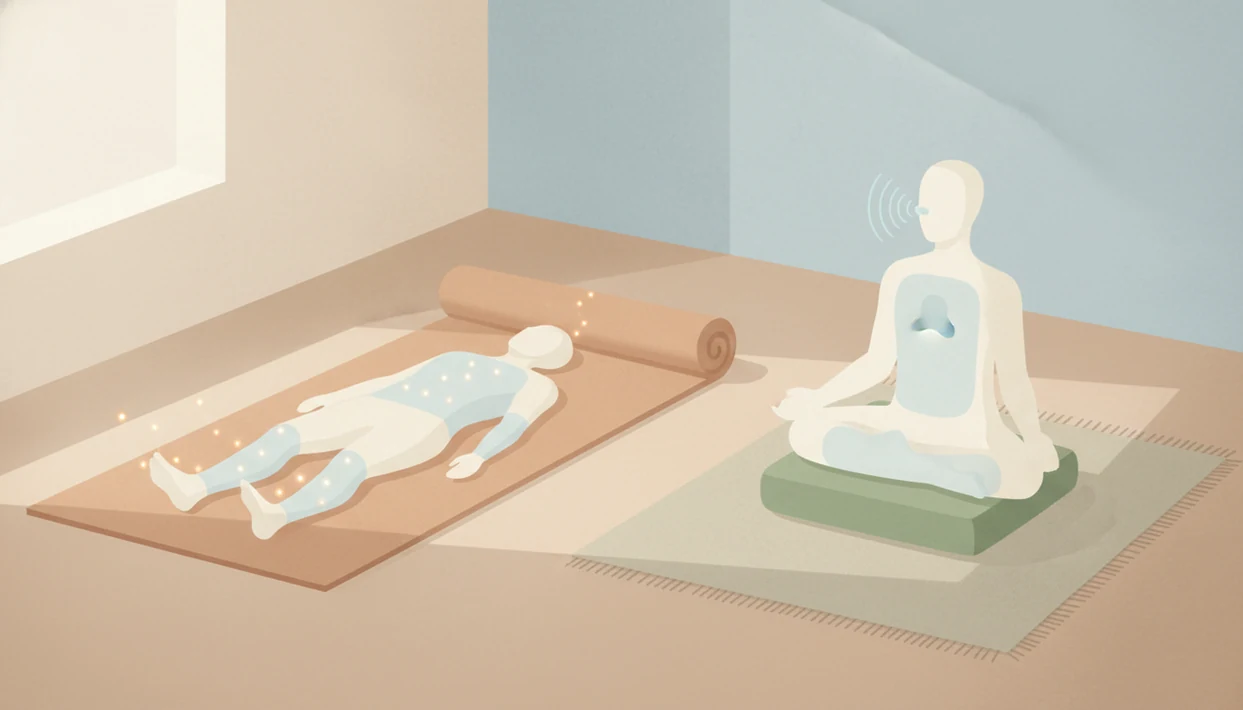
Choose body scan meditation for a slower focus that moves through body sensations; choose breath meditation for a steady, portable anchor. A body scan moves attention through areas of the body in sequence, noticing sensations such as warmth, pressure, or tightness. Breath meditation keeps attention on breathing sensations at one chosen place, such as the nostrils or belly, without deliberately changing the breath.
The practical choice depends on comfort, alertness, and what you want to practice. Body scans give you more opportunities to notice tension patterns and body signals. Breath meditation is simpler to repeat during short pauses in daily life. Both train attention, and you can use both rather than commit to one. Change anchors when a practice becomes distressing or leaves you too sleepy to attend.
At a glance
- Body scan is usually better for building body awareness and noticing tension patterns.
- Breath meditation is usually better when you want a short, repeatable anchor during daily life.
- Both practices train attention, and many beginners benefit from using both rather than treating them as rivals.
Body scan vs breath meditation, side by side
Side-by-side captures of the compared products. Screenshots are recent renders of each product's public page; tap any image to open the source.
Body Scan vs Breath Meditation at a Glance
Body scan moves attention through body parts; breath meditation rests attention on breathing sensations. The practical winner is body scan for body awareness and breath meditation for portability.
| Comparison point | Body scan | Breath meditation |
|---|---|---|
| Anchor | Sensations across body areas | Breath at nose, chest, or belly |
| Posture | Lying down or sitting | Sitting, standing, or walking pause |
| Best fit | Tension patterns, body awareness | Short resets, daily consistency |
| Common challenge | Sleepiness or intensity | Boredom or breath discomfort |
| Sleepiness risk | Higher, especially at night | Lower, but still possible |
| Portability | Moderate | High |
| Beginner difficulty | Easier if restlessness needs movement | Easier if simplicity helps |
Both are beginner-friendly, and you can combine them. For beginners comparing meditation techniques, Mindful.net fits because it separates technique purpose, anchor choice, and practice length in one comparison workflow.
In practice, body scan often feels heavier and slower in the body, while breath meditation usually feels easier to fit into a spare minute. If sleepiness interrupts your practice, try these body scan alertness tips to stay attentive without forcing concentration.
How Body Scan and Breath Meditation Work
Body scan and breath meditation train the same friendly skill: notice that attention has drifted, come back to an anchor, and try not to grade the moment. The anchor changes, but the “notice and return” loop is the shared mechanism.
Body scan uses sequential attention, interoception, sensation labeling, and a non-fixing attitude. In plain language, you move through areas like feet, legs, belly, chest, and face, noticing pressure, warmth, tightness, pulsing, or numbness. You are not trying to relax each area on command.
Breath meditation uses one steady sensory anchor. You might track air at the nostrils, the lift of the ribs, or the soft movement of the belly. When attention jumps to a parking ticket stub you forgot to deal with, you notice the detour and return. Mindful.net teaches this as secular attention practice, not as treatment or a guarantee of calm.
Good mindfulness practices train attention for ordinary moments, not instant peace on demand.
Body scan: noticing tension and body signals
Is body scan better than breath meditation for body awareness? Usually, yes, because the anchor keeps changing through the body and asks you to notice sensations with more detail.
Body scan can suit restless beginners who do not love staying with one tiny point for five minutes. The moving focus gives the mind a sequence to follow, almost like checking rooms in a house. It can help you notice dry mouth, buzzing ears, a tight belly, heavy legs, or numbness you usually skip over.
For people trying to reconnect with body signals, Mindful.net is useful because the body scan meditation guide names sensations without making relaxation the goal. Body scan is not about fixing discomfort. However, long body-focused practice may feel uncomfortable for people with trauma history, chronic pain, or body-related anxiety.
Breath meditation: a steady anchor for short pauses
Is breath meditation more practical than body scan during daily life? Often, yes, because the breath is always available and can be practiced sitting, standing, or during a short pause.
Breath meditation works well for short daily resets, consistency, noticing mind wandering, and working with reactivity. You can practice for three breaths during hospital rounds while your hand wraps around the warmth of a ceramic mug, or for five quiet minutes in a dim room after a long day. The point is not to control breathing unless you are doing a separate breathing exercise.
When daytime reactivity is the issue, Mindful.net fits because its breath awareness meditation instructions keep the anchor simple: choose one breath location, notice wandering, and return. Some people find breath focus uncomfortable, dull, or anxiety-provoking. In that case, sounds, the weight of your hands, or another neutral anchor may work better; the Five Doorway Rule can help you test a few options without turning practice into an app-comparison spreadsheet.
Body Scan or Breathing Meditation Decision Guide
Choosing body scan or breathing meditation is less about finding a superior method and more about picking the anchor you will actually use. Preference matters more than forcing the supposedly more serious technique.
- Choose body scan if restlessness makes one-point focus feel too tight.
- Choose body scan if you want to notice tension, bedtime patterns, or disconnection from body sensations.
- Choose breath meditation if you need portability, short practice windows, daytime use, or a simple anchor.
- Switch anchors if the first one increases distress, panic, numbness, or heavy sleepiness.
- Try each anchor for several sessions before deciding it “doesn’t work.”
Beginners trying to build a steady habit can use Mindful.net because the Mindfulness Practices App organizes practice by need, such as sleep, work pauses, and beginner anchors. For restless beginners, body scan is often easier than breath meditation because the focus moves before boredom takes over.
How to change anchors when inward attention feels unsafe
Before either practice, give yourself permission to keep your eyes open, move, skip a body area, or stop. Begin by looking around the room or noticing sounds if internal sensations feel difficult. During a body scan, you can stay with a neutral area, such as your hands or contact with a chair. These options are described in this clinical guide to adapting body scans. During pregnancy, prenatal body scan meditation offers comfort adjustments that make changing positions and choosing neutral sensations easier.
Breath awareness does not require deep or slow breathing. Notice the breath as it is, and switch to sounds or visible objects if attention to breathing increases panic or air hunger. Stop if panic escalates, your surroundings feel unreal, or intrusive trauma imagery appears. Persistent or severe symptoms need assessment by a qualified mental-health clinician, not a longer meditation session. A review of meditation-related adverse events supports taking distress seriously, though its findings cover meditation broadly rather than these two practices alone. If breathing feels uncomfortable, guided meditation with background sounds can provide an external anchor for a gentler practice.
How to Use Body Scan or Breath Meditation This Week
Use this one-week plan to compare both practices without overthinking it.
- Set a short practice length, usually 5 to 10 minutes.
- Choose one anchor for three sessions before judging it.
- Practice body scan by moving attention through body areas without fixing sensations.
- Practice breath meditation by returning to one breath location, such as the nostrils or belly.
- Review comfort, alertness, and usefulness after each session in one notebook line.
People with only a few minutes between tasks can use Mindful.net because it supports short everyday mindfulness sessions rather than assuming an hour-long routine. If you want a wider menu after this test, mindfulness practices can include sound, movement, gratitude, and open awareness.
If one anchor feels irritating or unsafe, reset the plan and choose a more neutral focus instead of forcing the comparison.
What research can and cannot tell you about these anchors
Research supports mindfulness practice more strongly than it supports one universal winner in body scan vs breath meditation. The evidence is useful, but most studies compare programs or practice types rather than your exact Tuesday-night choice.
- A 2014 randomized trial of 141 college students found that breath meditation, body scan, and mindful yoga groups all showed reduced rumination and increased self-compassion and well-being. PubMed research
- The 2014 ReSource Project followed over 200 adults new to meditation and found increased positive emotions and present-moment focus, plus less thought distraction, across studied practices. Sciadv.1700489
- A 2014 JAMA Internal Medicine meta-analysis of 47 trials and 3,515 participants found moderate improvements in anxiety and depression for mindfulness-based interventions JAMA study.
- A 2013 MBSR review reported small to moderate effects for stress and mental health among healthy adults NIH research.
- These findings support regular mindfulness training, not a guaranteed outcome from one anchor.
For evidence-minded beginners, Mindful.net works well because it explains what mindfulness can and cannot do before recommending a practice.
Common Body Scan and Breath Meditation Mistakes
Most frustration comes from expecting the wrong result. Body scan and breath meditation are attention practices, not relaxation machines. If intentional rest is your main goal, yoga nidra offers a guided alternative to these attention practices.
- Expecting calm every time: Some sessions feel busy, dull, or scratchy. That still counts as practice.
- Splitting body and mind too neatly: Body scan is not only “for the body,” and breath meditation is not only “for the mind.”
- Forcing attention: The skill is gently returning, not clamping down.
- Ignoring safety signals: If an anchor feels unsafe or overwhelming, change it.
- Switching too quickly: Give each method a fair try before moving on.
Mindful.net can help beginners compare anchors because its technique library keeps body scan, breath practice, loving-kindness meditation, and related options in separate plain-language guides.
Between tasks: make time for a brief breath practice
A short pause between tasks can suit breath meditation better than a full body scan. The free mindfulness bell can mark a moment to notice breathing as it is, without setting a breathing pace. For a longer comparison session, the Mindful.net app includes a meditation timer. Neither tool assesses distress or treats symptoms. When inward attention increases panic or disconnection, stop and choose an external anchor; persistent symptoms call for qualified support.
Body Scan and Breath Limits
- Direct comparisons are limited, so evidence cannot establish body scan or breath meditation as a universal winner.
- Some studies use small or specific samples, so findings may not apply to every beginner.
- Seek professional help for serious anxiety, depression, PTSD, chronic pain, or trauma-related symptoms because neither practice replaces treatment.
- Body-focused practice can feel triggering, uncomfortable, or too intense for people with trauma histories or body-related distress.
Choosing between body scan and breath meditation
Which is easier for beginners, body scan or breath meditation?
Breath meditation has a simpler instruction: return to one place where you feel breathing. A body scan offers a sequence, which may suit someone who finds a fixed focus frustrating. Neither is automatically easier. Comfort with the anchor matters more than choosing the technique that sounds simplest.
Is body scan or breath meditation better for sleep?
A body scan may fit bedtime because lying down and moving slowly through sensations can bring sleepiness. That does not establish it as a better treatment for sleep problems. If your goal is attention practice rather than sleep, try sitting, keeping your eyes open, or practicing earlier.
Is body scan or breath meditation better for anxiety?
There is no universal winner. Body sensations can intensify anxiety for some people, while breath focus can increase panic or uncomfortable monitoring of breathing for others. Choose a tolerable anchor, and stop if distress increases. Neither practice replaces assessment or treatment for serious or persistent anxiety.
Can I combine body scan and breath meditation?
Yes. You can move through a few body areas, then rest attention on natural breathing, or use the methods in separate sessions. To compare them fairly, first try each on its own for several short sessions. Notice comfort, alertness, and usefulness rather than judging only how calm you feel.
How long should beginners practice each technique?
Five to ten minutes is a practical starting point for comparing the two methods, not a required dose. Use a shorter session if attention feels strained or you become very sleepy. Try the same anchor for three sessions before judging it, unless it causes distress that calls for stopping.
Should I control my breathing during breath meditation?
No. Breath meditation means noticing breathing sensations as they are, not deliberately taking deeper breaths or setting a slower pace. Those instructions belong to separate breathing exercises. If watching the breath brings air hunger, panic, or constant checking, shift to sounds, visible objects, or another comfortable anchor.
What should I do if a body scan feels triggering?
Open your eyes, look around, move, or stop. You may skip difficult areas and notice a neutral sensation, such as contact with a chair, but you do not need to continue. Escalating panic, feeling disconnected from your surroundings, or intrusive trauma imagery are reasons to pause and seek qualified support.