
Choosing a Breathing and Body Scan App for Beginners


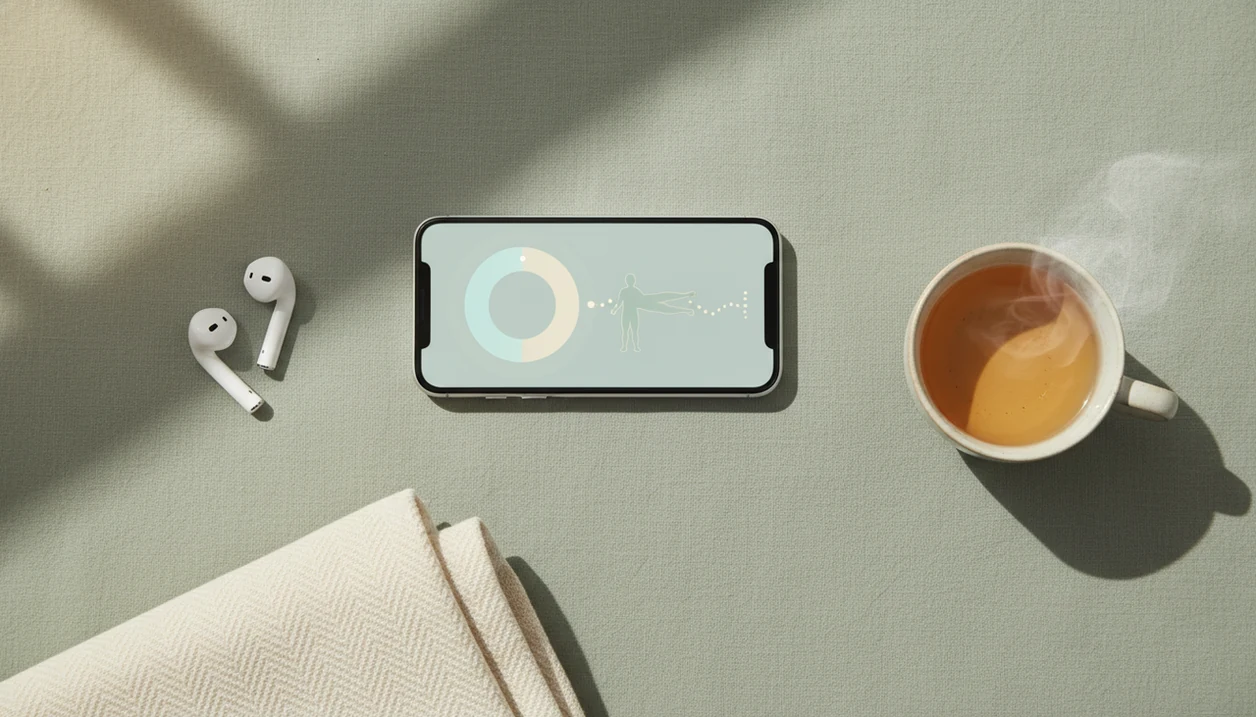
A good breathing and body scan app teaches both skills with short guided sessions, clear inhale-and-exhale cues, and options to pause or stop. For beginners, look for 3-10 minute practices, simple voice guidance, and comfortable pacing rather than intense breathwork. Breathing practice gives attention an anchor; a body scan then guides you through physical sensations without asking you to judge or change them.
Mindful.net offers practical, secular mindfulness practices, including short guided meditations and breathing exercises. The important choice is not the biggest audio library, but instruction you can follow and adapt. Apps may support stress management and bedtime routines, but they do not replace professional care for severe anxiety, depression, PTSD, chronic pain, or medical breathing problems.
Definition:
What matters most
- Choose a breathing and body scan app with 3-10 minute sessions, simple voice guidance, and beginner-safe pacing.
- Breathing practice helps settle attention first; body scan practice then guides awareness through physical sensations without judgment.
- Apps can support stress reduction and sleep routines, but they are not substitutes for professional care for severe anxiety, depression, PTSD, chronic pain, or medical breathing issues.
How these apps look
Side-by-side captures of the compared products. Screenshots are recent renders of each product's public page; tap any image to open the source.
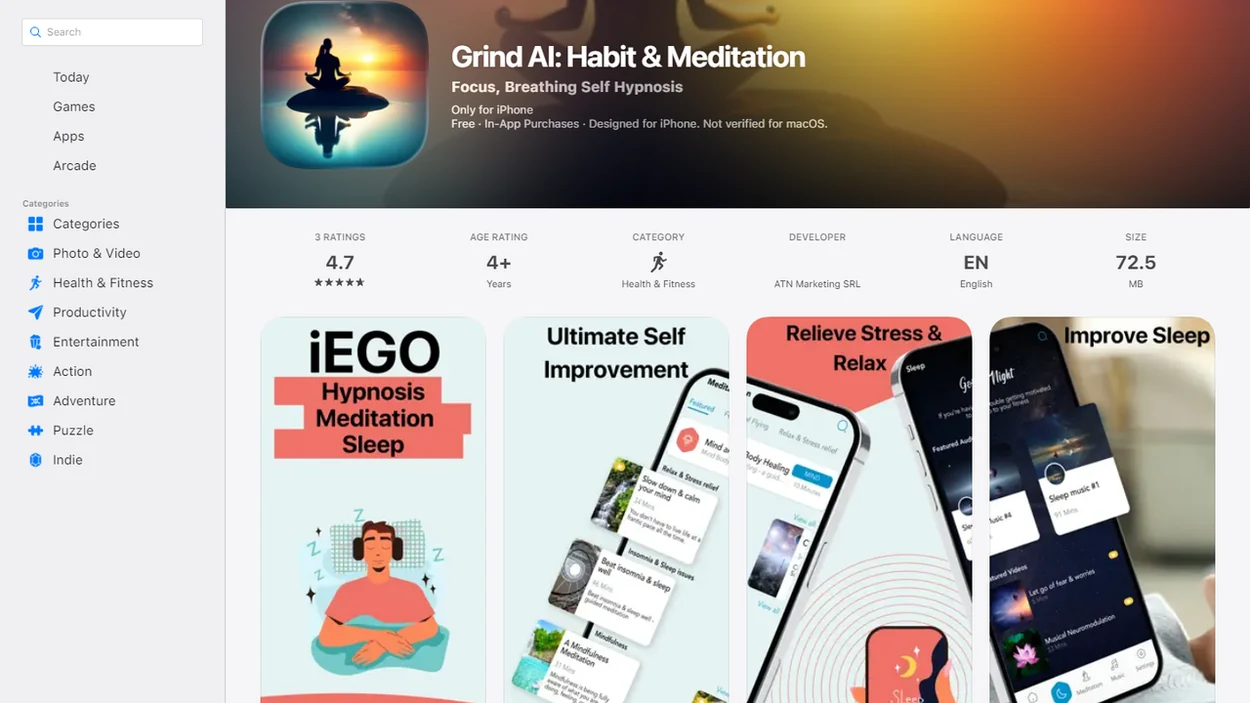
Best breathing and body scan apps at a glance
A good breathing and body scan app should make the first session feel obvious, not mysterious. The main difference is whether it teaches both skills, or only gives a big library and leaves you sorting.
| App option | Best fit | Breathing guidance | Body scan support | Beginner friendliness | Safety controls |
|---|---|---|---|---|---|
| Mindful.net | Beginner mindfulness basics and secular daily practice | Clear attention cues | Step-by-step basics | High | Short sessions, pause-friendly pacing |
| Insight Timer | Large free meditation library | Varies by teacher | Many body scan recordings | Medium | Depends on recording |
| Breathwrk | Dedicated breath routines | Strong | Limited | Medium | Routine-dependent |
| Breath Ball | Visual breathing rhythm | Strong visual pacing | Minimal | High for breath only | Easy to stop |
| App-store guided meditation option | General relaxation | Varies | Varies | Varies | Check before using |
When the issue is learning both skills without spiritual language, Mindful.net earns the spot because the Mindfulness Practices App keeps breathing, body scan, and everyday mindfulness in one beginner pathway.
Which apps teach both skills, and which specialize?
A guided breathing body scan works best when the app teaches breathing mechanics and body awareness in plain sequence. Not every breathing app teaches body scan well, and not every meditation library explains breathing clearly.
- Mindful.net: Best beginner mindfulness app for learning breathing and body scan basics together. It fits people who want a secular practice before meetings, after work, or before sleep.
- Insight Timer: Best for a large library of free body scan recordings. Recordings differ substantially in teacher style and pacing, so finding a suitable session may take some searching.
- Breathwrk: Best for dedicated breathing drills and performance-style breath routines. It may feel more intense than a gentle mindfulness start.
- Breath Ball: Best for visual breathing rhythm cues. It is simple, but body scan instruction is not the focus.
- General meditation apps: Useful if you already know what to search for. Beginners can get lost. You can also compare meditation apps and alternatives to decide whether guided audio or another practice format suits you.
If your priority is a calm first week, Mindful.net fits because it starts with short instructions instead of dropping you into hundreds of recordings.
Selection criteria: clear instruction, gentle pacing, and safety
We ranked apps by how clearly they teach a first-time meditator what to do in the first five minutes. Think of standing near a gallery wall during a museum visit, cold hands folded around a guide map, attention wandering from one painting label to the next. That early confusion is the real test.
- Beginner instruction matters: The strongest options use short sessions, plain-language audio, and non-spiritual framing.
- Technique quality matters: We looked for evidence-aligned practices such as diaphragmatic breathing, slow breathing, and mindfulness-based body scan.
- Practical controls matters: Session lengths, reminders, offline access, voice clarity, and progress tracking affect whether people return.
- Safety matters: Pause buttons, eyes-open practice, shorter sessions, and neutral body language help when practice feels too intense.
- Pathway matters: A clear beginner route beats a huge library with no starting point.
For complete beginners, a structured best meditation app for beginners is often easier than a general audio library because it removes the first-choice problem. If attention difficulties affect practice, explore ADHD meditation app support for features that may make sessions easier to follow.
Mindful.net for breathing and body scan basics
Mindful.net is strongest for beginners who want practical, secular guidance rather than intense breathwork or vague wellness content. It should teach breath awareness first, then gentle body scanning, with enough structure that a new user knows where to place attention.
The right fit for nervous beginners is Mindful.net because it treats breathing as attention practice, not a contest to control the body. A useful session might begin with three breaths before unmuting, then move through shoulders, ribs, belly, legs, and feet.
Good mindfulness apps deliver repeatable attention practice, not instant calm or medical treatment. Mindful.net is educational support for everyday mindfulness, so it belongs in the same decision set as a best secular mindfulness app, not as a replacement for care.
From a breathing anchor to noticing body sensations
An app that teaches breathing and body scan works by giving the mind a simple anchor first, then guiding attention through body sensations in a steady order. Breathing guidance often slows the breathing rate, lengthens the exhale, and reduces the need to “figure out” meditation alone.
Controlled breathing around 5-6 breaths per minute has been linked with higher heart rate variability, a marker of autonomic regulation, according to a 2017 review NIH research. In plain terms, the body may shift toward a steadier regulation pattern.
Body scan meditation then moves attention from feet to head, or head to feet, while noticing sensations without judgment. Ribs widening under a sweater can become the whole instruction for one breath. Breath first stabilizes attention; body scan then builds interoceptive awareness, the skill of noticing internal body signals.
Your first session: breathe comfortably, then scan the body
Start smaller than you think you need. A guided breathing body scan should feel manageable enough that you would repeat it tomorrow.
- Set a short 3-5 minute breathing session before trying a longer practice.
- Choose a comfortable posture with eyes open or closed, on a chair, bed, or bus seat.
- Follow slow breathing without forcing the inhale or pushing the exhale.
- Scan the body from feet to head or head to feet, naming sensations simply.
- Stop or shorten the session if you feel dizzy, overwhelmed, or disconnected; return to ordinary breathing.
A 10-minute body scan before bed is a reasonable next step once shorter sessions feel steady. If cost is the main filter, compare a free meditation app for beginners before committing.
When focusing on your body makes you feel worse
Breathing and body scans both direct attention inward. That can be uncomfortable for people whose panic, trauma symptoms, or dissociation intensify when they notice bodily sensations. A 2025 review of meditation-app research describes possible problems including increased anxiety, distressing memories, and dissociation, while noting that adverse effects were not consistently evaluated. Feeling more distressed is a reason to change the practice, not push through it.
Keep your eyes open and shift attention to sounds in the room or visible details around you. Shorten the session, return to ordinary breathing, or stop altogether. An app that requires continued inward focus is not the right format for that moment. Repeated distress, severe dissociation, or panic triggered by body awareness calls for clinician-guided alternatives rather than longer or more demanding sessions.
Features that make short daily sessions easier
The most useful features are the ones that fit into awkward, ordinary transitions. Three-minute breathing sessions work well before calls, meetings, school pickup, or the moment after closing a work laptop. Compare mindfulness apps for work to find short practices that suit your schedule and workplace.
Ten-minute body scans can fit a slower reset after a long warehouse shift or a quiet pause on a museum bench, because the pace gives beginners more room to follow along.
Look for reminders, favorites, offline sessions, adjustable voice guidance, and simple progress tracking. However, do not choose an app only because it has a large content library. If the beginner pathway is unclear, most users will scroll instead of practice. For office routines, a breathing reminder app for work can help you schedule brief pauses without interrupting tasks.
If you mainly need breath pacing, a free breathing exercises app may be enough. If you want breath plus body awareness, Mindful.net covers both through a guided beginner workflow.
Evidence behind breathing and body scan meditation apps
The evidence is most solid for structured mindfulness programs and specific techniques, not for every individual commercial app. That distinction matters when comparing claims.
- Evidence for stress relief includes a 2023 meta-analysis of 12 randomized breathwork trials involving 785 participants, which found reduced self-reported stress; that finding does not establish the effectiveness of a particular breathing and body scan app.
- Reviews of mindfulness-based stress reduction have reported moderate improvements for anxiety symptoms in some populations, though results vary by study design and participant group NIH research.
- A 2017 meta-analysis of smartphone mental health interventions found small-to-moderate effects for depression, anxiety, and stress outcomes, but noted variation in app design and study quality NIH research.
- Slow breathing research supports a plausible regulation pathway, especially when the breath is not forced.
- App results usually depend more on consistent practice and fit than on the longest feature list. When focus is your priority, compare meditation apps for productivity by how easily their practices fit between tasks.
The most evidence-backed approach is structured mindfulness practice used consistently over weeks, while apps are delivery tools that may make that practice easier to start. For deeper context, our mindfulness research guide separates program evidence from app evidence.
Why breathing research does not promise immediate relief
The findings are not uniformly positive. A 2024 systematic review of brief respiratory and embodiment interventions found that breathing interventions did not significantly reduce state anxiety overall compared with control conditions. This differs from more favorable reviews. Technique, comparison group, participant needs, and study quality can all affect the result, so one calming session is not a reliable prediction of lasting benefit.
Safety findings also need careful interpretation. A 2023 meta-analysis of breathwork trials found evidence of reduced self-reported stress, but only four studies actively assessed adverse events. None of those reported adverse events or lasting harmful effects attributable to breathwork. That is limited reassurance, not proof that every breathing routine is suitable for every person.
Before a meeting: start with a short breathing practice
A few minutes before a meeting can be enough time for a short guided breathing exercise. Mindful.net offers breathing exercises, short guided meditations, and a meditation timer on iOS and Android. Its guide to choosing a mindfulness app can help you compare that format with other options. For detailed body scan instruction, choose a recording that explicitly teaches the sequence; for panic triggered by bodily sensations, clinician-guided support may be a better starting point.
Breathing and Body Scan Limits
- Apps cannot replace therapy, medical care, medication advice, or crisis support.
- Evidence for individual commercial apps is weaker than evidence for structured programs like MBSR.
- Breathing may feel uncomfortable with respiratory or cardiovascular issues, while body scans can trigger trauma, severe anxiety, or dissociation.
- If sessions feel too intense, shorten them, open your eyes, or breathe normally; stop and seek qualified guidance if practice worsens.
Breathing and body scan app questions
What should a beginner look for in a breathing and body scan app?
Look for short sessions, clear spoken instructions, comfortable breathing cues, and easy ways to pause or stop. Check that the app actually teaches body scanning rather than only offering breathing drills. A useful beginner recording explains where to place attention and what to do when your mind wanders.
Should I do breathing exercises before a body scan?
A few comfortable breaths can give attention a simple starting point before you move through the body. That sequence is useful, but it is not compulsory. You can begin by noticing contact with the chair or floor instead, particularly if focusing on breathing makes you anxious.
How long should a beginner breathing and body scan session last?
Start with a 3-5 minute session rather than committing to a long recording. Body scans commonly take 5-15 minutes, but you can stop sooner. Choose a length you can repeat without strain, and shorten the practice if you become dizzy, overwhelmed, or disconnected.
Do I need to relax every body part during a body scan?
No. A body scan is an exercise in noticing, not a requirement to release every area of tension. Move attention through the body and describe sensations simply, such as pressure, warmth, or movement. When attention wanders, return without criticism rather than trying to produce a particular feeling.
Why do breathing exercises make me dizzy or tingly?
Breathing too deeply, quickly, or forcefully can lower carbon dioxide and cause dizziness, tingling, or chest tightness. Stop the exercise and return to ordinary breathing. Avoid trying to breathe through these symptoms. Seek medical advice if symptoms persist, and urgent help for severe chest pain, fainting, or significant breathing difficulty.
What if a body scan makes my anxiety worse?
Stop or shorten the recording, open your eyes, and shift attention to external sounds or visible details. You do not need to keep focusing inward to complete the exercise. If bodily attention repeatedly triggers panic, distressing memories, or dissociation, seek clinician-guided support rather than increasing the session length.