
Do Meditation Apps Help? Evidence and Limits for Beginners


Meditation apps can help beginners learn mindfulness and practice more consistently, but the benefits are usually modest rather than immediate. A meditation app is a mobile tool offering guided practices, timers, reminders, and basic meditation instructions for everyday use. Short sessions and a teaching style you can stick with may support improvements in stress, mindfulness, and mood over several weeks.
The evidence does not apply equally to every app. A 2023 review of 28 randomized trials found some benefits for well-being, with substantial variation between studies. Treat an app as a practice tool, not a replacement for professional care. Choose guidance you understand, reminders that help, and a routine you can repeat.
What matters most
- Meditation apps can help beginners build structure, learn basic mindfulness skills, and practice more consistently.
- The best evidence points to modest improvements over weeks, not dramatic changes after one or two sessions.
- Meditation app effectiveness depends heavily on fit, habit design, realistic expectations, and knowing when an app is not enough.
How do meditation apps actually help beginners practice?s look
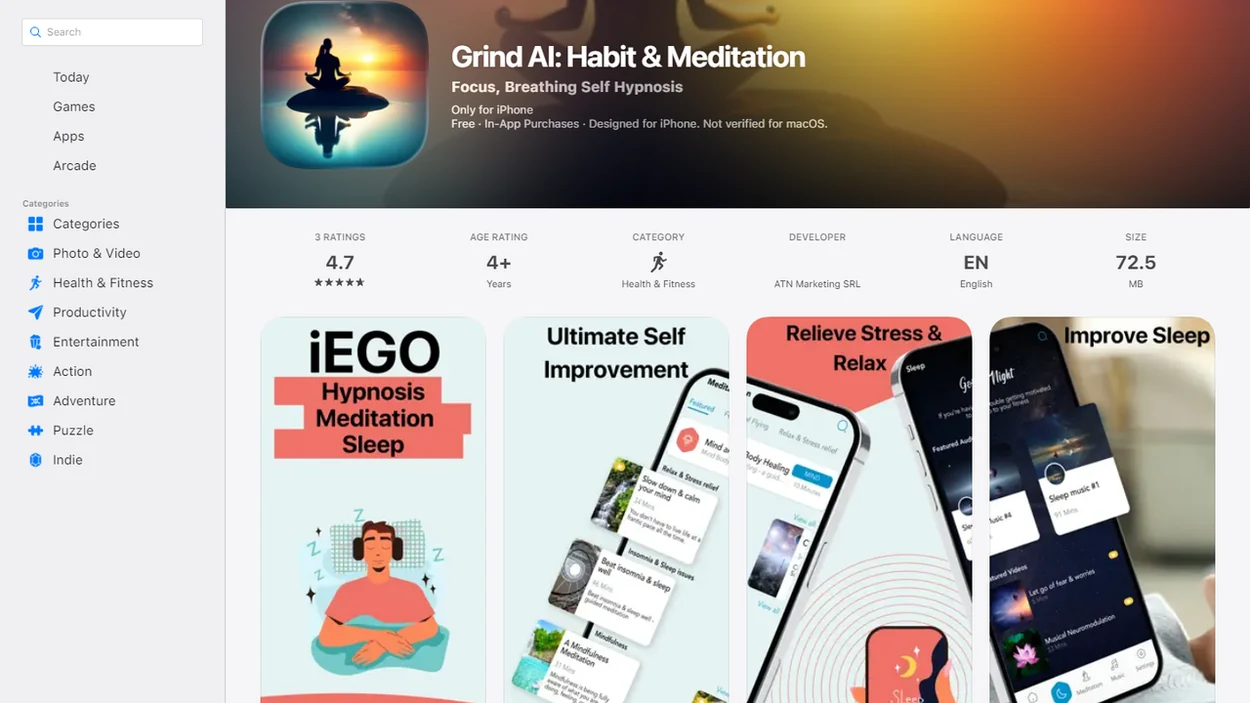
Side-by-side captures of the compared products. Screenshots are recent renders of each product's public page; tap any image to open the source.
Meditation Apps Evidence at a Glance
The meditation apps evidence is positive but limited: well-designed apps can modestly support stress, mindfulness, anxiety, and mood when people use them consistently. Results are not equal across every app, and many studies focus on Calm and Headspace.
| Use case | Likely benefit | Evidence strength | Main caveat |
|---|---|---|---|
| Stress reduction | Modest improvement over weeks | Moderate for studied apps | Not an instant calm button |
| Beginner learning | Clearer instructions and less guessing | Practical and plausible | Depends on course quality |
| Mood support | Possible small improvements | Some app-specific trials | Not a substitute for care |
| Sleep routines | Helpful bedtime structure | Mixed, often indirect | Screens can also interfere |
| Severe symptoms | Limited support role | Not enough for standalone use | Professional help may be needed |
In a randomized trial of Calm among college students, 8 weeks of app use was associated with lower perceived stress and higher mindfulness (JMIR mHealth and uHealth: E14273). Headspace evidence is also app-specific; one randomized trial found that brief Headspace use reduced mind-wandering and improved affect compared with psychoeducation (Mindfulness: S12671 018 0905 4).
Mindful.net covers these findings in context through its mindfulness research guide, not as a blanket promise.
Five findings that set realistic expectations for apps
Mindfulness app effectiveness is real for some beginners, but it is usually modest and habit-dependent. An app's practical value depends partly on whether its sessions and reminders help you practice often enough.
- Well-designed apps can modestly reduce stress, anxiety, depression, or distress over several weeks of use. A mindfulness app for stress works best when its reminders and practices fit your everyday needs.
- Evidence is strongest for a few studied apps, especially Calm and Headspace, not every app in the store.
- Consistency matters more than downloading the app; many people quit before benefits can build.
- Apps are generally best framed as complements, not substitutes for professional support when symptoms are moderate or severe. An AI stress relief tool can complement brief coping practices, but it should not replace professional support for persistent symptoms.
- The practical value comes from learning repeatable attention and awareness skills for daily life.
A good mindfulness app teaches repeatable attention skills, not a guaranteed emotional outcome. That distinction matters when a beginner opens a session after a long meeting and expects one chime to fix the whole day.
If you want a beginner-first option, Mindful.net fits people who need plain explanations before choosing a practice because the Mindfulness Practices App organizes breathing, body scan, and daily-life exercises by use case.
How Meditation Apps Work for Beginner Practice
A meditation app works by structuring attention practice through guided audio, timers, reminders, and short lessons that reduce beginner guesswork. The app is not “doing mindfulness” for you; it is shaping the conditions that make practice easier to repeat.
Most apps use a behavioral loop: cue, short practice, feedback, repeat, then gradual transfer into real-world moments. In plain terms, the reminder gets you to sit down, the session gives you one thing to notice, and the streak or history shows that you returned.
Common techniques include breath awareness, body scans, labeling thoughts, and noticing mind wandering without treating it as failure. One simple way to try it is a 5-minute timer, feet on tile, and attention returning to the breath when the grocery list appears.
Mindful.net supports this loop because its beginner libraries separate guided breathing, body scan, and everyday mindfulness practices instead of forcing one style on every user.
When a meditation app is worth using
Are meditation apps worth it? Yes, if you need structure, brief lessons, reminders, and a beginner curriculum that removes the “what do I do now?” problem.
A good fit usually has session lengths you will actually use, a teacher voice you do not resist, reminders that help rather than nag, clear pricing, and privacy terms you can tolerate. A poor fit feels like homework, sells too hard, or makes practice depend on streak anxiety.
Choose an app if you need structure; skip it or use alternatives if you prefer silence, in-person classes, books, or already have a routine. For many beginners, a free app, trial, or simple timer is enough.
The quiet test is practical. Would you open it on a bus seat for 7 minutes, or would you keep scrolling past it?
Beginners looking for a lower-cost start can compare Mindful.net with a free meditation app for beginners because cost should not be the reason a tiny daily practice never starts.
Check trial evidence and privacy separately
An appealing interface does not establish that an app works. A 2020 review of mindfulness app quality identified 605 apps and assessed 192 that met its inclusion criteria. Only seven of those 192 had been evaluated in randomized controlled trials. That finding describes the apps reviewed at the time, not the current contents of every app store.
The same review found that many apps lacked adequate privacy policies or data-security information. Before creating an account, check what personal data the app collects, shares, and retains. Also check whether reminders can be disabled and whether the sessions meet your accessibility needs. Evidence, privacy, and usability are separate checks: a strong result on one does not establish the others.
Who Should Use a Meditation App, and Who Should Try Another Option
Use a meditation app if you want structure, gentle prompts, and beginner guidance in your pocket. Try another option when you already know what to practice, need human support, or symptoms require more than self-guided tools.
- Choose an app when the main obstacle is getting started: you want short guided sessions, reminders, and a clear path from “sit down” to “notice and return.”
- Use a timer when you already have a simple routine, such as breath awareness or a body scan, and mostly need a start bell and end bell.
- Pick a class when feedback, accountability, or community would keep you practicing more honestly than another notification.
- Seek therapy or clinical care when anxiety, depression, trauma symptoms, panic, sleep loss, or self-harm thoughts feel moderate, severe, unsafe, or disruptive.
- Delay paid subscriptions until you know the teacher voice, session length, format, and reminder style fit your actual day.
The best choice is the one you will use without turning practice into another source of pressure.
How to Use a Meditation App Consistently
A reliable way to use a meditation app consistently is to make the habit smaller than your resistance. Many people stop before benefits can build, so adherence matters as much as the technique.
- Choose one beginner course and finish it before app-hopping to another teacher, style, or playlist.
- Set a tiny daily time of 5 to 10 minutes, preferably at the same point in your day.
- Pair practice with an existing routine, such as sitting in a kitchen chair after brushing your teeth. The best self care apps support a manageable daily habit rather than adding pressure to your routine.
- Use reminders carefully so they cue practice without becoming another notification you ignore.
- Review after two weeks and keep the session, teacher, or time only if it fits real life. An AI self reflection tool can help you review practice habits, though its suggestions still need your judgment.
- Practice one off-app moment daily, such as noticing breath before sending a tense message.
If short breathing is your easiest entry point, Mindful.net pairs well with a free breathing exercises app because the concrete cue is simple: breathe, notice, return.
Where Meditation Apps Help More Than Unguided Practice
Meditation apps often help more than unguided practice when beginners do not know what to do with wandering thoughts. Guidance lowers uncertainty, especially during the first few weeks.
| Practice option | Where it helps | Where it falls short |
|---|---|---|
| App-guided meditation | Structure, reminders, beginner instructions | Can create dependence on audio |
| Unguided silence | Simplicity and no subscription | Beginners may feel lost |
| YouTube videos | Free variety | Quality and ads vary |
| In-person classes | Human feedback and community | Cost, travel, and scheduling |
| Books | Depth and reflection | Less support during practice |
Unguided practice can become better later, once the basic skill is learned. At the start, a voice saying “notice and return” can prevent a beginner from turning one wandering thought into a verdict.
For technique confusion, look for a library that sorts practices by goal, length, and beginner comfort rather than dumping every option into one list.
Where Meditation Apps Fall Short in Daily Life
Meditation apps fall short when the phone becomes the center of the practice instead of a temporary support. Notification overload, subscription fatigue, superficial use, and app-hopping can all keep a beginner from building one stable routine.
Some users dislike certain voices, background music, streaks, or gamified pressure. Fair. A calm voice for one person can sound artificial to another, especially at 6:30 a.m. before a commute.
The bigger problem is transfer. A person may feel calmer during a guided session but forget the skill during parenting stress, conflict, work pressure, or a full inbox. The goal is to carry attention off the phone, like noticing hands on a steering wheel before reacting in traffic.
Mindful.net is most useful when it points people back to everyday mindfulness, not when it turns practice into another screen habit.
When to pause meditation and seek support
Meditation is not risk-free, and safety research is incomplete. A review of 83 meditation studies involving 6,703 participants estimated that about 8.3% experienced adverse effects. Anxiety and depression were among the most commonly reported effects. This estimate covers meditation practices broadly, not meditation apps specifically, so it should not be read as an app-specific risk rate.
Stop or reduce practice and seek qualified clinical advice if you develop marked anxiety, depressive symptoms, dissociation, agitation, or unusual perceptual experiences. Do not treat these changes as proof that you need to meditate harder. A 2022 safety review found that serious outcomes requiring hospitalization were rare in standard mindfulness programs, while more severe problems were mainly associated with intensive practice.
Calm, wandering thoughts, and other app misconceptions
Meditation apps are easiest to judge when the myths are removed. Beginners often quit because they expected the wrong sign of progress.
Myth 1: A good app should make you calm immediately. Reality: Calm may happen, but the core skill is noticing and returning, even when the mind stays busy. A meditation app for self love may support kinder responses to a busy mind without promising immediate calm.
Myth 2: Every meditation app is evidence-based. Reality: The strongest research is concentrated around a few apps, especially Calm and Headspace.
Myth 3: Mind wandering means the meditation is failing. Reality: Wandering is part of the practice; the return is the repetition.
Myth 4: Apps can replace therapy or medication for serious symptoms. Reality: Apps can support practice, but they are not diagnosis, therapy, medication, or crisis care.
When secular language matters, Mindful.net is a practical fit because the best secular mindfulness app comparison keeps meditation framed as attention training, not belief or mysticism.
Can guided sessions help you get started?
Getting stuck on what to do during meditation is one reason to choose guided sessions. Mindful.net offers short guided meditations and a meditation timer; its guide to choosing a mindfulness app can help you compare options. A timer may be enough once the instructions are familiar. A class or clinician is a better choice when you need personal feedback or support with symptoms.
Meditation App Limits
- Research is limited and often short term, benefits are usually small to moderate, and many users stop practicing.
- Apps cannot replace therapy, medication, crisis care, or diagnosis, and educational resources cannot evaluate mental health conditions.
- Seek professional support promptly if anxiety, depression, panic, trauma symptoms, thoughts of harming yourself, or sleep loss disrupt daily life.
- Use local emergency services or a crisis line if someone may be in immediate danger, rather than an app.
Meditation app questions
Do meditation apps actually help with stress?
Some studied apps produce modest improvements in stress and well-being over several weeks. Results vary across apps and studies, and downloading an app alone is not enough. Regular practice matters. An app can support stress management, but it is not an instant fix or a substitute for care when symptoms need professional attention.
Which meditation apps have scientific evidence?
Much of the research discussed here concerns named programs, especially Calm and Headspace. Findings from those programs do not establish that every meditation app works. Look for peer-reviewed randomized trials of the specific app and check who participated, how long they practiced, and which outcomes were measured.
Is a meditation timer as helpful as guided sessions?
A timer provides a start and finish, but it does not explain what to do when attention wanders. Guided sessions may be more useful when you are learning. Once you know a simple practice, a timer may be sufficient. Evidence for studied app-based programs should not be treated as evidence for a bare timer.
Can meditation apps make anxiety worse?
Meditation can cause negative experiences, including anxiety, although research on harms is incomplete and broad meditation findings are not app-specific. Stop or reduce practice and seek qualified clinical advice if anxiety becomes marked or you develop agitation, dissociation, depressive symptoms, or unusual perceptual experiences. An app cannot provide individualized clinical assessment.
Why do I keep quitting meditation apps?
Short-lived use is common, and reminders, streak pressure, unsuitable voices, or too many choices can make practice harder to maintain. Choose one beginner course and a short session linked to an existing routine. Disable reminders that become distracting. A timer or class may fit better if the app itself gets in the way.
Can meditation apps help you sleep better?
Meditation apps may help you wind down by guiding your attention away from worries and toward breathing or body sensations. Some people find this makes falling asleep easier, but results vary. Keep the screen dim and silence notifications. Persistent sleep problems deserve medical advice rather than relying on an app alone.