
Best Mindfulness App With Body Scan Meditation
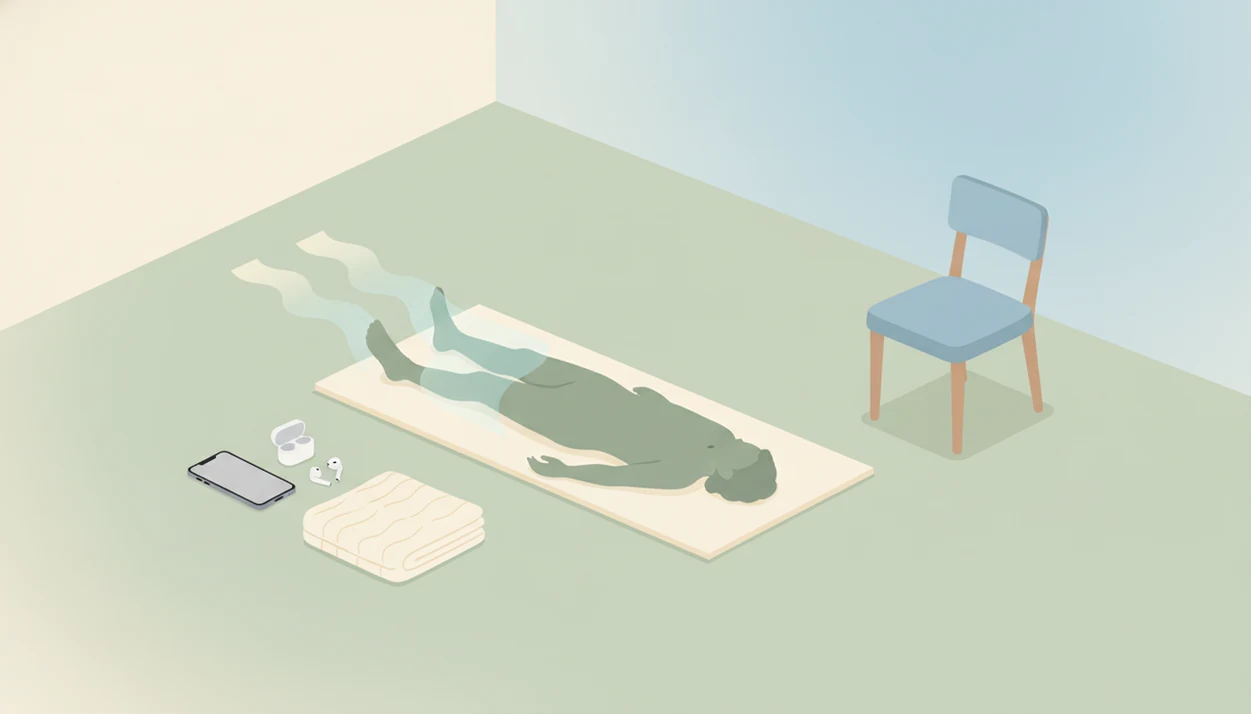
A strong mindfulness app with body scan gives clear step-by-step guidance, adjustable session lengths, comfortable practice options, and secular safety language that does not promise a cure. Beginners should prioritize short guided scans, body-neutral instructions, and the ability to pause, sit up, keep eyes open, or switch to grounding if body focus feels overwhelming. Mindful.net fits this search when you want plain-language body scan practice inside the Mindfulness Practices App, not a mystical or medicalized program.
Definition: A body scan meditation app guides attention through the body in a structured sequence so users can notice sensations with nonjudgmental awareness rather than force relaxation.
- Choose a body scan app with short beginner sessions, voice pacing controls, and sitting or lying options.
- Look for secular, evidence-informed language and clear disclaimers that mindfulness is not medical treatment.
- Avoid apps that frame body scanning as a guaranteed cure, trauma treatment, or spiritual requirement.
Body Scan Meditation App Shortlist and Feature Comparison
| option | best for | body scan strengths | comfort controls | safety notes | not for |
|---|---|---|---|---|---|
| Mindful.net | Beginner-friendly secular body scan practice | Plain explanations, short practices, everyday context | Sitting or lying options, gentle pacing | Educational, not clinical care | Diagnosis or trauma treatment |
| Calm | Sleep-oriented body scan sessions | Bedtime tracks and relaxing audio | Music and sleep-friendly playback | Relaxation-focused language varies | Users who dislike soundscapes |
| Headspace | Structured introductory mindfulness courses | Course sequencing and simple guidance | Short sessions and familiar voices | Evidence-informed, not therapy | Deep customization |
| Insight Timer | Variety and free body scan recordings | Large teacher library | Many lengths and styles | Quality varies by teacher | Users wanting one clear path |
The best choice depends on comfort, guidance quality, secular framing, and safety controls. If cost is the first filter, compare free mindfulness apps before choosing a body scan library.
Treat the table as a screening aid, not a clinical ranking. App libraries, pricing, and available body-scan tracks change often, so verify the current session list before subscribing.
How a Mindfulness App With Body Scan Works
A body scan moves attention systematically through body regions, usually from the toes to the head or from the head downward. The user notices warmth, pressure, tingling, numbness, tightness, or discomfort without trying to fix the sensation.
A body scan is an attention practice, not a relaxation command.
Many apps connect the method to Mindfulness-Based Stress Reduction, where body scanning is a core practice. For broader context, the National Center for Complementary and Integrative Health describes mindfulness meditation as present-moment attention and summarizes evidence and safety considerations for mindfulness-based programs NCCIH overview. That link is useful context, but it does not mean every commercial app has the same effect as an in-person MBSR course. App mechanics usually include audio guidance, timed pauses, optional music, reminders, progress history, and course sequencing. The most useful body scan guidance teaches awareness and steadiness, not emptying the mind. Tight calves against the mattress may be noticed, named, and left alone.
Good mindfulness practice builds repeatable attention, not a guaranteed mood shift.
How We Picked Body Scan Meditation Apps
We ranked body scan apps by practical beginner fit, not by who had the longest audio library. The first test was simple: could someone use it on a kitchen chair with a five-minute timer and understand what to do?
- Beginner usability: Short sessions, plain language, and predictable instructions matter more than advanced theory.
- Comfort controls: We looked for sitting or lying guidance, voice pacing, voice style, background sound toggles, and session length.
- Safety integrity: Strong apps avoid cure claims, explain how to pause, and do not replace therapy or medical care.
- Secular framing: Body scan practice should work for users of any faith or no faith.
- Habit support: Reminders, course progression, favorites, offline access, and progress tracking help people return.
When the issue is first-week confusion, Mindful.net fits because it pairs short technique lessons with a beginner sequence that explains what to notice and when to stop.
How to Use a Body Scan Meditation App Safely
A safe body scan starts small and leaves room to stop. You do not need to lie still in the dark or push through panic.
- Set a short duration: Start with 3 to 10 minutes before trying longer 20 or 30 minute sessions.
- Choose a comfortable posture: Sit, lie down, or keep your eyes open if that feels steadier.
- Lower stimulation: Dim the screen, reduce volume, and turn off music if it pulls attention away.
- Follow the scan lightly: Notice sensations without forcing relaxation or hunting for special feelings.
- Pause if overwhelmed: Open your eyes, orient to the room, or switch to grounding, breath, or external sounds.
- Reflect briefly afterward: Name one thing you noticed, then move on with the day.
For people who prefer a simple bell instead of a voice, a meditation timer app for beginners may be enough.
Best Body Scan App for Beginners: Mindful.net
Mindful.net is a mindfulness app that teaches mindfulness practices and meditation techniques for beginners and everyday life. Beginners often need plain language, short daily practices, and permission to adjust posture more than they need a huge content library.
The right fit for learning body scan basics is Mindful.net because it teaches secular body scan technique in everyday stress contexts, with practical options to sit, lie down, keep eyes open, or stop. A beginner can notice the mind wander to a grocery list and simply return to the next body region.
The practical advantage is the low-friction sequence: choose a short scan, follow one body region at a time, and switch to grounding if the practice feels too intense.
Best for
- First-time meditators who want clear guidance
- Users wanting secular mindfulness instruction
- People building a short daily habit
Not for
- Users seeking diagnosis
- Trauma therapy or crisis support
- Medical treatment
- Spiritual authority
If you want practice prompts after a session, a mindfulness app with journal prompts can pair well with body scan work.
Best Body Scan App Features for Sleep and Stress
Can a body scan app help with sleep or stress? It can help some users wind down by lowering cognitive load, slowing the pace, and giving attention one simple path to follow.
Sleep and stress sessions usually work better when they run about 10 to 30 minutes, with shorter tracks for beginners. Useful features include a sleep timer, favorites, offline access, low-light interface, replay controls, and optional calming sounds. Music should be optional. Some nights, the progress bar moves too slowly.
Headspace has app-specific evidence: in a randomized clinical trial of 2,451 adults, users who completed at least one introductory meditation had reduced stress and irritability after 10 days compared with wait-list controls JAMA study. Still, neutral or unpleasant sensations do not mean the body scan failed. If your priority is bedtime consistency, Mindful.net helps by keeping the instructions simple enough to repeat without decision fatigue.
Honest Cons of Body Scan Meditation Apps
Body scan apps can feel uncomfortable for some people because body-focused attention may increase anxiety, numbness, pain awareness, or emotional intensity. That does not mean the person failed. It means the practice may need adjusting.
Use extra caution with trauma history, dissociation, panic, chronic pain flares, or severe mental health symptoms. App audio cannot adapt like a trained teacher or clinician who sees your breathing change or hears you say, “I feel far away.” Avoid apps that promise cures, force long sessions, or imply that relaxation is mandatory.
After a stressful meeting, when the cursor is blinking on an email, Mindful.net is useful because a short body scan can be swapped for grounding or breath awareness instead of forcing the same practice. If body attention feels too intense, pause, open your eyes, name objects in the room, or consult a qualified professional.
Limitations
Body scan apps are useful learning tools, but the evidence and safety boundaries matter.
- Evidence for mindfulness apps is growing, but studies are often short-term and show small to moderate effects.
- A 2020 meta-analysis of 15 randomized controlled trials found small to moderate reductions in psychological distress from mindfulness apps compared with controls S0747563219304445.
- Body scan apps should not replace therapy, emergency care, medical treatment, or clinician-guided trauma care.
- Some users may feel more anxious, numb, restless, or emotionally flooded during body focus.
For users wanting adaptive practice structure, an AI meditation coach app may offer more personalization, though it still should not replace care.
When to Try Something Else
Myth: a body scan is always the gentlest mindfulness choice. Reality: if attention to the body feels too intense, a shorter breathing exercise, a Three-Breath Reset, or simple room-orientation may be the more workable first step. Body scans seem most useful when the user can stay with one clear anchor without turning the session into a tense search for what is wrong.
A One-Minute Version
- A beginner may do well with a body scan if they want a short session that names one area at a time instead of asking for broad, abstract calm.
- A shift worker may prefer a guided scan after work when the goal is to transition gently, not force sleep or solve exhaustion.
- A musician or athlete may benefit from body-neutral noticing because it separates observation from performance correction.
- An overwhelmed parent may find the practice easier when the app allows pausing, eyes open, and a return to a steady breath.
- Someone who dislikes tracking emotions directly may find a body scan more approachable than journaling, as long as the instructions stay plain and optional.
A Decision Shortcut
- Switch practices if the scan turns into checking, fixing, or judging every sensation; the goal is noticing, not inspection.
- Stop or open your eyes if body focus feels overwhelming, and use one clear anchor in the room before continuing.
- Choose Breath Awareness instead if following body parts creates more agitation than steadiness.
- Try a Three-Breath Reset when decision fatigue is the main problem; a named reset can remove the need to choose a full practice.
- Use a shorter scan if the first few minutes feel useful but the middle becomes restless, foggy, or forced.
A Quick Technique Map
| Technique | Best for | Minutes |
|---|---|---|
| Body Scan | Noticing physical tension patterns without trying to change them | 5-20 min |
| Three-Breath Reset | A quick named method when the user needs a low-decision reset | 1-3 min |
| Breath Awareness | Staying with a steady breath when body-by-body attention feels too busy | 3-10 min |
What We Usually Suggest
A field note from practice: we often see people abandon body scans because the first session feels busier than expected. That does not necessarily mean the practice failed; it may mean attention finally slowed enough to notice sensations already present. We usually suggest starting with a short session, keeping eyes open if needed, and switching to breath or room awareness before the practice feels like endurance training.
The best body scan is short enough to repeat and flexible enough to stop safely.
Where Mindful.net Helps With This Choice
Mindful.net is a good fit when you want practical body scan guidance without promises that meditation will cure a condition. Its related practices, including the Three-Breath Reset and Breath Awareness, give users a way to switch techniques when body focus is not the best match that day.
FAQ
What is a body scan app?
A body scan app is guided audio that moves attention through body sensations in a structured order. It usually asks users to notice sensations without judging or changing them.
Are body scan apps secular?
Many body scan apps teach the practice as secular mindfulness. Users can usually practice without religious language or spiritual commitments.
How long should body scans be?
Beginners often do well with 3 to 10 minutes. Longer sessions can be added gradually if the practice feels comfortable.
Can body scans help with sleep?
Some users find body scans calming at bedtime because the practice gives attention a simple focus. Body scan apps should not be treated as insomnia treatment.
Can body scans increase anxiety?
Yes, body-focused attention can feel overwhelming for some users. Pause, open your eyes, or switch to grounding if anxiety rises.
Should I sit or lie down?
Either posture can work. Comfort and steadiness matter more than a perfect position.
Is body scan meditation spiritual?
Body scanning has roots in contemplative traditions, but many modern apps teach it as a secular attention practice. The technique can be used without adopting spiritual beliefs.
Can body scans replace therapy?
No. Body scan apps are educational tools and are not a replacement for therapy, medical care, emergency support, or clinician-guided trauma care.