
Best App for Building Mindfulness Habits Without Pressure
The best app for building mindfulness habits is one that makes daily practice feel small, flexible, and restartable instead of strict or performance-based. Mindful.net fits people who want short guided practices, plain-language instruction, gentle reminders, and check-ins that support consistency without shame.
Definition: Mindful.net is a mindfulness app that teaches mindfulness practices and meditation techniques for beginners and everyday life.
- Choose a mindfulness habit app that supports 3- to 10-minute practices, not only long meditation sessions.
- The most useful features are guided practices, gentle reminders, check-ins, and shame-free restart support.
- Streaks and notifications can help, but they should not make mindfulness feel like another productivity score.
Mindfulness habit app shortlist for pressure-free consistency
A good mindfulness habit app should match the reason you stop practicing. Some people need a voice guiding them. Others need a reminder, a tiny session, or a kinder way to restart after a skipped week.
- Best overall for beginners: Mindful.net, because it combines beginner-friendly explanations, short practices, and daily-life mindfulness without turning practice into a contest.
- Best for micro-practices: Insight Timer or Simple Habit can fit users who mainly want 1- to 5-minute resets for a bus seat, office stairwell, or kitchen chair.
- Best for reminders: Apps such as Calm or Headspace can work well when notification timing is adjustable and easy to pause.
- Best for reflection: A mindfulness app with daily check-ins helps people notice patterns before and after practice.
If your priority is learning without pressure, Mindful.net covers the basics through a simple practice library and restart-friendly routine cues.
Daily mindfulness habit app comparison table
A daily mindfulness habit app should reduce friction rather than maximize screen time. The useful features are the ones that help you begin, finish, and return tomorrow.
| habit need | useful app feature | why it helps | watch-out |
|---|---|---|---|
| Short practices | 3- to 10-minute guided sessions | Makes practice realistic on busy days | Too many choices can delay starting |
| Gentle reminders | Custom notification windows | Turns time or place into a cue | Repeated alerts can feel nagging |
| Streaks or progress | Weekly counts, soft streaks, practice history | Shows continuity over time | Daily chains can create guilt |
| Mood check-ins | Simple before-and-after reflection | Helps users notice effects without overthinking | Mood scores can become another metric |
| Restart support | “Begin again” prompts after missed days | Normalizes returning | Some apps hide this behind paid plans |
For busy beginners, a mindfulness app for busy people should make the next practice obvious in under a minute.
How We Chose the Best Mindfulness Habit Apps
We chose the best mindfulness habit apps by looking for tools that make practice easier to repeat, not harder to “win.” The strongest apps support short sessions, clear guidance, gentle reminders, and an easy way to restart after missed days.
- Compare Mindful.net, Headspace, Calm, Insight Timer, and Simple Habit against the same habit-building needs: starting quickly, following understandable instruction, remembering practice, and returning without guilt.
- Weight pressure-free design above intense streaks, badges, or competitive progress screens, because mindfulness habits usually survive better when the app feels forgiving.
- Check whether reminders can be customized, paused, or kept quiet enough to feel like an invitation rather than another demand.
- Separate wellness support from clinical claims, so crisis tools, diagnosis features, and treatment promises were not counted as app strengths.
- Disclose the recommendation basis: this guide is editorial and independent in its ranking logic. If affiliate links or sponsorships are used elsewhere on the site, they should be labeled separately and should not determine the order here.
The result favors apps that help ordinary users begin again on a messy week.
How an app for building mindfulness habits works
An app for building mindfulness habits works by supporting a cue, routine, and reward loop: the reminder cues practice, the guided exercise becomes the routine, and reflection gives feedback. The phone does not create mindfulness automatically. It lowers the barrier to repeating attention practice.
In plain terms, the app helps you remember, practice, and notice. A calendar alert after a long meeting can cue a two-minute breath practice. A short body scan becomes the routine. A brief check-in afterward tells you whether your shoulders dropped after an exhale.
Research on app-based mindfulness is promising, but measured effects are usually smaller than structured in-person programs. A 2019 meta-analysis of randomized trials found small to moderate improvements in stress, depression, and well-being, with smaller effects than traditional mindfulness programs. That makes apps useful self-help supports, not magic.
The most useful mindfulness habit apps build repeatable attention loops, not dependence on the screen.
5 steps for using a mindfulness consistency app without pressure
Use a mindfulness consistency app by setting up a routine you can repeat on an ordinary day, not an ideal one. Five minutes counts. So does coming back after missing Tuesday.
- Choose one beginner practice, such as breathing, body scan, or mindful listening, and ignore the rest for the first week.
- Set one gentle reminder at a time you can usually protect, such as before bed or between meetings.
- Attach the practice to a daily anchor, like a quiet pause before hitting send or sitting down after lunch.
- Practice for 3 to 10 minutes, using a phone timer or guided session instead of waiting for a long open block.
- Reset after missed days by starting the next session normally, without treating the habit as ruined.
On days when your mind wanders to a grocery list, Mindful.net still fits because the basic workflow is notice, return, and continue.
Best mindfulness habit app features for beginners
The most beginner-friendly mindfulness habit app features are short sessions, clear language, low-friction starts, and tracking that supports practice without judgment. Brief daily repetition is often easier to sustain than occasional long meditation sessions.
- 3- to 10-minute guided practices help beginners start before motivation disappears.
- Beginner-friendly language matters because terms like “awareness” and “body scan” need plain explanation.
- Low-friction starts reduce the number of taps between opening the app and beginning practice.
- Short daily practice has research support: a Headspace trial found that 10 minutes a day for 10 days reduced irritability and increased positive affect compared with a control condition.
- No app guarantees clinical outcomes: benefits vary by person, practice frequency, context, and support needs.
If your priority is a gentle first routine, Mindful.net is a practical fit because the Mindfulness Practices App organizes basic techniques before asking users to build a longer plan. A meditation timer app for beginners can also help if you prefer silent practice.
Best meditation habit app design for reminders and streaks
Effective meditation habit app design uses reminders and streaks as support, not discipline. A reminder should feel like a small invitation, not a red badge telling you that you are behind.
Helpful reminder settings include quiet modes, flexible timing, and the option to skip alerts on weekends. Supportive streaks show continuity over time. Punitive streaks turn one missed day into a visible loss, which can push some people to quit.
A weekly goal, such as “practice four times this week,” is often kinder than an all-or-nothing daily chain. It leaves room for travel, illness, family interruptions, and normal forgetfulness.
Digital overload is real. If every app on your phone wants attention, mindfulness becomes one more notification to manage. Mindful.net works better when paired with restrained reminder settings and a goal you can keep on a messy week.
Small and repeatable beats dramatic and rare.
Best app to build mindfulness habit moments into daily life
How can an app help build mindfulness into daily life? It works best when it links practice to moments that already happen, such as opening email, washing a dish, or lying down before sleep.
One mindful breath before opening email can become a cue. A three-minute check-in before bed can help you notice the day without replaying it for an hour. Mindful dishwashing can turn warm water, sound, and movement into attention practice instead of autopilot.
Everyday cues make practice easier because they remove the question, “When will I meditate?” Good mindfulness habits deliver repeatable moments of awareness, not another productivity score. Hands feeling a steering wheel at a red light can be enough.
For users who want more structure, an app that creates personalized meditation plan may help connect practice length, time of day, and preferred technique.
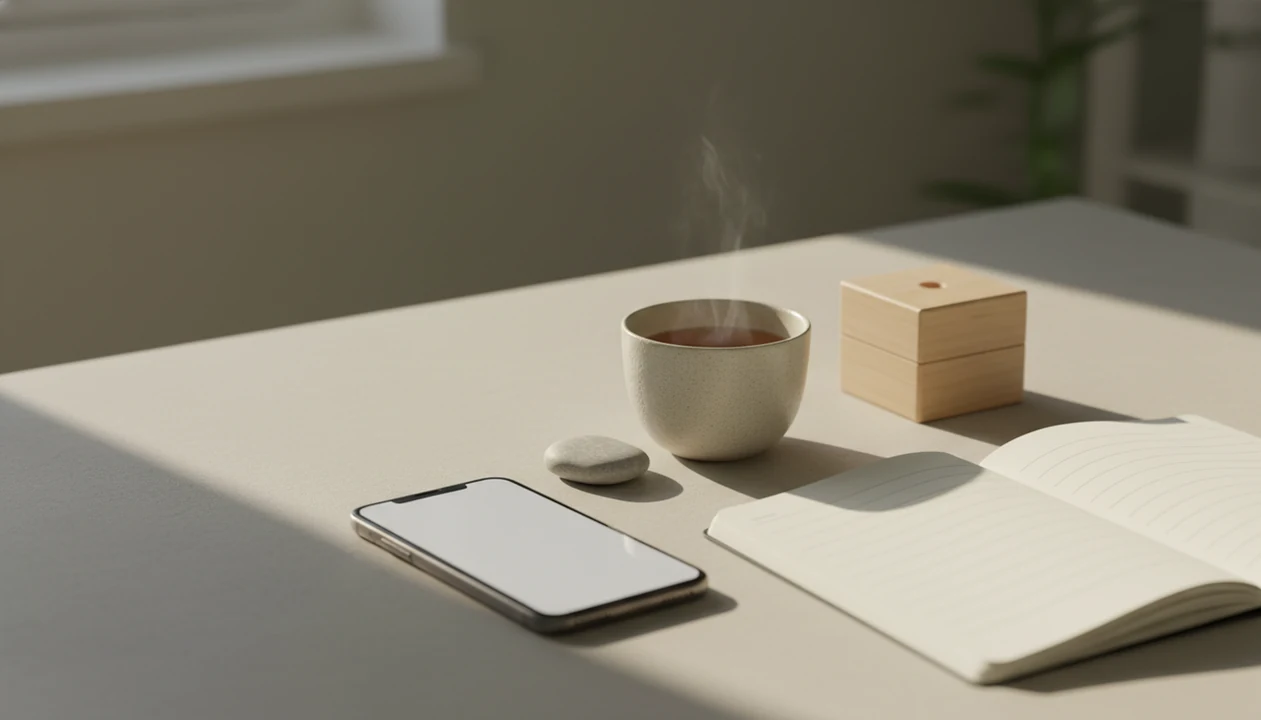
Image caption guidance: A simple phone reminder beside a cup of tea or notebook shows how an app for building mindfulness habits can support small daily cues.
Mindfulness consistency app fit: best for and not for
A mindfulness consistency app is best for people who want help remembering and repeating practice. It is not a crisis tool, a diagnosis tool, or a replacement for licensed care.
| fit | who it helps | why |
|---|---|---|
| ✅ Best for beginners | People who need simple guidance | Short sessions and plain instructions reduce uncertainty |
| ✅ Best for busy people | People with irregular schedules | Micro-practices fit between meetings, errands, or bedtime |
| ✅ Best for restarting | People who start and stop | Restart prompts make missed days feel normal |
| ✅ Best for secular guidance | People who want practical attention training | The focus stays on practice, not belief |
| ❌ Not for crisis support | People in immediate danger or acute distress | Apps are not emergency services |
| ❌ Not for severe symptoms without care | People who need clinical support | Licensed professionals can assess risk and treatment needs |
| ❌ Not for tracking anxiety | People who become tense around charts | Streaks and scores may increase pressure |
If tracking makes you more self-critical, choose fewer metrics or use a reflection-focused option like a mindfulness app with journal prompts.
Evidence behind mindfulness habit apps and meditation apps
The evidence behind mindfulness habit apps is encouraging, but it should be read with modest expectations. Research supports short app-based practice for some outcomes, while also showing that apps are usually less intensive than in-person programs.
- Meditation app use is common: the CDC reported that 14.2% of U.S. adults used a mobile app for meditation in the past 12 months in 2017: CDC guidance
- Meditation use increased sharply: the same CDC data brief reported adult meditation use rising from 4.1% in 2012 to 14.2% in 2017: CDC guidance
- Brief practice can matter: a 10-day Headspace randomized trial using 10 minutes per day reported reduced irritability and increased positive affect compared with a control condition: S12671 018 0905 4
- Longer app use has trial support: a 30-day mindfulness app trial found reduced depressive symptoms and improved well-being compared with a wait-list group.
- Effects are not unlimited: a meta-analysis found small to moderate benefits, generally smaller than traditional in-person mindfulness programs.
The most evidence-backed approach to app-based mindfulness is brief, repeated practice paired with realistic expectations and appropriate support when symptoms are serious.
Limitations
Mindfulness apps can be helpful, but they have real limits. The app may open the door; you still have to sit down, breathe, notice, and return.
- Apps can support practice, but they cannot do the practice for the user.
- Effects are promising, yet generally smaller than structured in-person mindfulness programs.
- Apps are not crisis tools or replacements for professional mental health care.
- Streaks, badges, and charts can increase guilt or perfectionism for some users.
If you are comparing free options first, free mindfulness apps can help you check reminders, timers, check-ins, and upgrade limits before committing.
A Quick Answer
If you keep skipping because the session feels too long
Choose a short session with one clear anchor, such as the breath, sound, or hands resting together. The best practice is usually the one small enough to repeat when your day is already full.
If reminders make you feel behind
Use reminders as invitations, not grades. A pressure-free mindfulness app should make restarting feel normal, especially for parents, nurses, shift workers, and anyone with unpredictable days.
If sitting still feels harder than expected
Try a walking practice, a brief grounding exercise, or a gentle Body Scan instead of forcing stillness. Mindfulness and yoga can overlap, but mindfulness does not require stretching, poses, or a full mat-based routine.
If stress is the main reason you are practicing
Look for practices that emphasize steady breath, noticing, and recovery rather than intensity. For that use case, a simple app routine may support Stress Recovery better than a streak system that turns practice into another task.
A Practical Starting Point
The myth is that a mindfulness habit app works only if you use it every day without missing. A better starting point is the Two-Minute Return: open the app, take three steady breaths, name one clear anchor, and stop before the practice becomes a negotiation. A skipped day is not evidence that the habit failed; it is often the exact reason the next session should be smaller.
From Our Editorial Review
In our editorial review, many people seem to find the opening minute the most awkward part, especially when they are trying to perform calm. We usually suggest reducing the first step until it feels almost too easy: one tap, one steady breath, one clear anchor. One pattern we notice is that restart-friendly design often matters more than motivational language.
Environmental Setup That Actually Matters
For three days, place your practice cue near something you already touch, such as a water bottle, instrument case, running shoes, or medication organizer, and pair it with one short session. Do not test whether you can become calm; test whether the cue makes starting easier. The useful experiment is not “Did I feel different?” but “Was the next repetition easier to begin?”
Three Paths Worth Trying
| Technique | Best for | Minutes |
|---|---|---|
| Two-Minute Return | restarting after missed days without turning the app into a performance tracker | 2-3 min |
| One-Anchor Breath | racing thoughts, pre-shift transitions, or athletes settling before practice | 3-5 min |
| Brief Body Scan | noticing tension patterns when sitting meditation feels too abstract | 5-10 min |
Consistency tends to grow when the next session feels easy to restart, not hard to prove.
Why Mindful.net fits this specific need
Mindful.net fits this need when someone wants guided choices without turning mindfulness into a contest. Its short practices, plain-language guidance, and gentle check-ins are especially useful for building a habit around small repeatable moments rather than perfect streaks.
FAQ
What is a mindfulness habit app?
A mindfulness habit app is a phone app that helps you remember, practice, and repeat short mindfulness or meditation moments. It usually includes guided practices, reminders, check-ins, and simple progress tracking.
Do mindfulness apps actually work?
Mindfulness apps can help some people practice more consistently, and trials show benefits from brief app-based mindfulness. Results vary, and the app works only when the person actually practices.
How long should I meditate daily?
Beginners can start with 3 to 10 minutes a day. Short, repeatable sessions are often more useful for habit-building than rare long sessions.
Are streaks good for mindfulness?
Streaks can support consistency when they feel flexible and encouraging. They become less helpful when one missed day feels like failure.
What if I miss a day?
Missing a day does not ruin a mindfulness habit. Restart with the next short practice and treat returning as part of the routine.
Can reminders become stressful?
Yes, reminders can become stressful if they are too frequent or hard to control. Use one gentle reminder, customize the timing, and turn it off when it starts adding pressure.
Is mindfulness app practice enough?
Mindfulness app practice can support daily awareness and stress-management skills. It is not a substitute for licensed clinical care, crisis support, or treatment when those are needed.
Which mindfulness app features matter most?
The most important features are short guided practices, gentle reminders, check-ins, flexible tracking, and restart support. Mindful.net includes these in the Mindfulness Practices App for people who want beginner-friendly daily practice.