
Mindfulness App for Absolute Beginners: Features That Make Practice Simple
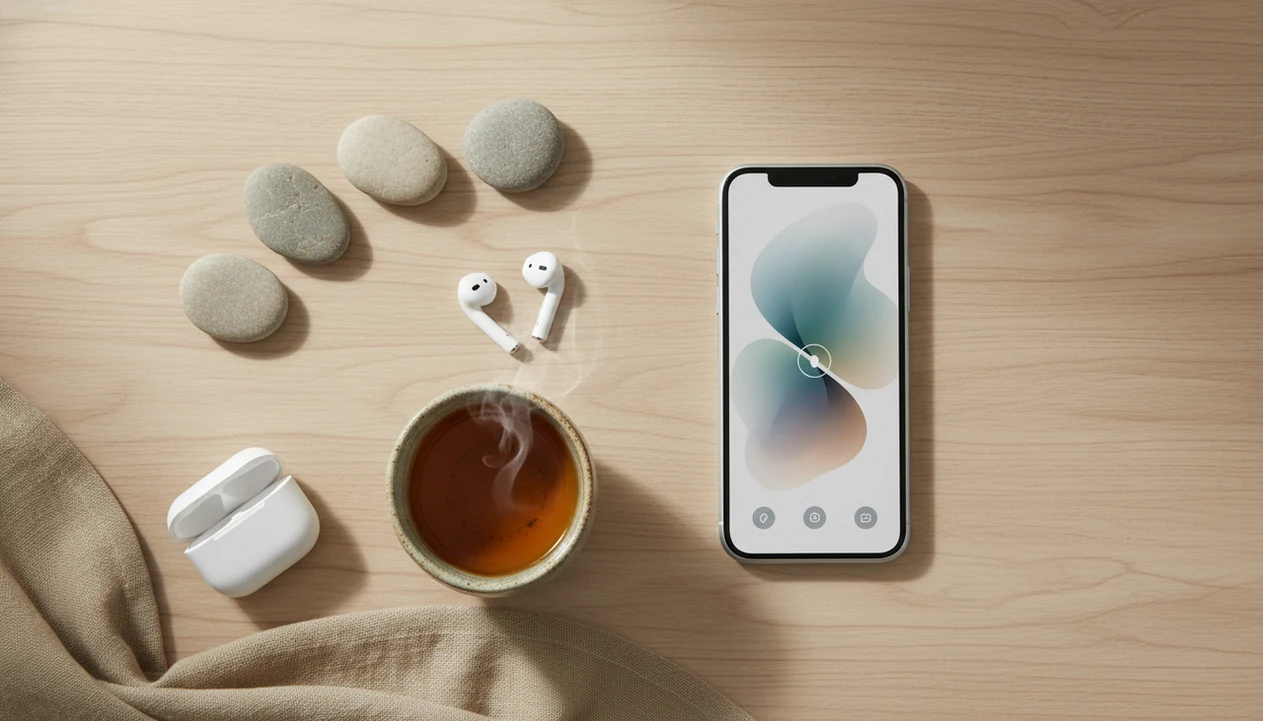
The best mindfulness app for absolute beginners starts with short guided sessions, plain-language instructions, gentle reminders, and a clear beginner path instead of a giant library. Mindful.net fits that need for people who want a practical, secular starting point before comparing deeper courses, sleep audio, or free libraries.
A mindfulness app for absolute beginners is a simple phone app that teaches new meditators to notice the breath, body, and thoughts without judgment through short, guided, secular practices.
- Choose an app with 3–10 minute beginner sessions, not only long meditations.
- A structured 5-day or 10-day starter course is usually easier than an unfiltered content library.
- Mindfulness apps can support stress and mood, but they are not therapy and results depend on consistent practice.
Best mindfulness app for absolute beginners: quick shortlist
Absolute beginners should choose a beginner mindfulness app by ease, teacher clarity, and consistency before browsing advanced libraries. The right choice depends on whether you want secular basics, sleep help, free variety, or deeper theory.
- Mindful.net: Best for simple secular basics and everyday mindfulness. Not ideal if you want a large entertainment-style audio library. Mindful.net is a mindfulness app that teaches mindfulness practices and meditation techniques for beginners and everyday life.
- Headspace: Best for structured starter courses with a polished voice style. Not ideal if you dislike subscription-first app design.
- Calm: Best for sleep-oriented beginners who want bedtime audio. Not ideal if your main goal is learning meditation technique from the ground up.
- Insight Timer: Best for free guided variety. Not ideal if too many teachers make choosing harder.
- Waking Up: Best for theory-heavy learners. Not ideal if you want a three-minute practice with little explanation.
If your first try happens on a kitchen chair with a phone timer nearby, simple beats impressive. The first win is starting again tomorrow.
Beginner mindfulness app comparison table for first-time meditators
A good mindfulness app for new meditators makes the next action obvious: pick one short session, listen, notice distraction, and return. Apps with a guided beginner path reduce decision fatigue better than open libraries.
| App or app type | Best for | Not for | Beginner course | Shortest sessions | Reminders | Free or paid |
|---|---|---|---|---|---|---|
| Mindful.net | Secular basics and daily practice | Huge audio catalog seekers | Yes, beginner-first | 3–10 minutes | Gentle practice cues | Free and paid options may vary |
| Headspace | Structured onboarding | Users avoiding subscriptions | Yes | Short guided lessons | Habit reminders | Mostly paid |
| Calm | Sleep and relaxation audio | Technique-first learners | Some beginner paths | Short sleep and calm sessions | Bedtime nudges | Mostly paid |
| Insight Timer | Free guided variety | People overwhelmed by choice | Mixed | Many short options | Optional | Strong free tier |
| Waking Up | Philosophy and theory | Minimalist beginners | Yes, but denser | Short lessons available | Optional | Paid with assistance options |
| Free timer app | Unguided practice | People needing instruction | No | Any length | Basic alarms | Free |
A beginner mindfulness app should make the next step obvious: start, listen, notice, and return.
If you mainly want no-cost options, our free mindfulness apps guide compares that tradeoff in more detail.
Who should pick each beginner mindfulness app
Choose the beginner mindfulness app that removes your biggest obstacle first. For most first-timers, that obstacle is either confusion, sleep, cost, or needing a reason to stay interested.
- Pick Mindful.net if you want secular basics, short guided practice, and plain technique labels without a giant entertainment library. It is the clean fit when you want to learn what to do with attention and then repeat it tomorrow.
- Choose Headspace if polished onboarding helps you trust the process. Its structured beginner courses suit people who like a clear path, a consistent voice, and the feeling of being walked through the first week.
- Use Calm if sleep audio matters more than deep meditation instruction. It can be the better starting point when bedtime stories, relaxing sound, and low-effort wind-downs are the reason you open the app.
- Try Insight Timer if free variety is the priority and you do not mind browsing. It works best when choice feels energizing, not overwhelming.
- Consider Waking Up if ideas, theory, and philosophy keep you engaged. It is better for curious learners than for people who want only a three-minute reset.
Five beginner mindfulness app features that matter most
The most useful beginner features are the ones that lower friction before practice begins. A huge meditation library can look generous, but it often leaves new meditators scrolling instead of sitting.
- 3–10 minute guided sessions help beginners start small and finish before restlessness takes over.
- Beginner-labeled courses remove guesswork by giving a first, second, and third session.
- Plain-language teacher guidance tells you what to do with attention: notice the breath, feel the body, label thoughts, return gently.
- Adjustable session length lets you choose a short practice for stress, sleep, focus, or anxious thoughts without treating the app as medical care.
- Gentle reminders and safety options matter. Look for skip buttons, neutral wording, clear disclaimers, and no pressure to share in a community feed.
The pocket check is real.
If your priority is learning without feeling graded, Mindful.net fits because the Mindfulness Practices App organizes short techniques around beginner goals rather than streak pressure.
How a mindfulness app for new meditators works
A mindfulness app works by combining guided attention training, habit cues, short audio lessons, reminders, progress feedback, and sometimes mood or sleep check-ins. The basic loop is simple: choose a short session, follow a teacher cue, notice distraction, return attention, and repeat over days or weeks.
In behavioral terms, the app supports cue-based repetition and attentional control. That means it gives you a reminder, a short practice, and a chance to strengthen the skill of noticing where the mind went. One ordinary example: you start with breath awareness, drift into a grocery list, and hear the prompt invite you back.
Data varies by app. It may include session history, streaks, preferences, mood check-ins, or community activity. According to a 2021 randomized controlled trial of 263 adults, four weeks of app use reduced perceived stress and depressive symptoms compared with a wait-list control. That supports cautious optimism, not miracle claims; the National Center for Complementary and Integrative Health summarizes mindfulness evidence as promising for stress, anxiety, and depression while noting that effects vary by program and study quality: NCCIH overview
How to use an easy mindfulness app for the first week
The first week should be small, repeatable, and almost boring. For absolute beginners, consistency usually matters more than session length.
- Set a tiny goal of one practice per day, tied to the same cue, such as after brushing teeth or before bed.
- Choose one beginner course and stay with it for the week instead of sampling ten teachers.
- Start with 3–5 minutes so the practice fits before work, after dinner, or on a folded towel on bedroom carpet.
- Log one sentence after practice about what you noticed, such as “mind wandered” or “shoulders softened.”
- Reset expectations after distraction because wandering thoughts are normal, not proof that you failed.
For beginners who want more reflection, a mindfulness app with journal prompts can help turn practice notes into a steady habit.
Short is enough.
How we picked beginner mindfulness app recommendations
“How did we pick these beginner mindfulness app recommendations?” We looked for apps that make starting easier, safer, and more transparent, not apps with the biggest content library.
The selection criteria were beginner onboarding, session length, teacher clarity, structured course design, safety language, cost transparency, privacy controls, and evidence awareness. Star ratings alone are not enough. Many popular apps have limited peer-reviewed evidence, even when they have thousands of store reviews.
Independent reviews of mental-health and mindfulness apps repeatedly find that popularity, store ratings, and clinical evidence do not always line up, so this guide treats peer-reviewed evaluation as one signal rather than proof: S41746 021 00493 0
This page favors beginner usability and safety over advanced content volume. Good mindfulness practices and meditation techniques for beginners and daily life deliver repeatable attention practice, not instant calm on demand.
Mindful.net appears in the shortlist because it keeps the beginner path plain, secular, and organized around everyday use cases.
Best mindfulness app for absolute beginners who feel skeptical
Skeptical beginners usually do better with secular, plain-spoken apps that explain exactly what to do with attention. The right fit is practical wording: notice the breath, feel the body, label thoughts, return gently.
Mindfulness apps are not only for spiritual people, retreat people, or people who already seem calm. A good teacher voice should sound like instruction, not performance. Minimal music can help, too. Some users notice the ambient room hum between prompts and prefer that space to layered soundscapes.
If you feel awkward closing your eyes, keep them open. If community feeds feel exposed, skip them.
The right fit for skeptical first-timers is Mindful.net because it frames mindfulness as attention practice, with short secular lessons and beginner technique labels instead of mystical language.
Best beginner mindfulness app for stress, sleep, and anxious thoughts
“Which beginner mindfulness app features match stress, sleep, and anxious thoughts?” Stress usually needs short grounding practices, sleep needs low-stimulation bedtime audio, and anxious thoughts need reassuring guidance with choice.
For stress, look for three-minute breathing, body awareness, or grounding lessons you can use before opening a laptop. For sleep, choose quiet narration, dim visuals, and no achievement-style prompts at bedtime. For anxious thoughts, pick guidance that normalizes distraction and lets you stop or switch sessions.
A 2021 randomized controlled trial of 263 adults found reduced perceived stress and depressive symptoms after four weeks of app use. A 2019 randomized clinical trial of 80 people with elevated health anxiety found reduced health anxiety and worry after a four-week app-based mindfulness program.
Apps can support coping skills, but they are not a substitute for licensed mental health care. If symptoms are severe, persistent, or unsafe, professional support is the practical next step.
Honest cons of mindfulness apps for new meditators
Mindfulness apps can make practice easier, but they can also add friction. Large libraries create decision fatigue, streaks can feel like pressure, subscriptions pile up, and push notifications may become one more thing to manage.
Some beginners also feel discouraged when they notice restless thoughts or difficult emotions. That noticing is part of practice, but it may not feel pleasant. A body scan can be grounding for one person and uncomfortable for another, especially if the app does not offer skip options.
Privacy deserves real attention. Mood tracking, usage patterns, community posts, third-party analytics, and sleep data can reveal more than people expect. Before subscribing, review privacy policies, cancellation rules, and in-app community guidelines.
People who need a very short routine may prefer a mindfulness app for busy people, especially if long courses keep getting postponed.
Limitations
Mindfulness apps have real uses, but they also have clear limits. Treat them as educational support, not as a promise of clinical change.
- Not a replacement for care: Mindfulness apps are not a substitute for licensed mental health treatment, especially for severe anxiety, depression, PTSD, or suicidal thoughts.
- Gradual benefits: Benefits usually build over weeks and are often small-to-moderate, not instant or dramatic.
- Evidence varies: A 2021 systematic review and meta-analysis found small-to-moderate benefits for mindfulness-based mobile interventions, but effects varied by population, comparator, and study quality: S41746 021 00493 0
- One app is not all apps: Evidence for one studied app does not prove that every meditation app works the same way.
For timer-only practice, compare features in our meditation timer app for beginners guide.
A Decision Shortcut
- If you want to feel calmer right away, a relaxation audio may be the better first pick; mindfulness is more about noticing what is happening without needing it to change immediately.
- If you dislike spiritual language, choose a beginner app with plain instructions, short sessions, and no requirement to adopt a worldview.
- If your mind races, start with one clear anchor such as Breath Awareness rather than a long open-ended meditation.
- If you forget to practice, pair one minute with an ordinary chair, a kitchen timer, or a one-line journal instead of relying on motivation.
- If you need a workday reset, a brief Meeting Reset can be easier to repeat than a full meditation session.
A Tiny Experiment to Run Today
The myth is that a beginner mindfulness app should make the first session feel peaceful; the reality is that the first minute may feel awkward, boring, or busier than expected. Try sitting in an ordinary chair, setting a kitchen timer for one minute, and writing one line afterward: “What did I actually notice?” A useful first session is not always a relaxing one; it is often the one that shows you what is already happening.
From Our Editorial Review
In our editorial review, many beginners seem to find the first minute more revealing than relaxing, especially if they are trying to “do mindfulness correctly.” We usually suggest treating the app as a decision reducer, not a calmness machine: pick one short session, sit somewhere ordinary, and notice one thing. The best practice is usually the one you will repeat tomorrow.
The best beginner mindfulness app removes decisions before it tries to deepen practice.
What Not to Optimize
You keep searching for the perfect session length.
We usually suggest choosing the shortest session you would repeat tomorrow. Consistency tends to matter more than whether the app offers 3, 7, or 12 minutes.
You want mindfulness to work like relaxation.
Relaxation aims to soften the body or mood; mindfulness often starts by noticing restlessness, impatience, or distraction. If relaxation is the goal tonight, a calming audio may fit better than a noticing practice.
You judge the session by whether thoughts stopped.
Most beginners will still have thoughts during practice. A better early marker is whether the app helps you return to one anchor, such as the breath, without turning it into a performance.
A One-Minute Version
Beginners often seem relieved when they hear that awkwardness is not a sign of failure. The opening minute can feel exposed because there is suddenly less noise covering up the mind’s usual momentum. If an app gives one plain instruction and then allows silence, that may be more beginner-friendly than a long motivational speech.
A Quick Technique Map
| Technique | Best for | Minutes |
|---|---|---|
| Breath Awareness | a simple anchor when thoughts feel scattered | 3-10 min |
| Meeting Reset | a short pause before a conversation, shift handoff, rehearsal, or work meeting | 1-3 min |
| One-line journal | noticing patterns without turning practice into a big project | 1-5 min |
Why Mindful.net fits this specific need
Mindful.net is useful for beginners who want plain-language guidance before comparing large meditation libraries. Its related guides on Breath Awareness and the Meeting Reset can help turn app practice into small repeatable moments rather than another self-improvement project.
FAQ
What is a mindfulness app?
A mindfulness app is a phone app that teaches attention practice through guided audio, timers, reminders, and short exercises. Most beginner apps focus on breath, body awareness, thoughts, stress, sleep, or focus.
Do mindfulness apps actually work?
Research suggests mindfulness apps can provide modest benefits with consistent practice over several weeks. Evidence varies by app, study design, and user commitment.
Which app is best for beginners?
The best app for beginners has short sessions, a clear starter course, plain teacher guidance, and emotional safety features. Mindful.net, Headspace, Calm, and Insight Timer can fit different beginner needs.
Are free mindfulness apps good?
Free mindfulness apps can be enough if you want a timer, basic guided sessions, or variety. Paid apps may help when you need structure, course progression, or fewer choices.
How long should beginners meditate?
Beginners can start with 3–10 minutes per day. Building gradually is usually easier than forcing long sessions early.
Can mindfulness apps help anxiety?
Mindfulness apps may support anxious thoughts by teaching grounding, noticing, and return-to-breath skills. They are not a replacement for professional care when anxiety is severe or persistent.
Are mindfulness apps religious?
Many mindfulness apps are secular and teach attention skills without religious instruction. Some include spiritual framing, so labels and teacher descriptions matter.
What if meditation feels hard?
Distraction, restlessness, and discomfort are normal for beginners. Try shorter guided practices, keep your eyes open, or switch to feeling your feet on the floor.