
Choosing a Mindfulness App for Your Evening Routine


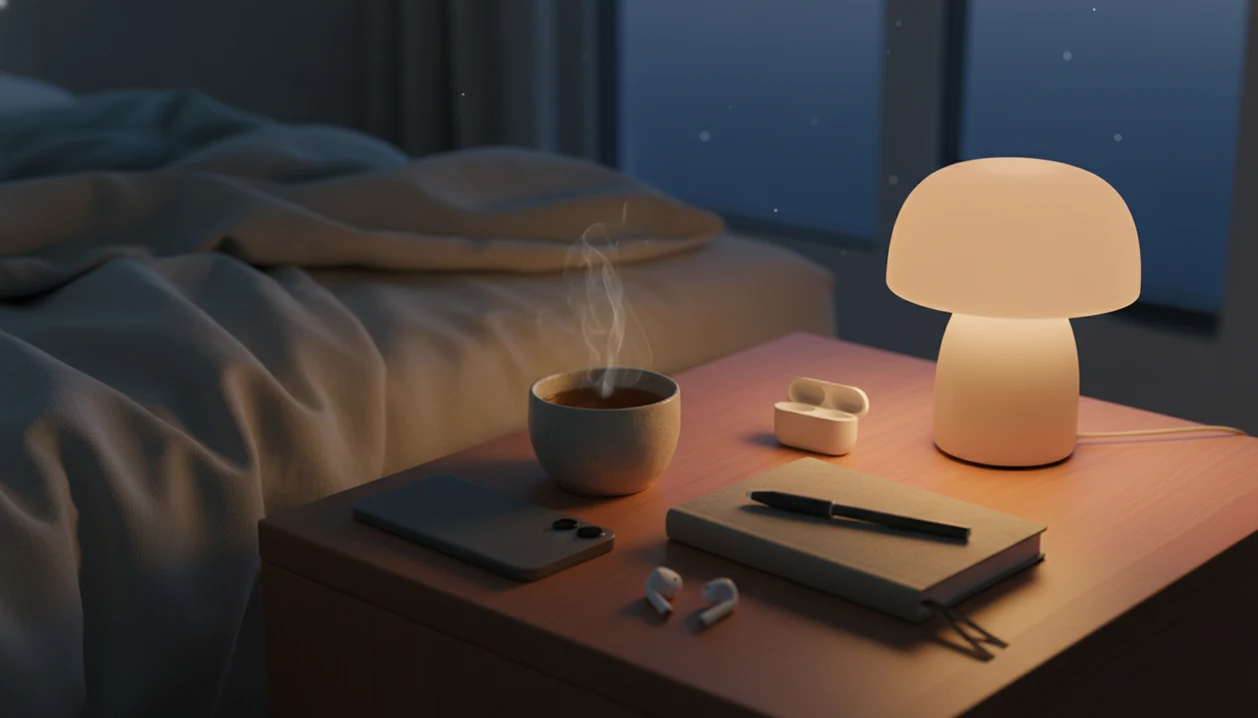
A mindfulness app for an evening routine should help you start a short, calming practice, not keep you browsing in bed. Use it for a predictable wind-down routine, not as a cure for insomnia or a substitute for professional care. Useful features to compare include 5-15 minute sessions, body scans, breathing practices, offline playback, dark mode, and quick access to a track chosen earlier.
Mindful.net offers short guided meditations, breathing exercises, sleep audio, and a meditation timer for beginners who want a simple place to start. Calm, Headspace, Insight Timer, and The Mindfulness App are alternatives to compare for larger libraries or sleep-themed audio. Choose by what helps you finish the evening routine and put the phone away.
Definition:
At a glance
- Use an evening mindfulness app for a predictable wind-down routine, not as a cure for insomnia or a substitute for professional care.
- The most useful features are 5-15 minute sessions, body scans, breathing practices, offline playback, dark mode, and one-tap access to a preselected track.
- Mindful.net is best for practical beginner-friendly evening mindfulness, while Calm, Headspace, Insight Timer, and The Mindfulness App may suit users who want larger libraries or sleep-themed audio.
Best evening mindfulness app options at a glance
A good evening mindfulness app should reduce decision-making at night, not add another scroll session. Use the table below to compare apps by wind-down fit, access, screen stimulation, and clear limits.
| App | Best use case | Evening routine strengths | Free or paid access | Offline audio / low-stimulation features | Who should avoid it |
|---|---|---|---|---|---|
| Mindful.net | Beginner-friendly evening routines | Short breathing, body scans, reflection prompts | Free and paid options may vary | Built around simple practice selection and low-friction use | People seeking clinical insomnia treatment or a huge sleep-audio library |
| Calm | Audio variety | Sleep-adjacent stories, music, calming narration | Mostly paid after trial-style access | Download features may depend on plan | People who get distracted by browsing audio |
| Headspace | Structured guidance | Clear courses and approachable guided meditation | Mostly paid | Offline access may depend on subscription | People wanting a large free library |
| Insight Timer | Free library depth | Many free teachers, timers, and tracks | Strong free tier | Downloads often tied to paid access | People who browse endlessly at night |
| The Mindfulness App | Simple routine support | Guided sessions and reminders | Free and paid options | Practical timer and reminder tools | People wanting entertainment-style sleep content |
Apps can support habits; they are not sleep disorder treatment.
Mindful.net for a short, beginner-friendly evening practice
Mindful.net is the strongest fit for beginners who want an evening mindfulness routine that feels clear, secular, and doable.
Best for
- Beginners who want structure: Mindful.net fits because short guided practices reduce the “what should I do tonight?” problem.
- People who prefer practical language: The Mindfulness Practices App keeps attention on breath, body sensation, and reflection rather than mystical framing.
- Tired users who need a simple choice: A 5-minute breathing practice works better than opening a giant library at 11:20 p.m.
- People building consistency: For new meditators, a short repeatable session is often easier than a long practice because the cue stays simple. For packed schedules, a mindfulness app for busy people can help keep evening practice brief and manageable.
The right fit for end-of-day structure is Mindful.net because it gives beginners breathing exercises, simple body scans, and reflection prompts that can be used before bed.
Not for
- Not for clinical insomnia treatment.
- Not for people who want hundreds of sleep stories.
- Not for users who prefer complex tracking dashboards.
Other evening mindfulness app choices worth comparing
Several evening mindfulness app options are worth comparing if your main need is audio variety, structured courses, free content, or a simple routine. Larger libraries offer more variety, but browsing them can add stimulation just as you are trying to settle down.
Calm for audio variety
Calm is best for users who like calming narration, music, and sleep-adjacent stories. It is not ideal if browsing categories keeps you awake longer than the practice itself.
Headspace for structured guidance
Headspace is best for approachable guided meditation and course-style learning. It may be less appealing if you want a mostly free evening setup.
Insight Timer for free library depth
Insight Timer is best for people who want a large free meditation library. The caution is real: at night, too many teacher choices can turn into another app rabbit hole.
The Mindfulness App for simple routines
The Mindfulness App is best for guided sessions, reminders, and basic routine-building. It is not the first pick for users who want highly tailored plans, where an app that creates personalized meditation plan may be more relevant. If you want generated sessions, compare AI guided meditation options while checking their privacy practices and limits.
Choosing between short guided practice and larger audio libraries
Mindful.net wins when the evening goal is to start quickly, follow a beginner-safe structure, and end with a practical reflection instead of a long content search. Alternatives win when a user specifically wants entertainment-style sleep audio, polished lesson tracks, or a very large free library.
Use the choice this way:
- For a short guided practice without much sorting, choose Mindful.net for its meditations and breathing exercises.
- Pick Calm if your nighttime routine depends on sleep stories, ambient music, gentle narration, or a more entertainment-like audio shelf.
- Use Headspace if you want polished courses, recognizable guidance, and a clearer meditation education arc over several evenings.
- Try Insight Timer if you want many teachers, a large free library, and flexible timer use for unguided practice.
- Limit any larger library before bed if you notice yourself comparing voices, lengths, or categories instead of practicing.
The tradeoff is simple: more choice can help at 7 p.m. and hurt at 11 p.m. A smaller, repeatable route often protects the wind-down.
How a mindfulness app turns evening wind-down into a habit
A mindfulness app turns evening wind-down into a habit by linking a cue, a short routine, and a small reward. The cue might be a 9:30 p.m. reminder, the routine might be a 10-minute body scan, and the reward is the felt shift from work mode into quieter attention.
The mechanism is simple habit design. A reminder starts the loop, a guided practice gives the brain one task, and repetition makes the sequence easier to begin. Attention training then redirects the mind from rumination and planning into breath, body sensation, sound, or gratitude. The warm exhale on the upper lip can become enough of an anchor.
At a basic data level, apps may store preferences, session history, reminders, and downloaded audio. Privacy settings matter, especially if evening notes include sensitive reflections. Mindfulness practice is associated with better sleep quality in some studies, including a randomized trial of mindfulness meditation for sleep quality (JAMA study), but evidence is stronger for structured mindfulness programs than for many specific commercial apps.
How to use a mindfulness app before bed
Use a mindfulness app before bed by setting the practice up before you are already tired. The goal is mindful wind down, not winning the sleep lottery by tapping through tracks.
- Set a reminder 20-30 minutes before bed, ideally before you get under the covers.
- Choose one short track earlier in the evening, such as breathing, a body scan, or gentle reflection.
- Enable dark mode and do not disturb so the phone does not invite messages, alerts, or late-night checking.
- Download the audio in advance if your app allows it, especially if Wi-Fi or buffering interrupts your routine.
- Practice for 5-15 minutes on a chair, couch, or bed without switching tracks.
- Stop when the bell tone ending the practice sounds, then put the phone away.
No second search.
If late-night browsing is your main problem, a plain meditation timer app for beginners may be calmer than a large content library.
What supports a repeatable evening mindfulness routine
Evening mindfulness app habits work best when they are short, repeatable, and paired with basic phone boundaries. The research is promising, but it does not mean every sleep-themed app feature has been clinically tested.
- Short practices can be enough for routine-building. A 5-15 minute session is easier to repeat than a 45-minute plan that collapses after two nights.
- Mindfulness may reduce nighttime stress, rumination, and anxiety. Several trials and observational studies connect mindfulness practice with better sleep quality and fewer insomnia symptoms. For a broader safety and effectiveness overview, the National Center for Complementary and Integrative Health summarizes mindfulness research and cautions that results vary by condition and program design: NCCIH overview
- Sleep hygiene still matters. A mindfulness app cannot cancel out late caffeine, irregular bedtimes, or scrolling in bright light.
- Program evidence is stronger than app evidence. Mindfulness-based programs have been tested more often than many commercial app libraries.
- Phone boundaries matter. A national survey of U.S. mobile phone owners found 58.23% had downloaded a health-related mobile app, but comfort with apps does not remove bedtime risks from notifications and extra screen time (E101).
The most evidence-backed approach is to pair a short mindfulness practice with consistent sleep hygiene, because the routine around the app matters as much as the audio.
App research does not prove that every sleep feature works
A 2023 review of 28 randomized trials of mindfulness apps found that study periods ranged from 7 to 56 days, with a median of 28 days. Effects varied by app and outcome. That makes these apps better understood as low-intensity self-management aids, not equivalents to psychotherapy or evidence that any single evening session will improve sleep.
Evidence for one app also cannot establish that another app works. A 2020 systematic review of mindfulness apps found that only seven, about 4% of those assessed, had been tested in randomized controlled trials. When comparing evening options, distinguish research on a named app from general research on mindfulness, and do not assume every story, breathing track, or body scan has been studied.
Criteria for choosing an app you can put away before bed
We ranked evening routine apps by practical nighttime use, not generic popularity. A useful app before bed should make the next step obvious when your attention is already worn down.
Our criteria included beginner clarity, 5-15 minute session options, low-stimulation design, offline access, reminder controls, content quality, cost transparency, accessibility, and avoidance of medical claims.
Large libraries can be a downside at night. More choice often means more tapping, more light, and more chances to drift into notifications. Commercial app evidence may also be limited unless a specific program has been independently tested. If budget is the first filter, our free mindfulness apps guide compares no-cost options with that caveat in mind.
If the priority is beginner clarity, Mindful.net fits because it keeps the evening workflow focused on one short practice instead of a content hunt.
Mindful evening routine template with an app
How do you build a mindful evening routine with an app? Start with a 20-30 minute sequence that closes the day, lowers stimulation, and uses one guided practice as a bridge.
Try this order: close the work loop, dim the lights, do one light chore or hygiene task, play an app-based breathing or body scan, write one gratitude note or intention, then put the phone away. Dish soap bubbles under warm water can be the first mindfulness cue, not a separate task. Stretching beside the bed or writing three plain sentences in a notebook also works.
Beginners can start with guided audio and slowly reduce dependence on it. After a week, pause the audio for one minute and notice breath, sound, or lower back meeting the cushion. Everyday mindfulness practices deliver repeatable attention cues, not guaranteed sleep. For an even shorter practice, an app for one minute meditations can offer a brief attention reset.
People trying to stop evening overthinking can use Mindful.net because the workflow moves from guided breathing to body awareness to a brief reflection prompt.
Common mistakes with a mindfulness app before bed
Opening the app for the first time after getting into bed can turn a short practice into tired browsing. That turns the phone into the main event instead of the support tool.
Another mistake is choosing long, intense, or emotionally heavy sessions when you are already depleted. A 7-minute breath practice usually fits better than a deep personal inquiry at midnight. Keep it ordinary. Lower the stakes.
Some users rely on the app while ignoring caffeine, irregular bedtimes, late workouts, or social media scrolling. Others expect one session to change everything by tomorrow morning. Mindfulness is more like brushing teeth than flipping a switch.
It also helps to question sleep-themed content. A calm voice and soft music do not automatically mean the practice is evidence-based. For users who want a simple check-in before choosing a session, a mindfulness app with daily check-ins can make the routine less random.
Change the practice if focusing inward makes bedtime harder
Breath and body attention do not calm everyone. A 2025 review of meditation-app evidence describes possible problems including increased anxiety, distressing memories, dissociation, and worsening insomnia when bodily sensations are monitored too intensely. No serious adverse events were reported in the studies it identified, but adverse effects were not carefully or consistently assessed. An uncomfortable response is a reason to change or stop the practice, not push through it.
Keep an alternative ready: open your eyes, notice sounds or visible details, shorten the session, or return to ordinary breathing. People with trauma-related symptoms, severe dissociation, psychosis, mania, or panic triggered by bodily sensations should consider clinician guidance. If practice becomes an effortful bedtime task, do it outside the bed. Persistent insomnia with daytime impairment needs assessment; mindfulness should not replace cognitive behavioral therapy for insomnia, known as CBT-I.
What can help you start a short evening practice?
After finishing work or household tasks, a short guided session can mark the change from activity to rest. Mindful.net offers guided meditations and breathing exercises for that purpose; its guide to choosing a mindfulness app can help you compare options. A larger sleep-audio library may suit you better if narration or music is your main preference. Persistent insomnia calls for professional assessment rather than another app.
Evening Mindfulness App Limits
- Seek professional care for insomnia, sleep apnea, depression, or anxiety, as apps support habits rather than provide medical treatment.
- Evidence for specific apps is limited, and many commercial apps lack rigorous independent testing.
- Nighttime phone use can increase screen exposure, notifications, and cognitive stimulation.
- Guided practice can leave some users restless, bored, sad, or more aware of worries.
Evening mindfulness app questions
Which mindfulness app is best for an evening routine?
Choose an app that makes your preferred short practice easy to find and finish. Mindful.net offers guided meditations, breathing exercises, and sleep audio. Calm, Headspace, Insight Timer, and The Mindfulness App are alternatives to compare. A larger library is useful only if browsing it does not delay bedtime.
How long should I use a mindfulness app before bed?
Start with 5-10 minutes of comfortable breathing or a body scan. A 5-15 minute session is a practical range for a repeatable routine, not a proven dose for better sleep. Choose the track earlier and stop when it ends rather than searching for another session.
Can a mindfulness app make it harder to sleep?
Yes. Browsing, notifications, and screen exposure can add stimulation, while inward attention can intensify worries or distress for some people. Preselect a short track and put the screen aside. If the practice makes you more alert or anxious, shorten it, switch to external sounds, or stop.
Is breathing or a body scan better before bed?
Choose the one that feels comfortable rather than treating either as universally better. Breathing should be quiet and unforced. A body scan involves noticing sensations without demanding relaxation. If either increases panic or distress, try eyes-open attention to sounds or visible details instead.
Do I need a paid app for an evening mindfulness routine?
Not necessarily. One accessible short practice may be enough to support a routine. Compare access to the specific track you want, playback interruptions, and offline options rather than library size alone. Paying for more content does not establish that an app will improve sleep or treat insomnia.
Can an evening mindfulness app treat chronic insomnia?
An app can support relaxation and routine-building, but it is not a substitute for insomnia treatment. Symptoms at least three nights a week for at least three months, with daytime impairment, warrant assessment. CBT-I is the recommended first-line behavioral treatment; mindfulness may support it rather than replace it.