
App for Short Guided Meditations: Choose a Length and Technique


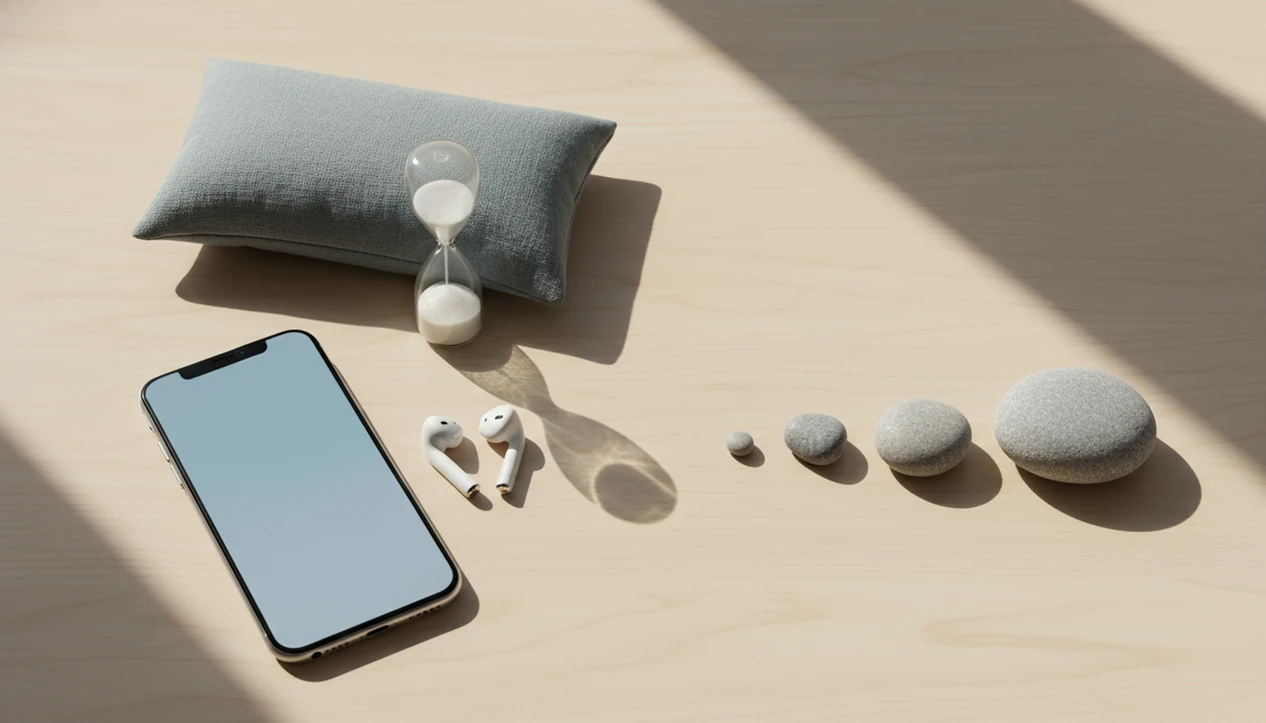
An app for short guided meditations plays brief, voice-led mindfulness practices, usually lasting 1 to 10 minutes, for work breaks, bedtime, transitions or moments of stress. Choose by duration first: 1 to 3 minutes for a pause, 5 minutes for a work break, or 10 minutes for a longer wind-down. Mindful.net offers short guided meditations for iOS and Android.
Length is only one filter. Look for clear beginner instructions, a voice you are comfortable hearing regularly, and reminders you can adjust or turn off. Match the technique to the moment: breath awareness for a brief pause, a body scan before bed, or labeling thoughts when distracted. A useful app makes that choice simple without promising a particular result.
Definition: An app for short guided meditations is a mobile mindfulness tool that plays brief voice-led practices, usually 1 to 10 minutes long, for everyday pauses such as work breaks, commutes, bedtime, or moments of stress.
At a glance
- Choose a short guided meditation app by duration first: 1-3 minutes for a reset, 5 minutes for a work break, and 10 minutes for a fuller wind-down.
- Technique matters as much as length: breath awareness, body scans, labeling thoughts, and loving-kindness serve different goals.
Short guided meditation app criteria that matter most
A good short guided meditation app should begin with flexible durations: 1-, 3-, 5-, and 10-minute sessions. If the shortest option is 15 minutes, it may not help when you only have one quiet pause in a surgery prep room, with a cotton sleeve at your wrist and a few minutes to collect yourself.
The main criteria are duration, technique, voice, reminders, offline access, and beginner structure. Breath awareness may fit a tense work break. A body scan may fit bedtime. Voice matters because you will hear the same tone when you’re tired, distracted, or trying not to check email. Our mindfulness apps and tools for beginners overview explains common features to compare before choosing a practice.
Meditation use is no longer niche: a CDC/NCHS data brief reported that 14.2% of U.S. adults used meditation in the previous 12 months in 2017, up from 4.1% in 2012: CDC guidance Apps such as Mindful.net, Calm, and Headspace can help beginners compare short practices without guessing where to start.
Short means usable. Not shallow.
Quick meditation app comparison table by duration and use case
Use session length as the first filter, then choose the technique. Longer is not automatically better if it makes you skip practice three days in a row.
| session length | best use | best technique | what to avoid |
|---|---|---|---|
| 1 minute | Interrupting a stress spiral or pausing before replying | One-breath reset or simple counting | Expecting a deep mood shift |
| 3 minutes | Transition between tasks, commute arrival, quick grounding | Breath awareness or sound awareness | Choosing complex visualizations |
| 5 minutes | Work breaks, pre-meeting focus, study reset | Breathing, noting thoughts, or open awareness | Scrolling the library for five minutes |
| 10 minutes | Evening decompression, body scans, sleep preparation | Body scan, loving-kindness, longer breath practice | Starting too late when you’re already asleep |
| Unguided timer | Practicing without prompts after learning the method | Silent timer with bell tone | Using silence before you know what to do |
For busy schedules, a mindfulness app for busy people should make the five-minute choice obvious, not buried under a course catalog.
What research says about brief app-based practice
Short guided practice has some trial support, but that does not establish an ideal session length. In a 2018 randomized trial of 238 healthy employees, a smartphone mindfulness program involving brief guided meditations several times per week improved work-stress and well-being outcomes compared with a wait-list control. Some effects persisted at follow-up. The finding applies to that program, not every meditation app.
Research generally evaluates repeated practice over weeks, rather than the effect of a single one-minute pause. A 2023 review of 28 randomized trials found intervention periods of 7 to 56 days and substantial variation between studies. A reasonable beginner trial is 5 to 10 minutes on most days for 2 to 4 weeks, then assessing usefulness. This is a practical starting point, not a proven optimal dose.
Short guided practice with Mindful.net
Mindful.net is built for short guided meditations in the 1-, 3-, 5-, and 10-minute range, with current and planned sessions organized around quick, realistic use cases. The goal is to make the next useful pause easy to find, not to promise a medical or therapeutic result.
Use Mindful.net by matching the session to the moment:
- Choose 1 minute for a stress reset before replying, 3 minutes for a transition, 5 minutes for a focus break, or 10 minutes for sleep preparation.
- Select a technique such as breathing, sound awareness, body scan, or simple noting based on whether you need steadiness, attention, rest, or a clean task switch.
- Follow beginner guidance that names where to place attention and what to do when the mind wanders, without treating the app as therapy or crisis care.
- Set gentle reminders and personalization preferences so the app surfaces familiar lengths and goals instead of forcing a long search.
- Check availability, offline access, pricing, and any paywalled or not-yet-released short sessions before relying on one routine.
Compared with Calm and Headspace, Mindful.net emphasizes short-session selection first, with less emphasis on large entertainment libraries or longer course paths.
Short guided meditation app fit for beginners, workers, and students
Short guided meditation apps fit people who need a low-friction way to practice attention. They are especially useful for a student who wants something realistic between demanding parts of the day, not an hour-long routine that requires perfect conditions.
- Beginners: Voice-led sessions explain where to place attention and what to do when the mind wanders to a grocery list.
- Busy professionals: A short session can fit before the first meeting, after a long call, or while sitting in an office stairwell.
- Students: Five minutes of sound awareness can help mark the shift from studying to taking an exam.
- Parents and caregivers: Brief practices are easier to use around school drop-off, bedtime, and interrupted schedules.
- People rebuilding practice: Short sessions reduce the shame spiral of “I used to meditate more.”
These tools are best for secular, practical mindfulness rather than spiritual instruction. They are not therapy, crisis support, trauma treatment, or a replacement for clinical care. Good mindfulness practices and meditation techniques for beginners and daily life build attention skills and repeatable pauses, not instant emotional control.
How audio guidance, cues and repetition support practice
An app for short guided meditations works by combining audio guidance, duration filters, habit prompts, and simple progress tracking into one repeatable attention routine. The app reduces friction so the user can choose a short practice before motivation disappears.
The behavioral design is simple: lower the effort, attach practice to a cue, repeat the same routine, and give an immediate reward. The cue might be setting down a paintbrush handle after class, the routine is a 5-minute guided breathing session, and the reward is noticing your ears buzz a little less or your cheeks cool slightly.
At a high level, the user chooses a goal, duration, voice, and reminder setting. The app then recommends or surfaces matching sessions. One randomized trial of a 10-day app-based mindfulness intervention found improvements in stress, irritability, and affect after about 10 minutes per day, but that does not make apps medical treatment: APA research It means short, repeated practice can be worth testing.
Set up a repeatable five-minute practice
A 5 minute meditation app works best when you remove choices before the day gets crowded. Pick one anchor, one default length, and one technique for the week.
- Pick one daily anchor such as after coffee, before lunch, or before bed.
- Set a 5-minute default rather than searching every time you open the app.
- Choose one technique based on the moment: breathing for stress, body scan for sleep, or sound awareness for focus.
- Play the same session for several days before switching to a new teacher or style.
- Review whether the reminder helps or creates pressure after one week.
One simple way to try it is a three-minute breathing pause before opening a laptop, then a five-minute session after lunch. If you prefer adaptive suggestions, an app that creates personalized meditation plan may be a better fit than a fixed library.
Match the technique to stress, focus or bedtime
Technique fit is often more important than app popularity. For most beginners, the right short practice is the one that matches the moment without needing much setup.
- Breath awareness: Useful for quick stress regulation and work breaks because the breath is always available.
- Body scan: Helpful before bed because it shifts attention toward physical tension and contact points.
- Noting or labeling thoughts: Useful for rumination and distraction because it names “planning” or “worrying” without arguing with the thought.
- Loving-kindness: Useful during interpersonal tension or self-criticism because it practices a warmer tone toward self and others.
- Sound awareness: Useful during transition moments because it uses ordinary noise as the object of attention.
Breath awareness for a work reset
Breath awareness is often easier than a complex visualization during a crowded day because it gives the mind one plain task: notice and return. Try the Stairwell Reset: feel one inhale widen the ribs, let the exhale leave without pushing, and use the next step or standing pause as the signal to begin again. For pauses that include movement, an app for mindful walking can provide guidance while you stay aware of your surroundings.
Body scan for a 10-minute bedtime session
A body scan fits a 10-minute bedtime session because it moves slowly through the body instead of asking you to clear your mind. Tea steam before bedtime, dim light, and a steady voice can make the practice feel less like another task.
10 minute meditation app features worth checking before subscribing
Does a 10 minute meditation app give you enough control before you pay? Check filters by time, goal, teacher, voice, and background sound first, because these decide whether you can find the right session quickly.
A useful app should also include beginner libraries that teach one method progressively. If day one introduces breath awareness and day two jumps into advanced open monitoring, many people get lost. A steady course helps you learn the method instead of sampling endlessly.
Look at reminders, offline downloads, and pricing before starting a trial. Reminders should be gentle, editable, and easy to pause. Offline downloads matter for commutes, flights, and low-connectivity rooms. Pricing should show the free trial, renewal date, cancellation flow, and whether core short practices are paywalled. Pew reported in 2015 that 12% of U.S. adults had downloaded a mobile health app for stress management, meditation, or mindfulness. For cost comparisons, our free mindfulness apps guide covers what is usually free versus paid.
Check privacy and know when to stop
Before creating an account, read what the app collects, shares and retains. A 2020 review of mindfulness app quality assessed 192 apps and found that only seven had been evaluated in randomized controlled trials. Many also lacked adequate privacy policies or data-security information. Attractive design, popularity and a streak counter do not establish either effectiveness or responsible handling of personal data.
Check accessibility separately from the meditation content. Look for any captions or transcripts you need, adjustable volume, screen-reader compatibility and offline access. Confirm which features work on your phone and which require payment. These checks answer practical questions about using an app; they are not evidence that its sessions improve stress, sleep or well-being.
Brief practice should not be treated as automatically risk-free. The NCCIH guidance on meditation safety says too few studies have systematically assessed harms to support definitive safety claims. If practice brings marked anxiety, depressive symptoms, dissociation, agitation or unusual perceptual experiences, stop or reduce it and seek qualified clinical advice. A meditation app is educational support, not medical treatment.
Short guided meditation app reminder settings that build habit
Reminder design can make a short guided meditation app feel supportive or irritating. Start with one reminder per day, attach it to an existing routine, and adjust after one week. For brief reminders between tasks, a one minute mindfulness app can offer simple prompts for short pauses.
| reminder type | useful example | habit benefit | possible downside |
|---|---|---|---|
| Time-based reminder | 8:30 p.m. before bed | Predictable and easy to set | Easy to ignore if the time is wrong |
| Context-based reminder | After school drop-off | Links practice to real life | May be inconsistent on unusual days |
| Streaks | Daily count after each session | Can motivate some users | Can create streak anxiety |
| Calendar prompt | Before first meeting | Fits work routines | May feel like another obligation |
| Quiet nudge | Soft prompt after opening laptop | Low pressure | Too subtle for some users |
Streak pressure can make meditation feel like a chore, especially for people who already track sleep, steps, and tasks. A mindfulness app with daily check-ins can help if the check-in feels reflective rather than scorekeeping. If you prefer written reflection, an app for mindfulness journaling can help you record thoughts after each session.
Short Meditation App Limits
- Evidence for mindfulness apps remains limited, with few evaluated in randomized controlled trials: E24.
- Smartphone mental health interventions show small to moderate effects for depressive symptoms, not a universal cure: PubMed research.
- Short guided meditation apps provide educational support, not substitutes for therapy, diagnosis, medication, crisis care, or trauma informed treatment.
- Seek professional evaluation if symptoms are significant or worsening, rather than relying on an app alone.
Short guided meditation app questions
Is five minutes of guided meditation enough?
Five minutes is a reasonable starting length, especially if it fits a regular break. Research supports some repeated app-based programs, but does not establish five minutes as an optimal dose. Try a clearly guided session on most days for a few weeks and assess whether the routine is useful.
Do one-minute meditations work for stress?
A one-minute session can provide a structured pause before replying to a message or switching tasks. Do not expect a deep mood change or assume that findings from longer app programs apply to it. Use it as a brief attention exercise, not a treatment for persistent stress or anxiety.
Should beginners use guided meditation or a timer?
Guidance is usually the more useful starting point because it explains where to place attention and what to do when distracted. A timer supplies duration, not instruction. Once you know a practice, a timer may be enough, particularly if voices or app notifications distract you.
Which short guided meditation should I choose before bed?
A body scan is a practical option before bed because it directs attention to physical tension and contact points. Choose a voice and volume you find comfortable, and keep the session simple. Treat it as sleep preparation rather than a guarantee that you will fall asleep.
What should I do when my mind wanders during a short meditation?
Notice that attention has moved, briefly label the distraction if helpful, and return to the breath or the session's chosen anchor. You do not need to restart the recording or make up lost minutes. Distraction is part of the exercise, not evidence that the session has failed.
Can short guided meditation make anxiety worse?
Meditation can bring negative experiences, including anxiety, and safety research remains incomplete. Short sessions are not a guarantee against harm. If you develop marked anxiety, agitation, dissociation or unusual perceptual experiences, stop or reduce practice and seek qualified clinical advice rather than pushing through to finish a session.