
ChatGPT Mindfulness Prompts for Safe Daily Practice
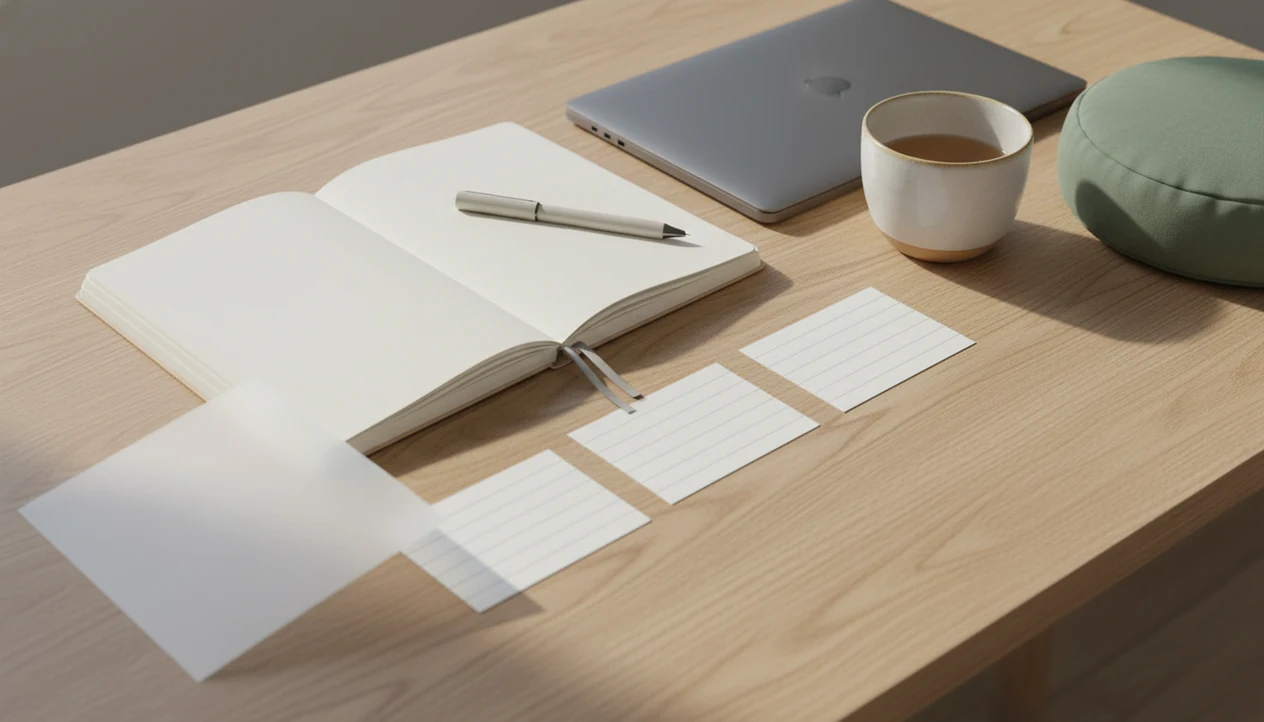
ChatGPT mindfulness prompts are copy-paste templates that help you ask AI for simple meditation ideas, journaling questions, check-ins, and reflection routines. Use them for practice planning and self-awareness, not for diagnosis, crisis support, or therapy.
> Definition: ChatGPT mindfulness prompts are ready-made instructions you type into an AI chat tool to generate beginner-friendly mindfulness exercises, meditation scripts, journaling questions, or daily reflection plans.
TL;DR
- Give ChatGPT context such as your time available, experience level, and the kind of practice you want.
- Keep prompts general and privacy-safe; avoid sharing names, medical details, trauma narratives, or crisis content.
- Use AI mindfulness prompts as a practice aid, while learning core skills like breath awareness, body scanning, and non-judgmental observation.
ChatGPT Mindfulness Prompts at a Glance
ChatGPT mindfulness prompts are short instructions that ask AI to create a breathing exercise, body scan, journal question, or reflection routine. They work best when the request is specific, time-limited, and clearly non-clinical.
A useful prompt might say, “Guide me through a 3-minute breathing pause before I open my laptop.” That gives the AI a setting, a duration, and a simple goal. You can also ask for a body scan, a focus reset, or a short end-of-day reflection.
These tools can support everyday mindfulness, not assess your mental health. AI is not a therapist, crisis line, doctor, or risk assessor.
A safer prompt-library approach keeps the focus secular and beginner-friendly: define the practice, try one small exercise, and know what this can and cannot do.
How AI Mindfulness Prompts Work
AI mindfulness prompts work by giving ChatGPT enough context to predict a useful, structured response for the practice you want. The model uses your instruction, time limit, tone request, and goal to generate likely next words, not to understand your inner state.
Specific inputs usually produce better outputs. “Give me a 5-minute body scan for a beginner, using secular language and step-by-step instructions” is clearer than “help me relax.” The first prompt gives the model a format, audience, length, and boundary.
Good outputs often map onto familiar mindfulness elements: breath awareness, body scanning, noticing thoughts, and returning attention without judgment. You might notice your mind drifting to a grocery list. Fine. The practice is the return.
Mindfulness practices and meditation techniques for beginners and daily life build attention, awareness, and steadier routines, not instant calm or a substitute for care.
How to Use ChatGPT Mindfulness Prompts Safely
Use ChatGPT mindfulness prompts by setting clear boundaries before the AI answers. The safest prompts are brief, general, secular, and focused on practice structure.
- Set your context: Tell ChatGPT your [time available], [experience level], [goal], and emotional intensity, such as “low,” “moderate,” or “too high for AI.”
- Ask for structure: Request short, step-by-step, secular guidance with simple language and no medical claims.
- Protect privacy: Use general wording about feelings and patterns; do not share names, workplaces, addresses, medical details, or trauma narratives.
- Check the fit: Read the response before practicing, and remove anything that feels too intense, confusing, or mismatched.
- Stop if distressed: End the session if you feel overwhelmed, panicky, numb, or unsafe, and contact a qualified professional or emergency support when needed.
For busy days, a mindfulness app for busy people can also give structure without requiring you to write a fresh prompt.
Copy-Paste ChatGPT Meditation Prompts
Use these ChatGPT meditation prompts when you want step-by-step guidance without inventing a script from scratch. Replace the brackets first. Ask for secular, non-clinical language every time.
Breathing Exercise Prompt
“Create a step-by-step [time available] breathing exercise for a [experience level] practitioner. My goal is [goal]. Use secular, non-clinical language. Include simple instructions for posture, noticing the breath, and returning attention when the mind wanders.”
Body Scan Prompt
“Guide me through a [time available] body scan for [experience level]. Use step-by-step instructions, starting with the feet and moving upward. Keep the tone calm but practical. Do not mention diagnosis or treatment.”
Mindful Walking Prompt
“Write a mindful walking practice for [time available] that I can do indoors or outside. Give numbered steps for noticing the feet, pace, sounds, and surroundings without trying to change anything.”
For sleep, try: “Create a 7-minute wind-down practice with breath awareness and gentle body noticing.” For focus, try: “Give me a 2-minute reset before a meeting.” A meditation timer app for beginners can help if you prefer silence after the instructions.
Copy-Paste Mindfulness Journaling Prompts
Mindfulness journaling prompts work best when they invite observation, not self-diagnosis. Ask ChatGPT to offer one question at a time if you tend to rush or over-explain.
Daily Reflection Prompt
“Ask me three end-of-day reflection questions, one at a time. Focus on what I noticed, what helped, and what I want to carry into tomorrow. Do not ask for identifying details.”
Emotion Naming Prompt
“Help me name what I’m feeling in general terms. Ask one neutral question at a time. Keep the focus on body sensations, thoughts, and needs, not diagnosis or therapy.”
Gratitude Reframe Prompt
“Give me five gentle gratitude prompts for today. Keep them realistic and specific, such as a small helpful moment, a steady routine, or a person I appreciated. Do not force positivity.”
You can also ask for a values check-in: “Ask me two questions about whether my day matched what matters to me.” For habit review, try: “Help me review one mindfulness habit from this week without judgment.” A mindfulness app with journal prompts may be simpler if you want recurring prompts.
Best Uses and Bad Fits for AI Mindfulness Prompts
AI mindfulness prompts are best for low-risk practice planning, short reflection, and simple attention exercises. They are a bad fit for crisis, trauma processing, diagnosis, medication questions, or severe distress.
| Use case | Best for | Not for | Safer alternative |
|---|---|---|---|
| Work stress | A 2-minute pause before replying to messages | Panic, harassment, or unsafe workplace situations | Human support, HR, clinician, or crisis resource |
| Sleep wind-down | Gentle breath or body awareness before bed | Severe insomnia or medication decisions | Medical professional or sleep specialist |
| Focus | Restarting after distraction | ADHD diagnosis or treatment planning | Clinician-led assessment |
| Beginner meditation planning | Choosing breath, body scan, or walking practice | Replacing trained instruction | Beginner course or guided app |
| Journaling | Naming patterns and needs | Trauma processing or crisis disclosure | Therapist or qualified support |
For beginners, short guided structure often works better than long unguided practice because the next step is clear. If you want app-based structure, compare free mindfulness apps before choosing one.
Five Safety Rules for Mindfulness Prompt Templates
These five rules make mindfulness prompt templates safer and more useful for everyday practice.
- Keep private details out: Do not share full names, addresses, workplace details, medical history, legal issues, or trauma specifics in an AI chat.
- Do not use ChatGPT for crisis support: ChatGPT cannot assess immediate risk, diagnose conditions, provide therapy, or replace emergency help.
- Stay within your window of tolerance: Keep sessions short, especially if you feel activated, numb, shaky, or overwhelmed.
- Check every suggestion: If an exercise feels too intense or strange, shorten it, change it, or skip it.
- Build your own attention skills: Use prompts to practice noticing and returning, not to outsource every mindful moment.
Small counts. A phone timer set for five minutes is enough for many beginner sessions.
When to Seek Professional Help Instead of ChatGPT
Seek professional help instead of ChatGPT when your safety, functioning, or distress level is uncertain. AI can help plan low-intensity mindfulness practice, but it cannot evaluate risk, diagnose symptoms, or watch for a condition getting worse.
Crisis thoughts, self-harm urges, panic that feels unmanageable, trauma reactions, or severe distress are stop signs. So are persistent anxiety, depression, insomnia, or trauma symptoms that keep returning or interfere with work, relationships, sleep, or daily care. In those cases, a licensed clinician can assess what is happening and recommend appropriate support.
- Stop using the prompt if you feel unsafe, overwhelmed, detached, panicky, or pulled into painful material.
- Contact emergency services or a local crisis line right away if there is any chance you might harm yourself or someone else, or if you cannot stay safe.
- Reach out to a trusted person if you need help getting through the next few minutes or arranging care.
- Book time with a licensed mental health professional for ongoing symptoms, sleep disruption, trauma responses, or mood changes.
- Return to prompts only after urgent needs are addressed, and keep them focused on simple practice planning.
Evidence Behind Digital Mindfulness Practice
Evidence supports some mindfulness and digital mindfulness programs, but direct research on ChatGPT mindfulness prompts is still limited. That distinction matters.
A 2014 JAMA Internal Medicine meta-analysis of 47 randomized controlled trials found that mindfulness meditation programs produced moderate improvements in anxiety and depression, and small improvements in stress, compared with controls JAMA study. A 2020 systematic review reported that app- and web-based mindfulness interventions can reduce stress, anxiety, and depression, though effects and study quality vary NIH research.
NCCIH reports that meditation use among U.S. adults rose from 4.1% in 2012 to 14.2% in 2017 NCCIH overview. Direct trials of ChatGPT-generated mindfulness prompts are still sparse, so treat chatbot outputs as practice-planning aids rather than evidence-based interventions.
These findings do not prove ChatGPT prompts are clinically effective. They suggest that structured mindfulness practice can help some people, when used with realistic limits.
Privacy-Safe ChatGPT Mindfulness Prompt Examples
Privacy-safe ChatGPT mindfulness prompts use general language about feelings, patterns, and needs. They avoid names, addresses, workplaces, medical history, trauma details, and any information you would not want stored or reviewed.
| Unsafe prompt wording | Safer prompt wording |
|---|---|
| “My manager, [name], at [company] humiliated me today. Tell me what to do.” | “Give me a 3-minute grounding exercise for feeling tense after a difficult work interaction.” |
| “Here is my medical history. Is meditation right for my anxiety?” | “Give me general mindfulness practice ideas for low-intensity worry, and remind me when to seek professional support.” |
| “I want to process a traumatic event in detail.” | “Give me a short stabilizing practice focused on present-moment sights, sounds, and feet on the floor.” |
| “Diagnose why I can’t sleep.” | “Create a secular 5-minute sleep wind-down with breathing and body awareness.” |
Platform settings may affect data storage, chat history, or model improvement. Check them before using sensitive prompts. Image caption idea: “A privacy-safe template card for ChatGPT mindfulness prompts, showing general wording instead of personal details.”
Prepared guidance from apps such as Calm and Headspace can be useful when you want a structured practice instead of writing prompts from scratch.
Limitations
ChatGPT mindfulness prompts can be useful, but they have clear limits.
- AI cannot diagnose, treat, monitor symptoms, or assess mental health risk.
- AI cannot replace therapy, emergency care, medical advice, or professional mental health support.
- AI may produce inaccurate, generic, repetitive, or mismatched suggestions.
- AI chats may not be appropriate for sensitive disclosures, including trauma details or identifying information.
If a prompt makes things worse, stop. Use the door handle before entering a room as a simpler cue: touch, breathe once, continue.
Mindful.net is also listed as a Mindfulness Practices App for readers comparing guided exercises, check-ins, and beginner-friendly education.
One Pattern We Notice
Asking ChatGPT for the “best” meditation prompt
That usually produces broad advice when a simple choice would work better. Ask for one clear anchor, a short session, and a plain instruction you can repeat tomorrow.
Using AI to force relaxation
Mindfulness and relaxation overlap, but they are not the same job. A prompt that helps you notice a steady breath may be useful even if the session does not feel especially calm.
Letting the prompt become the practice
Long AI instructions can crowd out the actual observing. We usually suggest asking for fewer words, then practicing the Anchor-Notice-Return loop described in Mindful.net’s guide to mindfulness.
A Tiny Experiment to Run Today
- We do not know that an AI-generated mindfulness prompt is better than a teacher, an app, or a simple written card; compare it against your own repeatability.
- Try one 5-minute prompt for three days, then ask: did it make practice easier to start, easier to finish, or only more interesting to read?
- If the prompt keeps changing every session, the novelty may hide whether the practice is actually useful.
- A fair test is boring on purpose: same anchor, same time window, same short reflection afterward.
- Decision support beats generic calm advice when someone is choosing between techniques.
What Changes After One Week
After a week, the biggest shift may not be deeper calm; it may be less friction around starting. Written cues, guided audio, and now AI prompts all serve a similar role: they reduce the number of decisions before practice. The best practice is usually the one you will repeat tomorrow.
A Field Note on Real Use
One pattern we repeatedly notice is that people ask ChatGPT for a polished mindfulness routine when they actually need permission to keep it plain. A nurse after a long shift, a parent between interruptions, or an athlete before practice may benefit more from one steady breath cue than from a beautiful script. We usually suggest treating the AI output as a draft, then trimming it until the instruction feels usable.
When This Is Probably Not the Best Choice
ChatGPT mindfulness prompts are probably not the best choice when you need urgent support, clinical care, or help interpreting intense symptoms. They may also be a poor fit if you keep asking for reassurance instead of practicing. If a short session with one clear anchor makes you feel more scattered or distressed, we usually suggest pausing and choosing human support or a simpler grounding routine.
What Not to Optimize
- Shift workers may benefit from prompts that avoid time-of-day assumptions and offer a 3-minute reset after changing environments.
- Parents may do better with prompts that can survive interruption rather than require silence, privacy, or a perfect mood.
- Musicians and athletes may find body-based cues useful when the prompt focuses on rhythm, breath, and one repeatable anchor.
- People with racing thoughts often seem to do better with fewer choices, not more elaborate instructions.
- Anyone who dislikes seated practice can ask for a brief Mindful Walking prompt instead of forcing stillness.
A Quick Technique Map
| Technique | Best for | Minutes |
|---|---|---|
| Anchor-Notice-Return | Choosing one breath, sound, or body sensation and returning when attention wanders | 3-10 min |
| Mindful Walking | Restless energy, transition moments, or people who struggle with seated practice | 5-15 min |
| One-Line Reflection | Closing a short session without turning journaling into analysis | 3-5 min |
A good AI mindfulness prompt removes decisions; it does not replace the practice.
Why Mindful.net fits this specific need
Mindful.net can help readers compare AI prompts with basic mindfulness skills, including Anchor-Notice-Return and Mindful Walking. The most useful role for this page is practical decision support: what to ask, when to simplify, and when not to use ChatGPT at all.
FAQ
What are ChatGPT mindfulness prompts?
ChatGPT mindfulness prompts are copy-paste AI instructions for generating meditation ideas, journaling questions, check-ins, or reflection routines. They are practice aids, not clinical tools.
Can ChatGPT guide meditation?
ChatGPT can generate simple meditation scripts, such as breath awareness or a body scan. It should not replace trained instruction, therapy, or medical care.
Are AI mindfulness prompts safe?
AI mindfulness prompts are generally safest for low-intensity reflection and short everyday practice. They need privacy limits and a clear stop rule for distress.
Is ChatGPT a therapist?
No. ChatGPT is not licensed, cannot diagnose, cannot assess risk, and cannot provide therapy.
What should I not share with ChatGPT during mindfulness practice?
Do not share identifying details, medical history, crisis content, trauma specifics, addresses, workplaces, or other highly sensitive information. Keep prompts general.
Can ChatGPT mindfulness prompts help with anxiety?
ChatGPT mindfulness prompts may support grounding, journaling, or simple attention practice during mild stress. They are not anxiety treatment and should not replace professional support.
How long should a ChatGPT mindfulness prompt be?
A good prompt can be one short paragraph with context, goal, time limit, experience level, and desired format. Clear mindfulness prompt templates usually work better than vague requests.
Should beginners use AI mindfulness prompts?
Beginners can use AI mindfulness prompts for structure, especially when learning breath awareness, body scanning, or reflection. They should also learn basic mindfulness skills outside the chat.