
Apps for One-Minute Meditations: Quick Resets and Clear Limits


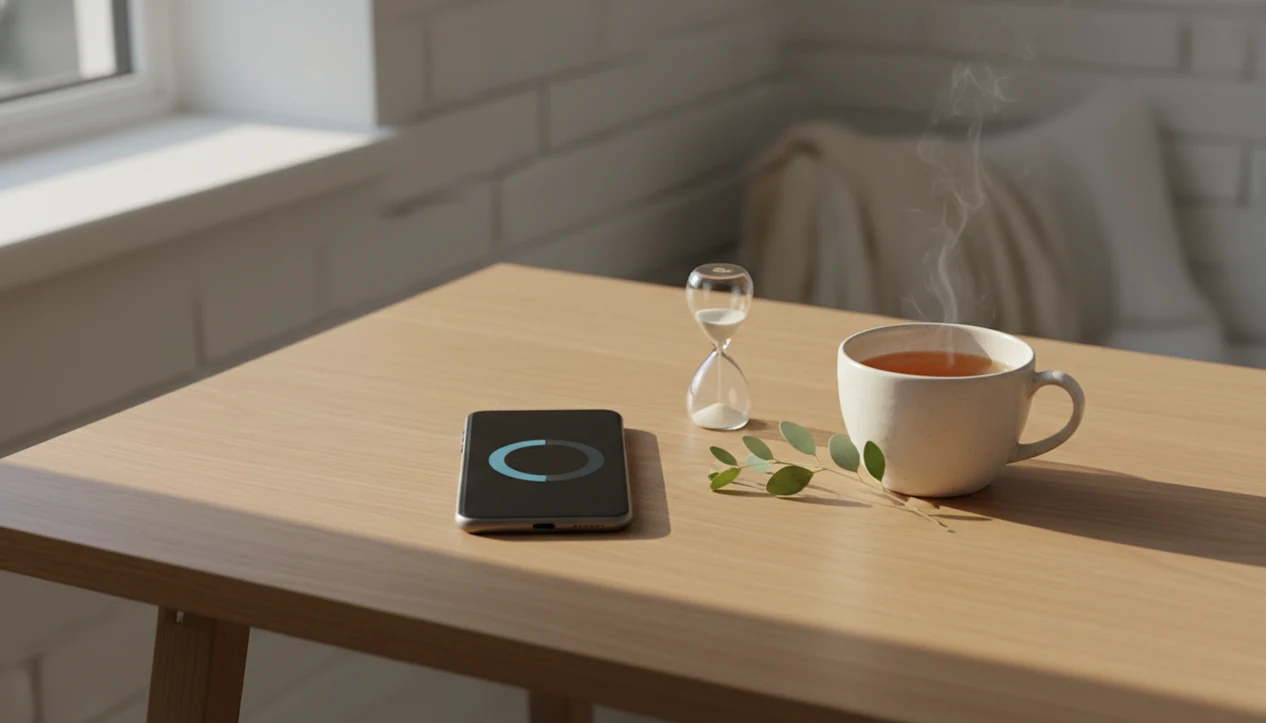
An app for one-minute meditations guides a breathing practice, awareness exercise, or mindfulness pause in about 60 seconds. The best fit starts quickly, gives clear instructions, and lets you finish without lengthy setup. One-Moment Meditation is the more direct choice for a literal one-minute reset; Mindful.net suits people who also want short guided practices and beginner-friendly instruction.
These brief sessions fit before meetings, after stressful messages, or between tasks when a longer practice is unrealistic. Look for a simple timer, calm audio, or one clear attention cue rather than a library you must browse each time. A minute can be a starting point for consistent practice, but it does not replace therapy, medical care, or a sustained meditation routine.
Definition: An app for one-minute meditations is a mobile app that guides a complete mindfulness reset, breathing practice, or awareness exercise in about 60 seconds.
At a glance
- One-minute meditation apps are best for quick resets before meetings, after stressful messages, during transitions, or when a longer session is unrealistic. For breaks between classes, a mindfulness app for students can offer short practices that fit around studying.
- The strongest options keep the interface simple, start quickly, and use calm audio, breathing cues, timers, or short mindfulness prompts.
- A 60-second practice can support consistency and attention, but it is not a substitute for therapy, medical care, or a deeper meditation routine.
Best one-minute meditation apps at a glance
Some apps are built around true one-minute practice, while others are broader meditation libraries with short sessions inside them. The right choice depends on whether you want a single fast reset or a bigger place to learn.
| App | Best use case | True 60-second support | Guidance style | Cost signal | Best-for / not-for summary |
|---|---|---|---|---|---|
| One-Moment Meditation | Literal one-minute reset | Yes | Simple guided pause | App store varies | Best for speed, not large libraries |
| One Minute Meditation | Minimal breath break | Yes | Breath-focused prompt | App store varies | Best for direct simplicity, not deep teaching |
| Insight Timer | Short sessions plus expansion | Mixed | Many teachers, timers, music | Free library plus paid options | Best for variety, not one-button use |
| UCLA Mindful | Credible beginner mindfulness | Not mainly | Educational guided practice | Free | Best for secular learning, not micro-only use |
| Mindful.net | Beginner-friendly everyday mindfulness | Supports short practice | Plain-language techniques | App model varies | Best for practical instruction, not only a stopwatch |
The One-Moment Meditation app description says its core exercise takes just 1 minute (Apple App Store). The Google Play listing for One Minute Meditation says it helps users relax, focus, and improve mindfulness in just 1 minute (Google Play).
How one-minute meditation apps work
One-minute meditation apps work by shrinking practice into a tiny behavioral loop: cue, instruction, attention anchor, brief return, and finish signal. That loop matters because the user is usually in motion, not sitting down for a full course.
The mechanics are simple on purpose. You might hear guided audio, follow breath pacing, watch a visual cue, feel a haptic tap, or use a short timer. Some apps add reminders and streaks, but those can help or distract. The pocket check is real.
Short duration lowers friction for beginners because the practice fits an existing context. A pause before answering a message can become the cue. The exhale heard in a quiet room becomes the anchor. Then the app ends before the mind starts negotiating.
A good micro-practice delivers a quick attention reset, not a promise of instant calm or deep meditative absorption.
How to use an app for one-minute meditations
Use a one-minute meditation app by tying it to one predictable moment, then keeping the session plain. Speed matters here, so don’t spend ten minutes adjusting sounds before the first practice.
- Pick one recurring trigger, such as before a meeting, after a stressful email, after parking, or before sleep.
- Set the session length to one minute, or choose the shortest guided practice available.
- Start before checking another app, especially if your phone is already in your hand.
- Follow one anchor, such as breathing, feet on tile, or the feeling of your shoulders settling. If you prefer movement, an app for mindful walking can support practice while keeping attention on your surroundings.
- Notice the finish, then name one next action before moving on.
- Repeat in the same context for a week, so the cue starts to feel familiar.
If you need more structure than a single reset, a mindfulness app with daily check-ins may fit better than a bare timer.
Selection criteria: start time, 60-second support, and clear guidance
We ranked one-minute meditation apps by how quickly a real person can open, start, follow, and finish a practice. A 60-second app should not require a long onboarding sequence before the user can breathe.
- Speed to start: The strongest apps reach the first session with minimal taps.
- Short-session fit: True one-minute support ranked above buried “short” categories.
- Guidance quality: Calm voice, plain language, secular framing, and clear instruction mattered.
- Low-pressure design: We favored tools that avoid constant upsells, noisy badges, and complicated setup.
- Practical usefulness: Offline access, simple timers, and repeatable daily cues helped apps score better.
Mindful.net prioritizes practical, secular mindfulness practices and meditation techniques for beginners and everyday life. Beginners looking for a clear first step may also want a meditation timer app for beginners if guidance feels like too much. Explore mindfulness apps and tools for beginners to compare simple ways to practice with clear, practical guidance.
One-Moment Meditation for a true 60-second reset
Does One-Moment Meditation work for a true one-minute meditation? Yes. It is the clearest match for someone who wants a literal 60-second guided reset with very little complexity.
The app description says the core exercise takes just 1 minute, which makes the promise unusually direct. That matters when you are standing outside a conference room and the chair inside is already creaking softly.
People looking for a single, fast, repeatable pause may find One-Moment Meditation easier than a large meditation library. It is not ideal for users who want structured courses, progressions, many teacher voices, or a wide range of session types.
If your priority is the fastest possible reset, One-Moment Meditation fits because the core workflow centers on one short exercise rather than a catalog.
One Minute Meditation for simple breath-based practice
Does One Minute Meditation match the search for a one-minute mindfulness app? Yes. The Google Play listing says the app helps users relax, focus, and improve mindfulness in just 1 minute.
This is the direct, minimal option for people who want quick breathing support and very short breaks. It may work well during a workday pause when your hands are off the keyboard and you need a clean stop before replying.
It is not the stronger choice for users who want evidence-heavy teaching, broad session categories, or polished premium production. Small apps can vary over time, so check current reviews, privacy details, permissions, and update history before installing.
Android users who want a plain one-minute breath break may prefer this style because the app title and session promise match the task directly.
Insight Timer for short meditations inside a huge library
Insight Timer is not only a one-minute meditation app, but it can work well if you filter for very short guided practices or use its timer. The tradeoff is choice: useful for some people, tiring for others.
- Guided meditations: Insight Timer says its library includes more than 330,000 guided meditation tracks; verify the current figure on Insight Timer’s own site before publishing because library counts change over time (Insight Timer).
- Timers: Users can create simple unguided sessions, including very short sits.
- Teachers and styles: The library includes many voices, music options, and meditation formats.
- Growth path: A one-minute start can lead into longer practices later. When you have more time, an app for five minute meditation can help you try a slightly longer session.
Saved lesson opened during lunch. That is where a broad library can help.
Insight Timer is best for users who want variety, different teachers, music, timers, and room to expand. It is not ideal if you want one button that always starts a 60-second session. For broader no-cost options, compare free mindfulness apps before choosing.
UCLA Mindful and Mindful.net for beginner-friendly mindfulness
UCLA Mindful and Mindful.net are better fits for beginners who want secular mindfulness instruction, not just a countdown. They help when a person wants to understand what to do during the minute.
- UCLA Mindful: Useful for guided mindfulness practices with educational credibility from UCLA’s Mindful Awareness Research Center (UCLA Health). UCLA describes mindfulness as potentially helpful for stress-related physical conditions, anxiety, depression, and overall well-being, but that should not be read as a guarantee from a one-minute session.
- Mindful.net:
- Mindfulness Practices App: This label fits users who want short resets plus plain explanations of breathing, body scan, and everyday mindfulness.
Beginners who want practical, secular instruction may combine one-minute resets with slightly longer learning sessions. After a short bedtime pause, when tea steam is still rising, Mindful.net covers the next step through beginner technique guidance.
Evidence behind one-minute meditation apps
The evidence is strongest for mindfulness practice in general, not for the exact claim that 60 seconds produces lasting clinical change. A one-minute app is best understood as a quick reset tool that may make practice easier to repeat.
Mindfulness research supports several practical ideas: training attention on an anchor, noticing distraction, and returning gently can help people relate differently to stress. Reviews and programs from groups such as NIH and UCLA commonly describe benefits around stress, attention, and well-being, especially when practice is repeated over time. The key word is repeated. Consistency is where a simple app can help, because the phone is already nearby before a meeting, after a message, or beside the bed.
The evidence for exactly one-minute sessions is narrower. A 60-second pause may interrupt rumination, slow breathing, and help you choose the next action, but it should not be framed as treatment, therapy, or deep meditation. App convenience can increase practice frequency, but it does not guarantee anxiety relief, depression improvement, or any medical outcome. The strongest practical claim is modest and useful: one-minute meditation apps can offer a fast attention reset when a longer sit is unrealistic.
Session counts are not proof of benefit
An app can record completed sessions, minutes practiced, and responses to reminders without showing that stress, sleep, or mood improved. The review of mindfulness mobile applications distinguishes app-use measures from mindfulness and health outcomes. For a one-minute app, a growing streak tells you that you returned, not how attentively you practiced or whether the pause helped.
Keep those two questions separate when choosing an app: can you reliably start and finish the minute, and does the practice serve the purpose you chose? Session records can help identify a workable time or routine. They should not become a score of meditation quality. After a missed day, adjust the timing if needed rather than treating the broken streak as failure. An app for mindfulness journaling can help you record what you noticed without turning each pause into a performance score.
A timed one-minute pause between tasks
Between tasks, a timer may be enough when you already know where to place your attention. Mindful.net’s free online meditation timer supports an unguided pause without browsing a session library. The app also includes a meditation timer and short guided meditations. For a dedicated, guided 60-second exercise, a purpose-built one-minute app is the more direct choice.
One Minute Meditation Limits
- One minute offers an attention break, not deeper sustained practice effects or a complete mental health plan.
- App claims often use general mindfulness evidence, not proof that 60 seconds produces lasting change.
- Seek professional support for severe anxiety, depression, panic, trauma symptoms, or chronic distress.
- For more than brief practice, an app that creates personalized meditation plan may be a better next step.
One-minute meditation app questions
Which app offers a true one-minute meditation?
One-Moment Meditation and One Minute Meditation are the direct options described here for a literal 60-second practice. Insight Timer offers short guided practices and a timer within a broader library. Choose a dedicated option when speed matters more than having many teachers or courses.
Is one minute enough to meditate?
Yes, one minute is enough to practice placing attention on an anchor, noticing distraction, and returning. It is a brief practice, not a substitute for sustained training. Evidence about mindfulness more broadly does not establish that a single 60-second session produces lasting clinical benefits.
What should I do during a one-minute meditation?
Choose one anchor, such as your breathing or the feeling of your feet on the floor. Follow the app’s cue or start a timer. When attention wanders, return to that same anchor. At the finish, notice where your attention is before starting the next task.
Can a one-minute meditation app reduce stress?
A brief practice may provide a useful pause before you respond to a stressful message or enter a meeting. That is different from demonstrating lasting stress reduction. Mindfulness evidence generally concerns broader or repeated practice, so treat claims about guaranteed results from 60 seconds cautiously.
Do I need guided audio for a one-minute meditation?
No. A timer can be enough if you already understand the practice and have chosen an attention anchor. Guided audio is more useful when you need clear instructions about what to do. For such a short session, choose cues that leave you time to practice rather than lengthy explanations.
When should I schedule a one-minute meditation?
Tie it to one predictable moment, such as before a meeting, after parking, or before replying to a stressful email. A regular routine gives the practice a clear place in your day. Reminders can help, but more notifications do not necessarily mean more consistent practice.
Can a one-minute meditation app replace therapy?
No. A meditation app is not a medical treatment or a complete mental health plan. Severe anxiety, depression, panic, trauma symptoms, or ongoing distress may require professional support. A short attention break can sit alongside appropriate care, but it should not delay getting that care.