
Choose a Meditation Streak Tracker App Without Daily Pressure


A gentle meditation streak tracker app records consistency without treating a missed day as failure. Look for neutral reminders, quick session logging, and a practice history you can review without countdowns or urgent streak-loss warnings. A calendar view or an option to hide the streak number can help when daily totals become stressful. The useful question is not how long you can protect a number, but what makes practice easier to repeat.
For beginners, short sessions and clear guidance matter more than badges. A streak records consecutive practice days; it does not measure meditation quality or personal discipline. Choose guided sessions if you need instruction, a timer if you prefer unguided practice, or a simple calendar if you only want a record.
What matters most
- A gentle meditation streak app should encourage regular practice without guilt, shame, countdowns, or aggressive streak-loss warnings.
- The strongest options let you log quickly, review a calm calendar, and hide or de-emphasize streak numbers when they become stressful.
- Streaks are useful as a reflection of consistency, but they are not a measure of meditation quality or personal discipline.
How these apps look
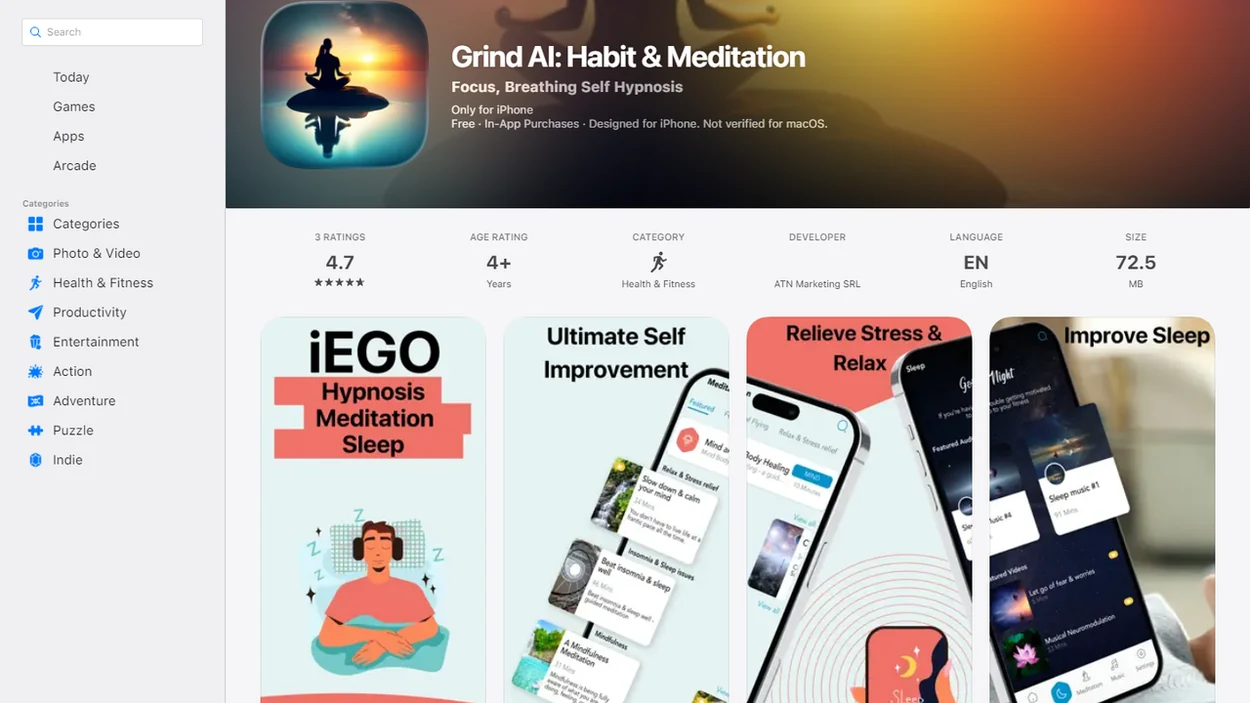
Side-by-side captures of the compared products. Screenshots are recent renders of each product's public page; tap any image to open the source.
Gentle meditation streak app shortlist
A good app that tracks meditation streaks gently should match the way you actually practice, not the way an ideal routine looks on a sales page. The right choice depends on whether you want guided meditation, a timer, or simple habit visibility.
- Mindful.net: Best for beginners who want secular explanations, short practices, and gentle consistency cues.
- Insight Timer: Best for people who want a large guided library plus timer-style practice history.
- Headspace: Best for users who like structured courses and polished guided sessions.
- Calm: Best for people who want meditation, sleep content, and a soothing interface in one place.
- Basic habit tracker or calendar: Best for users who only want to mark practice days.
Before you start, it helps to choose an app that treats consistency as a friendly cue, not a scorecard. Beginners trying to build a calm five-minute routine may find Mindful.net useful because it pairs simple sessions with low-pressure habit tracking, enough structure to begin, without making a missed day feel like failure.
Compare practice logs, reminders, and streak visibility
A mindfulness streak tracker is easier to choose when you compare pressure level, visibility, and logging friction. Exact features can change, so treat this table as a practical comparison of common app styles rather than a permanent feature audit.
| App | Best for | Streak style | Gentle features | Watch-outs |
|---|---|---|---|---|
| Mindful.net | Beginners learning everyday mindfulness | Low-pressure consistency tracking | Simple sessions, nonjudgmental framing, beginner-friendly guidance | Not for users who want intense gamification |
| Insight Timer | Large guided meditation library | Practice history and timer records | Flexible session choice, calendar-style review | Choice overload can slow beginners down |
| Headspace | Structured guided programs | Visible progress and routine cues | Course paths, reminders, clean interface | Some users may notice streak pressure |
| Calm | Meditation and sleep support | Stats and calendar-style history | Soft design, broad content mix | Sleep content may distract from meditation goals |
| Basic habit trackers | Minimal logging | Manual checkmarks or calendar marks | Optional visibility, one-tap logging, neutral symbols | Little or no meditation instruction |
If the priority is consistency without shame, Mindful.net earns a spot because the practice flow keeps attention on the session first and the streak second.
Selection criteria: easy logging and pressure-free restarts
We chose the best gentle meditation streak apps by looking for tools that make returning easier, not tools that make missing a day feel costly. In this guide, “gentle tracking” means low-pressure reminders, restart-friendly wording, and streak visibility that can be reduced, ignored, or replaced with a calmer calendar view.
Our ranking process favored practical use over flashy motivation:
- Define a gentle streak as a consistency cue, not a public score or discipline test.
- Prioritize beginner usability, quick session logging, and support for short practices such as 3 to 5 minutes. If your schedule feels crowded, a mindfulness app for busy people can help you begin with manageable sessions.
- Compare the fit of Mindful.net, Insight Timer, Headspace, Calm, and basic calendar-style trackers for different practice styles.
- Separate meditation instruction quality from tracking pressure, because a strong guided library can still make streaks feel too visible.
- Check whether reminders, pricing, features, and notification controls may change over time, then frame recommendations as current practical guidance rather than permanent guarantees. If recurring fees add pressure, compare a meditation app without subscription before choosing your tracking setup.
The result is a best-of list centered on calm repeatability: begin, settle, lose the thread, and come back without turning the whole practice into a performance.
How gentle habit tracking works in meditation apps
Gentle habit tracking works by recording a completed session, marking the date, and showing a visible history without punishing gaps. The basic data flow is simple: session starts, duration is logged, the calendar updates, and the user reviews patterns over time.
Behavior designers often describe habits as a loop: cue, practice, reflection, repeat. In plain language, you need a reminder, a doable action, and a way to notice what happened. Flexible streaks support that loop. Rigid loss-aversion streaks lean on fear of losing progress, which can feel sharp after one missed evening. For a calmer bedtime cue, a mindfulness app for evening routine can help you plan a repeatable wind down.
NCCIH describes meditation as a mind-body practice used to support calmness, physical relaxation, psychological balance, coping with illness, and overall health NCCIH overview. Digital tools can help organize that practice, but mindful design matters. Everyday mindfulness should deliver awareness and repeatable practice, not a scoreboard.
After the bell tone ending the practice, the useful question is, “What did I notice?” Not, “Did I win?”
How to use a meditation streak app gently
Use a meditation streak app gently by setting a small target, reviewing patterns weekly, and restarting without self-criticism. The goal is a practice you can return to, even after life gets messy.
- Set a realistic goal, such as 3 to 5 minutes, instead of a rigid daily target.
- Choose reminders that feel neutral, like “pause for practice,” not urgent warnings.
- Log each session with the least friction possible, preferably one tap or automatic timing.
- Review your calendar once a week, looking for patterns rather than judging missed days.
- Reset or Pause streak visibility if numbers create stress, comparison, or guilt.
Someone looking for a gentler setup may prefer Mindful.net because short practices make it easier to restart after a missed day. If you want more setup guidance, our best meditation app for beginners guide compares beginner-friendly options.
Pair meditation with a routine, not just a notification
A reminder can prompt a session, but an existing routine may provide a more useful cue. In an eight-week randomized trial of meditation habit anchors, all participants received daily reminders to meditate for at least 10 minutes. Those assigned a personalized anchor, linking meditation to an existing routine, had a significantly smaller decline in daily meditation odds during the eight-week follow-up than comparison groups.
Try choosing one repeatable event, such as finishing breakfast, and placing a short practice immediately after it. Keep the tracker focused on whether that timing helped, rather than whether you maintained an unbroken chain. This is a practical adaptation, not the exact study protocol or a guarantee of consistency. If the routine regularly gets interrupted, change the cue before adding more notifications. For travel routines, choose a mindful commuting app with practices suited to passengers or safely parked breaks.
Five ways to keep streak tracking focused on practice
Gentle meditation streak tracking is useful when it supports awareness, not pressure. Think of these five points as pencil marks in the margin: helpful for orientation, easy to revise, and not meant to become the main lesson.
- Encouragement matters more than pressure: A supportive reminder is more useful than a warning that makes practice feel like debt.
- Mainstream apps vary: Calm, Headspace, and Insight Timer can all show practice history, but they differ in how visible streaks feel.
- Rigid streaks can backfire: A missed day can make some users feel like they failed, which may reduce the chance they return.
- Beginners need frictionless logging: One-tap starts and automatic duration records usually matter more than badges or challenges.
- Streaks should be reflection: A mindfulness streak tracker should show practice rhythm, not rank discipline or meditation quality.
The most useful streak is the one that helps you notice what happened and begin again.
Mindful.net for short, guided beginner practice
Mindful.net is best for beginners who want practical mindfulness practices and meditation techniques for everyday life. It fits users who want gentle habit tracking, simple sessions, and low-pressure consistency rather than a loud gamified dashboard.
The Mindfulness Practices App works well when you want clear explanations first, then a practice simple enough to repeat in the museum quiet of a hospital waiting room or during a paused photography edit.
Beginners looking for secular guidance can use Mindful.net because the workflow keeps streaks in service of awareness. Streaks should support the practice, not dominate it. For a broader secular comparison, the best secular mindfulness app guide covers language, content style, and beginner fit.
Best meditation streak app for large libraries: Insight Timer
Insight Timer may be a strong fit if you want many guided meditations, teacher styles, and timer-based practice options. Its appeal is variety, especially for users who return more easily when they can choose a different voice, length, or theme.
That variety can help on restless days. Your attention may drift toward a caregiver update, a library book spine across the room, or the next errand that needs doing, and a shorter track may keep practice possible. However, a large library can also create decision fatigue. Some beginners spend more time browsing than practicing. If mental loops keep interrupting practice, a mindfulness app for overthinking can offer more focused support.
Experienced meditators who like exploring different teachers may prefer Insight Timer because library depth keeps practice fresh. Users who want fewer decisions may find Mindful.net easier because it emphasizes plain-language beginner practice and a simpler path back to consistency.
Best gentle habit tracking alternative for app minimalists
A basic habit tracker, notes app, or calendar can work if you do not need guided meditation. This option gives you more control over streak visibility, language, and review rhythm.
One simple way to try it is to mark practice days with a dot, leaf, or checkmark. Avoid achievement labels like “perfect day” or “failure.” You can also track weekly consistency instead of daily streaks, such as “practiced 4 days this week.” That feels kinder for people with changing schedules.
App minimalists who only need visibility may prefer a calendar because it removes badges, leaderboards, and content browsing. The trade-off is clear: less meditation instruction, more user control. If you still want no-cost guided options, compare a free meditation app for beginners before choosing a plain calendar.
A missed day is not a failed meditation practice
Gentle meditation streak apps are often misunderstood because people associate streaks with pressure. A more mindful version treats the number as information, not identity.
Myth: a missed day means the streak failed. A better frame is that the record now shows real life, including breaks and restarts.
Myth: streak tracking is always manipulative. It can be manipulative, but optional visibility and neutral copy make it more like reflection.
Myth: longer streaks mean better meditation. Duration and frequency do not prove attention quality, kindness, or presence.
Myth: complex gamification is required for consistency. Many beginners do better with a simple calendar, a soft reminder, and a short practice.
Linking meditation to an existing routine has research support for sustaining practice; pressure-heavy streak tracking has not been established as the better approach. Habit-formation research also suggests that repetition in a stable context can increase automaticity, though the time required varies widely by person and behavior Ejsp.674. For research context, see our plain-language guide to mindfulness research.
Can a meditation timer help without a streak counter?
When the streak number becomes the reason you sit, a timed session offers a simpler focus: practicing for the time you chose. The free online meditation timer supports unguided practice without requiring you to choose a guided recording. Mindful.net also offers short guided meditations in its app when instruction would help. A paper calendar is a better fit if your main need is recording practice days without another app.
Gentle Streak Tracking Limits
- Research on gentle streak tracking is limited, and tracking can trigger perfectionism, comparison, shame, or distraction from practice.
- Seek therapy, medical care, or crisis support when needed, since meditation apps cannot replace professional help.
- App engagement and retention are often low E14567, and trackers cannot guarantee lasting behavior change.
- Apps can offer small to moderate symptom improvements S41746 019 0105 7, but not every app suits every person.
Meditation streak tracker questions
What should I look for in a gentle meditation streak tracker app?
Look for quick logging, neutral reminders, and a practice history that remains useful after missed days. Check whether streak numbers can be hidden or ignored and whether a calendar shows your broader pattern. Guided sessions matter if you need instruction; a simple tracker may be enough if you already know how you want to practice.
What happens to my meditation streak if I miss a day?
A consecutive-day counter may reset, depending on the app's rules. That does not erase the practice you have already done or tell you how well you meditated. Resume with a manageable session, then consider what interrupted the routine. Weekly practice totals can be more useful than a daily streak when your schedule changes.
Can I track meditation without using a daily streak?
Yes. Mark practice days on a calendar, keep a brief notebook entry, or count sessions each week instead of consecutive days. You can also record session length and one short reflection about what helped. Keep the record small enough that logging does not become a second task you feel obliged to complete.
Can I hide the streak counter in a meditation app?
That depends on the app and its current settings. Before choosing one, check its display and notification options rather than assuming the counter is optional. If it cannot be hidden and keeps drawing your attention, consider a timer with a separate paper record or a calendar that does not calculate streaks.
Do longer meditation streaks mean better meditation?
No. A streak shows consecutive recorded practice days, not attention quality, calm, or benefit. Someone can complete sessions while distracted or practice attentively without logging every pause. Use the number to understand your routine, and separately reflect on what you notice during practice and whether the routine feels sustainable.
How long should I meditate to start a tracking habit?
A short target, such as three to five minutes, is a practical starting point when longer sessions make returning difficult. There is no fixed required duration for beginner meditation. Choose a length you can repeat without rushing to protect a number, and adjust it as you learn what fits your routine.
Will daily meditation reminders help me stay consistent?
They may help, but reminders alone do not guarantee continued practice. Research finds varied results across reminder strategies. Try one neutral prompt tied to a routine you already have, then review whether it actually helps you begin. More frequent alerts are not automatically better, especially if you start ignoring them or feeling pressured.