
How to Measure Meditation Progress Without Chasing Calm


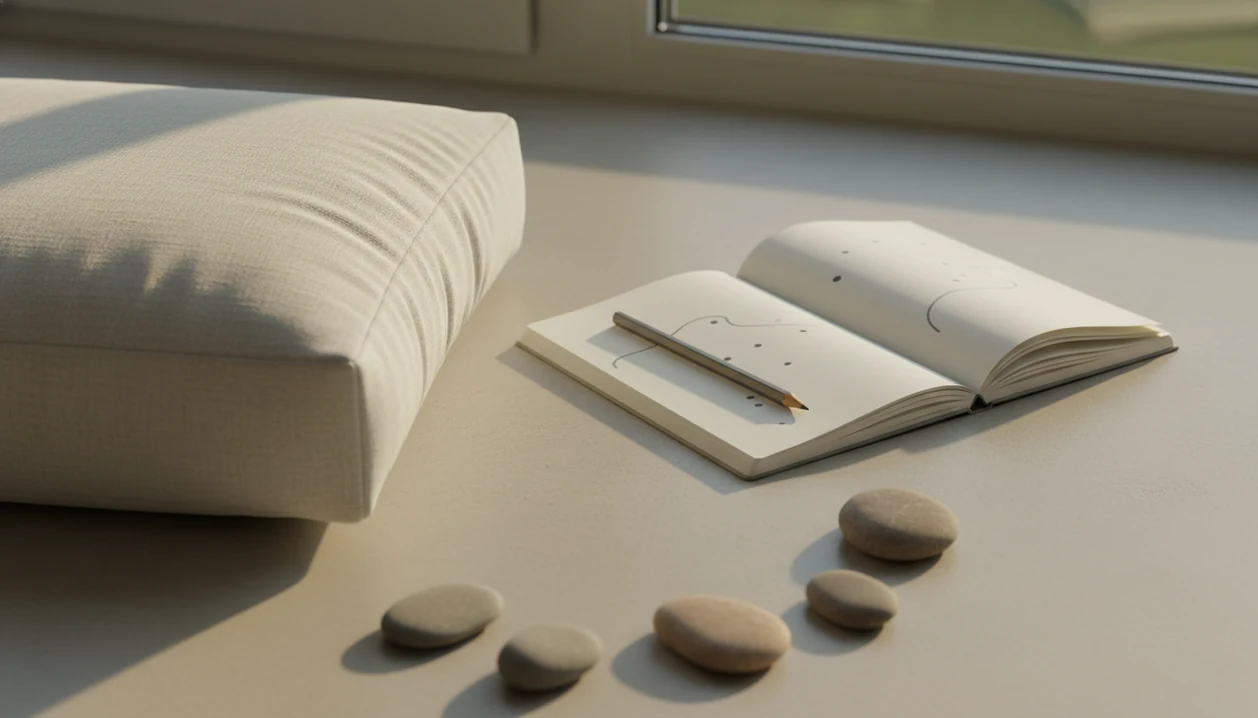
To measure meditation progress, look for changes in consistency, awareness, recovery after stress, and everyday reactions, not a blank mind or perfect calm. Useful signs include noticing wandering sooner, returning with less self-criticism, and pausing before you respond. These changes may be easier to notice outside a session than while you are sitting.
Keep brief notes and compare patterns over 4 to 8 weeks rather than judging one calm or restless session. Many studies assess outcomes at about eight weeks, but that is a review point, not a deadline for improvement. This page supports everyday self-observation, not diagnosis or treatment planning. If practice worsens panic, dissociation, intrusive memories, or unsafe thoughts, pause and seek qualified support.
What matters most
- Meditation progress signs are usually subtle: faster awareness of mind-wandering, softer returns to the breath, less reactivity, and quicker recovery after stress.
- A realistic tracking window is 4-8 weeks of regular practice, not one unusually calm or restless session.
- Track meditation progress with brief notes about consistency, mood, recovery, and behavior, not by treating every sit like a performance score.
Signs to compare during practice and daily life
Useful meditation progress signs are practical, not dramatic. When you check meditation progress, compare what happens during practice with what changes during ordinary life.
| Where progress shows up | Useful sign | What it means |
|---|---|---|
| On the cushion | You notice mind-wandering sooner | Awareness is becoming easier to access. |
| On the cushion | You return more gently | Practice is less tangled with self-criticism. |
| Daily life | You pause before reacting | A small gap appears between feeling and action. |
| Daily life | You recover faster from stress | Your nervous system may settle more quickly. |
| Weekly pattern | You practice consistently | The habit is becoming easier to restart. |
Calm can happen, but it is a side effect, not the only proof. A five-minute sit with a phone timer and ten distractions can still count if you notice and return.
Small counts.
For beginners, everyday mindfulness progress often looks like catching irritation in the office stairwell before it becomes a sharp email.
What research says about the pace and size of improvement
- Mindfulness progress is mostly subtle daily-life change, not dramatic meditation experiences or a perfectly quiet mind.
- A realistic early window is 10-30 minutes most days for about 8 weeks, which matches many structured mindfulness studies. If shorter sessions feel manageable, learn how to meditate longer while keeping your practice comfortable and unhurried.
- A 2014 JAMA Internal Medicine meta-analysis found moderate reductions in psychological stress across randomized trials of mindfulness programs JAMA study.
- In one 8-week Mindfulness-Based Stress Reduction study, participants had significant reductions in perceived stress compared with a wait-list group NIH research.
- Over-focusing on performance can increase tension and self-judgment, especially when every session becomes a private scorecard.
A practical next step is boring but useful: write one line after practice. “Mind wandered to grocery list, returned twice, felt less rushed afterward.” That is tracking, not grading.
Steadier attention and a gentler return after distraction are useful signs of progress for beginners; a calm mood on demand is not guaranteed. A beginner mindfulness guide can help you build basic awareness skills before comparing changes across several weeks of practice.
Attention and stress recovery mechanisms in meditation progress
Meditation progress works through a repeated attention loop: notice, name, return, repeat. You notice the mind has wandered, name it lightly, return to the chosen anchor, and repeat without making the distraction a failure. For a simple introduction to this attention loop, learn how to meditate step by step before tracking your progress.
That loop trains attentional control, which means the ability to place and replace attention on purpose. It also changes your relationship to thoughts and feelings. A thought can become “planning” instead of “me,” and a tight chest can become a sensation to observe before reacting.
The conference room chair creaks softly. You hear it, feel irritation rise, and come back to the breath.
Research on mindfulness links regular practice with resilience, well-being, and brain regions tied to learning and emotional regulation. For example, an 8-week mindfulness study reported changes in gray-matter concentration in regions associated with learning, memory, and emotion regulation NIH research. That does not mean meditation rewires everyone in the same way. It means repeated practice may support recovery skills that show up during stress, conflict, boredom, and worry.
For most beginners, faster recovery after stress is often a clearer progress sign than feeling peaceful during meditation.
Five-step meditation progress tracker without performance pressure
A gentle meditation progress tracker should reveal weekly patterns without turning practice into a daily exam. Use 30 seconds after each session, then review lightly once a week.
- Set a simple practice target, such as five minutes on weekdays or three sessions this week.
- Log one 30-second note after practice: minutes, anchor used, mood, and one word for attention.
- Notice daily-life signals, including stress recovery, relationship behavior, and awareness before reacting.
- Review weekly patterns instead of daily scores; no grades, no “good meditator” label.
- Reset after missed days by restarting at the next reasonable time, not by adding punishment minutes. Choosing the best time to meditate can make restarting easier when your usual routine gets interrupted.
The pocket check is real. Many people reach for the phone before they realize they are avoiding discomfort.
Tools like Mindful.net, Headspace, Calm, Insight Timer, or a paper notebook can support this, but the method matters more than the tool. Mindful.net’s Mindfulness Practices App is most useful here when you use it for short, repeatable sessions instead of chasing a perfect streak. If you want a no-cost starting point, a free mindfulness app can help you practice without building a complicated system.
Eight-week meditation progress method for self-observation
How do you track meditation progress over time? Use an 8-week self-observation window, because many mindfulness studies examine structured practice over that length of time.
This is not a clinical assessment. It is a simple way to compare your own patterns without overreading one rough session. A single sit is noisy. Sleep, workload, hormones, conflict, and health can all change how practice feels.
Track four categories once a week:
- Consistency: How many times did you practice?
- Awareness: Did you notice mind-wandering sooner?
- Recovery: Did stress settle a little faster?
- Behavior: Did you pause, repair, or listen more often?
You can use a journal, a notes app, a meditation app, or periodic self-reflection scales. The full evidence context is covered in our mindfulness research guide.
An eight-week tracking window usually works better than judging single sessions because mindfulness progress is easier to see in repeated behavior than in one mood state.
When symptom measures are more useful than a practice journal
When your goal is less anxiety, depression, or stress, a journal alone may miss important changes. Validated questionnaires such as the GAD-7 for anxiety, PHQ-9 for depression, or Perceived Stress Scale can add a consistent measure. Record a baseline before starting, then compare it with later results. The 2014 systematic review of meditation programs assessed symptom outcomes, not just how calm participants felt during practice.
An evidence-informed schedule is to reassess around eight weeks and again several months later. That schedule is not a universal rule or a diagnostic test. Read scores alongside sleep, work or study attendance, relationships, and daily activities. A pleasant session can coexist with unchanged symptoms; little immediate relaxation can coexist with better functioning. Discuss persistent or worsening symptoms with a qualified clinician rather than treating a questionnaire score as proof that meditation is working or failing.
Three beginner stories that show real meditation progress signs
Beginner meditation progress often looks ordinary from the outside. These examples are not promises, but they show what subtle change can look like.
Maya notices wandering sooner
Maya still spends half her sit thinking about errands. The change is that she catches it after three breaths instead of three minutes, then returns without the old “I’m bad at this” speech. Her blanket over crossed legs still slips. Practice continues anyway.
Jordan repairs conflict faster
Jordan does not become endlessly patient. He still snaps sometimes, but he notices the heat in his voice sooner and repairs the comment before dinner turns cold. Fewer reactive comments matter.
Priya keeps practicing through restlessness
Priya has restless sessions after work. Her progress is that she keeps showing up, then recovers from the afternoon rush faster. Some days she uses a free breathing exercises app because counting breaths feels easier than choosing a full lesson.
Four myths about meditation progress tracking
Several myths make people think they are failing when practice is actually developing.
Myth 1: Progress means fewer thoughts or a blank mind. Reframe it this way: progress means noticing thoughts sooner and relating to them with less struggle.
Myth 2: Every good session should feel calm. Some useful sessions feel restless, dull, or emotional. The skill is staying present enough to notice and return.
Myth 3: Mystical or blissful experiences are required. Most secular practice is quieter than that. It may show up as one breath after a classroom bell, then a better choice.
Myth 4: More minutes automatically mean more progress. Longer practice can help, but attention quality, instruction, and consistency matter. Ten honest minutes may teach more than thirty distracted minutes spent chasing a result.
For beginners, returning gently after distraction is often more useful than trying to suppress thoughts because it trains awareness without adding extra tension.
Meditation progress gaps that journals and streaks miss
Journals and streaks can support practice, but they miss important parts of meditation progress. Minutes show consistency; they do not prove the quality of attention or the way you handled stress later.
Mood logs are also noisy. Sleep, deadlines, relationships, hormones, pain, and illness can change a rating before meditation has any say. If you slept four hours, a low calm score may not mean practice is failing.
Sometimes other people notice change first. A partner may mention that you interrupt less. A coworker may see you pause before answering. That feedback is imperfect, but it can catch behavior you overlook.
Structured programs with teachers may produce different results than casual solo practice. If you are comparing options, a best secular mindfulness app guide can help you separate simple practice support from spiritual framing.
Use curiosity. Not surveillance.
During the workday: check your pause before reacting
A tense email or difficult conversation can reveal changes that a session log misses. The free mindfulness bell offers a reminder to pause and notice your attention during the day. Use that moment to ask what you noticed before responding, rather than to score your calm. For persistent anxiety, worsening symptoms, or questions about treatment progress, a qualified clinician is more appropriate than a reminder tool.
Meditation Log Limits
- No universally accepted objective meditation progress scale exists, and personal reports can be biased by mood or expectations.
- Research often studies structured programs with teachers, so findings may not apply to casual home practice.
- Meditation does not replace professional mental health treatment, medication, or crisis support.
- Seek qualified support if meditation increases panic, dissociation, intrusive memories, or unsafe thoughts, and reduce intensity or pause destabilizing practice.
Measuring meditation progress: common questions
How do I know if meditation is working?
Look for patterns across practice and daily life: noticing distraction sooner, returning with less criticism, pausing before reacting, or recovering more quickly after stress. Compare several weeks of brief notes. Feeling calm during a session is one experience, not proof of lasting benefit.
How long does it take to notice meditation progress?
About eight weeks is a useful review point because many structured mindfulness studies measure outcomes then. It is not a promise that you will improve by that date. Keep notes on consistency, symptoms, and daily functioning, and compare patterns rather than expecting each session to feel better.
Does mind-wandering mean I am not making progress?
Mind-wandering does not by itself show that practice is failing. Noticing it and returning to your chosen anchor are part of the practice. Pay attention to how you return: less self-criticism or earlier recognition can be useful signs even when thoughts remain frequent.
How can I track meditation without becoming obsessed with scores?
Spend about 30 seconds recording minutes practiced, your anchor, mood, and a short attention note. Review once a week rather than grading each session. Add one daily-life example, such as a pause during conflict, and note relevant context like poor sleep or an unusually demanding day.
Do longer sessions or meditation streaks mean more progress?
Minutes and streaks show how consistently you practiced, not how much you benefited. Research does not establish that more practice always produces proportionally greater improvement. Choose a manageable target and track daily functioning too. A missed day does not erase changes you have already noticed.
Can meditation help even if I never feel calm while doing it?
Immediate calm and meaningful improvement are not the same thing. You might feel restless during sessions yet notice less avoidance, better emotional regulation, or improvements in daily functioning over time. Conversely, pleasant sessions may not change symptoms. Compare both your practice notes and what happens afterward.