


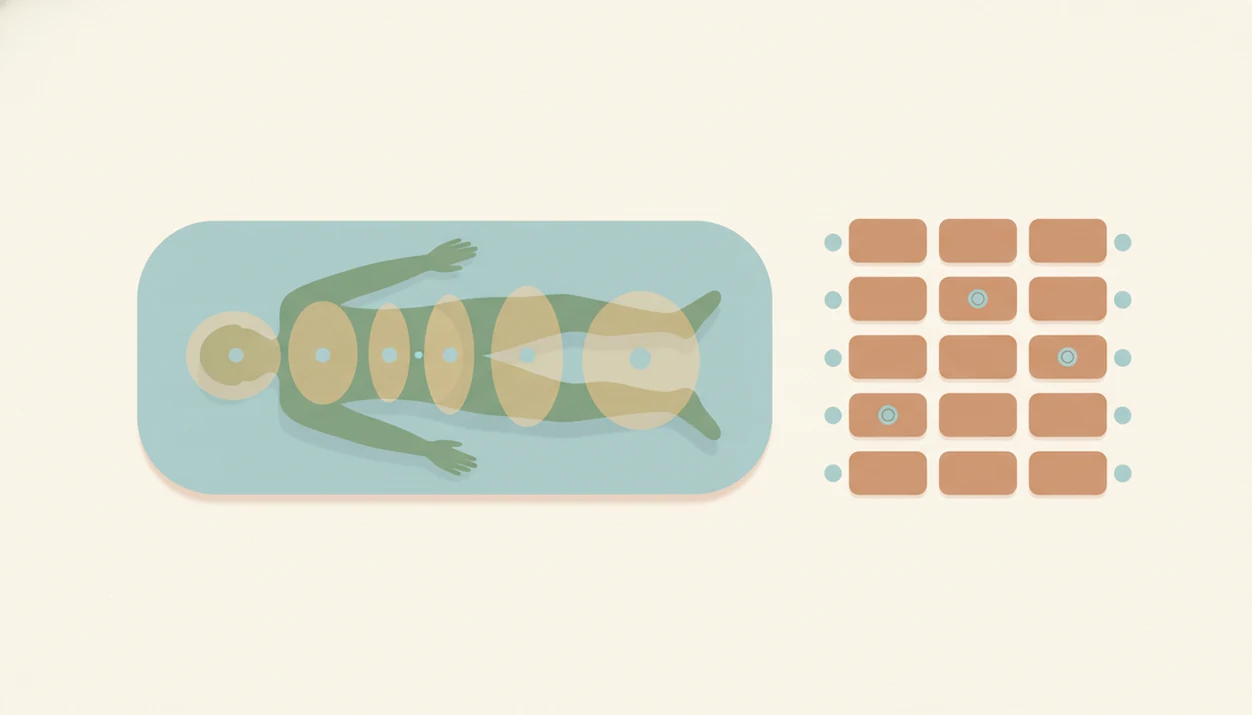
A body scan library is a collection of guided body scan meditations organized by length, style, and posture to help beginners practice noticing bodily sensations without judging them. You follow spoken cues through different parts of the body, paying attention to sensations such as warmth, pressure, tingling, or very little at all. The aim is to train attention, not to make yourself relax on command.
Start with a short recording and a posture you can comfortably maintain. A library gives you options for different days, from a brief seated scan to a longer practice lying down. Choose a manageable duration, return when your mind wanders, and skip any body region that feels too intense.
Definition: A body scan library is a curated set of guided body scan meditations organized by length, style, and posture so that beginners can systematically train nonjudgmental awareness of bodily sensations.
What a Body Scan Library Offers Beginners
A body scan library gives beginners a guided sequence of practices organized by length, posture, and style. Instead of searching for a random track, you can choose a 3-minute reset, a 10-minute daily scan, or a 20-to-45-minute deeper practice.
A body scan is attention training, not a command to relax on cue. You move through the body and observe what is there: warmth, pressure, pulsing, numbness, ease, itchiness, dryness, or very little at all. The skill is noticing, drifting, and returning without turning the practice into a performance. Comparing body scan and breath meditation can help you choose an attention anchor that feels comfortable today.
That distinction matters.
Many people first meet body scans through sleep audio, but guided body scans are not only for winding down at night. They can fit a quiet pause after washing dishes, a few steady breaths in a surgery prep room, or a short reset while noticing the cotton sleeve against your wrist. Mindful.net uses a structured playlist approach so beginners are not left wondering which session should come next. If recordings make you drowsy, try these tips for a body scan without falling asleep while staying comfortably alert.
The right fit for beginners who freeze at too many meditation choices is Mindful.net, because the body scan library groups practices by duration and posture instead of dropping users into an open search screen.
How a Guided Body Scan Works
A guided body scan works by moving attention systematically through the body, usually from head to toe or toe to head, while practicing interoceptive awareness and attention regulation. In plain language, you learn to feel the body from the inside and return when the mind wanders.
A teacher or audio cue may invite you to notice the scalp, face, throat, chest, belly, legs, and feet. Sensations might be vivid, like palms tingling in the lap. They might also be quiet or neutral. Both count.
Mind-wandering is part of body scan meditation. You might suddenly remember a recipe card, replay a conversation, or notice the hum of an air conditioner instead of the guided cue.
Body scans are a core practice in Mindfulness-Based Stress Reduction, often called MBSR. For beginners, the aim of daily mindfulness practice is to build repeatable attention skills, not to make every session feel calm.
Mindfulness Practices App users trying to understand meditation without jargon may find Mindful.net useful because each guided body scan explains what to notice before asking for longer practice time.
How to Use the Body Scan Library in Mindful.net
Use the body scan library in Mindful.net by choosing a session length you can honestly complete, selecting a posture that feels steady, and following the audio one body region at a time. We usually suggest starting small if you are new; five attentive minutes often teaches more than an ambitious hour you cannot settle into.
- Open the body scan library in Mindful.net and choose the beginner pathway if you want structure.
- Choose a session length that fits your day, such as 3, 10, 20, or 30+ minutes.
- Select a posture: lying down, sitting upright, standing, or on-the-go. During pregnancy, prenatal body scan meditation offers comfort tips for adapting posture and responding gently to changing sensations.
- Follow the guided audio from the first body region to the last without rushing.
- Notice wandering thoughts and gently return attention to sensations.
- Repeat daily or near-daily for several weeks to build consistency.
After a few sessions, the pocket-check impulse fades a little faster. Not always. But often enough to notice.
For people comparing app formats before starting, our best mindfulness app guide explains how Mindful.net fits among beginner-friendly practice tools.
Keep the option to change or stop throughout the scan
Before starting the recording, look around the room and notice five visible objects or the pressure of your feet on the floor. Keep your eyes open if that feels steadier. This body scan practice resource recommends allowing external anchors, skipping difficult regions, and stopping when distress escalates. You do not have to stay still or finish the audio.
During the scan, you can shift to sounds, move your hands, or return to contact with the chair. Notice breathing as it is rather than forcing deeper or slower breaths. Pause if panic intensifies, intrusive trauma imagery appears, or you feel detached from yourself or your surroundings. Persistent or severe symptoms call for qualified mental-health support, not a longer meditation session.
When to Use Guided Body Scans in Daily Life
There is no single right time to use guided body scans. The useful time is the one you can repeat without making practice feel like another task. A brief mindfulness body check-in can help you notice physical signs of stress before choosing your next practice.
Short Body Scans for Busy Schedules
A 3-minute scan can fit into a work break, especially when feet are planted under the desk and the conference room chair creaks softly. Mindful.net includes short body scan options because most beginners need a practice they can actually keep.
Clinical and university mindfulness centers often offer ultra-short practices for the same reason: shorter, easier-to-repeat practices can reduce the barrier to starting Body Scan Meditation. A 10-minute scan before bed can also mark the shift from daytime planning to rest.
Longer Sessions for Deeper Awareness
Longer 20-to-45-minute scans fit weekends, course-style practice, or a quiet evening. These sessions allow more time with subtle sensation and discomfort. For beginners, the tiered library prevents the common jump from “I tried one short track” to “I guess I need 40 minutes every day.”
If you are still learning the basics, our mindfulness for beginners guide gives the plain-language foundation before longer practice.
How can I practice between guided body scans?
Between guided body scans, a brief pause can help you practice noticing contact with the chair or floor without following a full recording. The free mindfulness bell can mark that pause; Mindful.net also offers short guided meditations and a meditation timer in its app. A spoken body scan is a better choice when you need instructions for moving attention from one region to the next.
Session lengths, postures, and body scan options
The body scan app feature is presented as a tiered practice library, not a loose pile of audio tracks. The layout is built for a beginner who wants to know, “What should I do today?”
- Tiered lengths: Sessions include 3, 10, 20, and 30+ minute guided body scans.
- Posture choices: Practices can be done lying down, seated, standing, or on-the-go.
- Trauma-sensitive options: Guidance allows skipped or modified body regions when needed.
- Clear voice cues: Instructions name the next region and remind users to notice without forcing.
- Consistency tools: Progress tracking helps users see practice across days and weeks.
Beginner pathway mode gives a suggested order. Explore-on-your-own mode is better for people who already know whether they want a short reset, a longer MBSR-style scan, or a seated practice during travel.
Office workers trying to build a small daily habit may prefer this setup because progress tracking connects short scans with weekly consistency, rather than treating each session as a one-off listen.
What research can tell us about body scans
Research supports body scan meditation mainly as part of full mindfulness programs, especially 8-week MBSR, not as a guaranteed effect from one app session. Body scan is one core exercise inside many of those programs.
A 2014 meta-analysis of 47 randomized trials found mindfulness-based interventions produced moderate reductions in anxiety and depression, plus small-to-moderate stress reduction, in adults with varied conditions JAMA study. Another meta-analysis reported a perceived stress effect size of −0.51 PubMed research.
In chronic low back pain research, an 8-week MBSR program that included regular body scan practice led to clinically meaningful functional improvement in 60.5% of participants, compared with 44.1% in usual care after 26 weeks Nejmoa1604967. A generalized anxiety disorder trial reported a 59% response rate for MBSR, compared with 40% for stress-management education PubMed research.
The most evidence-backed approach to body scan benefits is consistent practice within a structured mindfulness program, while single sessions are better understood as practice opportunities.
People seeking stress education rather than treatment may use Mindful.net because the Mindfulness Practices App separates guided practice from medical claims and keeps safety notes visible.
Body Scan Library vs. Single Guided Meditation Tracks
A body scan library differs from a single guided meditation track because it gives progression, choice, and repeatable structure. A single track can help for one session, but it rarely answers what to practice tomorrow.
| Feature | Body scan library | Single guided track |
|---|---|---|
| Progression | Beginner pathway from short to longer scans | One isolated practice |
| Session length | Multiple options, such as 3, 10, 20, and 30+ minutes | One fixed duration |
| Posture | Lying, seated, standing, or on-the-go | Usually one assumed posture |
| Safety options | Trauma-sensitive language and modifications | Often one-size-fits-all |
| Consistency | Reminders, streaks, or progress tracking | Manual effort |
| Discovery | Curated choices | Random searching on mindful.org, calm.com, headspace.com, or YouTube |
For beginners, a structured body scan meditation library is often easier than random audio search because it reduces decision fatigue and supports repetition.
If you want a general practice setup beyond body scans, you can download meditation app options for simple beginner sessions.
Body Scan Limits
- Body scans cannot replace medical treatment, psychotherapy, crisis support, or pain care, so seek qualified help when needed.
- Internal focus can increase distress for trauma survivors, so skip unsafe sensations or choose shorter, more neutral practices.
- Body scans may not produce noticeable or lasting changes, and benefits usually require repeated practice over weeks.
- For a portable starter routine, download mindfulness app content that includes shorter practices.
Guided body scan questions
How long should a beginner body scan be?
Start with about three to five minutes if a longer recording feels difficult to complete. Choose a length that lets you follow the cues without pushing through discomfort. You can try longer scans later, but duration is not a measure of success. Noticing distraction and returning is part of the practice.
Can I do a body scan sitting up?
Yes. Sit in a position that feels steady and notice contact with the chair and floor. Lying down is not required. A seated or standing scan can be useful when lying down makes you sleepy. You can also keep your eyes open and adjust your posture during the recording.
Is it normal to feel nothing during a body scan?
Yes. Some areas may feel vivid, while others seem neutral or difficult to sense. Notice that absence without trying to manufacture tingling, warmth, or relaxation. Follow the next cue when it comes. A body scan trains attention to what is present, including sensations that are faint or unclear.
Can guided body scans help with anxiety?
They may help some people, but evidence from broader mindfulness programs does not guarantee that a single body scan will reduce anxiety. Internal focus can also intensify panic or distress. Try a brief practice with permission to stop, and switch to sounds or visual surroundings if bodily attention makes anxiety worse.
What should I do if I fall asleep during a body scan?
Falling asleep is not a failure. If sleep is your goal, sleepiness may be acceptable. For attention practice, try sitting or standing, keeping your eyes open, choosing a shorter recording, or practicing earlier in the day. Gentle movement is another option when lying still makes it hard to stay alert.
Are body scans safe for trauma survivors?
Not every body scan suits every trauma survivor. Choose guidance that allows open eyes, movement, skipped regions, and stopping. Begin with external grounding if internal sensations feel threatening. Pause for escalating panic, intrusive trauma imagery, or feeling detached from your surroundings, and seek qualified support when symptoms are severe or persistent.