
Breathing and Well-Being: Gentle Practices for Stress Regulation


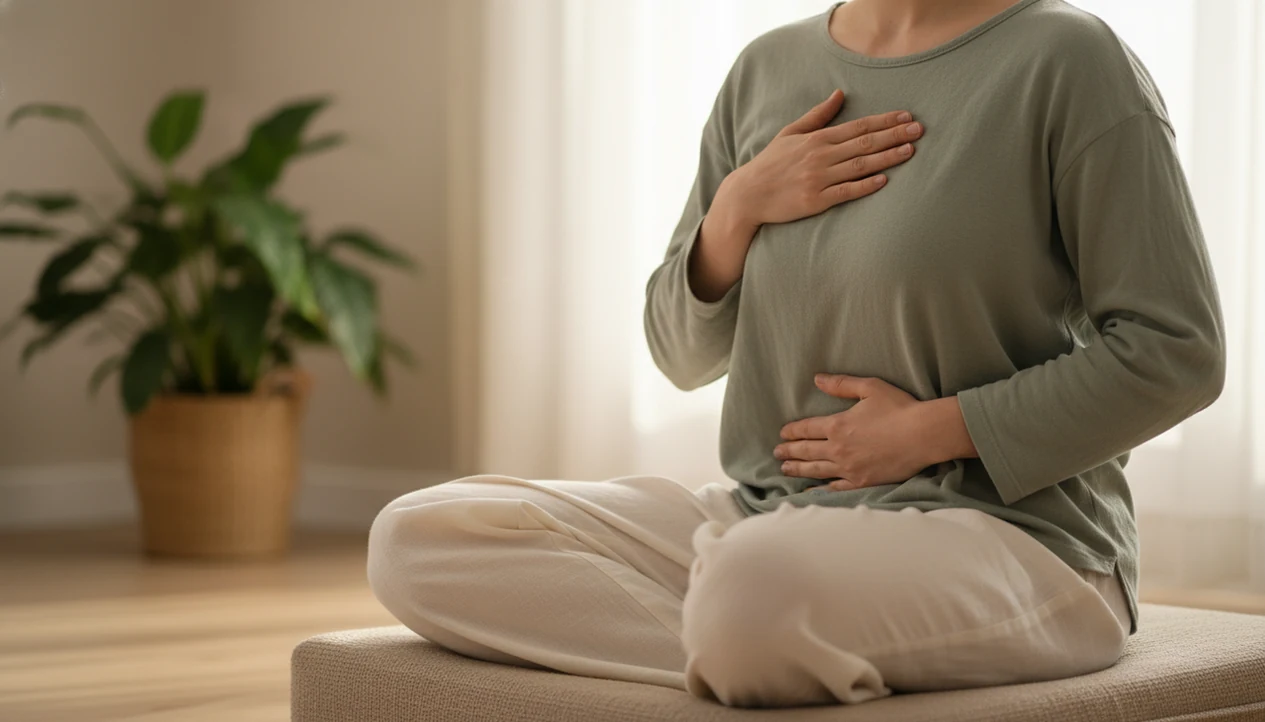
Breathing and well-being are connected because breath pace, depth, and exhale pattern can influence physical tension, nervous system activity, emotional state, and mental clarity. Slow, gentle, steady breathing may help the body shift away from stress arousal toward a calmer state. It is a supportive practice for stress, focus, and everyday regulation, not a cure for anxiety, depression, sleep disorders, or medical conditions.
A useful starting point is to notice your natural breath before changing it. Belly breathing, longer-exhale breathing, box breathing, and simple mindful breathing offer different ways to practice. None should require unusually large breaths or uncomfortable holds. Keep the effort gentle, and stop or return to normal breathing if you feel dizzy, strained, panicky, or uncomfortable.
The essentials
- Slow, controlled breathing may support calm by influencing the body’s relaxation response and autonomic nervous system.
- Beginner-friendly techniques include belly breathing, longer-exhale breathing, box breathing, and simple mindful breathing.
- Breathing practices should feel gentle; stop or return to normal breathing if you feel dizzy, strained, panicky, or uncomfortable. During pregnancy, gentle breath awareness offers a way to notice natural breathing without forcing depth or adding holds.
Five facts about breathing, stress, and safety
- Breathing can support stress regulation, but it is not a cure-all. Slow breathing may help some people feel steadier, yet it should not replace therapy, medical care, sleep support, or crisis help.
- The evidence is encouraging. A 2023 systematic review found that 54 of 72 breathing interventions significantly reduced stress or anxiety, across 58 included studies PMC research article.
- Belly breathing and longer exhales are common starting points. They give beginners something simple to feel, such as the ribs widening or the belly moving under one hand.
- Slow and gentle is usually safer than forced or exaggerated. Bigger breaths can sometimes create dizziness, especially when someone is already tense.
- This is a secular attention practice. Good mindfulness practices and meditation techniques for beginners and daily life deliver repeatable ways to notice and return, not guaranteed emotional control or medical treatment.
How slow breathing can affect stress arousal
Slow breathing can influence autonomic nervous system activity, which is the body system that helps manage arousal and recovery. In plain language, breathing can nudge the body away from “ready for threat” and toward “safe enough to settle.”
Stress arousal often feels like tight shoulders, quick breathing, and scattered attention. The relaxation response is not a magic switch. It is more like giving the body repeated cues that it does not need to brace as hard.
A large 2018 review reported that slow breathing techniques can enhance autonomic, cerebral, and psychological flexibility Full. That means the body and mind may shift states more easily. For beginners, the exhale often matters as much as the inhale because a longer, smoother out-breath naturally slows the whole rhythm.
Small changes count.
Try noticing cool air at the nostrils before changing anything. That first moment of attention is already part of the practice.
Observing the breath and changing it have different aims
Mindful breathing does not always mean slowing or deepening the breath. With natural-breath observation, the task is to notice breathing, recognize distraction, and return attention without changing the rhythm. Deliberate breath control adds a different task: adjusting the pattern to influence arousal or mood. Evidence for one approach should not be treated as proof that every breathing technique has the same benefits.
In a randomized study of five-minute daily practices, participants practiced breathwork or mindfulness meditation for one month. Breathwork, particularly exhale-focused cyclic sighing, produced greater improvement in mood and a greater reduction in respiratory rate. That finding concerns those outcomes and techniques, not every aspect of well-being. A separate four-week breathing meditation trial found reduced perceived stress and improved cognitive flexibility, but no significant improvement in attention, inhibitory control, or heart-rate variability.
A five-minute routine with a gentle, longer exhale
Use this breathing and well-being connection guide as a short, secular routine. A phone timer set for five minutes is enough; an hour is not required.
- Sit in a stable position on a chair, cushion, or bus seat, with your feet supported if possible.
- Notice your natural breath first, without improving it. Let the chest, ribs, belly, or nostrils be the anchor.
- Soften the pace slightly by breathing in through the nose or mouth in a way that feels easy.
- Lengthen the exhale by one or two counts, without pushing the air out or holding the breath.
- Return to normal breathing if you feel dizzy, strained, panicky, short of breath, or uncomfortable.
- Reflect for a few seconds: what changed, what did not change, and what would feel kind next time?
For many beginners, three minutes before opening a laptop is more realistic than a long morning session. The practical next step is consistency, not dramatic depth.
A useful everyday cue is simple: before you open email, feel both feet on the floor, let your shoulders drop once, and take three slower exhales before the screen pulls your attention forward.
Four breathing options for stressful moments
How do I use breathing when I feel stressed? Start with the smallest pattern that does not make the moment harder.
- Take three slow breaths. Use this before replying to a tense message or touching a door handle before entering a difficult room.
- Try longer-exhale breathing. Inhale gently, then exhale a little longer than you inhaled.
- Use box breathing lightly. Try equal counts for inhale, pause, exhale, and pause, but skip holds if they feel tight.
- Place a hand on the belly. Let the belly and lower ribs move gently, not dramatically.
University Hospitals says breathing exercises are commonly used to help lower blood pressure and heart rate as part of a relaxation response Breathing Exercises To Lower Blood Pressure. That does not mean every breath lowers every number. The goal is regulation, not perfect technique.
For a fuller attention-based version, breath awareness meditation uses the breath as the main object of practice.
Compare five beginner breathing techniques
Different breathing techniques suit different people, so compare the pattern before choosing one. If breath focus feels uncomfortable, a body-based practice may be easier.
| Technique | Best use | Basic pattern | Difficulty | Caution |
|---|---|---|---|---|
| Diaphragmatic breathing | Everyday stress and body awareness | Let belly and lower ribs expand gently on inhale | Easy | Do not force the belly outward |
| Longer-exhale breathing | Pre-meeting nerves or winding down | Exhale one or two counts longer than inhale | Easy | Keep the exhale soft |
| Box breathing | Short focus reset | Equal inhale, hold, exhale, hold | Medium | Shorten or skip holds if tense |
| 4-7-8 style breathing | Bedtime settling for some people | Inhale, hold, then longer exhale | Medium | Not ideal if breath holds cause panic |
| Mindful natural breathing | Beginner mindfulness practice | Notice natural breath without changing it | Easy | Mind may wander often, which is normal |
For beginners who want to compare more options, our meditation techniques guide explains breath, body, kindness, and awareness practices side by side.
Follow a visual cue without treating it as a lung test
A simple breathing video can show a circle expanding during the inhale and contracting during the exhale. A wave or moving line can serve the same purpose. Follow the cue only while the pace feels comfortable; there is no need to match every movement or hold your breath to finish a sequence. The screen is an attention aid, not a test to pass.
Keep the purpose clear: breath awareness is not a measurement of lung capacity, respiratory function, or fitness. Choose brief instructions that allow normal breathing and make pauses optional. The 2024 review of brief interventions found inconsistent results across breathing-based studies, reinforcing the need to judge the specific practice and outcome rather than assume that every breathing video supports calm.
When a breathing pause helps, and when to seek other support
Breathing practice is best used as a supportive skill for ordinary regulation. It is not the right tool for every situation, and that is not a failure.
Best for
- ✅ Everyday stress: a short pause when your shoulders climb toward your ears.
- ✅ Pre-meeting nerves: three longer exhales before speaking can steady attention.
- ✅ Transition moments: use the feeling of feet on tile or carpet before the next task.
- ✅ Sleep wind-down: quiet breathing can signal that the day is slowing.
- ✅ Beginner mindfulness practice: the breath is always available, so there is no equipment barrier.
Not ideal for
- ❌ Replacing therapy or medical treatment.
- ❌ Urgent chest pain, severe shortness of breath, or fainting symptoms.
- ❌ Severe panic when breath focus increases fear.
- ❌ Any practice that causes faintness.
- ❌ Forced breath-holding or aggressive breathwork.
If breathing feels too close or intense, body scan meditation may offer a gentler anchor.
Avoid forced inhales, rigid counting, and ignored dizziness
Faster and bigger breaths are not always better. For calming practice, the useful direction is often slower, softer, and more regular.
- Forcing deep inhales. Correction: let the inhale arrive naturally, then shape the exhale gently.
- Ignoring dizziness. Correction: stop the pattern, breathe normally, and sit still until you feel steady.
- Treating breathing as a performance task. Correction: count lightly, and drop the count when it becomes stressful.
- Expecting instant transformation. Correction: look for small signals, such as less jaw tension or one clearer thought.
The mind may still wander to a grocery list halfway through. Fine. Notice it and return.
The exhale pattern and overall pace often matter as much as inhale depth, especially for beginners trying to calm the body without strain.
Guided breathing support and its safety limits
Guided mindfulness can help beginners remember to practice gently and consistently. Instructions repeated in plain language are useful when stress makes it hard to recall what to do.
For health concerns, Mindful.net should be treated as guided education only. If breathing practice worsens panic, dizziness, chest discomfort, or shortness of breath, stop the exercise and use appropriate medical or mental health support instead.
The Mindfulness Practices App angle is simple: choose a short practice, try it safely, and compare what helps. If you prefer structure, a tool that can guide 10-minute meditation may make the habit easier to start.
An image showing gentle belly breathing
Use a calm, ordinary image of a person seated comfortably with one hand on the belly and one hand on the chest. The setting should look like a kitchen chair, quiet bedroom corner, or simple office break space, not a clinic or spiritual retreat.
Caption: A beginner practices the breathing and well-being connection by noticing gentle belly movement and a slow, easy exhale.
The image should avoid extreme breathwork cues, dramatic facial expressions, medical devices, incense-heavy styling, or symbols that imply a religious practice. The visual goal is “safe and doable,” not intense.
Suggested alt text: “Person seated comfortably practicing the breathing and well-being connection with one hand on the belly and one hand on the chest.”
A visual rhythm for a short breathing pause
During a short focus break, a visual rhythm can make the breathing sequence easier to follow. The free box breathing timer provides a cue for equal breathing phases, but its pattern is optional: skip holds or return to natural breathing if they feel uncomfortable. Mindful.net also offers short guided breathing exercises in its app. For worsening panic, chest discomfort, or shortness of breath, medical or mental health support is more appropriate than a timer.
Breathing Practice Limits
- Breathing exercises support care but cannot replace treatment for serious mental health symptoms, respiratory problems, cardiovascular symptoms, or sleep disorders.
- Evidence quality and individual results vary, and claims of detoxing, curing disease, or rapid life transformation lack support.
- Forced breathing patterns can make some people feel dizzy, panicky, lightheaded, or uncomfortable.
- Seek urgent care for chest pain, fainting, severe shortness of breath, or sudden neurological symptoms instead of breathing through them.
Breathing and well-being questions
How does slow breathing help with stress?
Slow breathing can influence the autonomic nervous system, which helps regulate arousal and recovery. A 2023 meta-analysis of 12 randomized trials found a small-to-moderate reduction in self-reported stress after breathwork compared with controls. Results vary by technique and person, so a calmer feeling is possible, not guaranteed.
Is mindful breathing the same as deep breathing?
No. Mindful breathing can mean noticing your natural inhale and exhale without changing either. Deep breathing deliberately changes the breath, and unusually large inhales are not necessary for mindfulness. Start by observing normal breathing. Adjust the pace only if doing so feels easy rather than strained.
How long should I practice breathing each day?
One to five minutes is a reasonable practical starting point, not a scientifically proven minimum. Brief mindfulness studies commonly use sessions lasting five to twenty minutes. Begin with a duration you can repeat comfortably, perhaps before a meeting or after sitting down for a break. More minutes are not demonstrably better across breathwork studies.
Should I make my exhale longer than my inhale?
A slightly longer exhale is one option for a calming practice. Try adding one or two comfortable counts without pushing the air out or taking an oversized inhale. Exact counts are not required. Drop the counting and return to normal breathing if you feel air hunger, strain, dizziness, or rising anxiety.
Why does focusing on breathing sometimes make anxiety worse?
Attention to internal sensations or deliberate breath changes can increase discomfort, panic sensations, or breath-monitoring anxiety for some people. You do not have to keep focusing on the breath. Open your eyes, notice external sounds, or feel your feet against the floor. Persistent or worsening symptoms call for qualified support.
Is box breathing safe if breath holds feel uncomfortable?
Breath holds are optional, not a requirement for a useful breathing pause. Shorten or skip them if they feel tight, and stop the pattern if it causes dizziness or panic. Natural-breath observation or a gentle longer exhale may be a better starting point. Respiratory or cardiovascular concerns may require individualized clinical guidance.
Can breathing exercises treat anxiety or sleep problems?
Breathing exercises may support stress regulation or an evening wind-down, but they are not standalone treatments for anxiety disorders or sleep disorders. Evidence for a brief breathing technique cannot automatically be applied to longer meditation programs. Use breathing alongside appropriate care, and seek professional help for persistent symptoms or substantial disruption to daily life.