
Interpersonal Meditation: Listening, Speaking, and Practicing Together


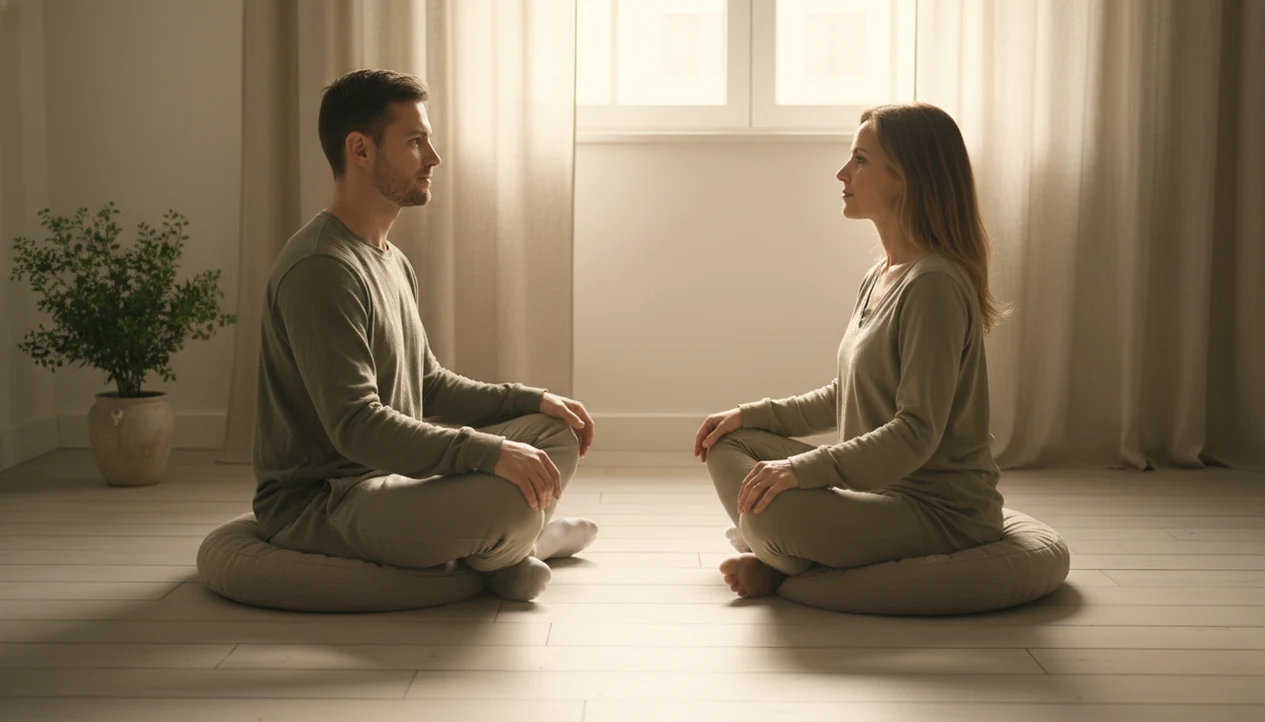
Interpersonal meditation is mindfulness practiced with another person or group, noticing your body, emotions, thoughts, and reactions while listening, speaking, or sharing silence. This secular practice brings meditative awareness into live interaction rather than keeping it separate from conversation. The aim is to stay present with another person and notice your response before acting on it.
Formats include mindful dialogue, partner sitting, Insight Dialogue, Authentic Relating, and group relational mindfulness exercises. For a first session, timed speaking and listening give both people a clear role. Agree on the length, choose a neutral prompt, and make stopping an option at any point. Eye contact is optional, and nobody needs to disclose something personal to participate.
Definition: Interpersonal meditation is a relational mindfulness practice that brings meditative awareness into live human interaction through listening, speaking, silence, eye contact, or structured dialogue.
The essentials
- Interpersonal meditation is not just conversation; it trains awareness during live interaction.
- Common formats include mindful dialogue, partner sitting, Insight Dialogue, Authentic Relating, and group relational mindfulness exercises.
- Use clear consent, simple structure, and opt-out options because relational practices can feel intense for some people.
What makes this different from ordinary conversation
Interpersonal meditation is mindfulness practiced with other people instead of alone. You notice sensations, emotions, thoughts, impulses, and speech as they happen in real time.
The shortest version is simple: one person speaks, the other listens, and both keep noticing breath, posture, emotion, and the impulse to react.
That makes it different from ordinary conversation. In a normal exchange, you may rehearse your next point, guard your pride, or start thinking about the watering can you forgot outside. In interpersonal practice, you catch that movement and come back to the human being in front of you. It can happen while speaking, listening, sitting in shared quiet, or using gentle eye contact. Remembering that thoughts are not facts can help you question assumptions before responding to another person.
The practice is secular skills training, not therapy or spiritual authority. Mindfulness practices and meditation techniques for beginners and daily life can help people notice, pause, and return.
The texture of a pencil between your fingers can be enough.
Five essentials before practicing with someone
- Interpersonal meditation brings meditative awareness into live interaction. The practice asks you to notice body sensations, thoughts, and emotions while another person is present.
- Common formats vary. They include mindful dialogue, partner sitting, eye-gazing, Insight Dialogue, Authentic Relating, and group relational mindfulness exercises.
- The main skills are relational. It trains presence, deep listening, nonjudgment, emotional regulation, and shared connection.
- Relationship mindfulness research is promising but broad. Studies suggest mindfulness may support satisfaction, empathy, communication, and stress regulation in relationships.
- The practice needs care. It can be emotionally activating, so consent, boundaries, pause signals, and opt-out options matter.
For beginners, a short relational practice is often easier than an open-ended emotional conversation because the roles and timing are clear.
Real-time conversation mechanics in interpersonal meditation
Interpersonal meditation works by moving attention between self-awareness and other-awareness. You listen outward, then check inward: breath, posture, tone, emotional charge, assumptions, and the urge to interrupt. An observing thoughts meditation offers solo practice in noticing mental activity without judging what comes up.
That small loop changes the conversation mechanics. A brief Parking Lot Pause gives the nervous system a chance to slow down before words take over. In live speech, you might feel warm cheeks, name the reaction silently, and let one extra beat pass. That beat can create space for a response that is clearer and less automatic.
A 2021 review on interpersonal mindfulness proposed that mindful people may influence others’ stress and emotions through interpersonal processes NIH research. A dyadic partner-mindfulness study also found associations between one partner’s mindfulness and the other partner’s stress and relationship satisfaction, but this should be treated as correlational rather than proof that one session changes a relationship.
One steady person can change the room.
Partner practice steps for interpersonal meditation
Use interpersonal meditation with clear consent and a short structure. Either person can stop without explaining, even if the timer is still running.
- Agree on consent, a 3 to 10 minute time limit, and a pause signal such as raising one hand.
- Ground by feeling your feet, breath, or hands for three slow breaths before speaking.
- Choose a neutral prompt, such as “What did you notice in your body today?”
- Listen while one person speaks for two minutes and the other only listens, without advice.
- Switch roles and repeat the same prompt with the same time limit.
- End with one sentence each: “I noticed…” or “I’m leaving with…”
If solo grounding feels unfamiliar, try breath awareness meditation first for a simpler attention anchor. Focused attention meditation builds the skill of returning to one chosen anchor when attention wanders.
Choosing between dialogue, sitting, and eye contact
Interpersonal meditation has several formats, and the gentlest ones are usually timed and verbal. Start with structure before trying silence or prolonged gaze.
- Mindful dialogue: One person speaks for a set time while the other listens. This is usually the easiest beginner format.
- Silent partner sitting: Two people sit near each other and notice breath, posture, and presence without needing to perform.
- Soft eye contact: Partners may include brief eye contact, but looking away should always be allowed.
- Insight Dialogue: This structured contemplative format uses prompts, pauses, and mindful speaking.
- Authentic Relating: These relational mindfulness games explore presence and honesty, with clear boundaries.
Guided apps and libraries such as Calm, Headspace, Insight Timer, and Ten Percent Happier can help people build basic solo skills before partner practice. A broader list of meditation techniques can also help you compare your options.
What relationship research supports
Direct trials on specific interpersonal meditation formats are still limited, so benefits should be stated carefully. The stronger evidence comes from broader mindfulness-in-relationships research.
A 2022 meta-analysis of 29 randomized controlled trials found a medium effect size, Hedges g = 0.55, for relationship outcomes such as satisfaction, communication, and empathy Famp.12474. For example, a mindfulness-based relationship enhancement trial reported gains in relationship satisfaction, autonomy, closeness, and acceptance after an 8-week program S0005 7894(04)80028 5.
Likely benefits include better listening, more empathy, steadier emotional regulation, and reduced reactivity. Those are practical outcomes, not guaranteed cures. Clinicians typically recommend therapy or couples counseling when distress is severe, unsafe, or persistent. Letting go meditation can help you practice releasing tension without forcing difficult emotions to disappear.
For people who want a kinder tone in daily conversation, relational mindfulness usually works best when paired with simple solo practice. For solo practice in motion, running meditation offers a way to notice sensations during an easy run.
Why the study comparison matters
An improvement after meditation does not, by itself, show that meditation caused the change. Related research illustrates this distinction: a 2022 review of loving-kindness and compassion meditation found improved life satisfaction in before-and-after analyses, but the effect was no longer statistically significant when the analysis included only randomized controlled trials. That review did not test interpersonal meditation directly.
The comparison group matters too. Gratitude and meditation studies frequently report larger benefits against no treatment or passive controls than against active alternatives. For interpersonal meditation, the practical conclusion is limited: it offers a structure for practicing attention with another person, but evidence from related practices cannot establish that a particular partner exercise reliably prevents conflict or repairs a relationship.
Consent, pause signals, and a safe first session
Safe interpersonal meditation starts with consent, a short time container, and permission to stop. Do not use the first session for the hardest topic in the relationship.
- Ask directly before starting, and accept “not today” without debate.
- Set a timer for 3 to 10 minutes, especially at the beginning.
- Avoid forced eye contact. Looking at the floor, a wall, or a window is fine.
- Use neutral prompts before emotionally loaded material.
- Practice reflective listening, not advice-giving or correction.
- Include a pause word, opt-out signal, and a few minutes of aftercare.
A kitchen chair is enough setup. If body cues feel easier than conversation cues, body scan meditation can build the noticing skill first.
When partner practice fits and when to seek support
Interpersonal meditation fits people who want more mindful communication, deeper listening, relationship presence, group practice, or everyday mindfulness. It is not a safe substitute for facilitated conflict work when people feel pressured, unsafe, or unable to opt out.
| Situation | Fit | Practical note |
|---|---|---|
| Partners wanting calmer listening | Good fit | Use timed speaking and no advice at first. |
| Friends or groups practicing presence | Good fit | Keep prompts simple and voluntary. |
| Active unresolved conflict | Not ideal | Use a trained facilitator or counselor. |
| Trauma activation or fear of disclosure | Not ideal | Pause and seek appropriate support. |
| Beginner mindfulness foundations | Good preparation |
For groups, a single earbud during a guided session is not needed. Shared instructions in plain language work better.
A partner practice scene with optional eye contact
Use an accessible, secular image of two people sitting comfortably at conversational distance. The scene should look like ordinary practice, not a dramatic breakthrough.
Show relaxed posture, open hands, and enough space between the people. A calm living room, office wellness room, or community room works well. Soft gaze can be shown, but the image should not imply forced eye contact. Avoid romantic staging, therapist-client framing, religious symbols, or a teacher looking like a spiritual authority.
Visible caption text: Two people practice interpersonal meditation by listening, pausing, and noticing their reactions in real time.
A simple visual cue can make the image more believable: two people near an airport queue sign, agreeing to practice for just a few minutes. Short and ordinary is the point, not dramatic or marathon-like.
Timing a short partner listening practice
During a partner listening session, a timer can keep speaking turns equal and give the practice a clear endpoint. The free online meditation timer supports that simple structure; the Mindful.net app also offers a meditation timer and short guided meditations for solo preparation. Neither replaces a facilitator or counselor when conflict, pressure, or safety concerns are involved.
Interpersonal Meditation Limits
- Direct trials of specific interpersonal meditation formats remain scarce, with much evidence drawn from broader mindfulness and relationship research.
- Eye contact and silence may feel overwhelming or coercive, especially when emotions or power dynamics are involved.
- Seek professional help if shared practice triggers overwhelming shame, anxiety, grief, anger, or trauma memories.
Interpersonal meditation questions
What is the difference between interpersonal meditation and ordinary conversation?
Interpersonal meditation adds deliberate awareness to an exchange. While someone speaks, you notice your breath, posture, emotions, assumptions, and urge to interrupt. Ordinary conversation may involve the same awareness, but the practice makes it explicit and usually adds timed turns, pauses, or shared silence.
How do two people start interpersonal meditation?
Agree on a short session, a neutral prompt, and a signal either person can use to stop. Take three slow breaths, then let one person speak for two minutes while the other listens without advice. Switch roles and finish by briefly naming what each person noticed.
Do you have to make eye contact during interpersonal meditation?
No. Eye contact is optional, and looking away should always be allowed. You can look at the floor, a wall, or a window while listening. Begin with timed verbal turns rather than prolonged gaze, especially if either person finds eye contact intense or uncomfortable.
How long should a beginner partner session last?
Start with a total practice window of 3 to 10 minutes. Keep speaking turns equal and leave time to close the session. A short, voluntary exchange is enough for a first attempt; neither person needs to continue until the timer ends if they want to stop.
What should you talk about during interpersonal meditation?
Choose a neutral prompt, such as what you noticed in your body today. Avoid beginning with the hardest issue in the relationship. The point is to practice noticing and listening, not to extract a disclosure, settle a disagreement, or persuade the other person.
Can interpersonal meditation improve a relationship?
Broader mindfulness research suggests possible benefits for relationship satisfaction, communication, and empathy. Direct trials of specific interpersonal meditation formats remain limited, so those findings are not a guarantee. Treat the practice as a way to rehearse attentive listening, not as a proven method for repairing a relationship.
What should you do if partner meditation feels overwhelming?
Pause or stop, even if the session has barely begun. Look away if eye contact feels intense, and return attention to your feet, hands, or breathing. There is no requirement to explain or continue. Repeated distress, trauma activation, or fear of disclosure calls for appropriate support rather than pressure to practice.
Can interpersonal meditation replace couples therapy or conflict mediation?
No. It is a mindfulness and communication practice, not therapy, mediation, or a substitute for accountability. When either person feels unsafe, pressured, or unable to opt out, partner practice is not an appropriate workaround. Active unresolved conflict is better addressed with a trained facilitator or counselor.