
Meditation for Self Criticism: A Five-Step Practice


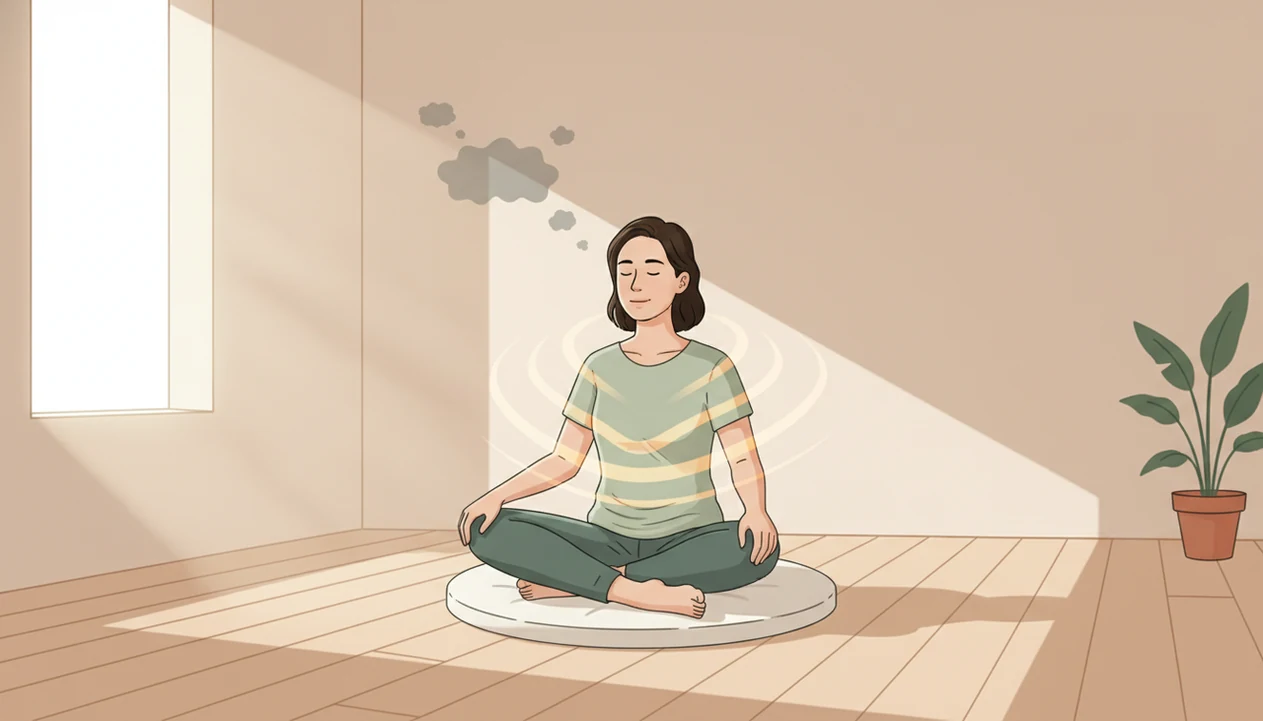
Meditation for self criticism is a secular mindfulness and self-compassion practice that helps you notice harsh inner commentary without believing or fighting it, then respond with greater accuracy and kindness. The basic pattern is simple: feel the breath or another steady anchor, label the thought as “judging” or “self-criticism,” notice the body’s response, and return with one compassionate sentence.
The aim is not to silence the inner critic or replace every difficult thought with praise. It is to recognize criticism as a mental event rather than an instruction. Start with a brief practice, then use the same steps after everyday mistakes. A useful response leaves room for both kindness and responsibility: “I missed something, and I can take one step to repair it.”
The essentials
- Do not try to silence the inner critic; practice noticing it as a mental event.
- Use a simple loop: anchor, label, feel, soften, return.
- Pair the meditation with daily-life self-talk changes for better results.
Notice the critical thought without obeying it
Meditation for a self-critical voice means noticing harsh inner chatter without being pulled into it. It is not positive thinking, and it is not an attempt to erase thoughts.
A self-critical thought might sound like, “I’m not good enough,” “I always mess up,” or “Everyone can tell I failed.” In practice, you hear the phrase, label it gently as “self-criticism,” and return to a simple anchor such as breathing, the touch of a cotton sleeve on your wrist, or the feeling of standing where you are. The aim is not to out-argue the inner critic; it is to relate to that voice with more space and less obedience.
This is a secular, beginner-friendly attention practice. You might use it after hospital rounds, while waiting through a slow checkout line, or in any ordinary pause when the inner commentary gets sharp. If you want a broader foundation first, start with basic meditation techniques.
Small counts.
Five points to remember before practicing
- Mindfulness and self-compassion work together. Mindfulness helps you notice the critical thought; self-compassion helps you answer it without cruelty.
- Labeling is usually more useful than arguing. “Judging” or “self-criticism” keeps the practice simple when the mind is loud.
- Regular practice may support mental well-being. Research on mindfulness and self-compassion programs links practice with lower anxiety, depression, and stress, plus higher well-being.
- Daily behavior matters. The cushion practice works better when you also change how you speak to yourself after mistakes. Comparing journaling and meditation can help you choose how to work with critical thoughts after everyday mistakes.
- This is skill-building, not a quick fix. It can support therapy or personal growth, but it does not replace professional care.
For beginners, labeling self-critical thoughts is often easier than debating them because it creates distance without starting another mental fight.
Interrupt the thought, tension, and shame loop
Self-critical voice meditation helps interrupt the loop between a harsh thought, a body reaction, and a shame-based response. It draws on two related skills: mindfulness and self-compassion. Mindfulness gives you an anchor, a way to recognize thought, a moment of non-reactivity, and a return point. In plain language, you notice that the mind has moved into criticism, name what happened, and come back without adding another layer of blame.
The self-compassion part changes the tone. Instead of “That was stupid,” you practice something more accurate: “That was hard, and I can take the next step.” Good mindfulness practices and meditation techniques for beginners and daily life build repeatable attention skills, not instant confidence or a cure for painful experiences.
At first, you may seem to hear the self-critical voice more often. That can feel like you are getting worse, but it often means awareness is becoming sharper. The missed detail from rounds, the awkward comment you keep replaying, the imagined judgment from someone else can all appear. You notice, label, and return. Evidence is strongest for structured mindfulness and self-compassion programs, not for any single branded inner-critic method.
Five-step self-critical voice meditation practice
Use this short practice when you have 5 to 10 minutes. A small cue can help: place a camping lantern, a paintbrush handle, or another neutral object nearby and let it mark the start and end of practice.
- Set a short timer for 5 to 10 minutes, and sit in a stable position.
- Anchor attention in the breath, hands, feet, or body contact. Try feeling your feet on carpet or tile.
- Label self-critical thoughts with one simple word, such as “judging,” “worrying,” or “self-criticism.”
- Feel the body response that comes with the thought, such as a tight jaw, dropped chest, or shoulders pressing into the chair.
- Offer a kind phrase like, “This is hard, and I can be kind to myself,” then return to the anchor without judging the meditation.
If breath focus feels too narrow, body scan meditation can make the body sensations easier to track.
No performance score.
When to use this practice and when to seek support
Self-critical voice meditation is best for everyday self-judgment, perfectionism, rumination, work mistakes, and learning self-compassion. It is supportive training, not medical treatment.
| Situation | Fit | Practical note |
|---|---|---|
| Everyday self-judgment | Good fit | Use a short label and return to the anchor. |
| Perfectionism after mistakes | Good fit | Add one accurate, kind repair sentence. |
| Beginner secular practice | Good fit | Keep the steps concrete and brief. |
| Trauma overwhelm | Use caution | Work with a trauma-informed professional. |
| Severe depression or suicidal thoughts | Not enough on its own | Seek professional or crisis support promptly. |
Clinicians typically recommend professional support when self-critical thoughts come with active suicidal thoughts, severe depression, trauma symptoms, or distress that feels unmanageable.
If you might harm yourself or someone else, do not use meditation as the main intervention. Contact local emergency services or a crisis line immediately, and use grounding only as a short bridge to real-time help.
If inward attention or kindness feels unsafe
For some people, especially those with trauma histories or strong shame, inward attention and kind phrases can increase distress rather than settle it. Begin with choices: keep your eyes open, look at an ordinary object, or feel your feet against the floor. Keep the practice brief and stop if distress increases. Soothing touch and imagery are optional, not required.
Persistent intrusive memories, dissociation, self-harm urges, or difficulty functioning call for assessment by a qualified mental-health professional. Suicidal thoughts need prompt professional or crisis support, not another meditation session. A 2023 review of self-compassion interventions also judged the overall risk of bias high, so encouraging results should not be read as proof that these practices suit everyone or replace clinical care.
Respond to self-criticism after everyday mistakes
Daily-life practice transfers the meditation into moments when the inner critic usually takes over. Use small cues, not a complicated routine. A lasting journaling habit can give these daily reflections a regular place in your routine.
- Three-breath reset: After a mistake at work or home, pause for three breaths before reacting. A quiet pause before hitting send can prevent a harsh reply to yourself or someone else.
- Journal and rewrite: Write the critical thought, then rewrite it as supportive but accurate. “I ruined it” might become “I missed one part, and I can repair it.”
- Good-friend question: Ask, “What would I say to a good friend in this same situation?” You can record your answer through daily voice journaling to build a repeatable reflection practice.
- Micro-practice moments: Try it while parenting, studying, waiting before a review, or standing in a grocery line with a clenched basket. For a broader daily routine, try daily steps toward a balanced life alongside these brief moments of practice.
What mindfulness and self-compassion studies show
The evidence is strongest for structured mindfulness and self-compassion programs, not for one standalone inner-critic technique. Still, the research is relevant because this practice borrows from both areas.
In a 2014 randomized trial of 939 adults, an 8-week mindfulness-based stress reduction course reduced self-reported anxiety and depression and increased well-being JAMA study. A 2015 meta-analysis found that self-compassion was associated with higher well-being across 79 samples, supporting the relevance of self-compassion practice even though association is not the same as proof of treatment effect Aphw.12051.
A 2017 meta-analysis of 23 randomized controlled trials found that mindfulness-based interventions improved self-compassion with a moderate effect size S12671 017 0727 3. In a 2008 trial of 94 adults with recurrent depression, mindfulness-based cognitive therapy reduced residual symptoms and relapse risk compared with usual care NIH research.
For people who get caught in rumination, mindfulness practice usually works best when it is repeated regularly and paired with real-world self-talk changes.
Research that directly measures self-criticism
A 2022 systematic review of self-compassion interventions examined 20 randomized controlled trials involving 1,350 participants. It found a medium reduction in self-criticism compared with control groups. This is more directly relevant to harsh self-talk than findings about general well-being, but it does not establish that this particular five-step meditation produces the same effect.
Longer interventions showed larger effects, and results were stronger against passive controls than active comparison groups. The authors rated study quality as moderate and reported substantial variation between studies. Treat these findings as support for practicing self-compassion over time, not a promise that a short session will quiet your inner critic.
Avoid forcing silence or using false reassurance
Trying to force the inner critic to disappear can turn meditation into another reason to judge yourself. That usually creates a second critic, the one judging your meditation.
Another mistake is assuming thoughts mean failure. Thoughts are not interruptions to the practice; they are the material you practice with. The progress bar may feel like it is moving too slowly, especially during guided sessions, but noticing one critical thought clearly is useful work.
Compassion phrases can also become fake positivity. “Everything is fine” may feel false. “This is painful, and I can take one careful step” is more believable.
Finally, avoid practicing only during crisis moments. Try it when you are calm too, even for three minutes. If silent practice feels too open, the guided vs silent meditation comparison can help you choose a format.
When Meditation Is Insufficient
- Seek professional help for severe depression, trauma, active suicidal thoughts, or overwhelming distress, rather than relying on meditation alone.
- This meditation and Mindful.net do not replace therapy, medication decisions, crisis support, or professional diagnosis.
- Some people notice increased self criticism during the first weeks of practice.
- Benefits usually require regular practice over weeks or months, rather than a single session.
Self-criticism meditation questions
Can meditation stop self-criticism?
Meditation is better approached as a way to change your response to self-criticism, not eliminate it. Practice noticing the thought, naming it, and returning to an anchor without adding blame. Research supports reductions in self-criticism through structured self-compassion interventions, but it does not guarantee that one brief meditation will have the same effect.
How do I label self-critical thoughts during meditation?
Use one short label, such as “judging” or “self-criticism,” when you notice a harsh thought. You do not need to analyze its origin or decide whether every part is true. Notice any tension that comes with it, then return to your breath, hands, feet, or another steady point of contact.
What can I say to myself instead of “I’m not good enough”?
Choose a sentence that is kind without denying the problem. Try “This is hard, and I can take one careful step” or “I made an error, and I can respond responsibly.” If a warm phrase feels false, use factual language first: name what happened and identify one possible repair.
Why does self-compassion make me uncomfortable?
Kindness toward yourself can feel unfamiliar, undeserved, or emotionally activating, particularly when shame or trauma is involved. You do not have to force a compassionate phrase. Try brief practice with your eyes open and an external anchor. If the reaction is intense or persistent, work with a qualified mental-health professional.
How long should I meditate for self-criticism?
The practice on this page starts with 5 to 10 minutes. Use a shorter session if that feels more manageable, and stop if distress increases. Benefits generally require repeated practice rather than one session. Between sessions, a three-breath pause after a mistake can help you apply the same skills.
Is meditation for self-criticism just positive thinking?
No. The practice asks you to notice a difficult thought and respond without cruelty, not insist that everything is fine. Sadness, anger, or disappointment may remain. A useful compassionate response acknowledges the difficulty and offers support, while staying accurate about what happened and what you can do next.
Will self-compassion make me excuse my mistakes?
Self-compassion does not require lowering standards or denying harm. Separate the event from the personal attack: describe what happened, acknowledge the consequences, and choose a repair or learning step. An apology or behavior change can sit alongside kindness. The target is destructive self-criticism, not responsibility.
When should I get help for self-critical thoughts?
Seek professional support when self-critical thoughts come with severe depression, persistent intrusive memories, dissociation, self-harm urges, or difficulty functioning. Suicidal thoughts call for prompt professional or crisis support. Meditation can be supportive, but it does not replace assessment, therapy, medication decisions, or a safety plan.