
Breathing and the Brain: How Breath Rhythm and Attention Affect Calm and Focus


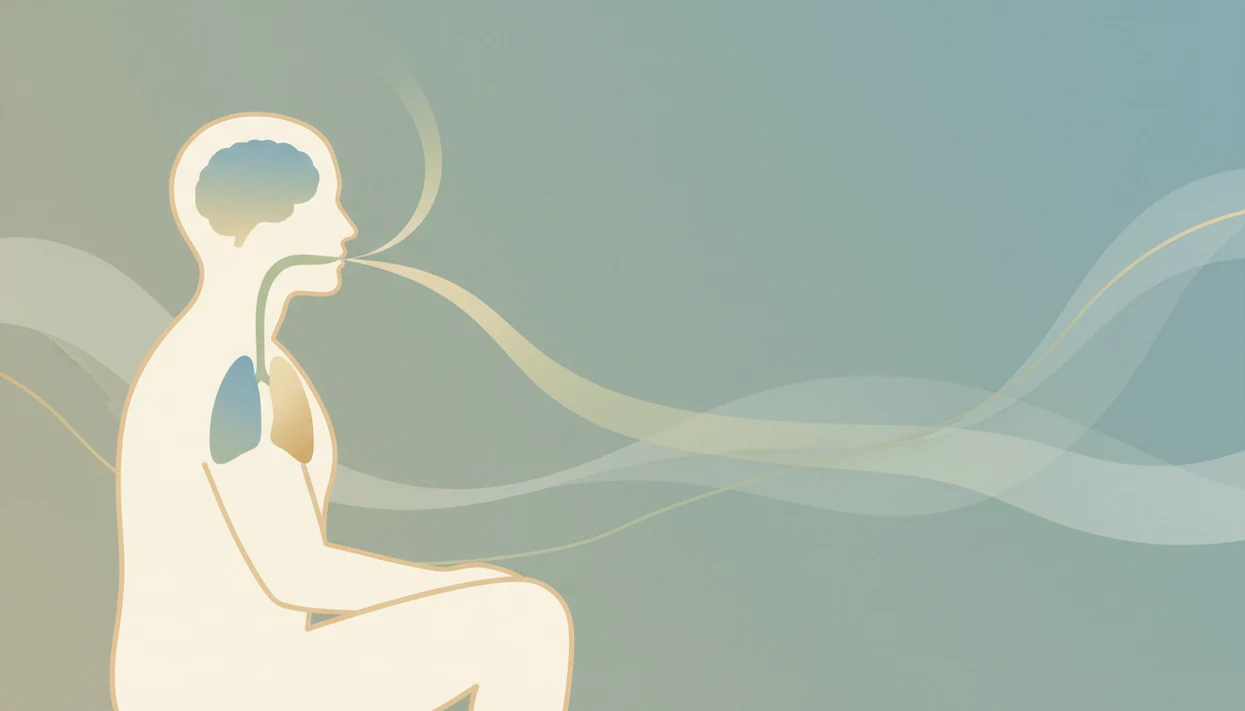
Breathing and the brain are connected through the networks that regulate stress, attention, emotion, and awareness of the body. Breathing happens automatically, but you can also change its pace and direct attention to its sensations. Slower, steadier breathing can support parasympathetic activity, helping the body settle, while mindful breath attention engages areas involved in sensing internal signals and controlling attention.
In practice, this means working with two different skills: adjusting your breathing gently and noticing it without needing to change it. Both can support a short pause before a difficult conversation or a return to focus after distraction. Neither requires a spiritual belief system, and neither replaces medical or mental-health care for severe or persistent symptoms.
The essentials
- Slow breathing generally supports parasympathetic activity, which can reduce physiological arousal and make it easier to feel calm.
- Paying attention to breath sensations activates brain areas involved in interoception and cognitive control, including the insula and anterior cingulate cortex.
- Breath practices are useful daily mindfulness tools, but they are not a substitute for medical or mental-health care when symptoms are severe or persistent.
How automatic breathing and deliberate attention work together
The breath brain connection is a physiology-based mindfulness concept: your breathing runs automatically, but you can also adjust it on purpose to influence stress, focus, emotion, and body awareness. You do not need a spiritual belief system to use it. You are working with attention, breath rhythm, and the nervous system.
Before you start, remember that breathing is both automatic and adjustable: it keeps going on its own, yet changes the moment you bring attention to it. That makes breath practice easy to use in real life. A museum docent leading a crowded tour, for example, might take four slower breaths while holding a paintbrush handle and noticing the stomach flutter settle slightly.
That small pause matters.
It gives the brain a different body signal before you type. Mindfulness practices and meditation techniques for beginners and daily life deliver trainable attention and steadier self-observation, not instant emotional control or a guaranteed cure.
Five basics about breath rhythm and attention
- Breathing pattern matters: Slow, fast, shallow, and held breathing can feel different because each pattern changes body signals reaching the brain.
- Breath attention trains awareness: Feeling the breath is a simple mindfulness technique for attention and interoception, which means sensing internal body signals. For a related attention topic, see how ADHD affects the brain and shapes everyday focus.
- Slow breathing can downshift arousal: A steady pace, especially with a relaxed exhale, can support parasympathetic “rest and digest” activity.
- Practice builds the skill: Most people notice more from repeated short sessions than from one dramatic attempt during a stressful moment.
- Breathwork has limits: It can support calm and focus, but it should not replace therapy, medical care, medication decisions, or crisis support.
For beginners, breath attention is often more workable than trying to make the mind blank because it gives attention one physical sensation to revisit. Start with a short, natural window: the pause after a customer support call, the quiet moment in a hospital supply room, or the echo of your steps in a parking garage.
How breathing influences nervous-system activity
Breathing works through both automatic control and intentional control. The brainstem keeps respiration going while you sleep, but higher brain networks can change pace, depth, and attention when you choose to practice.
The simple version is this: the sympathetic nervous system prepares you for action, and the parasympathetic nervous system helps the body settle. Slow breathing can send a steadier signal through the body, which may reduce arousal. A 2017 review of slow-breathing studies links slow respiratory patterns with changes in autonomic and psychological measures, while noting that protocols and study quality vary PMC research article. Breath awareness also recruits attention and interoception networks, including the insula and anterior cingulate cortex. Human experimental work has shown breath attention engaging these regions, according to a 2016 neuroscience study 4853. Research on meditation effects on the brain provides broader context for changes associated with sustained attention practice.
The change may be small rather than dramatic. Your legs may still feel heavy, or the next thought may still appear, but it may not pull as hard.
A gentle three-to-five-minute breathing practice
Use this breath brain connection practice for 3 to 5 minutes at first. It should feel steady, not forceful. If you get dizzy, stop and breathe normally.
- Set a timer for 3 to 5 minutes and sit on a kitchen chair, bus seat, or floor cushion.
- Place both feet on carpet or tile, then let your spine be upright without stiffening.
- Breathe in through the nose or mouth at a natural pace, then make the exhale slightly longer if that feels comfortable.
- Notice one breath sensation, such as the chest moving, the belly softening, or air passing the nostrils.
- Return to that sensation when the mind wanders to a grocery list, a text, or tomorrow’s meeting.
- Check how you feel at the end, without grading the practice as good or bad.
For more structure, breath awareness meditation builds the same notice-and-return skill into a simple beginner format.
Choose a breath practice for stress, focus, or strong emotions
How do you use breath during tense work moments, crowded public spaces, or difficult conversations? Try 4 to 6 slow breath cycles before you act, then choose the breath style that fits the situation. A team lead might use a quiet Meeting Reset while walking between rooms: inhale, lengthen the exhale, notice the next step, then continue.
For stress, use a calming breath: easy inhale, longer exhale, relaxed jaw. Before a tense meeting, try this in the hallway rather than waiting until you are already speaking. For focus, use a clear counting breath, such as counting one on the inhale and two on the exhale up to ten. During commuting, use noticing practice instead: feel the breath while also hearing traffic, announcements, or footsteps.
A pause before answering a message can change the whole exchange. Not always. But often enough to practice.
Breathing does not eliminate anxiety or guarantee emotional control. It creates a practical next step between body activation and behavior.
Four ways to make breath practice easier
- Count the breaths: Count from one to ten, then start again. Counting gives a busy mind a small task.
- Lengthen the exhale gently: Try a four-count inhale and a six-count exhale only if it feels easy. Do not strain.
- Feel one sensation: Choose the nostrils, ribs, belly, or hands resting in the lap. One clear anchor is better than scanning everything.
- Use the same daily cue: Practice after brushing teeth, before opening a laptop, or when sitting down at your desk.
If you are comparing styles beyond breathing, our meditation techniques guide explains common options in plain language.
Gentle beats impressive here.
When to use breath practice and when to seek other support
The breath brain connection is a good fit for everyday self-regulation, but it is not appropriate as a stand-alone response to severe symptoms or medical concerns. Use the table to compare your options before practicing.
| Situation | Best for | Not for |
|---|---|---|
| Everyday stress | Short pauses before work, study, or family conversations | Replacing therapy or medical support |
| Attention training | Returning to one breath sensation after distraction | Forcing the mind to go blank |
| Short mindfulness breaks | 3 to 5 minutes in an office stairwell, parked car, or bedroom | Long breath holds or intense rapid breathing |
| Emotional pausing | Creating space before reacting | Pushing through dizziness, pain, or panic |
| Health-sensitive cases | Practicing with clinician guidance when needed | Treating emergencies or breathing-related symptoms alone |
People with severe anxiety, trauma symptoms, panic attacks, depression, respiratory disease, cardiovascular conditions, or neurological concerns should consider professional support. For some beginners, body scan meditation feels steadier because attention rests on wider body sensations.
What research says about breath attention and brain activity
- Breath attention has brain-network evidence: Human experimental research shows attentive breathing can activate regions including the insula and anterior cingulate cortex, which relate to interoception and cognitive control.
- Meditation use has grown: Per the CDC, U.S. adult meditation use increased from 4.1% in 2012 to 14.2% in 2017 CDC guidance.
- Complementary health use is common: NCCIH reports that complementary health approaches are widely used by U.S. adults, but breathing, meditation, yoga, and other practices should not be treated as one interchangeable category NCCIH overview. The evidence on meditation and immune function addresses a separate question from breathing and immediate stress regulation.
- Structured protocols differ: Trials of structured breathing programs such as Sudarshan Kriya Yoga study a specific sequence, dose, and population; those findings should not be generalized to every casual breathing exercise PMC research article.
- Evidence is method-specific: Slow breathing, breath attention, rapid breathing, and structured breathwork are not interchangeable.
The most defensible conclusion is modest: breath practices can influence nervous-system state and attention, but the effect depends on the protocol, the person, the setting, and consistency. A three-minute calming breath before a meeting is not the same intervention as an eight-week clinical breathing program. For another practice with its own evidence base, explore how gratitude changes the brain without assuming identical effects.
Set aside three minutes for breath attention
During a short break from work or study, a timer can help you give breath attention a clear beginning and end. Set the free online meditation timer for three to five minutes, then notice one comfortable breath sensation without forcing a rhythm. The Mindful.net app also offers short guided meditations and breathing exercises. For persistent anxiety or breathing symptoms, professional assessment is more appropriate than another practice session.
Breathing Practice Limits
- Breathing practices cannot replace professional care, especially when symptoms are intense, persistent, or linked to trauma or medical conditions.
- Seek clinician guidance for panic, trauma symptoms, respiratory illness, cardiovascular conditions, or neurological conditions.
- Rapid breathing and prolonged breath holds can trigger dizziness, tingling, anxiety, or faintness.
- Research on one breathing method does not automatically apply to every breathwork style.
Breathing and brain questions
How does breathing affect the brain?
Breathing patterns influence body signals reaching the brain and can change nervous-system activity. Slow, steady breathing can help reduce physiological arousal. Paying attention to breath sensations also engages networks involved in attention and internal body awareness. Changing the rhythm and observing the breath are related, but distinct, practices.
Which part of the brain controls breathing?
The brainstem maintains automatic breathing, including while you sleep. Higher brain networks also let you change the pace or depth deliberately and pay attention to breathing sensations. Breath attention involves areas such as the insula and anterior cingulate cortex, which contribute to body awareness and cognitive control.
Can slow breathing help with anxiety?
Slow, comfortable breathing may help lower arousal during everyday stress and make it easier to pause before reacting. It does not reliably resolve every kind of anxiety, and focusing on breathing can make some people feel worse. Persistent, severe, or disruptive anxiety calls for professional care, not breathing practice alone.
Is slow breathing better than taking deep breaths?
For a calming practice, aim for gentle, steady breathing rather than the biggest breath you can take. You can let the exhale become slightly longer if that feels easy. Forceful over-breathing can cause dizziness or tingling. Stop adjusting your breath and return to normal breathing if discomfort develops.
What is interoception, and how does breathing practice use it?
Interoception means sensing signals from inside the body. During breath practice, you might notice the ribs moving or the belly changing with each breath. The task is to recognize a sensation and return to it after distraction, not to search for a special feeling or force the mind to become blank.
How long should I practice mindful breathing?
Start with three to five minutes at a comfortable pace. Choose one sensation, such as air at the nostrils or movement in the chest, and return to it when attention wanders. Short, repeated sessions help build the skill. Stop sooner if you become dizzy, distressed, or uncomfortable.
Can breathwork make anxiety or panic worse?
Yes. Respiratory sensations can trigger panic in some people, and rapid breathing or prolonged breath holds can cause dizziness, tingling, anxiety, or faintness. Do not push through those symptoms. Stop the exercise and breathe normally. Seek clinician guidance if breathing sensations trigger panic or you have significant heart or lung disease.
Do I need to control my breathing during meditation?
No. Breath meditation can mean noticing breathing as it happens naturally, without changing its pace or depth. Choose one sensation and gently return to it after distraction. Deliberately slowing the breath is a separate option, not a requirement, and any adjustment should feel comfortable rather than forced.