
How to Choose a Meditation Teacher: Training, Safety, and Fit


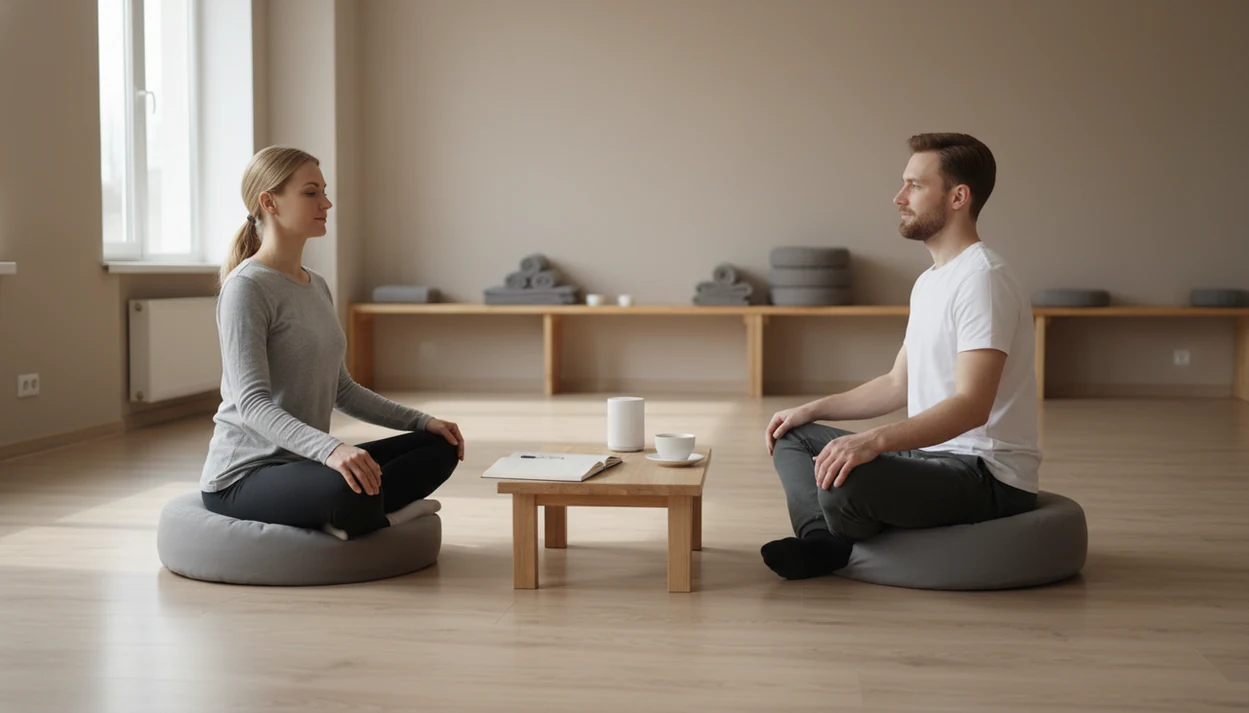
To choose a meditation teacher, check their training, personal practice, ethics, trauma-aware judgment, and ability to explain meditation clearly. The right guide supports your independence and helps you build a sustainable practice for everyday life. Fame, a reassuring voice, or a certificate alone cannot tell you how someone will respond to questions, anxiety, or disagreement.
Start with your goals and limits, then ask about supervision, boundaries, and support when practice becomes difficult. Try a short class or recording before committing to a course, retreat, or community. Look for clear instructions and permission to pause or adapt. A teacher should welcome questions, explain fees, and respect outside support, not pressure you to trust them.
Seven checks before committing to a teacher
How to choose a meditation teacher starts with seven checks: training, personal practice, ethics, safety, style fit, accessibility, and referral judgment. No single certificate proves quality, so test the teacher in a short session before you commit.
- Training: Ask what they studied, for how long, and with whom.
- Practice history: Look for regular personal practice, not only teaching language.
- Ethics: They should explain money, confidentiality, touch, and boundaries plainly.
- Safety: They should offer options to pause, open your eyes, or change posture.
- Fit: Their style should match your goal, whether that is everyday mindfulness, spiritual study, or learning basic meditation techniques.
A five-minute class can tell you a lot. Notice your shoulders, your breathing, and whether you feel free to ask a normal question afterward.
Set your goals, limits, and practical requirements
Before you screen teachers, get clear about what you need from the relationship. A good fit starts with your goals, limits, and practical constraints, not the teacher’s reputation.
- Name your aim. Decide whether you want stress support, help forming a steady habit, spiritual study, or preparation for a retreat. Each goal points toward a different kind of guide.
- Write down your risk factors. Note trauma history, panic, chronic pain, dissociation, grief, or any experience that makes stillness feel unsafe. You do not need to disclose everything at once, but you should know what needs careful handling.
- Choose your context. Decide whether you want secular mindfulness, a specific spiritual lineage, or a hybrid setting where the tradition is named clearly.
- Set your requirements. Be honest about budget, schedule, mobility, sensory needs, privacy, and whether online or in-person support will help you practice consistently. If local support matters, consider finding a meditation teacher nearby before comparing classes and checking accessibility.
- Select the support level. You may need a meditation teacher, a clinician, a group class, a practice app, or some combination. The right choice is the one that keeps practice realistic and safe.
How a teacher helps you practice and troubleshoot
A meditation teacher turns abstract attention skills into repeatable practices using setup, cues, debriefing, troubleshooting, and adaptation. Good guidance helps you observe your own experience, not become dependent on the teacher.
In real practice, the teacher might help you place attention on breath, body, sound, emotion, or open awareness. They may explain attentional stability, which simply means staying with one chosen object long enough to notice wandering and return. You might feel the warm exhale on the upper lip, then lose track to a grocery list. That is workable material.
Structured programs such as MBSR and MBCT use trained instruction, home practice, and group reflection. A 2014 JAMA Internal Medicine meta-analysis of 47 randomized clinical trials found mindfulness meditation programs had small to moderate benefits for anxiety, depression, and pain, but that does not make meditation a medical treatment for everyone JAMA study.
Six steps from initial research to a trial class
Use these steps before joining a course, retreat, or ongoing community. They keep the choice practical, especially when a teacher sounds impressive online.
- Define your goal. Decide whether you want stress education, a secular attention practice, spiritual study, or help building a daily habit.
- Check training and practice history. Ask about teachers, programs, years of practice, and actual teaching experience.
- Review ethics and boundaries. Look for clear policies on fees, privacy, touch, relationships, and student concerns.
- Test a short class or recording. Try one guided session before paying for a long program.
- Ask questions about difficult experiences. Ask what they do if practice brings panic, numbness, grief, or old memories.
- Choose fit over hype. A calm, plain teacher may serve you better than a famous one.
Start small. A phone timer set for 5 minutes is often more revealing than an idealized retreat plan.
Meditation teacher training, credentials, and practice history
“What credentials should a meditation teacher have?” They should be able to name where they trained, how long they trained, who taught them, and whether they still receive supervision, mentoring, or peer feedback.
Weekend certificates are not the same as longer supervised training. Some teachers come through Buddhist lineages, yoga traditions, secular mindfulness training, MBSR, MBCT, chaplaincy, counseling-adjacent education, or university-based programs. The label matters less than the depth, honesty, and scope of practice.
If the teacher claims MBSR, MBCT, trauma-sensitive mindfulness, or a specific Buddhist lineage, ask for the exact program name rather than accepting the label alone. A credible teacher should be comfortable saying, ‘That is outside my training,’ when your needs exceed their scope.
Ask what they teach often. A teacher who regularly guides breath awareness meditation may not be equally trained to lead intensive silent retreats or trauma-sensitive groups. Regular personal practice matters too. You want someone who knows the gap between saying “notice the breath” and sitting through a restless Tuesday evening when the mind will not settle.
Meditation teacher ethics, boundaries, and safety signals
Ethical meditation teaching is clear about power, consent, money, confidentiality, touch, and romantic or sexual boundaries. Safety screening matters because a meaningful minority of meditators report unpleasant or adverse experiences.
- Money should be transparent: Fees, refunds, donations, and upsells should be stated before you join.
- Consent should be explicit: Touch, posture suggestions, and sharing in groups should never be forced.
- Questions should be welcome: A teacher who punishes doubt is asking for trust they have not earned.
- Trauma-aware options should be normal: Open eyes, change posture, stop practice, or seek outside help.
- Referral judgment matters: A teacher should know when anxiety, trauma, pain, or crisis needs clinical care.
A 2022 systematic review of 83 studies found about 8.3% of participants reported at least one meditation-related adverse effect PubMed research. That does not mean meditation is unsafe for most people. It means teachers need humility. For immediate danger, suicidal thoughts, psychosis, or severe panic, the safer next step is professional or crisis support, not a longer meditation session.
Ask how the teacher checks for difficulties between classes
A teacher saying that nobody has reported problems is not the same as actively checking for them. A review of meditation safety reporting found that more than 80% of meditation trials did not state whether study-related adverse events occurred. That finding concerns research reporting, not individual teachers, but it gives you a useful screening question: does this teacher ask about difficulties, or wait for students to speak up?
Ask what happens if anxiety, sleep disruption, numbness, or distress appears after class. A concrete response should include checking when symptoms began, how intense they are, how long they last, and whether they affect daily functioning. The teacher should explain how practice can be paused or modified and when professional assessment is needed. Persistent symptoms, impaired functioning, or severe dissociation call for licensed mental-health support, not instructions to keep meditating through them.
Meditation teacher fit for secular beginners and spiritual seekers
The right teacher depends on what you are trying to learn. Secular beginners often need plain language and short practices, while spiritual seekers may want a teacher rooted in a clear lineage with transparent commitments.
| Learner need | Better fit | Watch for |
|---|---|---|
| Secular beginner | Plain language, short practices, gentle inquiry, daily-life examples | Mystical claims you did not ask for |
| Spiritual seeker | Clear lineage, consent, respect for autonomy, honest commitments | Superiority, secrecy, or pressure |
| Nervous or trauma-aware learner | Choice-based instruction and permission to pause | “Push through everything” language |
| Practical daily-life learner | Short guided sessions, reflection, and simple carryover | Vague inspiration without practice |
Tools like Mindful.net can support secular practice between classes, especially if you are comparing guided vs silent meditation. Mindfulness practices and meditation techniques for beginners and daily life can build attention and steadiness, not obedience to a teacher or a promise of permanent calm.
Questions to ask a meditation teacher before joining
Ask direct questions and watch the response, not just the answer. A grounded teacher can explain limits without sounding threatened. A useful sign is a short pause, a plain answer, and no rush to sell you the next course.
Training history: “Where did you train, for how long, and who supervised your teaching?” This should produce specifics, not a fog of impressive words.
Daily practice: “What does your own practice look like now?” The answer does not need to be dramatic. It should sound real.
Difficult experiences: “What happens if someone feels panic, dissociation, grief, pain, or overwhelm during practice?” A responsible teacher offers choices and referrals.
Class format: “Is this secular, religious, silent, guided, group-based, retreat-based, or mixed?” If you prefer body-based practice, ask whether they teach body scan meditation and how they adapt it for pain or restlessness.
Hands off the keyboard for one breath. Notice whether their answer makes your body tighten or soften.
Common meditation teacher selection mistakes to avoid
A certificate alone does not establish that a meditation teacher is competent. Meditation teaching has no universal licensing body, and training programs vary widely in length, supervision, ethics, and depth.
Popularity can mislead too. A large social following, polished videos, or a friend’s recommendation may not tell you how the teacher handles fear, grief, power, money, or disagreement. Charisma is not care.
Another mistake is letting a teacher control your life choices. Ethical meditation instruction supports self-observation and practical discernment. It should not replace your judgment, relationships, medical care, or therapy.
Finally, do not treat all meditation contexts as interchangeable. Secular mindfulness, religious traditions, therapy-adjacent programs, influencer methods, and retreat communities can carry very different assumptions. For beginners, a simple comparison like body scan vs breath meditation may be a safer starting point than joining an intense group immediately. Understanding mindfulness vs meditation can help you clarify whether you want everyday awareness skills or a formal sitting practice.
What a beginner-friendly first class can look like
Image concept: an inclusive beginner class in a simple room, with chairs and cushions available. The teacher sits at the same level as students and offers choices rather than commands: eyes open or closed, chair or floor, stillness or small movement. No glowing authority figure. No medical promise.
Caption: A first class can show whether a meditation teacher offers safety, clear instruction, and learner autonomy.
Alt text: Beginner class showing how to choose a meditation teacher through clear cues, consent, and supportive options.
The useful detail is ordinary: someone settling on a kitchen chair, another person choosing a cushion, and the teacher saying, “If this does not feel right, adjust.”
Meditation Teacher Screening Limits
- No universal licensing body regulates all meditation teachers, and credentials cannot guarantee ethics, fit, safety, or good judgment.
- Evidence is stronger for structured programs such as MBSR and MBCT than for many branded methods.
- Seek professional medical, psychological, or crisis care when needed, rather than relying on meditation alone.
- Treat mindfulness apps as education and practice support, not substitutes for a qualified teacher or clinician.
Choosing a meditation teacher: common questions
Does a meditation teacher need certification?
Meditation teaching has no universal licensing body, so certification is a useful signal rather than a guarantee. Ask which program the teacher completed, how much supervised teaching it included, and whether they receive ongoing mentoring or peer feedback. Their ethics, boundaries, and response to difficulties matter alongside the credential.
How do I check a meditation teacher's qualifications?
Ask for the names of their training programs, teachers, and supervisors, plus the duration of training and their teaching experience. If they advertise a specific approach such as MBSR or MBCT, ask about training in that intervention. Vague claims about being certified are less useful than details you can verify.
What should I look for in a first meditation class?
Look for clear instructions, manageable practice periods, and choices about posture, eyes open or closed, and stopping. Notice how the teacher responds to questions or discomfort. One class cannot establish long-term safety, but it can reveal pressure, unclear boundaries, or a style that does not match your needs.
What are red flags in a meditation teacher?
Be cautious about pressure to buy more courses, secrecy around fees, unwanted touch, punishment for questions, or blurred romantic and sexual boundaries. Discouraging therapy or advising medication changes is another warning sign. A teacher should explain their limits and support your independence rather than demand loyalty.
How do I choose a meditation teacher if I have anxiety or trauma?
Ask about experience with anxiety, panic, dissociation, and trauma-related distress, including supervision and referral arrangements. Look for permission to pause and options such as movement or eyes-open attention. If symptoms are active or severe, consult a licensed mental-health professional before joining a standard program. Meditation instruction is not trauma treatment.
Should a beginner choose a secular or spiritual meditation teacher?
Choose according to what you want to learn. For everyday attention skills or stress education, a secular teacher using plain language may fit. For spiritual study, look for a clearly identified tradition and transparent commitments. Neither label guarantees good teaching; consent, boundaries, training, and room for questions remain essential.
Can an online meditation teacher be a good choice?
Online instruction can suit your schedule and give you a way to sample a teacher's style. Apply the same checks for training, ethics, and scope of practice as you would in person. Ask how you can report difficulties and receive a response. A recording alone cannot provide individual assessment or responsive support.
When should I change meditation teachers?
Consider changing if your questions are repeatedly dismissed, boundaries are crossed, or the approach does not fit your goals. You do not need to wait for serious harm to leave. If practice is causing persistent distress or interfering with daily life, pause and seek professional support rather than simply finding a more demanding teacher.