
How to Pause Before Reacting: Use STOP to Choose Your Response


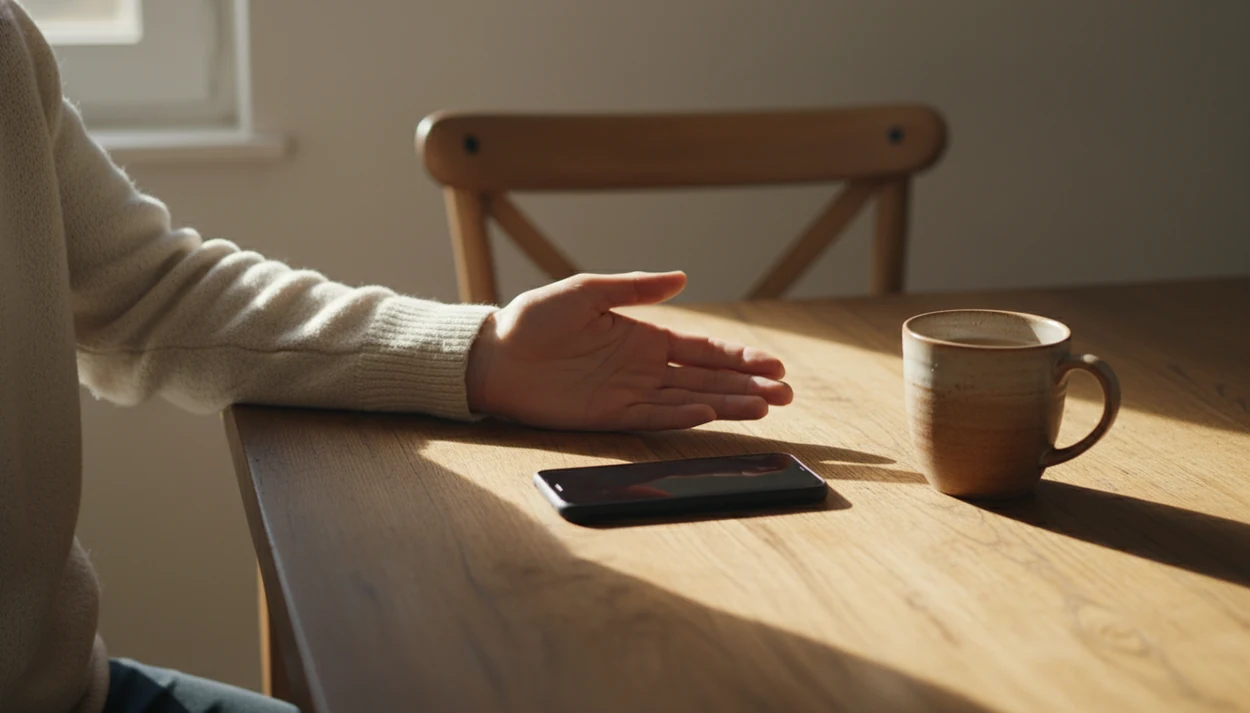
To pause before reacting, stop, take one slow breath, notice what is happening in your body, and choose your next word or action. This secular mindfulness skill creates a brief gap between a trigger and your response. The STOP method gives it a simple sequence: Stop, Take a breath, Observe, Proceed mindfully. You do not need to feel calm before you begin.
Practice with small annoyances first, such as a notification or a delay, so the pause becomes familiar before an argument, stressful email, parenting moment, or work pressure. Pausing is not suppressing emotion or pretending nothing happened. It gives your attention and body a few seconds to support a more deliberate response, which might mean asking a question, setting a boundary, or taking a longer break.
The essentials
- Use the STOP method: Stop, Take a breath, Observe, Proceed mindfully.
- Practice on small annoyances first so the pause becomes easier during arguments, stressful emails, parenting moments, or work pressure.
- Pausing is not suppressing emotion; it is giving your nervous system and attention a few seconds to respond more deliberately.
The gap between a trigger and your response
Pausing before reacting means noticing the trigger, creating a brief gap, and choosing the response instead of moving on autopilot. The trigger might be a sharp comment, a tense text, criticism from a manager, a child refusing shoes, or work stress piling up before lunch.
> Definition: Pausing before reacting is a secular mindfulness skill that trains you to notice thoughts, emotions, and body sensations before acting on impulse.
The gap can be tiny: one breath, one palm touching a cool counter while you wash dishes, one moment of noticing warm cheeks before you speak. You are not pretending the anger or hurt has disappeared. You are registering, “I’m activated,” before you argue harder, go silent, or act from the first impulse that shows up.
A pause is not avoidance. It is a cleaner starting point.
What research supports about mindful pauses
Pausing before reacting is credible because it trains attention, body awareness, and emotional regulation together. It is not a trick for becoming calm on command.
- It is a mindfulness skill. The core move is to notice thoughts, emotions, and body sensations before acting on them.
- STOP is a common framework. Stop, Take a breath, Observe, and Proceed mindfully gives the pause a simple shape.
- Slow breathing can settle the body. Longer exhalations may support parasympathetic regulation, the body’s “rest and digest” side. A 2018 review of slow breathing found links with autonomic and emotional regulation markers NIH research.
- Repetition matters. Low-stakes practice helps the skill show up during harder moments, such as a tense email or parenting stress.
- Mindfulness is not instant. A 2022 JAMA trial with 3,515 participants found that an 8-week mindfulness-based stress reduction program improved stress, anxiety, depression, and well-being compared with waitlist control JAMA study. A 2013 meta-analysis also found moderate effects for anxiety and stress. See Khoury et al., 2013: PubMed research.
For most beginners, one practiced pause is more useful than a long plan you never use. For a brief rehearsal, try 2-Minute Mindfulness Exercises during an ordinary delay or a quiet break.
How body awareness and breathing support a pause
Pausing before reacting works by interrupting the trigger-response loop long enough for body awareness, attention, and choice to return. Emotional surges are fast body-brain responses, not proof that you are failing.
That is why a short pause helps. Slower breathing can give the body a different signal, and attention practice gives the mind a small assignment: feel the breath, name the emotion, notice tingling fingers, then return to the next choice. In research-reviewer terms, the pause is not magic; it is a brief bid to give working memory a chance to rejoin the situation. For a structured version of this pause, try Breathing Space Meditation, a three minute practice for noticing and responding.
How pausing before reacting works: it interrupts the trigger-response loop long enough for attention, body sensation, and choice to re-enter the moment. In one randomized trial, brief mindfulness training over four days improved attention and working memory and reduced negative mood compared with an active control NIH research.
The exhale heard in a quiet room can be enough to mark the shift.
After the first breath, check your interpretation
A delay changes when you respond; reappraisal changes how you understand the trigger. In a 2007 neuroimaging experiment comparing reappraisal and suppression, reappraisal reduced negative emotional experience, while hiding emotional expression produced a different pattern of brain activity. This supports checking your interpretation rather than merely holding back your words. It does not prove that every brief pause will change how you feel.
Once you can think more clearly, ask, “What do I know, and what am I assuming?” A short message may feel dismissive without establishing the sender’s intent. You might ask for clarification instead of accusing them. Reappraisal is not an instruction to excuse harm: when the facts indicate mistreatment, a deliberate response can still be a firm boundary or leaving the situation.
Before You Start: Set Up a Low-Stakes Pause
Before you use the STOP method in a hard conversation, set up one tiny pause you can practice on ordinary days. The point is to make the pause familiar before your body is already in alarm. A 5-Minute Morning Meditation can help you rehearse noticing your body before the day's demands begin.
- Choose one cue. Pick something that repeats without much consequence: a phone notification, a red light, the kettle clicking off, or the moment before opening email.
- Select one body anchor. Use breath, feet, hands, jaw, or shoulders. Keep it simple enough that you can find it in a grocery line or at your desk.
- Decide your default delay. Make the rule clear: one breath, ten seconds, or “reply later.” You should not have to negotiate with yourself every time.
- Practice away from danger. Do not make a crisis, an unsafe situation, or a highly escalated conflict your first training ground.
- Write a short reminder. Put “One breath first,” “Feel feet,” or “Pause, then reply” somewhere you will actually see it.
Small cues teach the body the sequence before the stakes rise.
STOP: four steps before you speak or act
How do I pause before reacting? Use the STOP method as a short, repeatable sequence: stop moving toward the reaction, take one breath, observe what is happening, then proceed with intention.
- Stop. Pause your speech, typing, scrolling, or movement for one beat.
- Take a breath. Inhale normally, then let the exhale be a little slower.
- Observe. Notice one body sensation, one emotion, and one thought without arguing with them.
- Proceed. Choose the next useful action, such as replying later, asking a question, or speaking more slowly.
If a tense moment lands suddenly, treat it like the Kettle Pause: let the pressure be noticed before it becomes action. A student might feel a dog leash tug, hear a sharp comment from a roommate, and want to snap back. First, take one breath, notice the heat in your face and the sentence forming, then choose a shorter, steadier response.
One breath is enough to begin. If breath feels like the easiest entry point, breath awareness meditation builds the same notice-and-return skill in a quieter setting.
Take a communication break with a clear return plan
When one breath is not enough, make the pause explicit: “I want to respond carefully, but I’m too upset right now. Can we return to this at 3 p.m.?” A specific return time distinguishes a break from unexplained withdrawal. During the break, use grounding or a change of environment rather than rehearsing accusations. Threats or violence call for safety and outside help, not a promise to resume the conversation.
For texts and emails, save a draft rather than sending it while activated. Reread it after the intensity has fallen, removing accusations, absolutes, and claims about the other person’s motives. A 2025 meta-analysis on anger and emotion regulation supports the underlying regulation mechanisms, not a universal waiting period. The useful question is whether you can now write toward your goal rather than toward retaliation.
Practice with notifications, queues, and small delays
Neutral and mildly annoying moments are the training ground for pausing before reacting. If you only try the skill during conflict, your nervous system is already running hot.
Use these cues as small practice reps:
- Phone buzz: Feel the urge to check, take one breath, then decide.
- Red light: Relax your jaw and notice both hands on the wheel.
- Waiting in line: Feel your feet and soften the shoulders.
- Email notification: Read the subject line, pause, then open it.
- Kettle boiling: Let the sound remind you to exhale before moving.
Try this 10-second script: “Stop. Breathe. What am I feeling? What matters next?” That is the whole practice.
Repetition over intensity builds automaticity. Like practicing a piece of music slowly, the pause becomes easier when you rehearse it during ordinary life, not only during arguments. Try linking it to a recurring cue: lifting a diaper bag strap, rinsing a cup, or stepping into the dim light of a movie theater before you decide what to do next. When you have more time to practice, 10-Minute Mindfulness Exercises offer another format for rehearsing attention during ordinary life.
Everyday uses and situations that require outside help
Pausing before reacting fits everyday emotional friction, but it is not enough for danger or crisis. Use it to support better choices, not to stay silent in unsafe conditions.
| Best for | Not for |
|---|---|
| Everyday irritability | Immediate danger |
| Tense conversations | Abusive situations |
| Impulsive texting | Severe mental health crises |
| Work stress | Replacing therapy or psychiatric care |
| Parenting stress | Situations that require urgent outside help |
A pause can help you avoid sending the email you will regret at 10 p.m. It can help before unmuting in a meeting, especially when your chest is tight and your first sentence would be sharper than you want.
Mindfulness practices and meditation techniques for beginners and daily life can offer practical attention training, not a guarantee that you will feel calm or fix a relationship.
For people who want a broader menu, meditation techniques can help you compare breath, body, compassion, and awareness practices.
Five mistakes that make pausing harder
Most people quit pausing practice because they misunderstand what success looks like. The goal is not to become blank, pleasant, or always composed.
- Using the pause to suppress emotion. Correction: name the emotion quietly, such as “anger” or “fear,” instead of forcing it down.
- Expecting not to feel triggered anymore. Correction: expect the surge; practice changing what happens next.
- Waiting for a crisis before practicing. Correction: rehearse during small delays, notifications, and mild irritation.
- Confusing pausing with passivity. Correction: pause first, then act clearly. You can still set a boundary.
- Judging yourself when you react too quickly. Correction: review the moment later and identify the earliest cue you noticed.
Reset the plan.
For people who feel emotions mostly as body tension, body scan meditation can make the “observe” step more concrete. Tight calves against the mattress are easier to notice than a vague label like “stressed.”
Keep the pause from turning into an argument in your head
Not speaking is not necessarily the same as pausing mindfully. Replaying an insult, assembling counterarguments, or imagining retaliation can keep the reaction active. In a 2019 experiment on sequential emotion-regulation strategies, reappraisal decreased anger, while rumination produced no reduction. A useful pause has a task: notice the reaction, settle enough to think, and choose what happens next.
Give the loop one neutral label, such as “replaying” or “anger,” then return attention to your feet, hands, or surroundings. Ask, “What action would help now?” Choose something concrete: request clarification, postpone the discussion, state a boundary, or return to the current task. Success is not having no angry thoughts. It is letting those thoughts have less control over your next action.
Optional tools for rehearsing the pause
App support is optional. You can practice pausing before reacting with a breath, a sticky note, or a quiet moment in an office stairwell.
A mindfulness practices app can be useful when you want short guided structure instead of inventing the practice yourself. Headspace, Calm, and Mindful.net all offer beginner-friendly sessions for breath awareness, body scan, mindful walking, and STOP-style practice.
Beginner-friendly options include breath awareness, body scan, mindful walking, and STOP practice. A saved lesson opened during lunch can be enough to rehearse the skill before the afternoon gets noisy. For a longer guided practice, try a 15-Minute Meditation Routine when you have time to settle and observe.
Mindful.net, as a Mindfulness Practices App, should be treated as educational support. It does not diagnose, treat, or replace qualified care. If comparison helps you choose a format, the guided vs silent meditation guide explains when voice support helps and when silence may fit better.
How can I remember to pause before tension builds?
During an ordinary workday, a reminder can help you rehearse a pause before a difficult conversation. The free mindfulness bell can serve as a cue to notice your feet, loosen your jaw, and choose your next action. Mindful.net’s app offers short guided meditations for separate practice sessions. During an escalating argument, a clear request for a break is more useful than opening a tool.
Mindful Pause Limits
- A mindful pause cannot make others safe or fair, and unsafe or abusive situations require safety planning and outside help.
- Pausing is not a substitute for trauma informed care, psychiatric care, therapy, or crisis support.
- Focusing inward can feel destabilizing for people with dissociation, psychosis, panic, or acute distress.
- If pausing makes you feel more flooded, open your eyes, look around the room, and shift attention outward.
Questions about pausing before reacting
How do I pause before reacting when I’m angry?
Stop speaking or typing for one beat. Take a comfortable breath, notice a body sensation, and name both the emotion and the urge: “Anger, wanting to argue.” Then choose one useful action. If you remain too activated to think clearly, ask for a longer break rather than forcing an immediate answer.
How long should I wait before responding when upset?
There is no universally validated waiting period. One breath may be enough for a small irritation; a difficult conversation may require a longer break. Wait until you can consider your goal and the information available. When another person is involved, state that you need time and agree on when to return.
How can I stop sending angry texts or emails?
Make saving a draft your default when you feel activated. Before sending, reread it for accusations, words such as “always” or “never,” and assumptions about motives. Replace those with what happened, what you need, or a clear question. A delay helps only if you use it to reconsider the message, not rehearse retaliation.
Is pausing before reacting the same as suppressing anger?
No. Suppression tries to hide or push down an emotion. A mindful pause acknowledges it while separating the feeling from the first action urge. You can recognize that anger makes sense and still choose not to shout. The next step may be a firm boundary, a complaint, or another corrective action.
What if focusing on my breath makes me more anxious?
You do not have to use breath as your anchor. Try looking around the room, feeling your feet, moving gently, or contacting someone supportive. Stop or modify inward-focused practice if distress increases. Severe dissociation, loss of contact with reality, self-harm urges, or sustained worsening call for professional support rather than more solo practice.
Can mindfulness actually reduce emotional reactivity?
Research supports modest, variable benefits, not guaranteed emotional control. A 2026 review of 110 studies found a small overall benefit of mindfulness-based strategies for emotion regulation. That finding concerns a range of strategies, not proof that one breath always works. Repeated practice can support deliberate responses while anger or fear remains present.