
Early Morning Meditation: A Simple 2-5-Minute Routine


Early morning meditation is a short, secular mindfulness practice done soon after waking, using attention to the breath, body, sound, or movement to help set a steadier tone for the day. Begin with 2-5 minutes of breath awareness, a body scan, or guided meditation. The basic task is to notice when attention wanders and return to your chosen focus, not to make your mind blank.
You do not need a 5 a.m. alarm or a silent home. Sit on a chair, practice on the edge of the bed, or begin after brushing your teeth. Choose a time you can repeat without cutting into needed sleep. Build consistency before adding minutes, and change the setup if you keep falling asleep or rushing through it.
The essentials
- You do not need to wake up at 5 a.m.; any quiet, repeatable time soon after waking can work.
- Beginners can start with 2-5 minutes in bed, on a chair, or after brushing teeth.
- The best morning practice is the one you can repeat most days without making your routine harder.
Early morning meditation basics for beginners
Early morning meditation is a short, intentional mindfulness period soon after waking. It can happen on a kitchen chair, on the edge of the bed, or in a quiet corner before the house gets loud.
A beginner practice usually uses one simple anchor: breath, body sensations, sound, guided audio, or gentle movement. You notice where attention is, then return when the mind wanders. That return is the practice, not a mistake.
Two minutes counts.
This is secular attention training, not spiritual authority and not medical treatment. For beginners, mindfulness and meditation offer attention skills that can be repeated in daily life, not guaranteed calm or a substitute for care. If you want a wider menu, compare simple meditation techniques before choosing a morning routine.
Before you start early morning meditation
Before you start early morning meditation, make the first session almost too easy to refuse. A small setup the night before helps you practice instead of negotiating with a sleepy brain.
- Choose a realistic window. Start with 2-5 minutes, even if you think you “should” do more. The point is to create a repeatable morning cue.
- Prepare the timer. Set a phone timer, kitchen timer, or saved guided audio before bed so the first decision is already made.
- Pick an awake posture. Sit on the edge of the bed, use a chair, stand near a wall, or keep your eyes open if closed-eye practice makes you drowsy.
- Move the phone away. Keep it out of reach unless it is only serving as the timer or audio player. Notifications can wait until after the practice.
- Pause if distress rises. If meditation makes you feel panicky, unreal, trapped, or more upset, stop and ground yourself with open eyes, feet on the floor, or naming objects in the room.
Short and steady beats perfect.
Short sessions, wandering attention, and realistic expectations
Here are the five facts that matter most for an early morning meditation guide. They keep the practice realistic, especially when the alarm feels rude.
- Morning practice reduces competition for attention. It often happens before email, social media, commute decisions, and household requests start pulling at you.
- Consistency matters more than length. For beginners, 2-5 minutes most mornings is usually easier to keep than one long session on Sunday.
- Mind wandering is normal. Noticing the mind has drifted to a grocery list, then returning to the breath, is core training.
- Mindfulness practice has broad stress evidence. Reviews of meditation programs have found modest evidence for reduced anxiety, depression, and pain, with smaller or mixed effects for stress outcomes JAMA study.
- Morning is useful, not magic. Evidence supports mindfulness more strongly than the claim that morning is always superior to every other time.
Per the CDC, adult meditation use in the U.S. rose from 4.1% in 2012 to 14.2% in 2017 CDC guidance.
Practicing the pause between distraction and response
How early morning meditation works: it gives attention a simple object, such as the breath or body, then trains the skill of returning. In plain language, you practice catching distraction before it runs the whole morning.
The light technical term is self-regulation. Each time you notice distraction and come back, you rehearse a small pause between impulse and response. That can matter when the screen glow hits tired eyes and the first message already feels urgent.
Morning timing may help because fewer interruptions compete for attention. A 2024 randomized trial of adults with poor sleep quality found that daily morning meditation improved positive affect and reduced negative affect compared with controls NIH research. Broader mindfulness research, including MBSR studies, supports stress reduction and psychological well-being, though effects vary by population, practice dose, and study design NIH research.
For many beginners, breath awareness meditation is easier than open-ended sitting because the breath gives attention somewhere clear to land.
Five-step early morning meditation routine
How to use early morning meditation: keep the routine short, repeatable, and easy to start before the day gets crowded. Try this tomorrow, even if you only have a phone timer set for 5 minutes.
- Set a small time target. Choose 2-5 minutes, not the session you imagine a more disciplined person would do.
- Choose a repeatable place. Sit in bed, on a chair, on a cushion, or in one quiet corner.
- Anchor your attention. Use breath, body sensations, sound, or a guided audio track.
- Return gently. When the mind wanders, label it “thinking” and come back without scolding yourself.
- Close with one intention. Name something simple, such as “listen before replying” or “move slowly into breakfast.”
If you feel groggy, sit upright or practice after washing your face. Tight calves against the mattress are a useful cue, but they may also pull you back into sleep.
If closing your eyes makes you feel spaced out or unsafe, keep them open and rest your gaze on one ordinary object, such as a mug, doorframe, or patch of floor.
Early morning meditation tips for real routines
The easiest early morning meditation tips fit into routines you already have. You are building a cue, not adding a dramatic new identity.
- The alarm cue: Sit up after the alarm, take three breaths, then start the timer.
- The bathroom cue: Practice after brushing teeth or washing your face, when sleepiness has lifted a little.
- The visible cue: Leave a cushion, chair, note, or saved audio where you’ll actually see it.
- The micro-practice cue: Use a mindful shower, teeth brushing, first sips of coffee, or walking to the door as practice.
- The interruption plan: Expect kids, pets, partners, and noise. Restarting after interruption still maintains the habit. If you have stopped practicing, restarting your meditation habit can begin with one short session rather than a demanding schedule.
A classroom bell followed by one breath is still mindfulness. Pick the lesson the night before if browsing choices tends to turn into scrolling before practice.
Keep a backup time for mornings that do not work
Make morning your default, not your only permitted time. A 2023 analysis of app-based meditation timing found that participation was most successful when practice happened primarily in the morning. It also found that excessive rigidity reduced the chance of practicing at all when the preferred time was missed. Because this was an observational analysis, it does not prove that morning meditation causes better adherence.
Choose a backup before you need it: after lunch, after work, or another repeatable pause. Keep the same short practice rather than trying to compensate with a longer session. If caregiving, an early shift, or poor sleep disrupts the morning plan, move the session instead of treating the day as a failure. The purpose of a preferred time is to help you practice, not to create another rule you cannot meet. If mornings remain difficult, an evening meditation habit can give you another consistent time to practice.
Adjusting practice for shift work, caregiving, and sleepiness
Early morning meditation fits people who want a calm start before screens and a consistent cue. It may not fit people whose mornings are unsafe, caregiving-heavy, or so sleepy that practice turns into another nap.
| fit | good match | adjust or avoid |
|---|---|---|
| Before-screen routine | You want one pause before messages, news, or work apps. | Avoid checking notifications first if that usually pulls you away. |
| Beginner consistency | You need the same cue most days, such as after brushing teeth. | Adjust if your schedule changes daily or includes rotating shifts. |
| Short secular practice at home | You prefer breath, body, sound, or guided audio without religious framing. | Avoid treating it as a medical plan for severe symptoms. |
| Low-energy mornings | You can sit upright and keep the session brief. | Adjust if you immediately fall back asleep. |
| Caregiving-heavy mornings | You may use a 60-second reset before others wake. | Avoid adding pressure if mornings are already chaotic. |
Best for: simple routines, short practices, and people who like a steady first cue. Not ideal for: crisis mornings, severe insomnia, or care needs that require professional support.
Early morning meditation mistakes and simple fixes
Why does early morning meditation feel hard at first? Usually the problem is not you; it is the setup.
Trying to meditate too long too soon is the common first mistake. Reduce the target to 2 minutes and end while it still feels doable. If lying down makes you fall asleep, sit upright or wait until after washing your face.
Phone first is a trap.
Checking messages before practice gives the mind ten new problems to solve. Put the phone out of reach, or open only the timer or saved audio. If the mind wanders, label “thinking” and return. That moment is the rep.
Expecting instant calm also backfires. Some mornings will feel restless, dull, or scratchy, and still be useful practice. Measure consistency, not mood. If you prefer voice guidance, the guided vs silent meditation comparison can help you choose.
A simple chair-based morning meditation setup
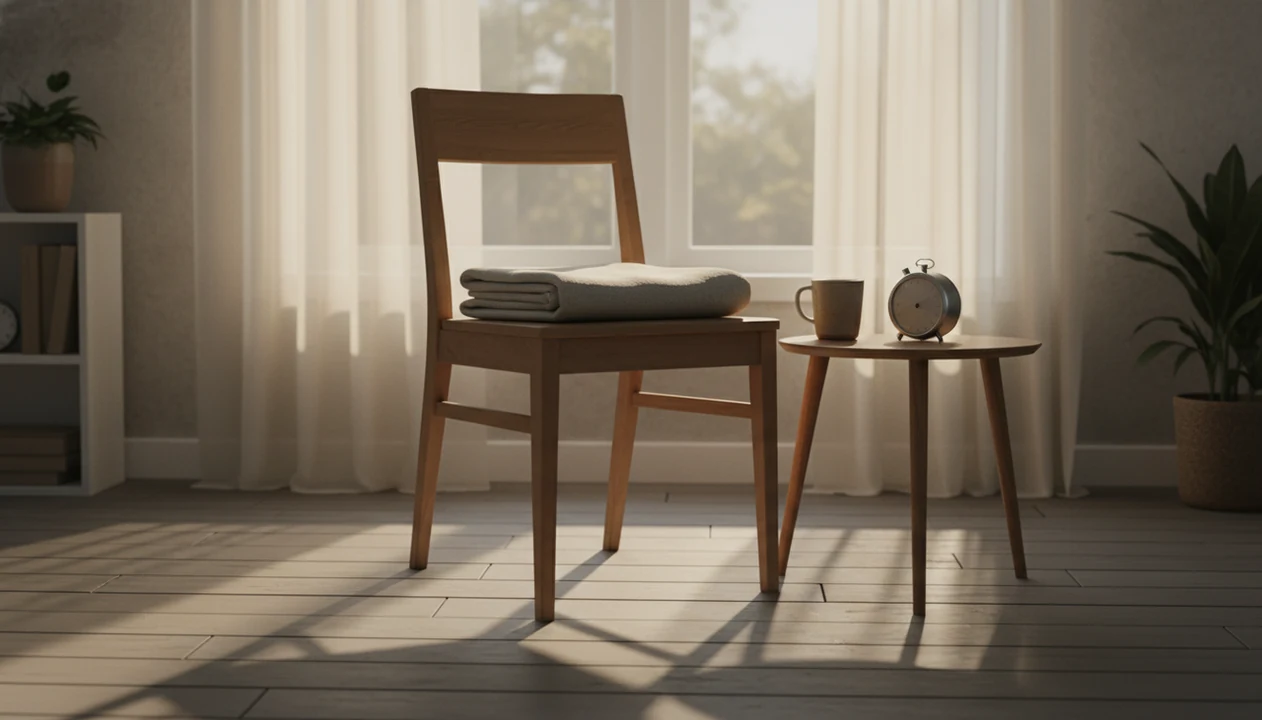
Use an image that shows a practical routine, not a luxury wellness scene. A good concept is a person sitting upright on a simple chair near morning light, with a timer visible and the phone out of reach.
The caption should reinforce what readers can copy: short duration, ordinary posture, and a repeatable place. It should not imply that meditation requires a sunrise view, special clothing, candles, a silent home, or a perfect apartment.
Caption idea: A simple chair-based early morning meditation setup with a visible timer and no phone notifications.
Alt text idea: Person practicing early morning meditation while sitting upright on a chair near soft morning light.
Plain works.
How can I make space for a short morning pause?
A morning that starts with messages or household tasks can leave little room for a deliberate pause. Set the mindfulness bell to mark a brief practice window, or choose a short guided meditation in the Mindful.net app when spoken instructions help. A kitchen timer is enough for silent practice, and a later session is better than sacrificing needed sleep to fit meditation in.
Morning Meditation Limits
- Seek qualified professional help for depression, severe anxiety, trauma, insomnia, or urgent concerns, rather than relying on meditation alone.
- Research comparing practice times remains limited, and benefits usually require repeated practice over weeks or months.
- Some feel groggy, dissociated, restless, or sleepy practicing after waking, and body-focused guidance may feel unsafe for people with trauma histories.
- Apps can provide beginner structure, but they cannot evaluate risk or replace a qualified clinician.
Early morning meditation questions
How long should I meditate in the morning as a beginner?
Start with 2-5 minutes if that makes the practice manageable. Five to ten minutes is also a reasonable starting range, but there is no required minimum for every person. Repeat a comfortable session before extending it. Short-term studies have not consistently found that longer sessions produce better outcomes.
Should I meditate before or after coffee?
Choose the order that makes practice easier to repeat. You can meditate before preparing coffee or use the first few sips as a cue to begin. The research notes do not establish that either order is better. If you are too sleepy before coffee, try sitting after your usual morning routine.
Can I meditate in bed immediately after waking?
Yes, a short practice can begin on the edge of the bed or while sitting upright in bed. Notice whether the position helps you stay attentive. If lying down turns meditation into another nap, move to a chair, keep your eyes open, or wait until after washing your face.
Why do I keep falling asleep during morning meditation?
You may still be groggy, or your posture may make returning to sleep easy. Try sitting upright, opening your eyes, or practicing after brushing your teeth. Do not cut sleep short just to meditate earlier. If mornings remain too sleepy, choose a later time rather than forcing the routine.
Is sunrise the best time to meditate?
You do not need to practice at sunrise or wake at 5 a.m. A quiet, repeatable period after your normal waking time is enough. Research on practice timing suggests morning routines may support participation, but it does not establish sunrise as superior or show that morning practice suits everyone.
What should I focus on if I wake up anxious or rushed?
Try a brief breath-counting practice or a short guided session to give attention one clear task. If focusing on breathing feels uncomfortable, use sounds or contact with the chair instead. The aim is a deliberate pause, not guaranteed relief. Meditation is not a substitute for care for severe or persistent anxiety.
Does mind wandering mean my morning meditation is not working?
No. Noticing that attention has moved to breakfast, messages, or the day ahead is part of the practice. Return to your chosen focus without scolding yourself. You can quietly label the distraction as thinking if that helps. A useful session does not require continuous concentration or a calm feeling at the end.