
Focused Attention Meditation: Choose an Anchor and Start Practicing


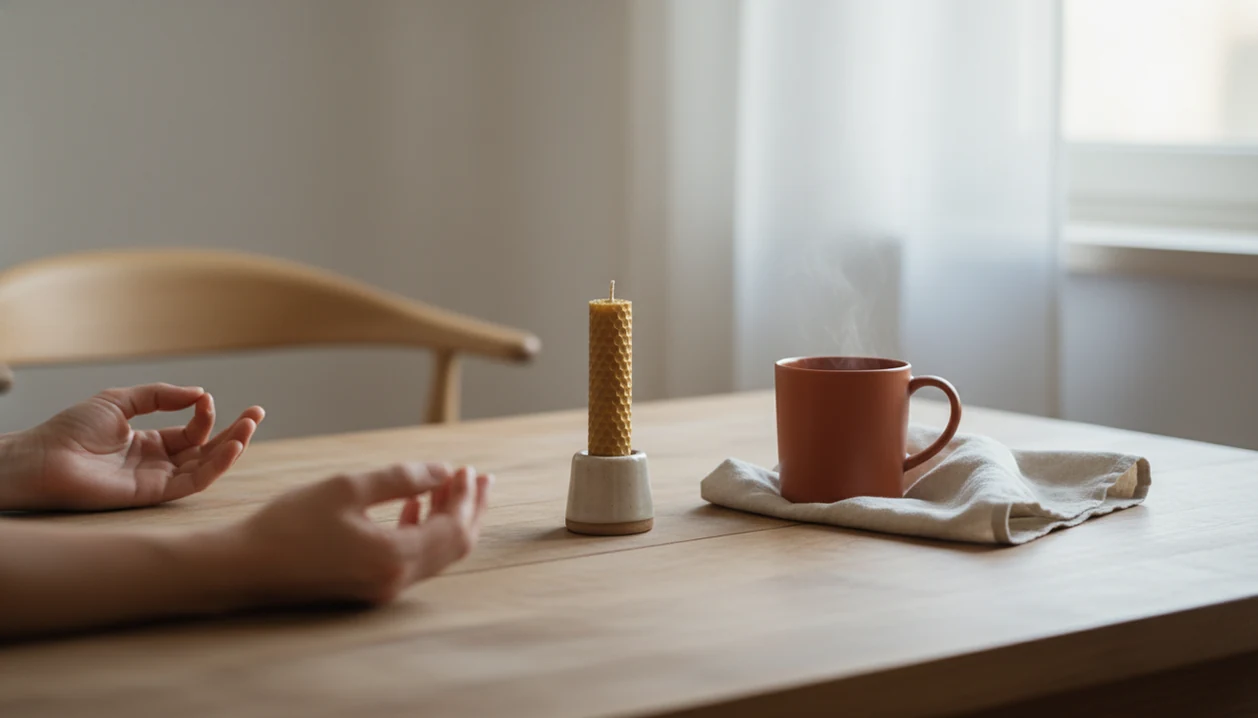
Focused attention meditation is a secular mindfulness practice in which you choose one anchor, such as the breath, a sound, or a visual object, and gently return to it whenever your mind wanders. It trains attentional stability through repeated returns, not by stopping thoughts. Remembering an unfinished email during practice is not a failed attempt. Recognizing the distraction gives you a chance to bring attention back.
Start with a short session and an anchor you can clearly sense. A chair is enough; you do not need silence or special equipment. The aim is a practice you can repeat over weeks, rather than one flawless session. This guide covers the basic steps, adjustments for common distractions, and limits of the evidence.
Definition: Focused attention meditation is a secular mindfulness technique that trains attentional stability by repeatedly returning awareness to a chosen object.
The essentials
- Choose one anchor, such as breathing, sound, or a candle flame, and keep returning to it.
- Mind-wandering is not failure; noticing and returning is the core training.
- Benefits are most likely with short, consistent practice over weeks, not one flawless session.
One anchor, repeated returns
Focused attention meditation means choosing one object of attention and returning to it each time you notice the mind has wandered. Common anchors include the breath, a sound, a candle flame, or a body sensation like feet on the floor.
Thoughts will still show up. So will sounds, emotions, planning, and the sudden memory that you forgot to answer a message. None of that means you are doing it wrong. The practice is the return.
A beginner might sit on a kitchen chair, feel the breath at the nose, and notice the mind drift toward a grocery list. The next move is simple: notice and return.
Mindful.net teaches focused attention as a secular, beginner-friendly mindfulness technique. It sits alongside other meditation techniques, but its structure is especially clear for people who want one simple way to start.
Before You Start Focused Attention Meditation
Before you start focused attention meditation, make the practice easy enough to repeat and safe enough to stop. You do not need a perfect room, special gear, or a long session.
- Choose a quiet-enough place, such as a bedroom corner, parked car, office chair, or kitchen table. Some noise is fine. The practice can include hearing a door close or traffic pass without needing total silence.
- Use steady support, whether that is a chair, cushion, or meditation bench. Aim for an upright posture that feels alert but not stiff, with the body supported rather than held in place by effort.
- Start small, with 3 to 10 minutes. A short session you actually finish is better training than a long session you dread.
- Pick a workable anchor, such as the breath, sound, or contact with the feet. If inward attention feels activating, use an external sound or eyes-open visual point instead.
- Stop or shorten the practice if panic, numbness, agitation, or distress increases. Opening your eyes, standing up, or choosing a different anchor is not failure; it is skillful adjustment.
Choose an anchor that helps you stay alert
Choose an anchor you can sense without straining. Breath offers a repeating sensation; sound gives you an external target; feet on the floor or contact with a chair gives attention a concrete place to rest. A small visual point is another option when you want to keep your eyes open. These are practical choices, not a ranking of scientifically proven winners. For a visual anchor, try a mindful observation exercise and notice the details of one ordinary object.
If you choose breathing, feel it rather than trying to produce a special breathing pattern. The NHS beginner meditation instructions suggest simple mental labels such as “breathe in” and “breathe out,” followed by a return whenever attention drifts. If breath focus feels uncomfortable, try sound or body contact instead. Once an anchor feels manageable, use it for the rest of that short session.
How Focused Attention Meditation Works in the Mind
Focused attention meditation works by repeating a basic attention cycle: choose an anchor, notice wandering, and return. That cycle trains attentional control, which means the ability to place attention and recognize when it has moved.
- Focused attention starts with one chosen anchor, such as breathing or sound.
- Mind-wandering is expected; recognition is part of the mechanism.
- Returning attention is a mental rep, similar to one repetition in strength training.
- The practice builds stability of mind, not a blank or frozen mental state.
- Focused attention and open monitoring are two major studied meditation families.
Suppression is not the aim. If you try to force thoughts away, the practice often becomes tense. A more useful move is quiet recognition: “thinking,” then back to the breath.
The shoulder drop after an exhale is small. It still counts.
Focused attention usually works best when the anchor is simple and repeatable, while broader awareness practices fit people who are ready to track more changing experience.
Focused Attention Meditation Benefits and Evidence
The evidence for focused attention meditation is promising, especially for attention, mind-wandering, stress symptoms, emotional regulation, and pain, but it is not a cure-all. Many findings come from mindfulness-based programs, not isolated breath practice alone.
- A 2014 JAMA Internal Medicine meta-analysis of 47 randomized trials found moderate improvements in anxiety and depression symptoms in mindfulness-based interventions JAMA study.
- A 2007 randomized trial reported that four days of 20-minute mindfulness training improved sustained attention and working memory compared with relaxation training S1053810007000048.
- A 2013 PNAS trial found that two weeks of daily 10-minute focused-attention practice reduced mind-wandering and improved reading comprehension Pnas.1307787110.
- A 2017 review reported small to moderate reductions in chronic pain intensity with meditation-based interventions M16 2453.
- Effects tend to be modest and depend on practice, instruction quality, and life context.
For beginners and daily practice, mindfulness and meditation offer attention training and practical pauses, not instant calm or guaranteed symptom relief.
Try a five-minute focused attention session
Here is a focused attention meditation guide you can try today. Use a short session first; a phone timer set for 5 minutes is often more useful than an ambitious plan you avoid.
- Set a short timer, such as 3 to 10 minutes, and put your phone on airplane mode if that helps.
- Choose one anchor, preferably the breath if you are new to meditation.
- Sit upright in a relaxed posture, on a chair, cushion, or bench, with both feet supported if seated.
- Notice when attention wanders, whether it moves to a sound, memory, worry, or plan.
- Return gently without judging yourself, using the anchor as a home base.
At the end, pause before standing. Notice how the body feels, how busy the mind is, and whether the next task needs a slower entry.
If breath practice feels like a good fit, a fuller breath awareness meditation guide can help you refine the anchor.
Adjusting for thoughts, restlessness, and sleepiness
Focused attention meditation tips are mostly about adjusting the practice before frustration takes over. The useful move is kind redirection, not self-criticism.
When thoughts keep interrupting
If thoughts keep coming, label them lightly. Try “thinking,” “planning,” or “remembering,” then return to the anchor. The label should be quick, not a new analysis project.
A pencil tapping during study time can become “hearing.” Then back to breathing.
When the body feels restless
If the body feels restless, open your eyes slightly, straighten your spine, or choose a more concrete anchor like feet on tile. If sleepiness is the issue, sit more upright or practice earlier in the day. If you feel sleepy, try meditation for energy to refresh attention without forcing a longer session.
For anxious or trauma-sensitive readers, inward focus may feel too intense. Try a sound anchor, eyes-open practice, or a shorter session. Reduce the length instead of forcing through distress.
A softer method, such as body scan meditation, may fit better on some days.
Focused Attention Meditation vs Open Monitoring Meditation
Focused attention meditation uses one chosen anchor, while open monitoring meditation rests in broader awareness of whatever arises. They are complementary, not rivals.
Focused attention often builds the base skill: noticing when attention leaves and bringing it back. Open monitoring then widens the field, allowing thoughts, sensations, and sounds to be noticed without choosing one fixed object.
| Practice | Anchor | Main skill | Beginner difficulty | Best use |
|---|---|---|---|---|
| Focused attention | One object, such as breath or sound | Stability and redirection | Usually simpler | Building concentration and starting small |
| Open monitoring | Whatever arises in awareness | Receptive noticing | Often harder at first | Observing patterns without narrowing attention |
For beginners, focused attention is often easier than open monitoring because it gives attention one clear home base.
If you want the broader style later, our open monitoring meditation guide explains that transition in more detail.
When anchor-based practice helps, and when to seek other support
Focused attention meditation is a good fit when you want a simple anchor-based practice, especially before work, study, or a transition. It is not ideal as a stand-alone response to serious mental health symptoms.
| Best for | Not ideal for |
|---|---|
| Beginners who want one clear instruction | People seeking a replacement for therapy or medical care |
| People training concentration before work or study | Anyone whose distress increases when turning inward |
| Short daily-life mindfulness resets | People forcing long sessions despite panic or agitation |
| Transitions, such as before opening a laptop | Complex trauma or psychiatric history without support |
A three-minute breathing pause before opening a laptop can be enough. Not dramatic. Useful.
Professional guidance may be appropriate if you have trauma history, severe anxiety, depression, psychosis symptoms, or other psychiatric concerns. Clinicians typically recommend using mindfulness as support when appropriate, not as a substitute for needed care.
When to shorten or stop a session
Meditation can produce unwanted effects, not just ordinary distraction. A 2020 systematic review of meditation-related adverse events estimated that 8.3% of participants experienced adverse events across 83 studies. That figure covers different meditation practices and study designs; it is not a risk estimate for a five-minute focused attention session. Reported effects included anxiety and depression, and they could occur without a previous mental-health diagnosis.
Stop or shorten practice if you experience escalating panic, a sense that your surroundings are unreal, marked agitation, or intrusive traumatic memories. Open your eyes and shift to an ordinary activity rather than forcing yourself to finish the timer. Seek qualified clinical help if symptoms persist or feel unsafe. Longer sessions are not automatically better, especially with a history of panic, trauma-related dissociation, mania, or psychosis.
Brief attention resets before work and between tasks
Daily micro-practices help focused attention meditation become ordinary. Short practices support consistency because they fit into real gaps, not imagined perfect mornings.
- Before meetings or emails: take one minute to feel three slow breaths before clicking into the next task.
- During commuting or waiting: use sound, foot pressure, or contact with the seat as the anchor. While waiting, a 5 senses mindfulness exercise can help you reconnect with sights, sounds, and other immediate sensations.
- Between tasks: take a 3-breath reset before standing, replying, or switching screens. You can also practice mindful drinking water as a brief pause between tasks, noticing each sip before continuing.
- At a doorway: touch the door handle before entering and notice one full inhale and exhale.
Guided tools such as Calm and Headspace can support beginner sessions when you want a voice to keep the practice simple. Mindful.net’s Mindfulness Practices App is most useful here when you want short, secular instructions rather than a long course.
Image caption idea: A person sitting upright in a chair practicing breath awareness for focused attention meditation.
Focused Attention Limits
- Focused attention meditation is attention practice, not a universal fix.
- Research quality varies, with differing study designs, small samples, publication bias, and mixed interventions.
- Benefits are not guaranteed and depend on regular practice, instruction, health, sleep, stress, and life context.
- Seek professional help when needed, since meditation cannot replace mental health care, medication, crisis support, or therapy.
Focused attention meditation questions
How long should a beginner practice focused attention meditation?
Start with 3 to 10 minutes if that makes practice manageable. Longer beginner guidance varies: Mayo Clinic suggests 10 to 15 minutes, while the NHS describes an approximately 20-minute practice. No exact duration is established as best for everyone. Choose a length you can repeat without forcing yourself through distress.
What should I focus on during focused attention meditation?
Choose one clear sensory anchor: breathing at the nose, a steady sound, feet touching the floor, or a small visual object. Breath is a common starting point, but it is not compulsory. If it feels uncomfortable, try an external sound or body contact. Keep returning to the same chosen anchor during the session.
Am I doing it wrong if my mind keeps wandering?
No. Noticing that attention has wandered and returning it is the central practice. You do not need to count distractions or finish with a blank mind. A brief label such as “thinking” or “planning” can help you recognize what happened, then return to the sensation or sound you chose.
Can focused attention meditation help with anxiety?
It may help, but evidence for anxiety relief is stronger for structured mindfulness programs than for a short anchor practice alone. Turning inward can also increase distress for some people. Treat meditation as an optional support, not a replacement for therapy or medication, and stop if anxiety escalates during practice.
Can focused attention meditation help with ADHD?
Focused attention practice trains noticing and redirecting attention, but it is not a stand-alone treatment for ADHD. General findings about attention do not establish that it will reduce an individual's ADHD symptoms. A brief session may serve as a practice aid before work or study, alongside appropriate treatment and accommodations.
Why do I get sleepy during focused attention meditation?
Sleepiness can make it hard to stay with a subtle anchor such as breathing. Try sitting more upright, opening your eyes, or choosing a visual point or feet on the floor. Keep the session short rather than pushing through. Meditation is not a substitute for sleep, so consider your need for rest too.
How is focused attention different from open monitoring meditation?
Focused attention uses one chosen anchor and returns to it after distraction. Open monitoring notices thoughts, feelings, sensations, and sounds without making one object the sole focus. Both have been associated with attention improvements, but findings vary. Starting with an anchor can give beginners a clearer instruction; neither technique is universally superior.