
Meditating With Breathing Problems: Natural Breathing and Other Anchors


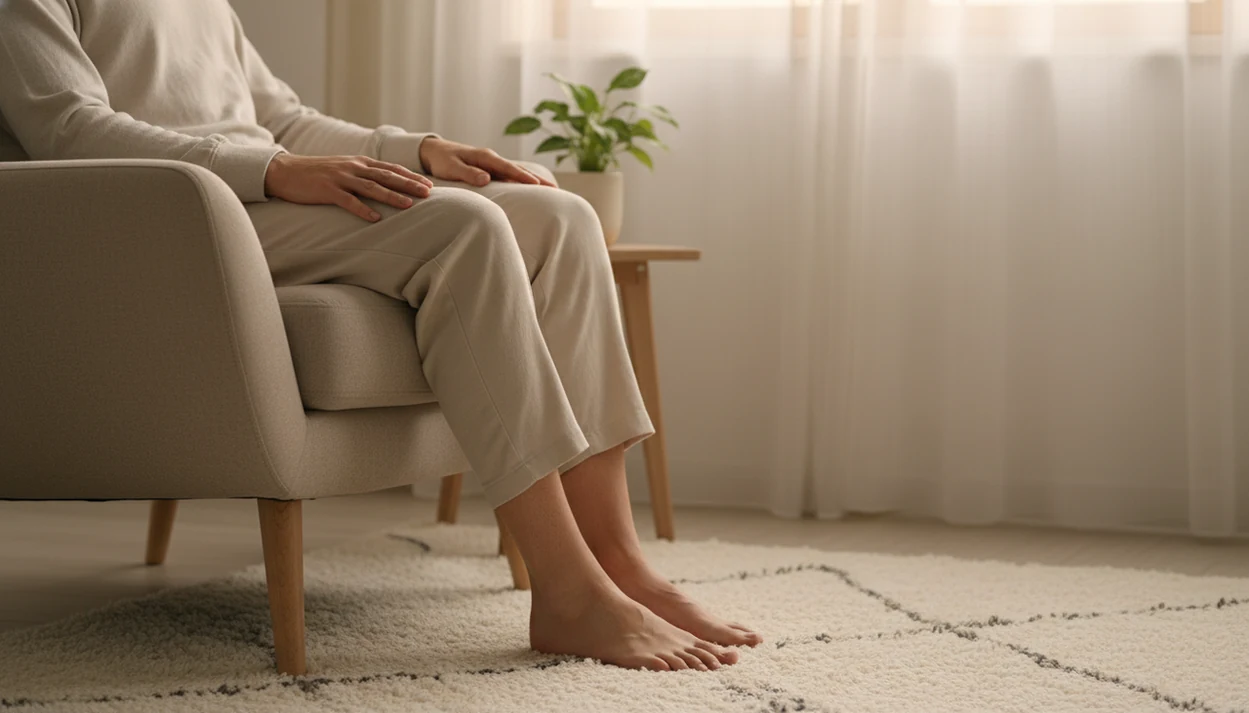
Meditating with breathing problems means practicing present-moment awareness while keeping breathing natural, without straining, controlling it, or relying on it as your only focus. Avoid forcing deep breaths or holding your breath. When breath awareness feels uncomfortable, try the sensation of your feet, your hands, contact with a chair, or sounds around you. NHS mindfulness guidance includes sounds and body sensations alongside breathing as possible points of attention.
The aim is to give attention somewhere comfortable to rest, not to make your lungs perform differently. Meditation is not a treatment for asthma, COPD, panic, or other breathing symptoms. Start briefly, in a supported position, only when symptoms are manageable. If breathlessness worsens or you develop dizziness, chest pain, wheezing, or increasing panic, stop and follow medical advice rather than trying to finish the session.
Definition: Meditating with breathing problems means practicing present-moment awareness without straining, controlling, or relying exclusively on the breath as the meditation anchor.
The essentials
- Do not force deep breathing, breath holds, or intense breathing patterns when breathing already feels difficult.
- Use non-breath anchors such as feet, hands, body contact, sound, or visual attention when breath focus increases anxiety or shortness of breath.
- Stop the practice and follow medical advice if meditation worsens breathlessness, dizziness, chest pain, wheezing, or panic.
Start with natural breathing and a comfortable anchor
Start with natural breathing, not controlled breathing. If noticing the breath makes you tense, you can meditate by feeling your feet, hands, chair contact, or sounds in the room.
Breath awareness is optional. It is not the price of admission. Many people are taught meditation with phrases like “take a deep breath,” but that can be the wrong cue when the chest already feels tight. A safer first practice is to sit upright, let the breath move on its own, and place attention somewhere steadier.
Cold fingertips resting lightly together can be enough.
Asthma and COPD are common enough that meditation instructions need gentler options. Per CDC asthma data, 6.5% of U.S. adults reported current asthma in 2022 (CDC guidance), and CDC COPD surveillance reported about 11.7 million U.S. adults diagnosed with COPD that year (CDC guidance). Meditation may support calm attention, but it does not replace inhalers, oxygen, pulmonary rehab, therapy, or clinician care.
When breath awareness turns into checking your breathing
Meditating with breathing problems works best when attention has a steady place to land, rather than a demand for the lungs to perform. That landing place might be sound, touch, a visual point, or the feeling of holding a warm mug while making tea.
For some people, the breath is calming because it is rhythmic and always present. For others, breath focus can sharpen air hunger, panic, or body scanning. That shift can happen fast. One moment you notice an exhale in a quiet room; the next, you are checking whether the next inhale is big enough.
The key distinction is observing versus controlling. Observing means, “breathing is happening.” Controlling means, “I must breathe deeper, slower, or better.” Those feel very different in the body.
A gentle longer exhale may feel settling for some readers, especially if it happens without strain. Clinicians typically recommend following your medical plan first when breathing symptoms are present; meditation can be an attention practice, not a lung-function treatment.
For safety framing, the NIH’s National Center for Complementary and Integrative Health notes that meditation is generally used as a complementary practice, not a replacement for conventional medical care (NCCIH overview).
A five-step practice without controlling your breath
Use this short practice when breathing feels manageable enough to sit, recline, or lie still. If symptoms are severe, new, or worsening, skip meditation and follow medical advice. If symptoms remain manageable, a flexible routine for meditating twice a day can keep both sessions brief and comfortable.
Keep any prescribed rescue medication, oxygen setup, or clinician-recommended breathing plan available before you begin. If you are unsure whether sitting still is safe today, choose medical guidance over meditation.
- Set your posture. Sit in a supported chair, recline, or lie on a bed with the head and chest comfortable.
- Let breathing happen naturally. Do not deepen, hold, count, or correct the breath.
- Choose one anchor. Use feet, hands, contact points, sounds, or the breath only if it feels comfortable.
- Notice discomfort early. If breath focus tightens the chest or raises panic, switch anchors instead of pushing through.
- End slowly. Open your eyes, feel the room, and ask whether symptoms feel better, worse, or unchanged.
Try 3 to 5 minutes marked by something ordinary, such as the kettle finishing or a class period ending, rather than watching the clock. If you want a broader foundation, our meditation techniques guide compares several beginner-friendly practices without assuming one style fits everyone.
Five precautions for breathing-sensitive meditation
These five rules make meditation safer and more realistic when breathing already feels sensitive.
- Do not force deep breathing. Natural breathing is usually a safer starting point than trying to fill the lungs.
- Do not use long breath holds as your default. Breath retention can increase discomfort, dizziness, or panic for some people.
- Use the feet or hands when the breath feels threatening. Feeling toes on tile or fingers resting in the lap can steady attention.
- Try short sessions first. One to five minutes is often wiser than jumping into a 10-minute practice. Meditation for impatient people offers practical ways to start small without turning a short session into a test of endurance.
- Pause if symptoms escalate. Follow prescribed care if wheezing, chest tightness, breathlessness, or panic increases.
For beginners with breath sensitivity, non-breath anchors are often easier than breath counting because they reduce monitoring of every inhale and exhale.
Best Meditation Anchors for Breathing Problems and Breath Anxiety
The best anchor is the one that steadies attention without making breathing feel more difficult. Breath can work, but it should not be treated as mandatory.
| Meditation anchor | When it may help | When to switch |
|---|---|---|
| Breath | Useful when breathing feels natural and neutral | Switch if it creates air hunger, checking, or panic |
| Feet | Good for shortness of breath, worry, or panic | Switch if leg sensations become distracting |
| Hands | Subtle option for sitting, reclining, or lying down | Switch if tingling causes concern |
| Sound | Helpful when body sensations feel too intense | Switch if sounds feel irritating or stressful |
| Open awareness | Gentle for experienced meditators who dislike narrow focus | Switch if it feels too vague or ungrounded |
If breath attention is sometimes comfortable, breath awareness meditation can be practiced lightly. If it is not comfortable, feet, hands, sound, or contact points are valid meditation anchors.
Keep your eyes open when closing them increases anxiety
Closing your eyes is optional. If it makes you more anxious or more absorbed in checking your breathing, keep them open with a soft gaze. Guy’s and St Thomas’ NHS mindfulness instructions explicitly allow eyes open or closed. This gives you another way to practice without depending on sensations inside your chest.
Choose a stationary object nearby and let your gaze rest gently on it, without staring or trying to block out everything else. When attention returns to checking your breath, notice that shift and return to the object. Adjust your position or stop if discomfort increases. An eyes-open practice is an option for attention, not a way to override breathing symptoms.
Who can use this practice, and who should wait
This guide is best for people who need meditation options that do not depend on smooth or “perfect” breathing. It is not for acute distress or unmanaged medical symptoms.
Best for beginners: People who feel tense, breath-aware, restless, or easily distracted during meditation may benefit from short practices and flexible anchors. Mindfulness for neurodivergent people offers adaptable options for readers who need more flexibility in attention, sensory input, or practice structure.
Best for secular mindfulness: People who want practical attention training can use chair contact, sound, or hands without spiritual framing.
Not for emergencies: Severe breathlessness, chest pain, blue lips, fainting, or rapidly worsening symptoms need urgent medical help.
Not for replacing care: Meditation should not replace inhalers, oxygen, pulmonary rehab, therapy, or clinician instructions.
Tools like Mindful.net can help beginners learn everyday mindfulness, meditation techniques, and gentle alternatives such as body scan meditation, but the practical next step is still safety first.
Avoid forced breaths and pushing through symptoms
Deep breathing is not a requirement for meditation, though treating it as one is a common mistake. It does not. You can meditate with ordinary breathing, shallow breathing, uneven breathing, or no breath focus at all.
Another mistake is staying with the breath after it starts increasing anxiety. If the mind keeps asking, “Am I breathing right?” the anchor has stopped helping. Move to the chair under you, the sound of a fan, or the weight of the hands.
Don’t tough it out.
Dizziness, worsening breathlessness, wheezing, or chest pain should not be treated as normal meditation resistance. Stop the practice and follow medical guidance.
Intense breathwork, rapid breathing, and breath retention also deserve caution. They are different from gentle mindfulness and may be inappropriate without qualified guidance. Mindfulness practices and meditation techniques for beginners and daily life can build steadier attention, not guaranteed symptom control or medical improvement. For support with adapting practice, learn how to choose a meditation teacher who respects medical care and your comfort.
When to Seek Medical Help Instead of Meditating
Seek medical help instead of meditating when breathing symptoms feel severe, unusual, or medically unstable. Meditation can wait; urgent symptoms and care plans come first.
- Call for urgent help if shortness of breath is severe, rapidly worsening, or paired with chest pain, blue lips or face, fainting, confusion, severe weakness, coughing blood, or an inability to speak in full sentences.
- Stop the session if meditation brings on wheezing, dizziness, chest tightness, panic that feels out of control, or breathlessness that keeps rising instead of settling.
- Contact a clinician for new, recurring, unexplained, or worsening breathlessness, even if it improves after rest or a few minutes of grounding.
- Follow your plan if you have asthma, COPD, prescribed oxygen, rescue medication, pulmonary rehab instructions, or a panic-care plan. Use the steps your clinician gave you rather than improvising a meditation technique.
- Choose not to meditate when symptoms feel unpredictable. Skipping practice is not failure; it is appropriate self-care when the body needs assessment, medication, or support. After a safety pause, advice for a missed meditation day can help you restart when symptoms are manageable.
A supported seated setup with natural breathing
A useful image for this guide would show a person upright and well supported, with the torso easy rather than stiff. The hands might rest on a folded blanket or loosely around a watering can after tending a plant. The chest should look neutral, not lifted into an exaggerated deep-breath pose, and the face should suggest steadiness rather than effort.
Caption: A supported setup for how to meditate with breathing problems: sit comfortably, let the breath stay natural, use the feet as an anchor, and pause if discomfort increases.
Avoid medical-device dramatization, glowing wellness poses, or staged “big inhale” imagery. A kitchen chair or simple office chair is more honest. The point is ordinary steadiness, not performance.
During a short seated practice: mark the finish with a bell
When breathing feels manageable but breath counting makes you anxious, a timed session lets you focus on your hands or chair contact instead. The free mindfulness bell can mark the end without making breathing the task. The Mindful.net app also offers a meditation timer. Neither replaces a prescribed breathing plan or medical care when symptoms worsen.
Meditation and breathing limits
- Meditation is not a treatment for asthma, COPD, lung cancer, infection, panic disorder, or unexplained breathlessness.
- Breath attention may worsen anxiety or air hunger, so consider body scan vs breath meditation when it feels loaded.
- Breath holds, intense breathing cycles, and forced deep breathing may be inappropriate for people with dizziness, panic, or lung conditions.
- Seek clinician guidance for unexplained breathlessness, and never replace prescribed care, therapy, or testing with meditation.
Meditation with breathing problems: common questions
Can I meditate without focusing on my breath?
Yes. Rest attention on your hands, feet, contact with a chair or bed, sounds, or a visual object. When your mind wanders, gently return to that focus. You do not need to monitor or change your breathing for the practice to count as meditation.
Should I take deep breaths or hold my breath during meditation?
Not when breathing already feels difficult. Let your breath move naturally rather than forcing deeper inhalations, longer exhalations, or breath holds. These can increase discomfort, dizziness, or panic for some people. Follow any clinician-prescribed breathing plan separately rather than replacing it with a meditation exercise.
Why does focusing on my breath make me feel short of breath?
Breath focus can make some people more aware of air hunger or lead to repeated checking of each inhale. That can increase anxiety instead of settling attention. Switch to sound, touch, or a visual object. Do not assume new or worsening breathlessness is only anxiety; seek medical advice.
Can I meditate if I have asthma?
This guide is intended for times when symptoms are manageable, not during acute breathing distress. Keep prescribed rescue medication and your care plan available, leave breathing natural, and choose a non-breath focus if needed. Stop if wheezing, chest tightness, or breathlessness increases. Meditation does not treat asthma or replace inhalers.
Can I meditate if I have COPD?
A short, supported practice with a non-breath focus may be an option when symptoms are stable. Do not change prescribed oxygen or breathing care to fit a meditation exercise. Avoid forced breaths and breath holds, and ask your clinician about suitable positions or activities if you are unsure what is safe.
What should I do if I become short of breath while meditating?
Stop the session and follow your medical care plan rather than trying to meditate through it. Seek urgent help for severe or rapidly worsening breathlessness, especially with chest pain, blue lips, fainting, confusion, or inability to speak in full sentences. New or recurring symptoms also need clinical advice.
Can I meditate lying down if sitting makes breathing uncomfortable?
Lying down is a recognized meditation position, but choose it only if it feels comfortable for your breathing. If lying flat worsens symptoms, use a supported or side-lying position instead. Keep attention on hands, contact with the bed, or sounds. Lying down may also make you more likely to fall asleep.
How long should I meditate when breathing feels difficult?
When symptoms are manageable, start with one to five minutes rather than committing to a longer session. There is no need to reach a target time. Use a comfortable focus and finish sooner if needed. Skip meditation when symptoms are severe, new, or worsening, and follow medical advice instead.