
How Meditation Trains the Brain
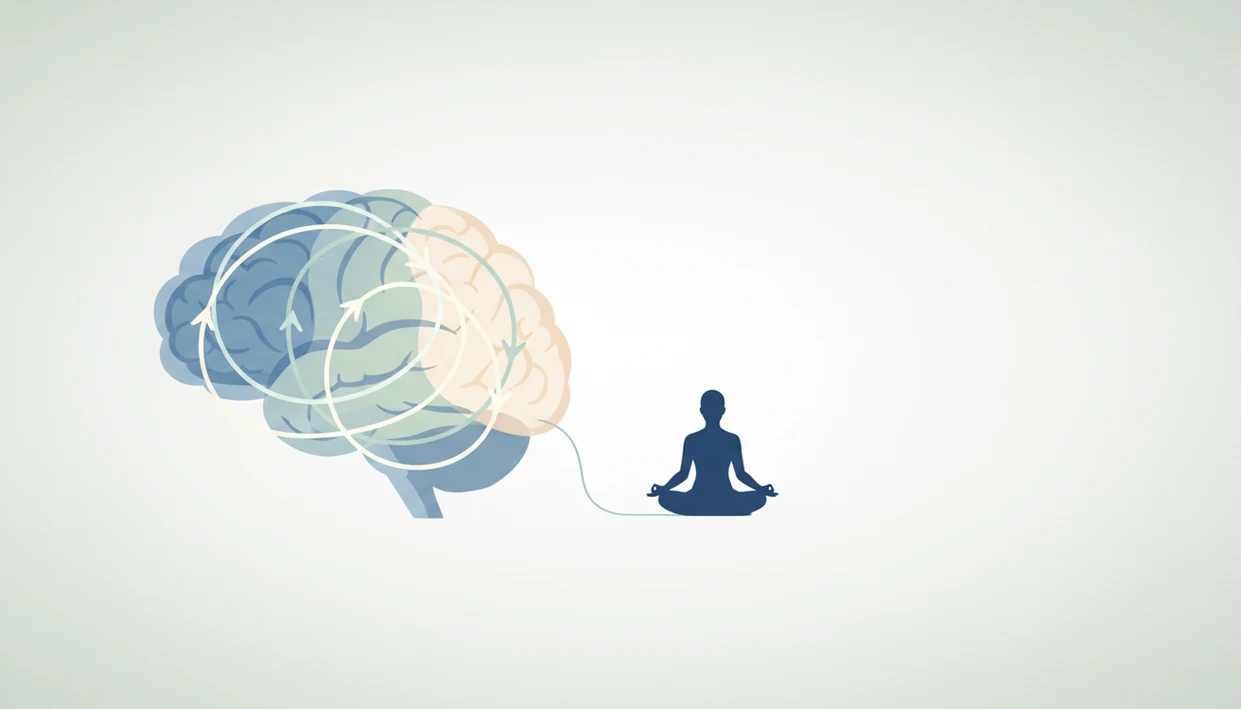
Meditation trains the brain by repeatedly practicing attention: you notice distraction, return to a chosen focus, and gradually strengthen circuits for focus, emotional regulation, and self-awareness. In simple terms, how meditation trains the brain is through consistent repetition, not through forcing the mind to go blank.
> Definition: Meditation is a secular attention-training practice that uses repeated awareness of breath, body, thoughts, or emotions to build steadier focus and more deliberate responses.
TL;DR
- Meditation trains attention by repeating the cycle of noticing distraction and returning to a chosen focus.
- Research links regular mindfulness practice with changes in brain areas involved in memory, attention, stress response, and emotion regulation.
- Benefits are usually gradual and moderate, and meditation is a skill-building practice rather than a cure-all.
How Meditation Trains the Brain in One Practical Answer
Meditation trains the brain through a repeated loop: choose a focus, notice the mind has wandered, and return without making the wandering a problem. That small return is the training rep.
The aim is not to empty the mind. It is to change your relationship to thoughts, so a grocery list, worry, or old argument becomes something noticed rather than automatically followed. Over time, many people report steadier focus, quicker stress recovery, and more space before reacting.
A three-minute breathing pause before opening a laptop can count. The practice is ordinary, but the repetition matters. Mindfulness practices and meditation techniques for beginners and daily life build usable attention skills, not instant calm or a new personality.
Meditation Training Mechanisms in the Brain
Meditation trains the brain by repeating the notice-and-return loop, which recruits attention networks, body awareness systems, and self-regulation circuits over and over.
In plain language, focused practice asks the prefrontal cortex to help guide attention, while cingulate regions help detect distraction and conflict. The default mode network, often active during mind-wandering and self-talk, may become less dominant during practice. None of this means the brain is permanently “rewired” after a few sessions. It means repeated attention practice can nudge brain activity and habits over time.
Breath and body practices also build interoceptive awareness, which means sensing internal signals like breathing, pressure, warmth, or tension. You might notice the tongue softening from the palate, then lose focus, then come back. That return is the mechanism. For a simple starting point, breath awareness meditation gives the brain one clear anchor.
Five Brain Changes Linked to How Meditation Trains the Brain
- Hippocampus changes: An 8-week MBSR study found increased gray matter concentration in the hippocampus and related learning, memory, and emotion regulation areas in 16 participants compared with 17 controls. Source: Hölzel et al., 2011, Psychiatry Research: Neuroimaging, J.Pscychresns.2010.08.006
- Amygdala changes: The same study found decreased gray matter density in the right amygdala, and the change correlated with reduced perceived stress.
- Attention-control regions: Reviews of mindfulness neurobiology report changes in prefrontal and cingulate regions linked with attention control, conflict monitoring, and self-regulation. For a broad review, see Tang, Hölzel, and Posner, 2015, Nature Reviews Neuroscience, Nrn3916
- Emotion regulation: Meditation may support stronger top-down regulation, where thinking and monitoring systems help calm alarm responses instead of letting them run the whole show.
- Clinical symptoms: A 2014 systematic review and meta-analysis found moderate evidence that mindfulness meditation programs improve anxiety, depression, and pain, but average effects are not dramatic. Source: Goyal et al., 2014, JAMA Internal Medicine, Jamainternmed.2013.13018
For beginners, the practical takeaway is simple: repeated attention practice is often more useful than chasing a special mental state.
Six Beginner Steps to Train Your Brain With Meditation
Use meditation like a short daily attention drill, not a performance test. Consistency matters more than intensity, especially in the first few weeks.
- Choose one focus, such as the breath, body sensations, or sound.
- Set a short timer for 3 to 10 minutes.
- Notice when attention drifts to planning, judging, or remembering.
- Return gently to the chosen focus without scolding yourself.
- Repeat the process each day or most days.
- Adjust the style if one method feels agitating or too vague.
A phone timer set for 5 minutes is enough to begin. If you want a broader menu, our guide to meditation techniques compares beginner-friendly options without requiring long sessions.
Small counts.
Best Meditation Styles for Brain Training Goals
Different meditation styles train overlapping skills, but they do not all emphasize the same brain-training goal. Beginners usually do better when the technique matches the reason they are practicing.
| Meditation style | Main training goal | Best for | Not ideal for |
|---|---|---|---|
| Focused attention | Concentration and returning | People who want a clear anchor, such as breath or sound | People who feel frustrated by repeated wandering |
| Open monitoring | Awareness of thoughts and emotions | People practicing less reactivity to mental events | Beginners who need more structure at first |
| Body scan | Interoceptive awareness and tension recognition | People who learn well through physical sensation | People who find body sensations distressing |
| Compassion or loving-kindness | Social and emotional tone | People working with harsh self-talk or resentment | People who dislike phrase-based practice |
For awareness-based practice, open monitoring meditation can help you observe thoughts without chasing each one. For body-based training, body scan meditation gives attention a slower route through sensation.
8-Week Meditation Practice and Brain Change Expectations
How long does meditation take to train the brain? Some MRI studies used 8-week mindfulness programs, but brain change does not mean instant personality change.
A realistic beginner plan is short daily or near-daily practice, often 3 to 10 minutes at first. Dose, practice style, baseline stress, sleep, and personal fit all shape what someone notices. One person may feel calmer after the first week. Another may mainly notice how busy the mind is. That is still useful information.
The most reliable way to begin meditation is short, repeatable practice paired with a clear focus, because the brain learns through repetition rather than effortful intensity.
Tools like Mindful.net, Calm, and Headspace can support gentle beginner practice when instructions repeated in plain language help you stay with the exercise. An app is optional, not the point.
Five Myths About How Meditation Trains the Brain
- Myth 1: Meditation requires an empty mind. Meditation trains noticing and returning; thoughts are part of the practice, not proof you failed.
- Myth 2: Only long sessions matter. Short, consistent practice can be meaningful, especially when it happens most days.
- Myth 3: Meditation is only relaxation. Some sessions feel effortful, boring, or restless because attention training exposes habits you normally skip past.
- Myth 4: Everyone’s brain changes the same way. Brain and behavior changes vary by practice style, dose, history, stress level, and fit.
- Myth 5: Meditation makes you stress-proof. It may support recovery after stress, but it does not remove deadlines, grief, illness, or conflict.
If compassion practice interests you, loving-kindness meditation trains a different emotional tone than breath counting or silent observation.
Limitations
Meditation is useful for many people, but it has limits. Honest practice includes knowing what this can and cannot do.
- Meditation is not a replacement for professional care for major depression, PTSD, severe anxiety, substance crisis, or suicidal thoughts.
- Effects are moderate on average, and not everyone notices strong benefits.
- A minority of people may feel more anxiety, distress, dissociation, or unpleasant body awareness during practice. For reported meditation-related difficulties, see Lindahl et al., 2017, PLOS ONE, Journal.Pone.0176239
- Many neuroimaging studies have small samples, short follow-up periods, or differences in meditation style.
Clinicians typically recommend using mindfulness as a supportive skill, not as a stand-alone treatment for serious mental health symptoms. Feet on carpet or tile can be grounding, but it is not emergency care.
Three Situations Where This Helps
- For a nurse coming off a demanding shift, a short session with one clear anchor may help create a small transition before sleep, conversation, or the next responsibility.
- For a parent who feels pulled in five directions, the named method “Anchor-Return-Name” can make practice less vague: feel one steady breath, return when distracted, and name the return as the training rep.
- For a musician or athlete, mindfulness can function like attention rehearsal: the goal is not perfect calm, but noticing drift sooner and coming back with less self-criticism.
- For someone comparing mindfulness vs prayer, the distinction is often intention: prayer may involve relationship, devotion, or petition, while mindfulness usually trains observation and return without needing a belief frame.
Who Benefits Most — and Least
- Mindfulness tends to fit people who can tolerate a few moments of inner noticing without feeling flooded; if silence feels overwhelming, movement or guided grounding may be a better first step.
- People who want a quick mood fix may feel disappointed, because meditation usually works more like repeated practice than instant relief.
- Shift workers may benefit from brief, repeatable anchors, but long evening sits can backfire if they become another performance task after exhaustion.
- If someone is in acute distress, dissociation, or panic-like intensity, we usually suggest support from a qualified professional and a more stabilizing technique rather than unsupported silent practice.
- If prayer is already meaningful, mindfulness does not have to replace it; some people keep prayer for spiritual connection and use mindfulness for attention training.
What We Usually Suggest
In our editorial review, many beginners seem to do better when meditation is framed as a repeatable decision, not a personality test. We usually suggest naming the practice, keeping the session short, and choosing one clear anchor before starting. One pattern we notice is that people quit less quickly when the first goal is simply “return once” rather than “feel calm.”
The best brain-training meditation is usually the one simple enough to repeat tomorrow.
Signs You Should Try Another Approach
Try one tiny experiment before judging the whole practice: for three days, use the Anchor-Return-Name method for two minutes, choosing one clear anchor such as a steady breath or a sound in the room. If you consistently feel more agitated, numb, or self-critical afterward, that may be a sign to switch to walking meditation, guided practice, or a stress recovery approach such as /mindfulness-for-stress. A useful practice should feel workable enough to repeat, even if it is not immediately relaxing.
At-a-Glance Options
| Technique | Best for | Minutes |
|---|---|---|
| Anchor-Return-Name | Training attention when the mind wanders often | 2-8 min |
| Walking Count Practice | Restless beginners, athletes, or shift workers who struggle with stillness | 5-15 min |
| Three-Breath Transition | A brief reset before conversation, prayer, or a work task such as the /mindfulness-at-work Before Email Pause | 1-3 min |
Why Mindful.net fits this specific need
Mindful.net is useful here because the topic often calls for choosing a practice, not just understanding the brain. Related guides such as /mindfulness-at-work and /mindfulness-for-stress can help readers match a short session to a real-life moment without turning mindfulness into generic calm advice.
FAQ
Does meditation change the brain?
Yes, research links regular meditation with structural and functional changes in brain areas involved in attention, memory, stress response, and emotion regulation. The evidence is promising, but changes vary by person and study design.
How fast does meditation work?
Some people feel calmer during a first session, especially after slow breathing. More stable training effects usually require consistent practice over days or weeks.
Can meditation improve focus?
Yes, meditation can improve focus by repeatedly training attention to return to the breath, body, sound, or another chosen anchor. The improvement comes from practicing the return after distraction.
Does meditation reduce stress?
Meditation can support stress recovery by helping people notice reactions sooner and respond more deliberately. It does not remove the stressor itself.
What happens during meditation?
During meditation, you notice sensations, thoughts, emotions, and distractions as they arise. Then you return attention to the chosen focus.
Can meditation stop overthinking?
Meditation does not stop thoughts from appearing. It can reduce how often you get hooked by them.
How long should beginners meditate?
Beginners can start with 3 to 10 minutes per session and build gradually. A short daily practice is usually easier to maintain than an occasional long one.
Does meditation affect brain waves?
Some studies observe brain-wave changes during or after meditation. Practical benefits still come mainly from repeated attention training.
Is meditation safe for everyone?
Meditation is generally low-risk, but it can be uncomfortable or destabilizing for some people. It is not a substitute for professional care when symptoms are severe or urgent.